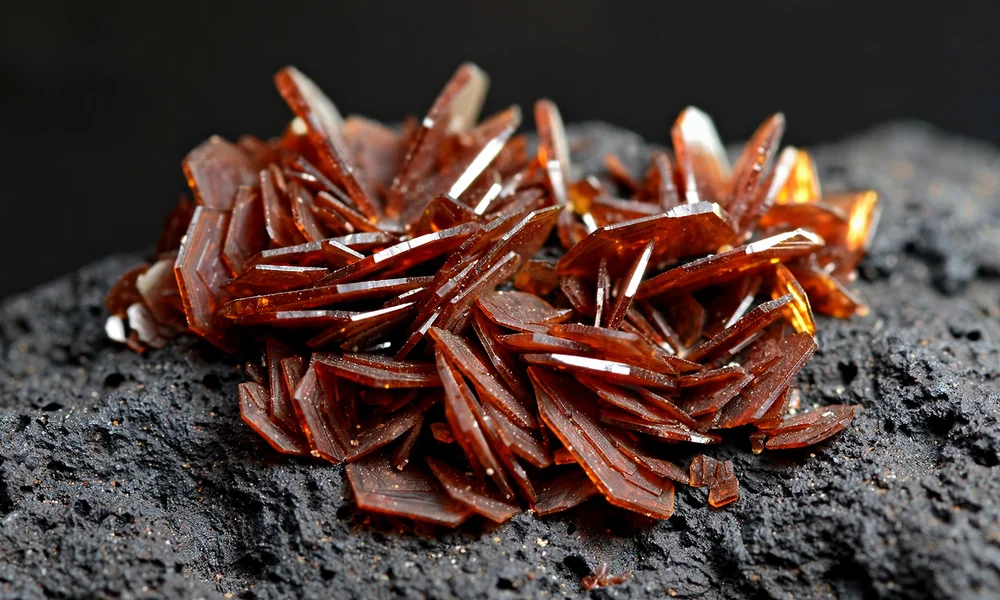
Brookite is a little-known stone, and that only adds to its appeal. It grows as flat, warm red-brown blades, thin as playing cards and sharp at the edges, with bright faces that catch the light.
It suits a steady day because it asks for so little: no polishing, water or fussing, only a dry tray, a little daylight and a shelf where it will not be knocked. A small piece can sit there for years and look the same every morning.
This guide gives the best tips for living with it: what brookite is, where it comes from, how to tell it from its two titanium dioxide cousins, how to spot a genuine piece, and how to keep it at home. It is general information, and it promises nothing for health.
Key Takeaways
- Brookite is titanium dioxide in flat, warm red-brown blades.
- It is the third form of titanium dioxide, beside rutile and anatase.
- Its colour runs from warm red to brown-black, and red pieces are prized.
- Keep brookite dry beside a glass of water, never inside it.
- It is a stone to look at and keep, and it heals nothing at all.
What Brookite Is
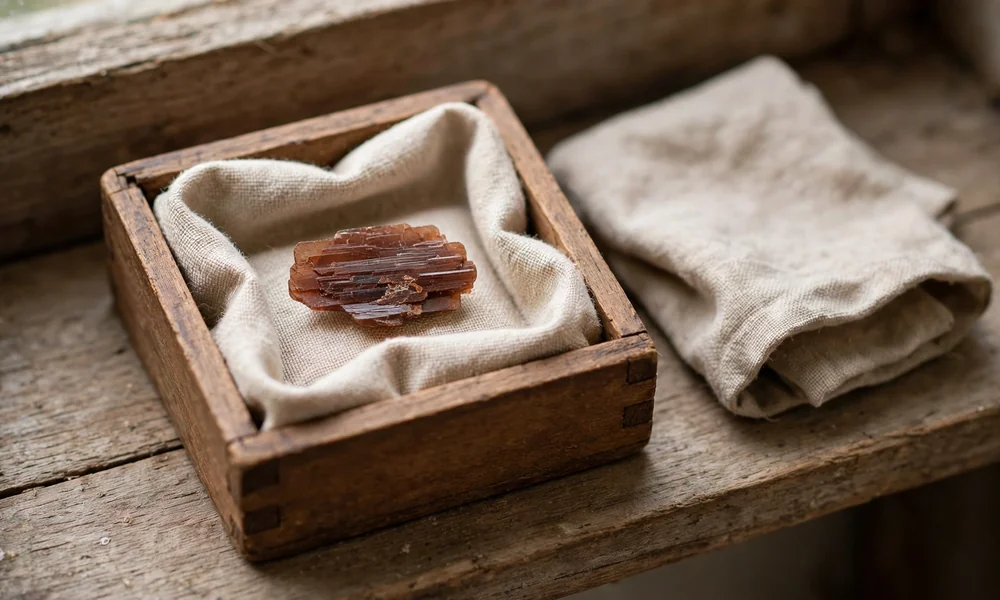
Brookite is titanium dioxide, a mineral that grows as thin, flat crystals shaped like blades or tablets. The crystals are usually small, often no bigger than a thumbnail, and they stack in fans that catch the light on flat, bright faces.
People come to brookite for its colour: the best pieces are a warm red-brown, darker at the base and brighter toward the edges, though many run brown, honey or near-black instead. Collectors ask first for the red ones.
Where Brookite Comes From
Brookite forms in cracks and pockets in rock, left behind by hot water that once moved through the stone. Collectors find small red blades high in the Alps, and other good pieces turn up in Pakistan, Brazil and the United States.
The shade changes with the place: Alpine crystals lean toward deep red, while Pakistani pieces often run darker, toward brown-black. They grow a face at a time, slowly, which is why they stay so small and so sharp.
Brookite and Rutile
The complete guide to rutile describes golden threads of titanium dioxide, a mineral that grows in hair-fine needles and is most often seen sealed inside clear quartz, shining through the glass.
Brookite shares rutile's chemistry and nothing else about its shape: where rutile stretches into long golden hairs, brookite grows short, flat and red. Rutile is the gold you find when you look into a stone; brookite is the warm red tablet you hold between your fingers.
The two never look alike once you have seen both: rutile glints in threads, brookite glows in plates, and a piece that shows long golden needles is rutile, not brookite.
Brookite and Anatase
Is anatase worth it for bright days? looks at a small blue stone built from sharp little pyramids. Anatase is titanium dioxide in its second form, and it is brookite's closest cousin.
The two share the same chemistry and the same love of a dry tray, but their shapes could hardly be more different: anatase builds pointed double pyramids in cool blue, brookite builds flat blades in warm red.
Anatase is kept rough as a small crystal on a tray, and brookite is kept the same way, on its own tray, away from harder stones. The difference is what your eye meets first.
Brookite and Rutilated Quartz
Rutilated quartz golden threads for focused days keeps a clear quartz stone on the desk for a short pause before work, with golden rutile needles running through the clear stone. There the quartz comes first and the needles live inside it.
Brookite never plays that guest role: it grows on its own, as free-standing blades on a small base of rock, with no quartz around it. A rutilated quartz is a window with gold inside it; a brookite cluster is the whole view in one small red fan.
The buying tip follows from that: a rutilated quartz is judged by how clear the quartz is and how bright the needles shine through it, while a brookite is judged on its own, by the colour of its blades and whether the cluster is whole.
How to Spot a Genuine Piece
Start by turning the piece slowly under a bright window. A real crystal has flat faces that meet in clean, sharp edges, with the colour growing deeper near the base, and the red brightens a little as the light moves across it.
Touch the blades lightly at the base, never at their thin rims. Genuine brookite feels cool and dry, with crisp edges that are easy to chip, never tacky or soft. Ask to see the very piece you would buy, not a picture of another one.
Brookite at a Glance
| Flat red blades | Titanium dioxide | Dry tray only |
|---|---|---|
| Red, brown, honey | Small, often thumbnail-sized | Sharp edges chip |
| Alps, Pakistan, Brazil | Ask the source | Daylight shows colour |
| Beside water, never in | Dust with dry cloth | Steady days, slow looking |
A Steady Morning with Brookite
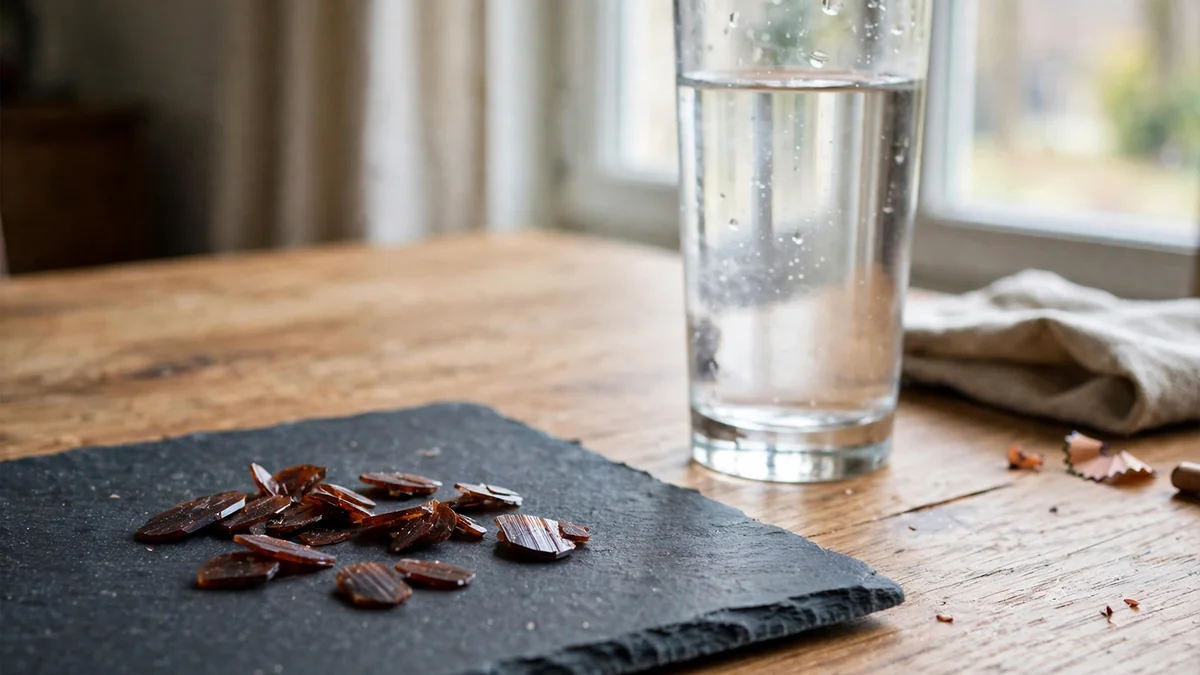
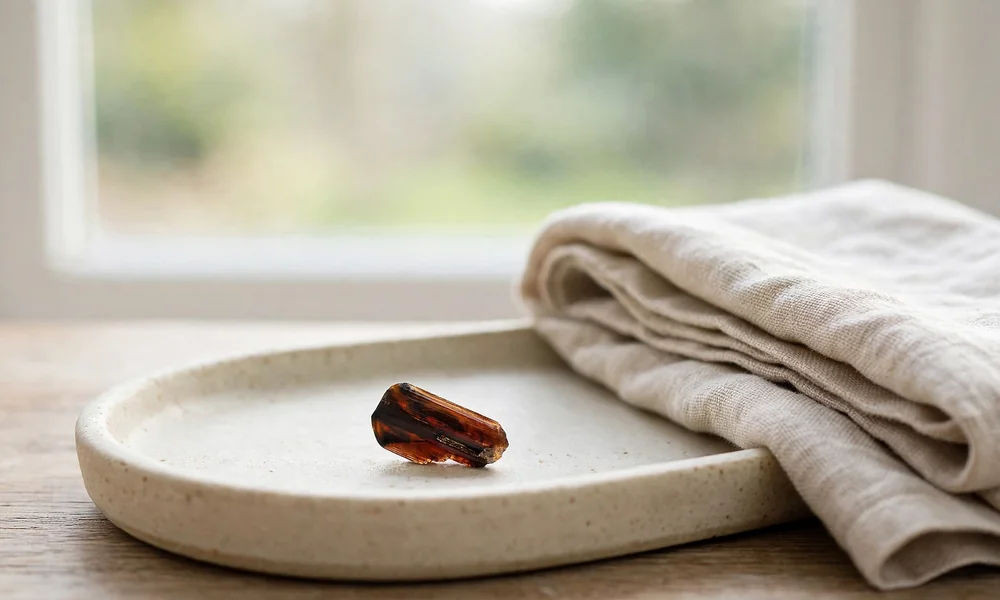
Lay a pale ceramic tray on the desk near the window, a folded linen cloth beside it, and set the brookite piece on the tray where the morning light falls across it. Put the glass of water on the far side of the desk, well away from the stone, and drink slowly while the light moves over the blades.
The red faces brighten one by one as you turn the tray, and no lamp or spotlight is needed: ordinary daylight shows the colour best.
Brookite Beside Water
Brookite and water belong in the same room, not the same glass. The drinking glass stays on the far side of the desk, the stone stays on its tray, and a good gap sits between them at all times. Do not rinse the piece, do not hold it under a tap, and do not drop it into a drink: a wet crystal slips easily, and a fall chips the blades.
Clean it by brushing the dust off with a soft, dry cloth once a week. Keep the tray away from bathrooms, where steam hangs in the air, and never wipe the bright faces with anything damp.
Nine Neighbours in This Batch
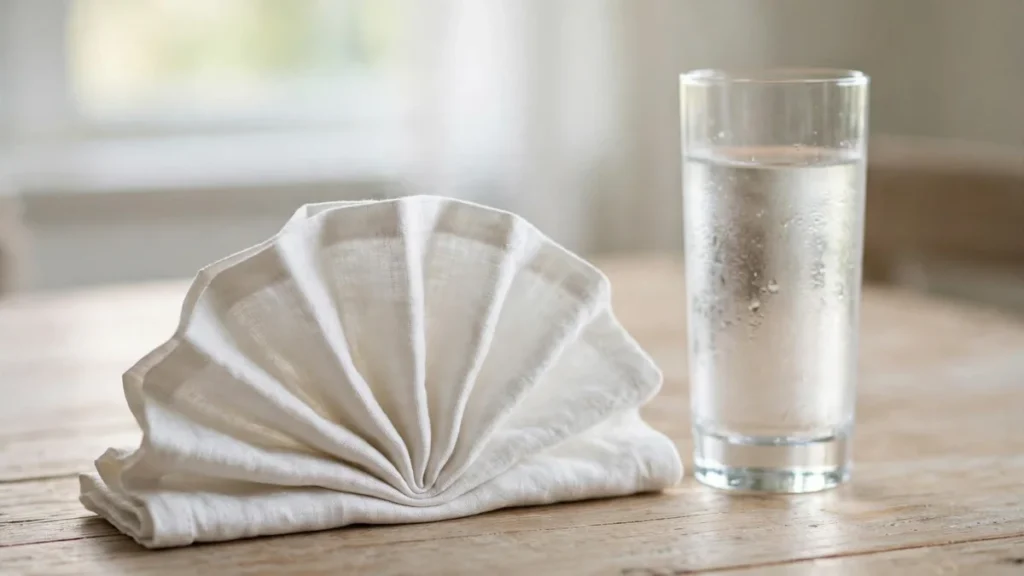
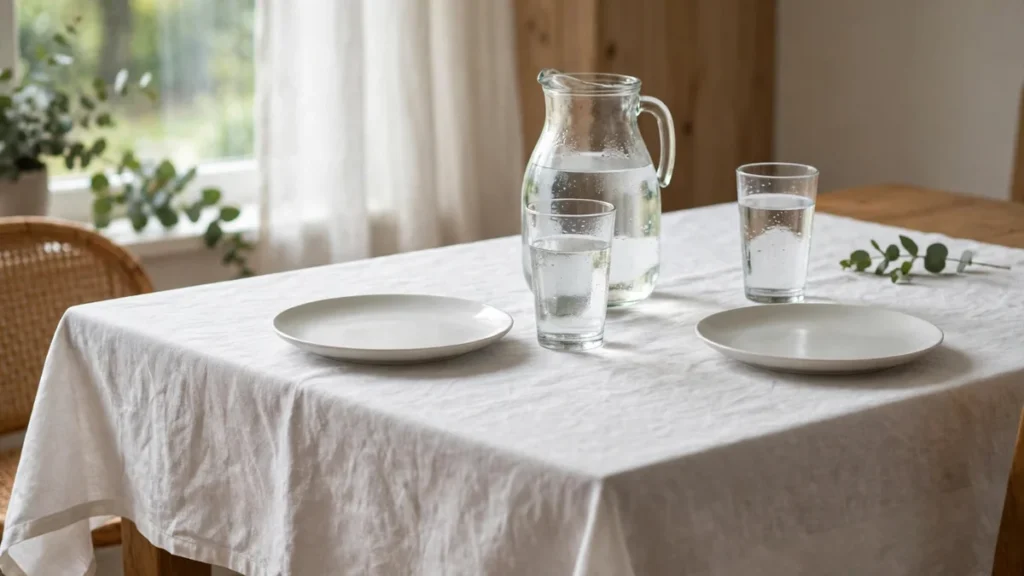
Nine other guides stand beside the brookite guide in this batch, each one taking water or a stone somewhere different. A pale shell rests in the sand dollar guide for calm days, a plant gets a little water in the succulent guide, and cloth lies over the whole table in the tablecloth guide.
The fern guide tends fresh fronds, the apache tear guide studies a deep black stone, and the apron guide keeps a kitchen apron clean. The ajoite guide wonders whether a soft blue stone suits calm days, the napkin guide shows how to fold one small cloth for each place, and the siderite guide covers what to check before buying a soft brown stone.
Stones That Must Never Touch Water
Some stones only look tough, and a glass of water is where that shows. Leave amber in a soak and its warm glow turns milky, and no amount of drying brings the clear shine back.
Pyrite brightens a shelf when it stays dry, yet after a wet afternoon its gold goes flat and grey. Angelite swells as it drinks water in, its smooth face going rough and pitted, and a piece left in a glass can crack while it dries.
Apatite loses its gloss in damp places, turning tired and matte after weeks in wet soil, while lepidolite, pale and flaky, holds lithium inside it, so it is kept far from jugs, glasses and every damp cloth. A dry shelf suits all five.
Keeping Brookite at Home
Brookite asks for very little keeping: a tray of its own, away from harder stones, brushed clean with a dry cloth each week. Water never touches the stone, and the tray stays out of the bathroom.
A desk near the window, a shelf in a dry room, or a box lined with linen all suit it. The box is the safest choice: line it with linen, lay the crystal flat, and close the lid when the room is busy.
Check the piece once a month in daylight, turning it slowly to see that the blades are whole and the colour is even. If an edge has chipped, keep the piece anyway; a chip changes the look, not the stone.

Your Brookite Checklist
- Look at the piece in daylight and check the blades are flat and red.
- Ask the seller where it was found and see the actual piece.
- Give it a tray of its own, away from harder stones.
- Keep it dry beside a glass of water, never inside one.
- Dust it weekly with a dry, soft cloth.
- If a seller promises cures, or the stone leaves you unsure, walk away and ask a jeweller or a doctor — a stone is a thing to keep, not a treatment.
Frequently Asked Questions
Is brookite safe to hold?
Yes, brookite is safe to hold in the hand for a short look, as long as the blades are whole and you lift it by the base. Wash your hands after handling it, and keep it away from children who might drop it.
Where should brookite sit at home?
Brookite sits best on a dry tray or a cloth-lined box on a desk or a shelf in a dry room, near a window but out of direct afternoon sun. Keep it away from the bathroom, where steam settles.
Can brookite go in water?
No, brookite should never go in water, and it should never be held under a tap or dropped into a drink. Keep the glass on the sill and the stone on its tray, a full arm apart, and dust it only with a dry cloth.
How can I tell brookite from rutile?
Rutile grows as long golden needles, often sealed inside clear quartz, while brookite grows as flat red-brown blades on their own base of rock. Golden threads mean rutile; red plates mean brookite.
How can I tell brookite from anatase?
Anatase grows as sharp blue pyramids, cool in colour and pointed in shape, while brookite grows as flat red blades. Both share the same titanium dioxide chemistry.
Is brookite expensive?
A small brown piece costs little, while a good red crystal of the same size costs more, because red pieces are the ones collectors ask for. Buy the piece you can see and hold, and never pay a high price for one you have only seen in a photograph.
The Bottom Line
Brookite rewards a steady eye: flat red blades, a dry tray, daylight, and water kept at a distance.
A Note for Quiet Corners
A small red fan of blades on a slate tile, a glass of water on the sill, morning light coming in sideways — that is all brookite needs.