Some workdays scatter before they begin. The phone lights up, the inbox fills, and by mid-morning the list has grown longer than the hours left to do it. The mind jumps from one small task to another, and nothing gets the full attention it deserves.
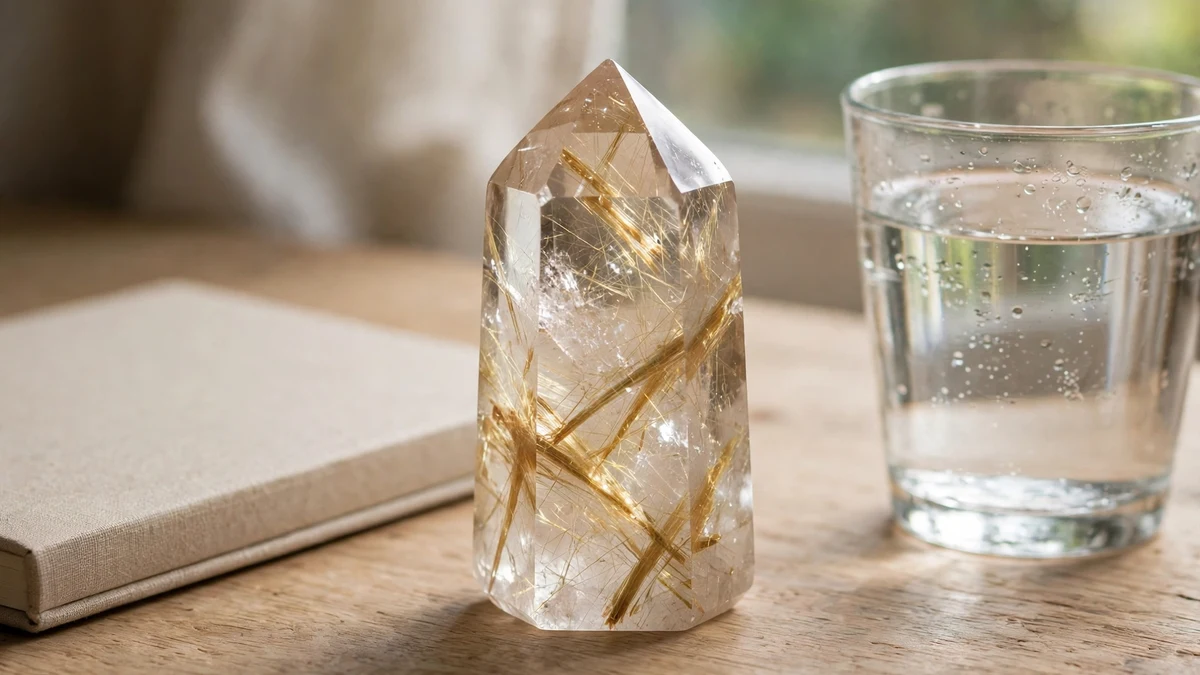
Rutilated quartz is a clear quartz stone threaded through with fine golden needles of rutile, and it suits this scattered feeling well. The threads catch the light and give the eye somewhere to rest, a small golden pattern inside a plain, quiet stone. This article looks at how it can anchor a focused workday: what the stone is, how to set it up, and how a two-minute pause with it can steady the hours that follow.
Nothing here promises more focus or a better day. Rutilated quartz will not make you focus, and it is not a treatment for anything. This is a gentle guide to a simple desk habit, general information only, and it asks for nothing more than a stone, a glass of water and two quiet minutes.
Key Takeaways
- Rutilated quartz is clear quartz threaded with fine golden rutile needles, and the threads are what make each stone different.
- The stone belongs on the desk beside your work, never inside drinking water.
- A two-minute pause with the stone before work can steady a scattered morning.
- Short focus blocks, a glass of water and a tidy desk do more than any long routine.
- Rutilated quartz will not make you focus and is not a treatment; its value is the quiet pause itself.
What Rutilated Quartz Is
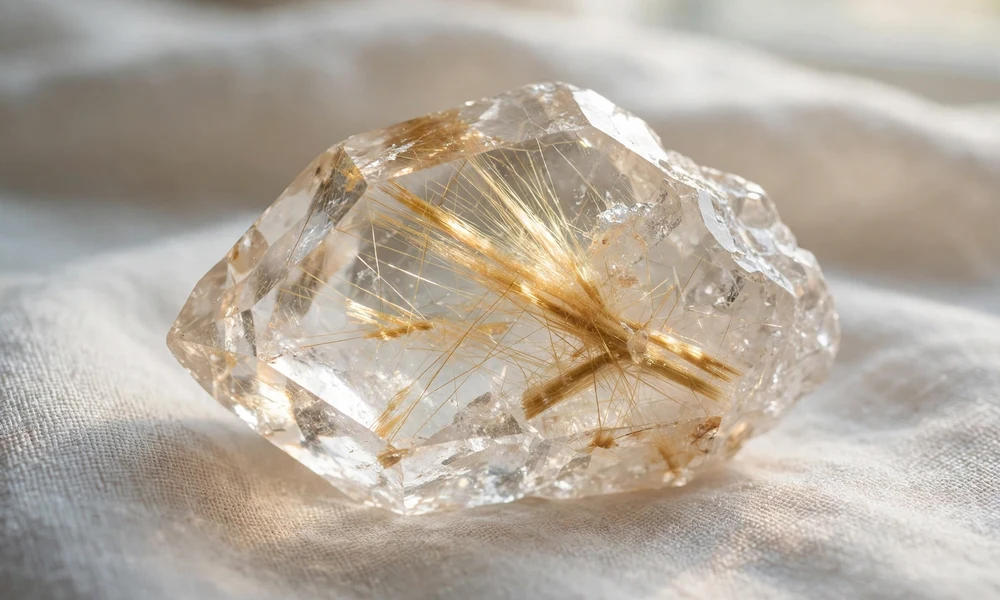
Rutilated quartz is a variety of clear quartz with thin needles of rutile trapped inside it as the crystal formed. Rutile is a mineral that grows in fine, hair-like threads, and in this stone those threads are usually golden, coppery or reddish-brown, running through the clear quartz like strands of light. Each piece is different: some hold a few bold threads, others are full of fine golden hair.
The stone is popular as a desk piece because it is beautiful to look at and easy to keep. It sits happily on a shelf, a tray or a desk corner. In this article it is treated as what it is: a natural stone, a decorative object and a visual anchor for a quiet pause, not a medicine and not a promise.
The Golden Threads Inside
The golden threads are the whole charm of rutilated quartz. Hold the stone up to the light and the rutile catches it, glowing softly inside the clear crystal. Turn the stone slowly and the threads shift, some catching the light while others fade into the clear quartz around them.
That minute of looking is the heart of this guide. A focused day does not start with effort; it starts with attention, and attention needs something to rest on. The threads give the eye a pattern to follow, and following a pattern is easier than forcing the mind to settle.
Why Focused Days Need a Pause
A focused day is not a day without breaks. The mind works in stretches, and after an hour or so of real work it begins to wander, reaching for the phone, the inbox or a new tab. That wandering is not laziness; it is the mind asking for a rest.
The pause in this guide lasts two minutes, and it comes before the work begins. Two minutes is short enough to fit into any morning, and long enough to change the shape of the hour that follows. It is a small doorway between the rush of arriving and the work itself.
Setting Up a Focus Corner
A focus corner needs very little: a clear space on the desk, the stone, and a glass of fresh water. Choose a spot where the daylight reaches it, because the golden threads show best in natural light, and keep it free of clutter so the eye has somewhere calm to rest. A small tray underneath the stone keeps it steady and marks the corner as its own place.
Set the corner up the evening before, so the morning begins with everything ready. Put the stone on its tray, leave a clean glass beside it, and clear the desk of yesterday's papers. When the morning arrives, there is nothing to arrange and nothing to decide.
A Two-Minute Look Before Work
Begin the workday with the stone, not with the screen. Sit down, pick up the rutilated quartz or look at it where it rests, and give it two quiet minutes. Hold it in your hand if you like, feeling its cool weight and smooth surface, or simply look at the golden threads as the light moves through them.
When the two minutes are done, put the stone back on its tray and open the work. Start with the hardest task first, while the mind is still quiet. The stone stays on the desk all day, a small golden reminder that focus is a habit of returning, not a state that lasts forever.
Water Beside the Stone, Never Inside It
Keep a glass of fresh water beside the stone, and keep the stone out of the water. This matters for a practical reason: natural stones can have sharp edges, small cracks and dust you cannot see, and a drinking glass is not the place to discover any of those things. The stone belongs beside the glass, on the tray or in your hand, and the water stays simply water.
Drink the water slowly, in small sips, through the morning, and refill the glass when it is empty. A glass of water on the desk is a gentle reminder to pause, and each sip is a small break that asks for nothing. The same simple rule runs through how to cleanse crystals with water safely, where stones and water are kept close but never mixed.

Working in Short Focus Blocks
After the two-minute pause, work in short blocks. Twenty-five or thirty minutes of one task, then a short break to stand, stretch and sip some water, works better for most people than a long unbroken stretch. When the block ends, stop, even if the task is not finished. The break is part of the work, not a reward for it.
Between blocks, glance at the stone again. A few seconds of looking at the golden threads is enough to mark the boundary between one block and the next. Four or five blocks make a good morning.
Caring for Your Stone
Rutilated quartz is a hard stone, but it still deserves gentle care. Wipe it with a soft, dry cloth when dust gathers, and wash it only with plain lukewarm water and a little mild soap if it truly needs it, drying it at once with a soft towel. Keep it away from hard knocks and from other stones that might scratch it.
Choosing a real stone matters too, and it is worth learning what to look for before you buy. The guide to how to spot a real crystal before you buy one explains the simple checks that separate a genuine stone from a glass copy.

What Rutilated Quartz Will Not Do
Be honest about what the stone cannot do. Rutilated quartz will not make you focus, and no stone can. It will not cure stress, anxiety, poor sleep or any health condition, and it is not a treatment of any kind. If focus is hard for reasons that worry you, or if low mood or exhaustion keep coming back, the answer is a doctor or a professional, not a stone.
What the stone can do is smaller and more honest: it can give your attention a beautiful place to rest for two minutes, and it can mark the start of a working day with a quiet ritual. The same steady idea runs through smoky quartz grounding rituals for busy mornings, where a stone is a companion to a pause, never a promise.
| Focus habit | Stone use | Water use |
|---|---|---|
| Two-minute pause | Look, then work | Sip water slowly |
| Short work blocks | Stone on tray | Glass by desk |
| Breaks between blocks | Glance, then rest | Refill the glass |
| Evening tidy up | Stone back home | Wash glass out |
Your Focused Day Checklist
- Set the stone on its tray the evening before, with a clean glass beside it.
- Take a two-minute pause with the stone before opening any work.
- Work in short blocks of twenty-five or thirty minutes, then stand and stretch.
- Sip plain water slowly through the morning and refill the glass when empty.
- Keep the stone beside the water, never inside a drinking glass.
- See a doctor if poor focus, low mood or exhaustion keep coming back.
Frequently Asked Questions
What is rutilated quartz?
Rutilated quartz is clear quartz with fine needles of rutile, usually golden, trapped inside it as the crystal formed. The threads run through the stone like strands of light, and no two pieces ever look quite the same.
Can rutilated quartz help me focus?
No stone can make you focus. Rutilated quartz can give your attention a beautiful place to rest for two minutes, and that quiet pause can help a scattered morning feel steadier, but the focus itself comes from the habit, not the stone.
Should I put rutilated quartz in my drinking water?
No. Keep the stone beside the glass, never inside it. Natural stones can have sharp edges, small cracks and dust you cannot see, and a drinking glass is not the place to discover any of those things.
How long should the morning pause be?
Two minutes is enough. It is short enough to fit into any morning and long enough to mark a calm start to the day. If two minutes feels too short, sit a little longer, but there is no need to make it a long ritual.
How do I clean rutilated quartz?
Wipe it with a soft, dry cloth when dust gathers. If it truly needs washing, use plain lukewarm water and a little mild soap, then dry it at once with a soft towel and keep it away from hard knocks.
Is rutilated quartz the same as smoky quartz?
No. Smoky quartz is grey-brown quartz, while rutilated quartz is clear quartz threaded with golden rutile needles. They are different stones with different looks, and each suits a different kind of quiet pause.
The Bottom Line
The golden threads are a small beauty, and the two-minute pause is a small habit. Together they make a calmer start to a focused day.
Put the stone on its tray tonight, and let tomorrow begin with two quiet minutes.
A Note for Focused Days
Look at the threads, sip the water, and begin. The calm hours can still belong to your work.