A napkin is the smallest cloth on the table, and it does the quietest job there: it waits beside the plate, folded and clean, ready for a spill or a crumb.
Most people fold a napkin only when guests are coming, and then they rush it. The same cloth, folded slowly with flat hands, can make an ordinary Tuesday dinner feel cared for.
This guide is about that one small cloth: what it is, which fabric suits it, three folds that anyone can learn, and how to wash it so it stays soft. It is gentle general information about a household habit, and any skin or health question belongs with a doctor.
Key Takeaways
- A napkin is a small folded cloth for one place at the table.
- Linen stays crisp, cotton stays soft, and paper suits busy days.
- A plain rectangle is the everyday fold; a fan is for guests.
- Wash napkins in plain water, dry them flat, and iron lightly.
- A napkin is a household habit, not a remedy.
What a Napkin Is
A napkin is a square of cloth, or a sheet of paper, laid at one place so that one person can wipe their hands and mouth. It is smaller than a tea towel and far smaller than a tablecloth, and it belongs to a single seat, not to the whole table.
Napkins are old: people once wiped their hands on shared cloths, then on bread, and then, slowly, on a cloth of their own.
A napkin is a tool first, a soft cloth for hands and lips, and its prettiness comes second, from a clean fold and a colour that suits the plates.
Linen, Cotton or Paper: Picking Your Cloth
Linen is the classic napkin cloth. It feels crisp when it is new, grows softer with every wash, and holds a fold well because its fibres are firm. A linen napkin dries fast and lasts for years.
Cotton is softer from the start and easier to wash, and it suits everyday meals and children. It folds neatly, though a fan fold in cotton can sag, since cotton is less stiff than linen.
Paper napkins suit picnics, parties and busy weekdays, when washing a pile of cloth feels like too much. Choose thick paper, not the thin kind that tears at the first wipe.
The Plain Rectangle Fold
The rectangle is the fold for every day, and it takes ten seconds. Lay the napkin flat, face down, and smooth it with your palm. Fold the bottom edge up to the top edge, then fold the left edge to the right, and press the folds flat.
Set the rectangle on the plate, or beside the fork on the left, sitting flat with its edges lined up.
If the napkin is large, fold it once more, into a smaller rectangle that fits the plate.
The Fan Fold, Step by Step
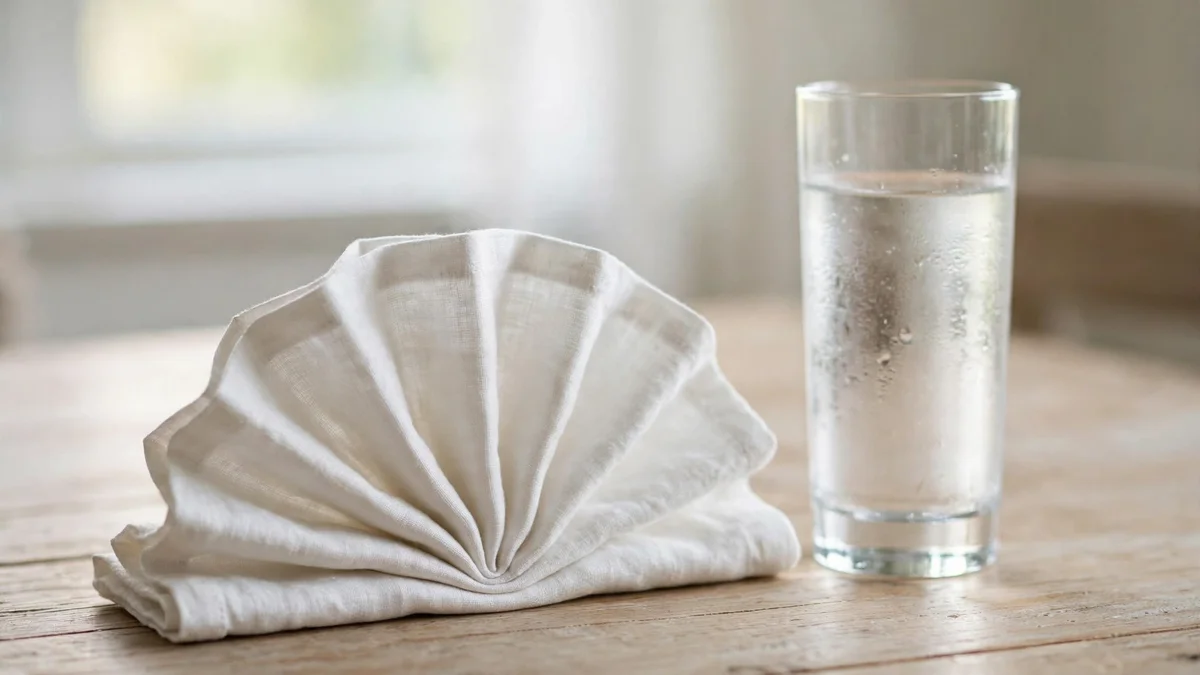
The fan is the fold for guests, and it stands up on the plate like a small sail. Lay the napkin flat and fold it in narrow pleats, about two fingers wide, from one edge to the other, turning it over after each fold so the pleats stack evenly.
Fold the strip in half, so the pleats open upward, and tuck the folded end into a glass, or set it on the plate with the pleats fanned out.
A fan fold works best in linen, which holds its shape, and in a napkin that has been ironed first. Practise once before the guests arrive, and the second try will be neater.

The Pocket Fold for Cutlery
The pocket fold turns a napkin into a small holder for a fork and knife. Lay the napkin flat, fold it in half, then fold it in half again, so it is a small square. Turn the square so one corner points up, and fold the top layer down, making a pocket across the front.
Slide the fork into the pocket, with the handle pointing down, and lay the knife beside it. The fold should hold the cutlery upright, not let it slide out when the plate is carried.
A pocket fold suits a tray, a picnic and a buffet, where cutlery needs to travel with the plate. Use a napkin that is big enough: a small one makes a pocket too tight for a fork.
Napkin at a Glance
| Rectangle for weekdays | Fan for guests | Pocket holds cutlery |
|---|---|---|
| Linen holds shape | Cotton stays soft | Paper suits picnics |
| Fold on flat table | Press folds firmly | Wash after each meal |
| One cloth, one place | Glass holds fan | Tray carries pocket |
Water and a Table Setting
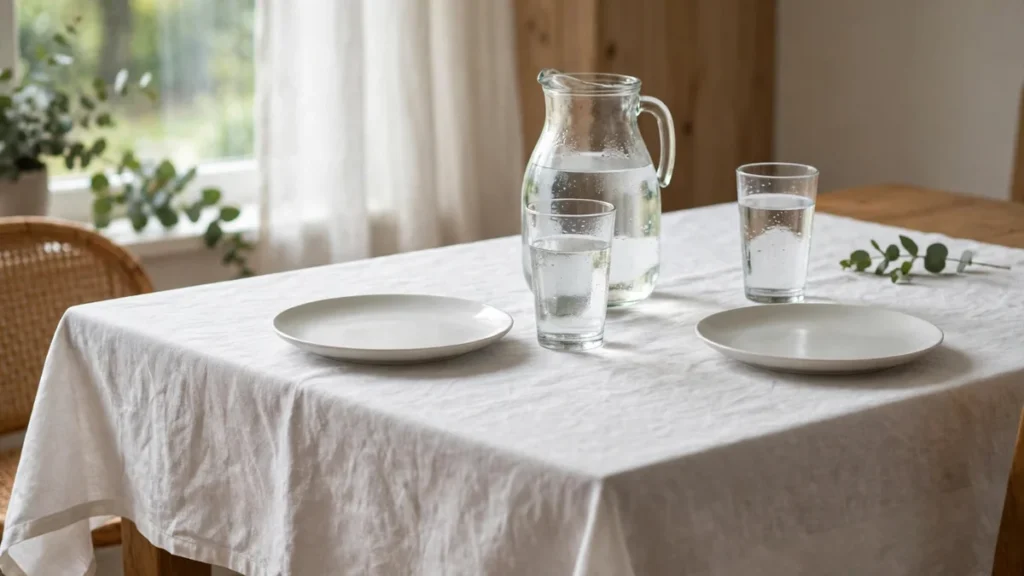
Water and a table setting: top tips for fresh days lays out a whole place before a meal: plate, cutlery, napkin and glass, each in its set spot, with a jug of water in the middle of the table. That guide is about order across a table, where every object has a position and the meal begins with water first.
This guide looks closer, at one object in that setting: the napkin itself. The table setting guide tells you where the napkin goes; this guide tells you how to fold it and wash it. One guide sets the table, the other folds the cloth.
Water and a Tea Towel
Water and a tea towel: a simple drying guide dries glasses until they shine, and it draws a clear line: a tea towel is for drying dishes, thick and handy in the kitchen, while a napkin is small and made for the table. The tea towel lives by the sink, and the napkin lives by the plate.
The two cloths should never be swapped. A tea towel is larger, rougher and often damp from the dishes, while a napkin is clean, dry and folded for one person.
Water and Dinner Parties
Water and dinner parties: a simple fresh guide sets a plain table for guests: clean glasses, plain plates, a jug of water, and a folded linen napkin with a small vase of flowers. That guide is about the whole evening, the food and the company, with the napkin as one small part of a welcoming table.
This guide gives that napkin its own attention. A dinner party napkin should be linen, freshly ironed, folded into a fan or a pocket, and laid before the guests sit down.
Nine Neighbours in This Batch
Nine other guides stand beside the napkin in this batch. The brookite guide keeps a warm red stone for bold days, the ajoite guide asks if a soft blue stone suits calm days, and the apron guide keeps a kitchen apron clean. The fern guide waters fresh fronds, the sand dollar guide keeps a clear white shell, and the succulent guide gives a small plant a little water.
The apache tear guide studies a deep black stone, the tablecloth guide lays a cloth over the whole table, and the siderite guide explains a soft brown stone before you buy it. The napkin sits among them as the smallest cloth in the batch, folded for one place.
Water and a Tablecloth: Napkin or Tablecloth?
A tablecloth and a napkin are easy to confuse, because both are cloths on a table, but they are different in size, in place and in job. A tablecloth covers the whole table, spread across its top from edge to edge, and it belongs to the table itself.
A napkin is the small folded cloth for each place, laid on a plate or beside a fork, and it belongs to one person at that place, for wiping hands and lips. The tablecloth is shared by everyone at the meal; the napkin is used by one person only.
So the distinction is plain: a tablecloth is the big cloth under everything, and a napkin is the small cloth at one seat.
Stones That Must Never Touch Water
A table holds more than cloth, and some stones that sit on a shelf near the table must never go near a drink. Apatite softens and crumbles when it stays wet, so it is kept on a dry shelf far from every jug. Lepidolite carries lithium in its pale flakes, and that is reason enough to keep it away from glasses and soaks.
Pyrite darkens in damp air and leaves rusty marks, while angelite drinks water in and loses its smooth face. Amber is old tree resin, and a soak turns it milky, a change that never clears.

Your Napkin Checklist
- Pick a clean napkin for each place, linen for guests and cotton for weekdays.
- Fold it on a flat table, pressing each fold with your palm.
- Set one napkin per place, on the plate or beside the fork.
- Wash cloth napkins after the meal, dry them flat, and iron lightly.
- Keep paper napkins in a drawer for picnics and busy days.
- If a cloth irritates your skin, stop using it and ask a doctor — a napkin is a household cloth, not a cure.

Frequently Asked Questions
When should I fold a napkin?
Fold a napkin just before the meal, after the plates are set, so the folds stay crisp and the cloth does not pick up dust while it waits on the table.
Which napkin fold is best for everyday meals?
The plain rectangle is best for everyday meals, because it takes ten seconds, sits flat on the plate, and never falls over when the plate is carried.
Can I wash linen napkins in the washing machine?
Yes, linen napkins wash well in a machine on a gentle cycle with plain detergent, and they grow softer with every wash.
Should a napkin go on the plate or beside it?
Either place works, and the choice is yours: on the plate suits a fan or a rectangle, while beside the fork suits a pocket fold that holds cutlery.
How do I keep white napkins from turning grey?
Wash white napkins on their own, in warm water with plain detergent, and dry them in daylight.
Can I use a paper napkin at a dinner party?
You can, though linen looks better at a dinner party, and thick paper in a plain colour is a fair choice when washing cloth feels like too much.

The Bottom Line
Water and a napkin work together when the cloth is clean, the fold is simple, and one napkin waits at each place before the meal begins.
A Note for Fresh Tables
A white fan beside a glass of water, a blue rectangle on a wooden table, a pocket holding a fork — that is all a napkin needs to do.