
A tablecloth is the first thing a table wears in the morning and the last thing taken off at night. One piece of cloth changes bare wood into a place where people sit down together, and it does that work quietly, asking for nothing more than a wash now and then.
Most tablecloths fail in small ways: bought too short, so the corners pull up, or too long, so they catch on chairs, or washed with the wrong soap until they turn stiff.
This guide covers the cloth itself: its fabric, its measure, how to lay it flat, how to keep water near it without soaking it, and how to wash it so it lasts. It is gentle general information about a household cloth, and it promises nothing for health.
Key Takeaways
- A tablecloth is one cloth that covers the whole table, edge to edge.
- Measure the table first, then buy the cloth, never the other way round.
- Linen and cotton wash well and dry soft; wipe-clean cloths suit busy days.
- Water belongs in jugs and glasses on top of the cloth, never poured on it.
- A tablecloth is a household habit, not a remedy for anything.
What a Tablecloth Is
A tablecloth is a single piece of fabric laid over a dining table, long enough to hang a little over every edge. It protects the wood below from plates, glasses and spills, and it gives the table a clean, finished look.
The cloth is not a runner, which is a narrow strip down the middle, and it is not a placemat, which sits under one plate only. A tablecloth covers everything at once: the middle, the edges and the corners, so the whole table shares one surface.
Choosing the Cloth
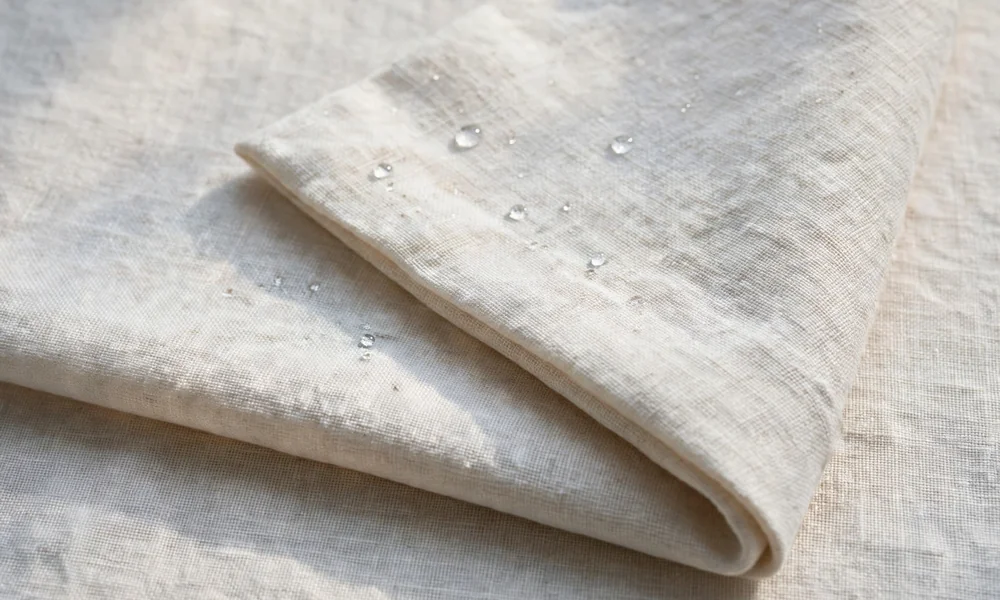
Linen is the classic choice: cool in the hand, softer with every wash, falling in loose folds that suit a dining room. It creases and costs more than cotton, but a good linen cloth can last for years.
Cotton is the everyday choice: it washes easily, dries quickly, irons flat, and comes in every colour a kitchen could want. It suits a table used three times a day and washed often.
Measuring the Table
Measure before you shop, with a tape and a pencil: the length from one end to the other, then the width from one side to the other, and write both numbers down. Round tables need one number only, the diameter across the middle.
Add the drop to both sides: fifteen to twenty centimetres on each side suits an everyday table, a neat overhang that does not catch on chairs. For a special meal, thirty centimetres looks grander.
Laying It Flat, Step by Step
Start with a clean, dry table: wipe it down, let it dry, and shake the cloth out fully before you lift it over. A cloth laid while the table is still damp will cling and crease.
Stand at one end and let the cloth fall over the middle first, then walk round and ease each side down in turn. Smooth it with the flat of your hand from the centre outward, and straighten the corners last so the overhang matches on all four sides.
Water First at the Table
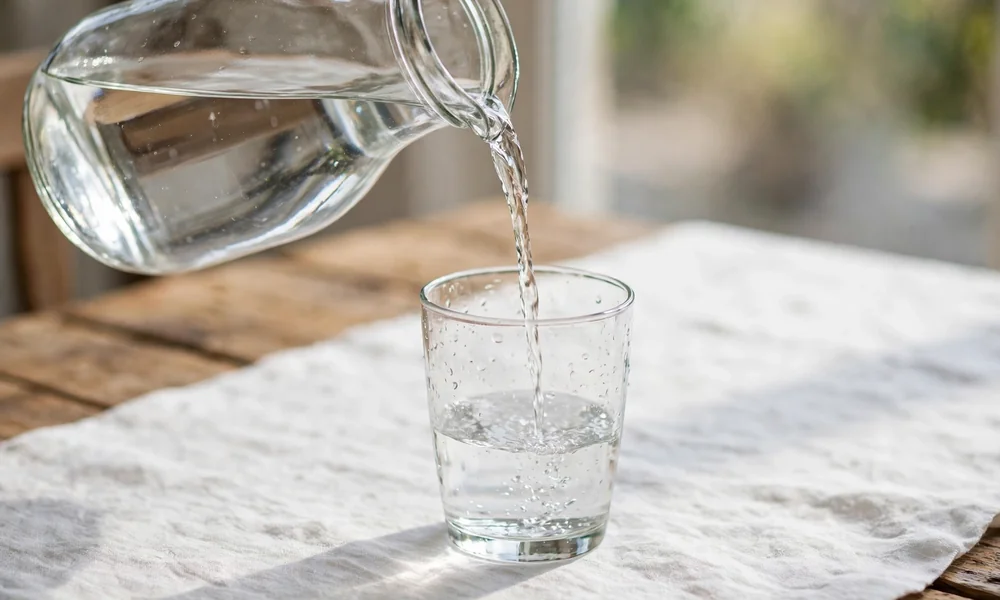
At a clothed table, pour the water before anything else arrives. Take a jug of your usual drinking water, put it in the middle on a small mat or a folded towel, and fill a glass at every place before the food comes out.
A cold jug sweats, so set it on a mat: a folded towel, a cork mat or a small wooden tray all catch the drips, and the cloth stays dry underneath. Glasses sweat too, so give each one a coaster or a folded napkin.
Tablecloth at a Glance
| One cloth covers all | Measure table first | Water in jugs |
|---|---|---|
| Linen softens slowly | Cotton washes easily | Wipe-clean suits children |
| Drop fifteen centimetres | Smooth centre outward | Blot spills fast |
| Wash weekly, dry flat | Store folded, not stuffed | Fresh table, calm meal |
Water and a Table Setting
Water and a table setting sets one place for each person, putting the plate down first and then the cutlery, the folded napkin and the glass around it, each in the same spot every time. It is a guide to order, and it puts the water down before anything else.
This guide is different because it is about the cloth underneath all of that. The table setting guide assumes the cloth is already there, smooth and clean, and never says how to choose it or wash it. Here the cloth is the subject.
Water and Dinner Parties
Water and dinner parties is about friends gathered around a meal, plates moving hand to hand, candles lit low, and talk that carries on after the dishes are cleared. It is about the meal and the company, not the cloth.
A tablecloth suits a dinner party well, because it makes the table look cared for before anyone arrives, and it catches the drips from a jug passed hand to hand. Choose the best cloth for the evening, the one without stains, and lay it an hour early so it settles flat.
Water and a Fruit Bowl
Water and a fruit bowl keeps whole fruit in a bowl on the table through the day, a glass of water beside it, ready whenever someone wants a piece. Nothing in it is chopped or timed.
A tablecloth is different: it is spread for a meal and folded away after, while the bowl stays out all day. The bowl is one dish; the cloth is the ground under every plate, glass and fork. Set the bowl in the middle of a clothed table and it becomes the centrepiece.
Tablecloth or Napkin
A tablecloth and a napkin are often confused, because both are cloths and both sit on the table, but they do different jobs. The difference is size and place, and it is worth stating plainly.
A tablecloth covers the whole table. It is one large cloth, laid over the entire surface, hanging a little over every edge, and it stays in place for the whole meal, underneath every plate, glass and dish. It dresses the table itself.
A napkin is the small folded cloth for each place. It is one per person, folded into a rectangle and set on the plate or beside the fork, and it is picked up and used during the meal, then folded away. The napkin serves the person; the tablecloth serves the table.
Nine Neighbours in This Batch
Nine other guides stand beside the tablecloth in this batch, and each one takes water or a stone somewhere different. The succulent guide gives a little water to a small plant, the sand dollar guide keeps a pale shell for calm days, and the fern guide tends fresh fronds with a gentle hand.
The siderite guide weighs a soft brown stone worth knowing before you buy one, the napkin guide folds one small cloth for each person's place, and the brookite guide offers tips for steady days with a warm red stone. The ajoite guide asks if a soft blue stone suits calm days at home, the apron guide keeps a kitchen apron clean, and the apache tear guide studies a deep black stone.
Stones That Must Never Touch Water
A dining table is a good place for a stone to sit beside a glass, and a bad place for one to swim in. Amber is old tree resin, not a true stone at all, and a soak leaves it cloudy, its warm glow gone milky and dull for good.
Pyrite, bright as fool's gold when dry, goes flat and grey after a wet afternoon, and the shine never quite comes back. Angelite takes water in and swells, so its smooth face turns rough and pitted, and a piece left in a glass can crack as it dries.
Apatite fades when it stays damp, its polished surface turning tired and matte, and lepidolite carries lithium in its pale flakes, so it stays far from every jug, glass and damp cloth. Keep each of these on a dry shelf.
Your Tablecloth Checklist
- Measure the table and write the numbers down before you shop.
- Choose linen for slow meals, cotton for every day, wipe-clean for children.
- Lay the cloth on a dry table and smooth it from the centre outward.
- Set the jug on a mat and give every glass a coaster.
- Blot spills at once, pressing down, never rubbing.
- Wash weekly, dry flat, and if the cloth or your skin gives you trouble, ask a laundry worker or a doctor — a cloth is a household thing, not a cure.

Frequently Asked Questions
How often should I wash a tablecloth?
Wash a tablecloth once a week if the table is used every day, and straight after any meal where food or drink has spilled on it. A clean cloth smells fresh and lays flat.
Can I put a tablecloth in the washing machine?
Yes, most cotton and linen tablecloths wash well in a machine on a gentle cycle with mild soap. Check the label first, and take it out while it is still a little damp so it dries flat.
How do I remove a red wine stain from a tablecloth?
Blot the stain at once with a dry cloth, then cover it with salt or baking soda to draw the wine out, and wash the cloth as soon as you can. Never rub the stain, and never pour hot water on it, since heat sets it.
Should the tablecloth match the napkins?
It does not have to match, but it should sit well together. A plain white cloth suits coloured napkins, and a patterned cloth suits plain napkins, so one of the two stays quiet while the other speaks.
Where should the water jug sit on a clothed table?
Set the jug in the middle of the table on a mat or a folded towel, where everyone can reach it without standing. The mat catches the drips, so the cloth below stays dry.
Can I use a tablecloth on a round table?
Yes, a round cloth suits a round table best, measured by the diameter with the same drop on all sides. A square cloth can work too, its corners hanging down in four points.
The Bottom Line
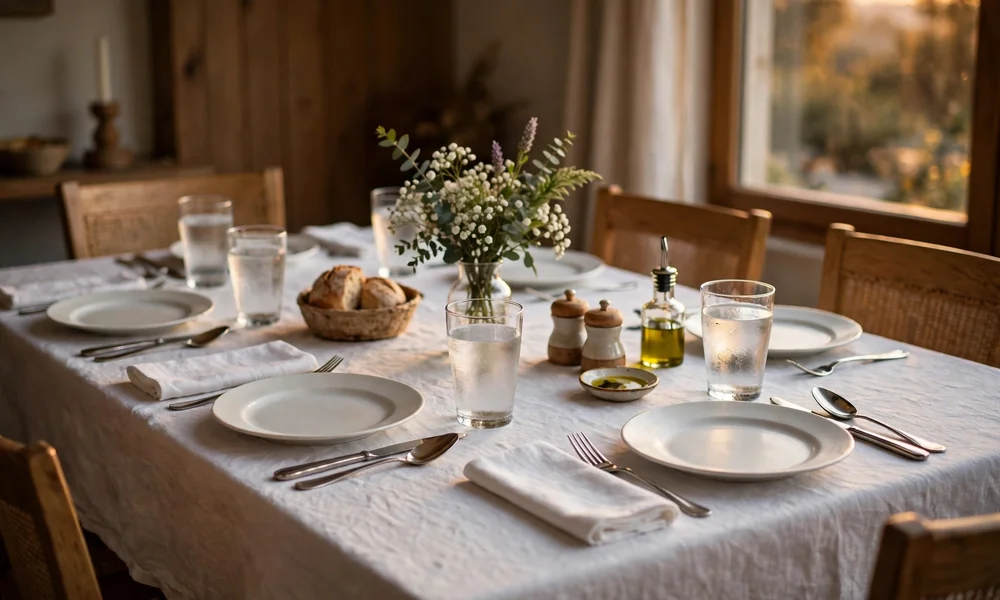
Water and a tablecloth work together when the cloth fits the table, the water stays in jugs and glasses on mats, and the cloth is washed often enough to stay fresh.
A Note for Quiet Corners
A white cloth in the morning light, a jug of water in the middle, plates waiting for the meal — that is all a table needs to feel ready.


