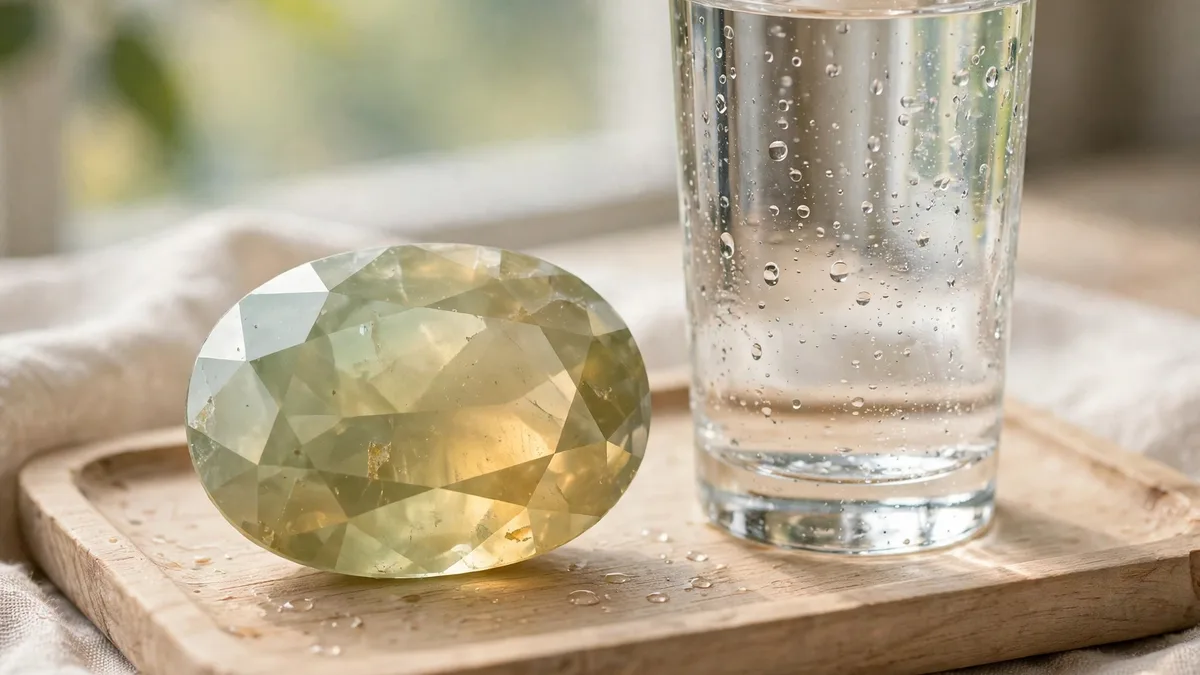
Some stones keep one colour all day, and some refuse to settle. Zultanite belongs to the second group. Carry it from a bright window to a warm lamp and the pale green-gold softens into a blush of pink, as though the gem were answering the light. The change is gentle, and it suits bright days, when daylight moves and every hour looks a little different.
Zultanite is the gem name for diaspore, a mineral found in the mountains of southwestern Turkey. In daylight it often shows a soft green with a hint of gold, and under warm indoor light it leans toward champagne pink. A cut piece feels cool and smooth, with a clear shine. It is a stone for looking at and holding, and it will not heal anything or change your luck.
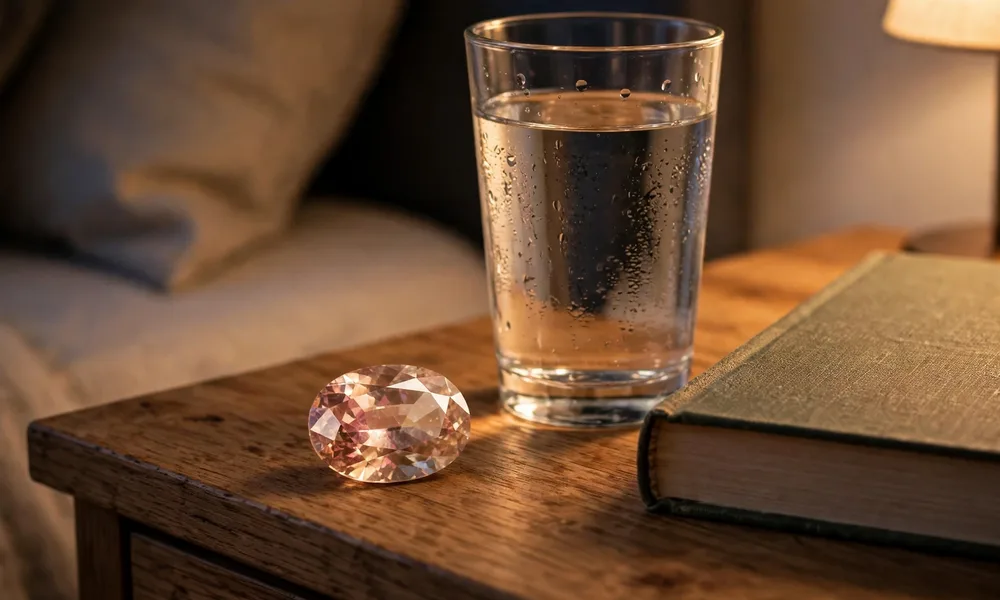
Your water stays in its own glass, set apart from the gem, and the stone stays dry on its tray.
Key Takeaways
- Zultanite is colour-change diaspore from Turkey, pale green-gold by day and warm pink under lamplight.
- Its soft shift suits bright days, when daylight moves across the room.
- It differs from colour change sapphire, alexandrite and colour change garnet.
- The stone is for looking at only, and it will not heal anything.
- Keep the water in its own glass, apart from the stone.
What Zultanite Is
Zultanite is the trade name for gem-quality diaspore, a mineral made of aluminium hydroxide from the bauxite-rich hills of the Anatolian mountains in Turkey. Miners work one deposit there, and the rough runs from pale green to soft gold. A cutter shapes it into a faceted oval or a smooth pebble with a clear, watery shine.
Gem pieces with a strong colour change are uncommon, and most fine material comes from that one Turkish source. Ask a seller where the stone was mined, and a straight answer about Turkey is a good sign.
How the Soft Shift Works
The shift works because tiny traces of chromium and iron inside the crystal take in some colours of light while letting others pass. Daylight carries blue and green, so the stone sends green and gold back to your eye. A warm lamp carries more red and yellow, so the same crystal sends back a soft pink instead. Nothing inside the stone has moved; the light has changed, and the gem simply replies to it.
To see it best, hold the piece by a bright window, then carry it to a warm lamp. A fine zultanite moves clearly from green-gold to champagne pink, without needing a dark room or a strong bulb. A weak changer barely moves, and a muddy brown tone marks a poor piece.
Picking a Zultanite Piece
Choose a zultanite piece in two kinds of light, never one alone. By the window, look for a fresh green-gold tone, clear, with no dull patches or rough pits. Then step to a warm lamp and watch for the pink; the best pieces turn soft champagne rose, not flat brown.
Look at the cut as well as the colour. A well-cut oval has even facets and a steady shine, while a lopsided cut leaves one side dull. Ask the seller about the Turkish source and whether the stone has been treated, and choose one who answers plainly.
A Bright Day with Zultanite
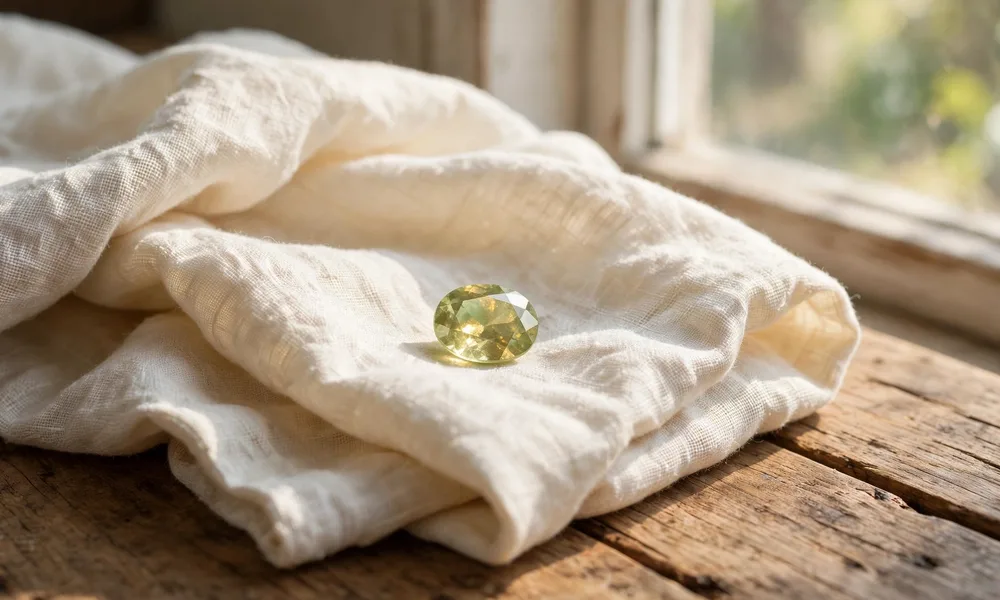
A bright day with zultanite asks for very little. Lay a pale cloth on the side table, rest the stone at one end, and stand a glass of water at the other. Drink the water slowly while the stone catches the morning sun, and watch the colour drift.
Midday is the stone's best hour, when the sun is high and the green-gold looks freshest. Later, as the lamps come on, the pink arrives, and the same piece looks like a different gem by evening. One stone, one glass, and an unhurried day are enough.
Zultanite Beside Water
A glass of water and a zultanite gem look lovely sharing a tray, yet the two should never meet. Put the drink at one end and the gem at the other, with bare cloth between them. The gem must never slip into a glass, a jug, or a bath, and water must never be tipped across its face.
Wash your hands after handling the stone, before lifting your glass. A soft, dry cloth is all the cleaning it needs, and soap or polish can dull its shine. Keep the tray away from taps and kettles, and beyond the reach of young children.
Zultanite at a Glance
| Green-gold days | Bright tray | Dry hands |
|---|---|---|
| Warm pink lamps | Slow mornings | Glass apart |
| Smooth and cool | Open windows | Never in drinks |
| Turkish diaspore | One tray | Dust weekly |
| Soft shift | Tidy shelf | Never soak |
Zultanite and Colour Change Sapphire
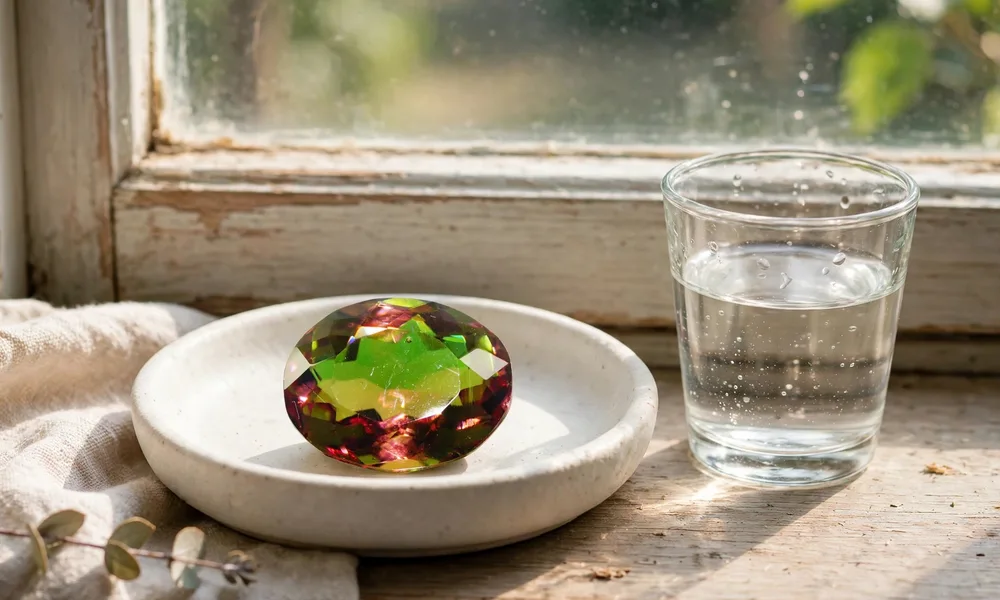
Colour change sapphire for special evenings is the closest cousin to zultanite in this journal, and the two share a habit: both drift from one colour to another as the light changes. The sapphire often shows soft blue-green in daylight and turns toward violet under a warm lamp, suiting the evening, when lamps glow low.
Zultanite is a different mineral, diaspore from Turkey rather than sapphire, and its colours are warmer. Where the sapphire moves from blue-green to violet, zultanite moves from green-gold to champagne pink, and where the sapphire belongs to special evenings, zultanite belongs to bright days. The sapphire is a hard, dense corundum, while zultanite is softer, so it needs gentler handling.
Zultanite and Alexandrite
Alexandrite for special evenings is the most famous colour-change stone of all, and its change is bolder than zultanite's. It is a chrysoberyl turning from fresh green in daylight to warm red under lamplight, a strong swing prized for generations.
Zultanite's shift is softer and quieter. Its daylight green carries gold rather than a leaf green, and its lamplight colour is a pale champagne pink rather than a deep red, so the change feels like a slow warming. Alexandrite is much harder, while zultanite scratches easily, so keep it apart from harder gems and never toss it into a pouch with keys.
Zultanite and Colour Change Garnet
Colour change garnet for special days is the third colour-change stone in this journal, and it shares zultanite's gentle pace. The garnet shows leafy green by day and warms toward soft red under lamps, suiting birthdays and small celebrations.
Zultanite differs in family and colour. The garnet is a dense silicate, while zultanite is diaspore from a single Turkish deposit. The garnet's daylight green is leafy and plain, while zultanite's carries gold, and the garnet's lamplight red is rosy, while zultanite's is a pale champagne pink. Both shift softly, but neither stands in for the other.
Other Stones in This Batch
This batch holds four more new stones, each easy to tell apart from zultanite. Trapiche emerald is fresh green with a dark star pattern zultanite never shows. Datolite is soft yellow and steady, with no shift at all. Euclase is soft blue and even, and chrome chalcedony is fresh green chalcedony, plain and steady where zultanite changes.
None of the four changes colour with the light, and none comes from the Turkish diaspore deposit. Zultanite is the only stone in this batch that drifts from green-gold to pink as the day moves on.
Keeping Zultanite at Home
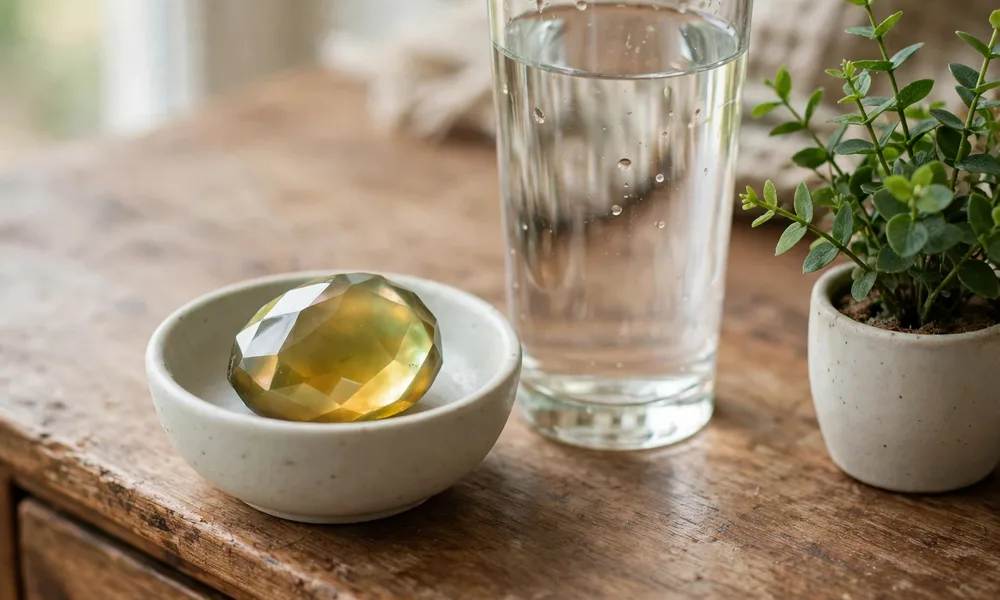
Give zultanite a bright, tidy corner where morning sun can reach it. The top of a chest of drawers works well, as does a clear patch on a desk or a shelf near the window, if the gem sits in plain view and nothing can knock it over. A small dish stops it rolling, and a tray holds the glass apart.
Wipe it once a week with a clean, dry cloth, and leave soap and polish in the cupboard. Between displays, rest it alone in a little cotton pouch, far from keys, coins, and harder gems that might mark it. Zultanite is softer than sapphire and alexandrite, so a gentle home suits it best.
Stones That Belong Nowhere Near Water
Not every pretty stone is safe near a drink. Green malachite holds copper compounds in its bands, and copper has no place in anything you swallow, so malachite stays on the shelf, far from glasses. Hematite is another to keep out of drinking water, while pyrite can rust and stain in damp air.
Lepidolite carries lithium, so it stays dry, and the same goes for apatite beside it. Angelite softens and wears away in water, while amber, which began as tree resin, turns cloudy after a soak. None of them belongs near food or drink. Treat zultanite the same: set it next to the glass, never in it.
Your Bright Days Checklist
- Set the gem on dry cloth, with the glass apart.
- Sip the water slowly, without rushing the moment.
- Move the gem toward the lamp and see the pink.
- Put the gem back on its tray, then wash up.
- Pick a seller who names the Turkish source plainly.
- For any health worry, speak to your own doctor.
Frequently Asked Questions
What is zultanite?
Zultanite is the gem name for colour-change diaspore from southwestern Turkey. In daylight it looks pale green-gold, and under warm lamplight it turns soft champagne pink.
Where does zultanite come from?
Zultanite comes from one deposit in the Anatolian mountains of Turkey, where diaspore grows in bauxite-rich rock. Fine pieces with a clear colour change are uncommon.
How is zultanite different from colour change sapphire?
Colour change sapphire is a corundum moving from blue-green to violet, made for special evenings. Zultanite is Turkish diaspore, moving from green-gold to champagne pink, made for bright days.
How is zultanite different from alexandrite?
Alexandrite is a chrysoberyl swinging boldly from green to red, while zultanite shifts softly from green-gold to pale pink. Alexandrite is harder, so zultanite needs gentler handling.
Is zultanite safe to hold?
Holding a small polished piece for a short while suits most people. Set it down when you finish, wash your hands, and put it somewhere out of reach of small children.
Where should I keep zultanite at home?
A dry ledge in sunlight, a corner of the desk, or a dish on the drawers all work. Keep the gem away from the glass, and out of damp rooms.
The Bottom Line
Zultanite fits bright days: green-gold warming to pink in lamplight, a full glass waiting nearby, and the gem kept dry.
A Note for Bright Days
Green-gold by day, pink by lamplight — a bright day asks for nothing more.