Evenings have their own kind of light. The lamps come on, the sky outside turns a deep blue, and the room feels quieter than it did at noon. A special evening asks for something a little different from the day: a nicer dress, a favourite meal, and one small beautiful thing to look at while the hours pass slowly.
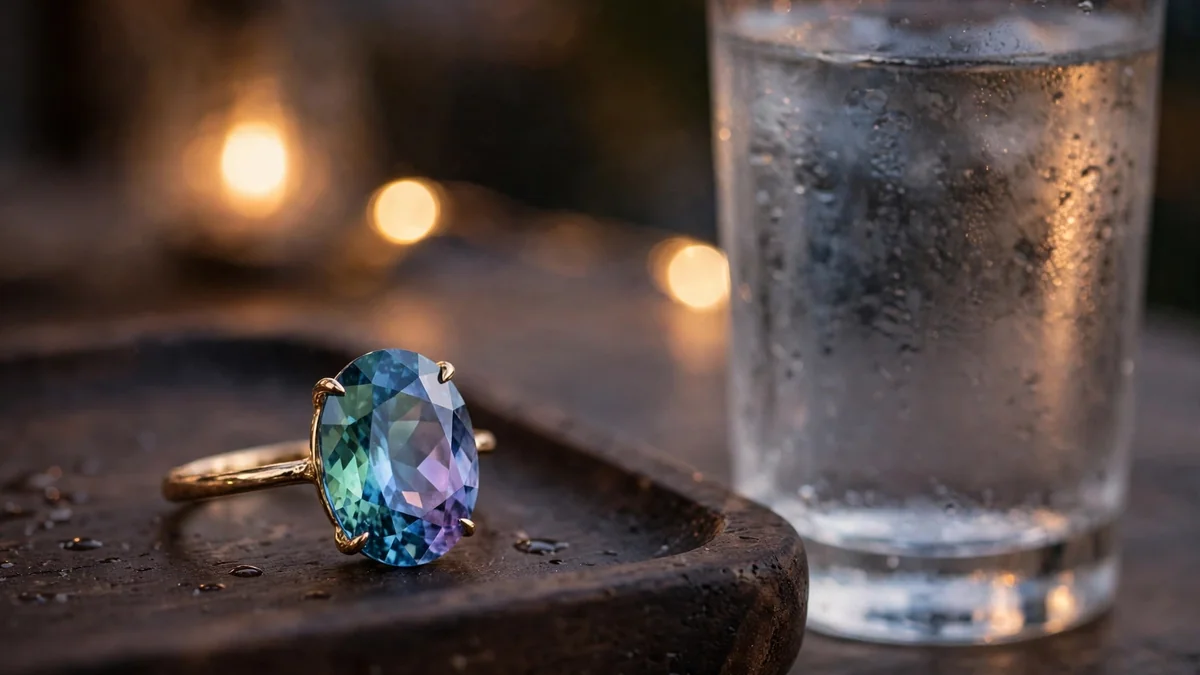
Colour change sapphire fits that hour. In daylight it often shows a soft blue-green, and under warm lamplight it drifts toward violet. The stone never sits still, and that slow shift is the whole pleasure of it.
What follows looks closely at this shifting sapphire: why its colour moves, how it differs from the sapphires that keep one steady shade, how to pick a piece worth keeping, and how to spend a special evening with it near water. It is a pretty object for looking, and it cannot alter health.
Key Takeaways
- Colour change sapphire shifts colour as the light around it changes.
- In daylight it often looks blue-green, and in lamplight it turns violet.
- It differs from every steady-colour sapphire and from alexandrite, a different mineral.
- Colour change sapphire is for display only: beside water, never inside it.
- One shifting stone on a dry tray is enough for a special evening.
What Colour Change Sapphire Is
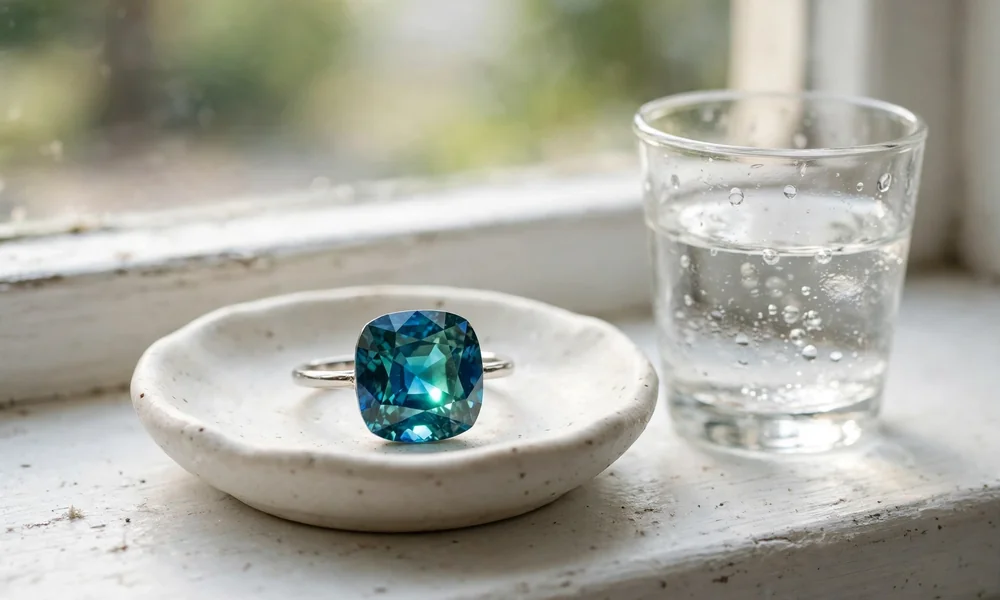
Colour change sapphire is a sapphire that refuses to settle on one colour. Most sapphires hold a single shade all day long, but this one answers the light around it. Step from a bright window into a lamplit room and the blue-green softens, then warms into violet, purple, or a smoky mauve.
The shift comes from tiny traces of vanadium and chromium inside the stone, which bend the light differently under different lamps. Daylight pulls out the green and blue; a warm bulb pulls out the violet. Neither colour is a trick, and neither is the "real" one: both belong to the stone.
Good pieces show the change clearly, without needing a strong lamp or a dark room. A weak shift, visible only if you squint, marks a poor piece.
Why Its Soft Shift Suits Special Evenings
A special evening moves through different lights of its own. Guests arrive in the last daylight, candles are lit at dinner, and lamps glow low as the night goes on. A stone that changes with those lights feels made for the occasion.
The shift is gentle, never sudden. It does not flash or glitter hard; it drifts, the way the sky drifts from blue to violet at dusk, giving the eye something quiet to follow.
There is also a small delight in showing it to someone else. Hold the stone near the window, then carry it toward the lamp, and watch the colour turn in your hand.
Choosing a Colour Change Sapphire
Look for a stone where both colours are pleasant on their own. Some pieces turn muddy brown under lamplight, and those are best left behind. The daylight colour should be a clear blue-green or soft teal, and the lamplight colour a clean violet or purple, with no grey washing either one out.
Size matters less than the strength of the shift. A small stone with a bold change beats a large stone that barely moves, so check it under a window first, then under a warm lamp.
Ask the seller to name the stone plainly as colour change sapphire, and to show you the shift in both lights before you pay. A seller who hides the lamp test is a seller to walk away from.
A Special Evening with Colour Change Sapphire
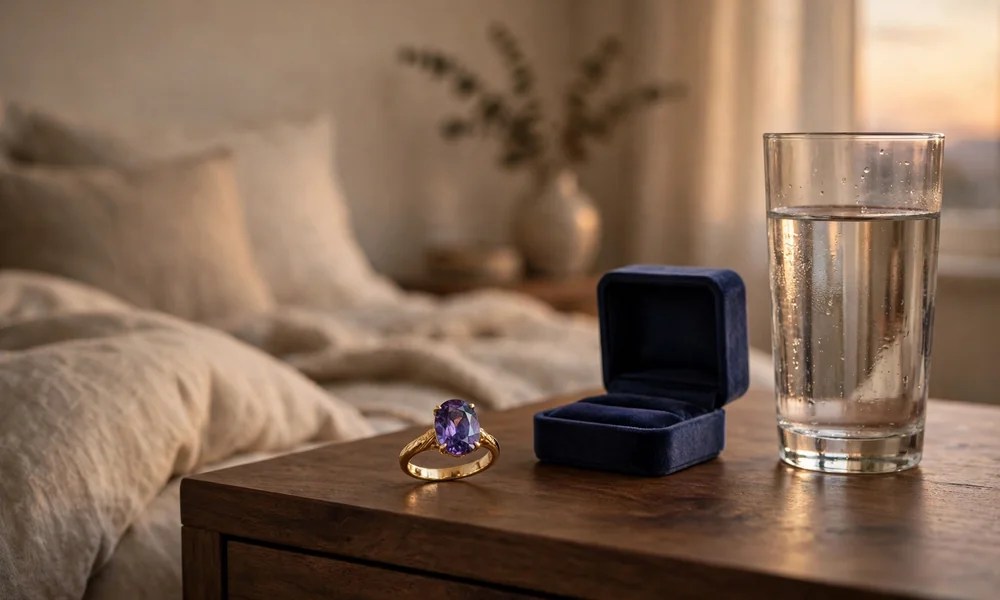
Begin by setting the sapphire on a dark tray near the lamp, a tall glass of cool water standing a hand's width away. Drink the water slowly and take one unhurried breath before the evening's first guest arrives.
Carry the tray to the window for a moment, then back to the lamp, and watch the colour turn from blue-green to violet and back again. The stone works no wonders; the evening is yours, and the soft shift only marks it.
Colour Change Sapphire Beside Water
Sapphire and water belong on one tray, together, and that tray marks the nearest they ever come. Set the glass at the far edge and the stone at the near edge, leaving space between them so the gem stays dry while the drink stays pure. One stray splash dabbed off right away is harmless, yet the sapphire must never rest in a soak.
Rinse your hands after handling the stone, store it far from meals and from little children, and never let it fall into a glass, jug, or bath.
Colour Change Sapphire at a Glance
| Shifts with light | Special evenings | Display only |
|---|---|---|
| Blue-green, then violet | Tray, lamp, window | Wash hands after |
| Vanadium, chromium inside | Dusk, candles, low lamps | Never in water |
| Small stone, bold shift | Slow hours, kind guests | Dry cloth wipe |
Colour Change Sapphire and Blue Sapphire
Blue sapphire is the best-known sapphire of all, and it makes a useful contrast with the shifting stone. Blue sapphire for calm days covers a deep blue stone, steady and rich as a clear night sky.
Both are sapphires, yet their moods part ways entirely. Blue sapphire keeps one deep colour from morning to night, while colour change sapphire trades its blue-green for violet as the lamps come on.
Colour Change Sapphire and Star Sapphire
Star sapphire carries its own quiet magic, and it sits close to the shifting stone in spirit. Star sapphire for quiet evenings covers a soft blue stone with a star of light that moves across its face.
The two stones change in different ways. A star sapphire shows a bright star that glides as the stone turns, while its blue stays put; a colour change sapphire shows no star at all, but its whole colour turns as the light changes.
Colour Change Sapphire and Alexandrite
Alexandrite is the stone most people think of when they hear "colour change", and the comparison matters. Alexandrite for special evenings covers a stone that shifts from green in daylight to red in lamplight.
Alexandrite is not a sapphire at all. It is colour-change chrysoberyl, a different mineral, and its shift runs green to red, far bolder than the sapphire's blue-green to violet. Colour change sapphire is the gentler cousin, with a softer, quieter turn.
Colour Change Sapphire and the Other Sapphires
Beyond the nearest neighbours, the sapphire family keeps more colour still. White sapphire is clear and bright, like clean glass in sunlight, and pink sapphire holds a soft rose. Yellow sapphire is warm as late afternoon sun, while orange sapphire is deeper, like apricot at dusk.
Green sapphire stays a calm leaf green, purple sapphire a soft violet that never moves, and padparadscha a tender peach-pink. None of them shifts with the light: colour change sapphire alone does that, which is why it earns its own guide for special evenings. Colour change garnet, a separate stone with its own guide, shifts too, but it is a garnet, not a sapphire.

Caring for Colour Change Sapphire
A colour change sapphire is tough, yet it still deserves careful handling. Rest it somewhere dry and shaded at home, inside a small box padded with soft fabric, or on a shelf where nothing weighty can tumble onto it. Do not ever toss it loose into a pocket beside keys or coins.
Wipe it with a dry cloth, using gentle strokes that follow the setting instead of pressing down. Avoid soap, sprays, and polishing creams, and never hold the stone beneath a running tap.
Stones That Must Never Touch Water
Certain stones must always stay away from drinking water altogether, so hold these names in memory each time you lay out a tray. Malachite leads the list: it must never enter a cup, a jug, or a glass. Hematite sits beside it there, kept far from any plain drink, even for a moment.
Apatite and lepidolite call for the same care, and lepidolite carries lithium inside its pale flakes. Pyrite, angelite, and amber belong far from glasses and soaking bowls too, kept dry. Colour change sapphire is tougher, yet the rule still holds: the stone stays dry next to the glass.
Your Special Evenings Checklist
- Set the sapphire on a dark tray, a full glass of water close by.
- Carry it from window light to lamplight and watch it turn.
- Rinse your hands with soap once you set the stone down.
- Buy from a seller who shows the shift in both lights.
- Keep the stone dry, away from little hands and away from food.
- When a health worry will not leave you, see a doctor; a stone holds no answers.
Frequently Asked Questions
What is colour change sapphire?
Colour change sapphire is a sapphire that shows one colour in daylight and another under warm lamplight, often blue-green by a window and violet near a lamp. Tiny traces of vanadium and chromium bend the light differently as it changes.
How is colour change sapphire different from blue sapphire?
Blue sapphire keeps one deep blue colour all day, from morning to night, while colour change sapphire trades its blue-green for violet when the lamps come on. Both are sapphires, but only one of them shifts.
Is colour change sapphire the same as alexandrite?
No, although both stones change colour. Alexandrite is colour-change chrysoberyl, a different mineral that shifts from green to red, while colour change sapphire is a true sapphire that shifts from blue-green to violet.
Is colour change sapphire safe to hold?
A brief look in the hand is fine, as long as you wash your hands with soap after you put it back and keep it far from little ones and meals. Lift it gently and set it down softly, since a hard knock can chip the edges.
Why must colour change sapphire never go in water?
Set this stone beside your glass, and let the water stay in the glass on its own. Do not drop it into a cup, do not leave it in a bath, and do not swirl it through a drink; should a drop land on it, dab it dry at once.
Where should I keep colour change sapphire at home?
Pick a dry, shaded spot for it, maybe a dark tray, a quiet shelf, or a bedside table, with a glass of water standing close by yet apart, well beyond the reach of small children.
The Bottom Line
Colour change sapphire lends special evenings a quiet turn of colour: blue-green by the window, violet by the lamp, resting on a dark tray beside a tall glass of water, admired and never tasted.
A Note for Special Evenings
Let the lamps stay low and the stone stay dry. One shifting sapphire, one glass of water, and a few slow hours are all an evening needs.