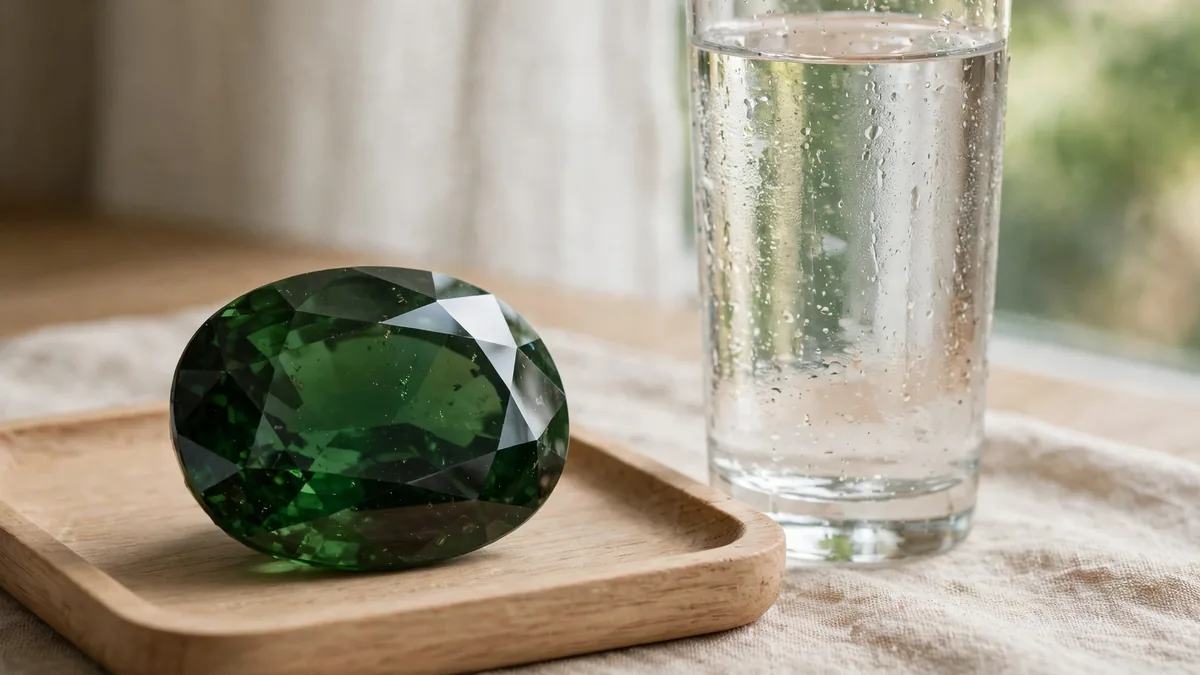
Some days ask for a little ceremony. A birthday lunch, a small anniversary, a graduation tea: the table is laid with care, the glasses are polished, and everyone arrives a touch smarter than usual.
A colour change garnet gives a table exactly that kind of quiet surprise. In daylight it shows a leafy green, and when the lamps come on in the evening it warms toward a soft red, as if the stone itself were dressing for the occasion. One gem, two moods, and no fuss at all.
This guide looks at what the stone is, why its colour moves, how to pick a good piece, and how to set it out for a special day with a glass of water close by. It is a lovely object to admire, and nothing in this guide suggests it can improve health or change luck.
Key Takeaways
- Colour change garnet shifts colour with light, green by day and warm red by lamplight.
- The shift is gentle, so look for it by moving between daylight and a warm lamp.
- Colour change garnet differs from alexandrite, the other famous colour-change stone.
- Star garnet is a different stone altogether: deep red, steady, and made for bold days.
- The garnet is for looking at only: keep it dry beside water, never in it.
What Colour Change Garnet Is
Colour change garnet is a garnet that refuses to settle on one colour. Most garnets are known for a single steady shade, a deep red or a warm orange that stays put from morning to night. This one behaves differently, because tiny traces of chromium and vanadium inside the crystal respond to the kind of light falling on it.
Hold it near a window on a bright afternoon and the stone reads green, sometimes a soft sage, sometimes a richer leaf green, depending on the piece. Carry the same stone into a room lit by warm lamps and the green gives way to a rosy red, or a dusky plum, as the light changes. The stone itself has not altered; the light has, and the gem simply answers it.
How the Soft Shift Works
The shift works because the stone absorbs some colours of light and lets others through, and different lamps send out different mixes. Daylight is rich in blue and green, so the garnet passes green back to your eye. A warm household lamp is rich in red and yellow, so the same crystal passes red instead.
To see the shift at its best, hold the stone first in daylight, then under a warm lamp, and give your eyes a moment to settle each time. A stone that barely moves between the two lights is a weak changer; a stone that clearly turns from green to red is the one to keep.
Choosing a Colour Change Garnet Piece
Start by testing the shift yourself, in two kinds of light, before you decide anything else. A seller who will not let you carry a stone to a window and back to a lamp is not the seller for you, and a stone that looks the same in both places is not a true colour changer.
A Special Day with Colour Change Garnet
Begin the day by setting the garnet on a pale dish in the brightest part of the room, with a tall glass of cool water a little way off. As guests arrive in daylight, the stone will show its green, fresh and calm against the linen. Drink the water slowly, and let the room settle into its happy noise.
Colour Change Garnet Beside Water
Water and this garnet belong on the same table, with a clear gap between them. Set the glass at one side and the dish with the stone at the other, so the garnet stays dry while the water stays clean. A splash wiped away straight away does no damage, but the stone should never be left sitting in a puddle or a soak.
Wash your hands after you have handled the gem, keep it away from food and from small children, and never drop it into a glass, a jug, or a bath. The two share a scene, a bright dish and a clear glass, and each stays in its own place.
Colour Change Garnet at a Glance
| Green by day | Red by lamplight | Display only |
|---|---|---|
| Window light, leaf green | Warm lamp, rosy red | Dry dish, clean hands |
| Small oval, bright face | Slow shift, two moods | Never in water |
| Pale dish, linen cloth | Evening lamps, soft glow | Keep from children |

Colour Change Garnet and Alexandrite
Alexandrite is the stone most people think of when they hear the words colour change, and it deserves its place. Alexandrite for special evenings describes a chrysoberyl that turns from green in daylight to red under warm light, much like this garnet does.
Colour Change Garnet and Star Garnet
Star garnet is the sibling this article stands beside in the same batch, and the two could not be more different in character. Star garnet is a deep red garnet for bold days, a stone whose colour stays steady and strong, with a soft star of light that can appear across its face when it is cut just so.
Colour change garnet, by contrast, never stays still. It moves from green to red as the light moves, and its charm is that soft shift, not a steady glow. One stone is constant and bold; the other is changeable and gentle, and a special day suits the changeable one best.
Colour Change Garnet and Demantoid Garnet
Demantoid garnet is the bright green garnet of the family, and it makes a useful comparison. Demantoid garnet for fresh days describes a vivid green stone, usually cut into single polished gems that sparkle hard in the light.
Demantoid keeps its green in every light, morning, noon, and lamplight alike, and that constancy is its beauty. Colour change garnet borrows that green only in daylight, then lets it go for red when the lamps come on. One stone holds one colour faithfully; the other trades colours as the day turns to evening.
Colour Change Garnet and the Other Garnets
The rest of the garnet family keeps to single colours, and each one is easy to tell apart from a changer once you know what to look for. Tsavorite is another bright green garnet, fresh as spring leaves, but it stays green whatever the lamp. Spessartine is warm orange, and hessonite is a softer cinnamon orange, and neither of them shifts at all.
Pyrope is the deep red garnet of the family, and pyrope garnet for bold days describes a wine-red stone that stays red in every light. Umbalite is soft pink, mali shines gold, rhodolite is rose red, almandine is deep red, and melanite is deep black. None of them moves between two colours: colour change garnet alone in this family trades green for red with the light, which is why it earns its own guide for special days.

Caring for Colour Change Garnet
This garnet asks for the same gentle handling as any small cut gem. Store it somewhere dry and shaded, inside a case lined with soft fabric, or on a high shelf where no weighty object can ever tumble onto it.
Stones That Must Never Touch Water
Some minerals and water are a poor match, and a few names are worth remembering whenever a display is set out. Malachite should stay far from any cup, jug, or glass, and it has no place in a drink or a soak. Hematite belongs on the same keep-away list, and it should not be dipped in drinking water even for a moment.
Apatite and lepidolite need the same distance, and lepidolite holds lithium within its grey flakes, which is one more reason to keep it dry. Pyrite, angelite, and amber must also stay well clear of glasses, jugs, and soaking bowls.
Your Special Days Checklist
- Test the shift in daylight and under a warm lamp before you buy.
- Set the garnet on a pale dish, with a glass of water a little way off.
- Sip the water slowly while the room fills with guests.
- Pick a seller who calls it colour change garnet in plain words.
- Keep the gem dry, away from little hands and away from food.
- When a health worry lingers, talk with a doctor; a gem cannot settle it.

Frequently Asked Questions
What is colour change garnet?
Colour change garnet is a garnet that looks green in daylight and warm red under a warm lamp. Tiny traces of chromium and vanadium inside the crystal cause the shift, and the stone is admired as a small cut gem for special days.
How is colour change garnet different from alexandrite?
Both stones change colour with the light, but they belong to different mineral families. Alexandrite is a chrysoberyl, rarer and dearer, while colour change garnet is a garnet, easier to find and gentler in price, and the two are sold under different names.
Is colour change garnet the same as star garnet?
No, the two are quite different. Star garnet is a deep red garnet whose colour stays steady, and it can show a soft star of light across its face. Colour change garnet moves between green and red as the light changes, and it shows no star.
How strong should the colour shift be?
A good changer turns clearly from green in daylight to warm red under a warm lamp, and you should be able to see the move without straining. A stone that looks almost the same in both lights is a weak changer, and it is worth passing over.
Is colour change garnet safe to hold?
Handling it is fine, as long as you wash with plain soap after the gem is back on its dish and keep it far from youngsters and from meals. Take it up, lay it down with care, and never let it slip into a drink or a bath.
Where should I keep colour change garnet at home?
Give it a bright, dry corner, perhaps a pale dish on a shelf, a windowsill, or a bedside table, with a glass of water standing near yet apart, well out of small children's reach and away from food.
The Bottom Line
Colour change garnet suits a special day because it changes with it: green while the daylight lasts, warm red once the lamps are lit, and always dry on its dish beside a glass of water.
A Note for Special Days
Let the daylight do its work and the lamplight do its own. One small gem, one clear glass, and a room full of people are all a special day needs.


