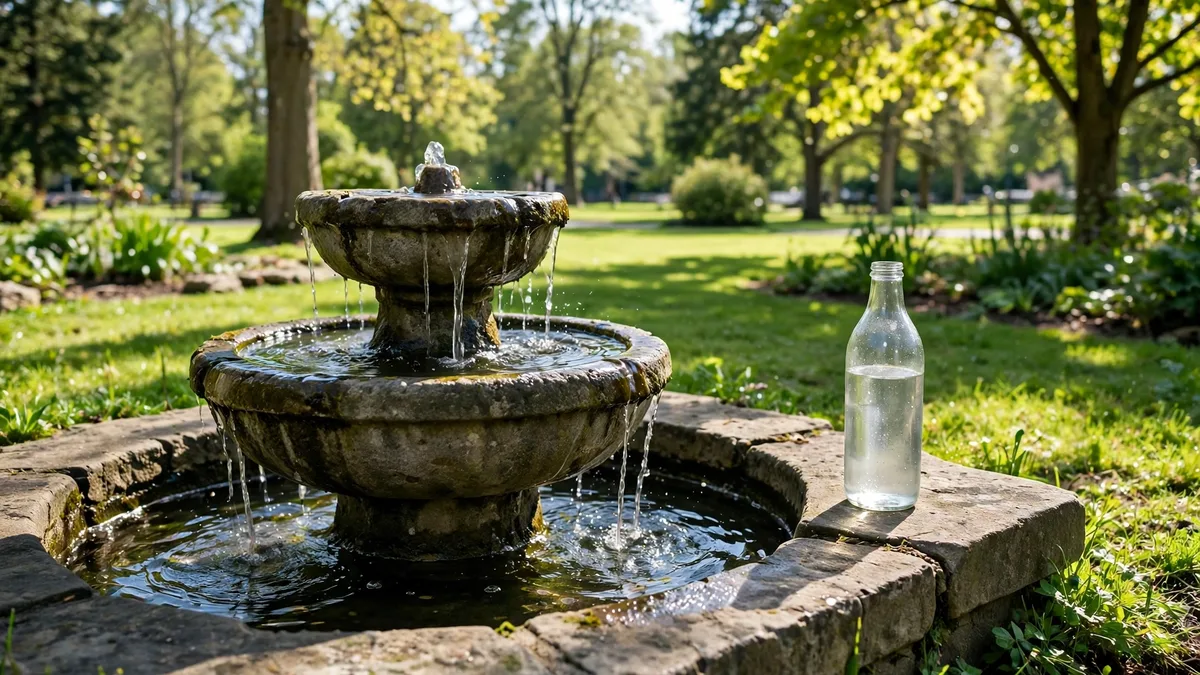
Some towns keep a small fountain in a square, and some parks keep one beside the lawn, where the water runs all day. The sound is soft and steady, a little falling water over stone, and it turns an ordinary walk into something slower.
Water and a fountain go together simply. Bring your own glass or bottle, find a bench in the shade, and sit a while with the water moving in front of you, drinking slowly and letting the day settle.
Fountain water itself is not drinking water, so keep your own bottle close and your hands clean.
Key Takeaways
- A fountain is a public water feature, usually stone, where water flows and falls.
- The ritual is simple: bring your own water, sit nearby, and drink slowly while you listen.
- A fountain is not a garden bed, a pond, or a stream; it is stonework that pours water for everyone.
- Never drink from the fountain itself; its water is for looking at and listening to.
- Take your bottle home, and leave the place as tidy as you found it.
What a Fountain Is
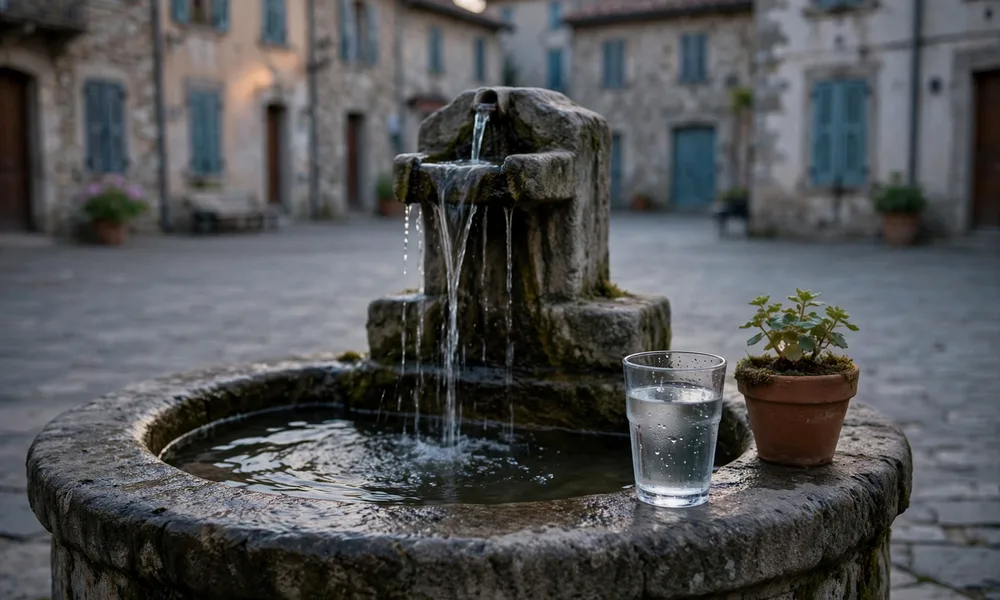
A fountain is stonework built to move water where people can see and hear it. Some are grand, with tiers of basins in a square, and some are small, with one spout pouring into a round basin. The water is pumped up and let fall again, so the sound never stops.
Fountains have stood in towns for a very long time, because a town needs water and a square needs a centre. The earliest ones were plain drinking places for travellers and horses, and over the years they grew into ornaments, with carved rims and wide basins. The basin water is not for drinking or washing; it belongs to the fountain, to the birds, and to the sound it makes.
Finding a Fountain to Visit
Look for a fountain the way you would look for a good bench: somewhere with shade, somewhere you can sit without being in the way, and somewhere the water reaches you over the traffic. A park fountain is often the quietest, tucked beside a lawn or a path, while a square fountain is livelier.
Go in the morning if you like the place to yourself, when the light is low and the birds are still at the basin. Go in the late afternoon if you like company. Either way, take your own bottle, filled at home, and a small cloth to wipe the bench dry.
A Morning at the Fountain
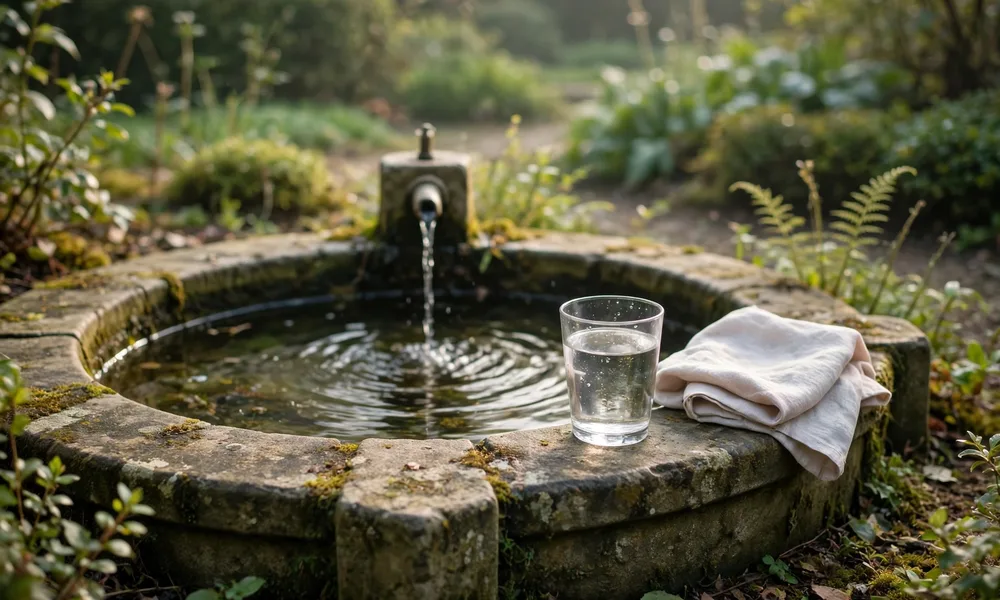
A morning at the fountain asks for very little. Walk over slowly, set your bottle on the ledge, and sit on the nearest bench with your back to the sun. Pour a glass, drink it slowly, and let the falling water do the talking.
If the bench is damp, spread your cloth first. Ten quiet minutes is enough, and twenty is a small luxury.
Water at the Fountain
Water at the fountain comes in two kinds. The water you drink comes from your own bottle, filled at home, and poured into your own glass. The fountain water stays in the fountain, where it belongs.
Never drink from the basin, and never dip your bottle or glass into it. Fountain water is open to the air, to birds, to leaves, and to dust, and it is not meant for drinking. Wash your hands after touching the stone rim, and before lifting your glass, and keep the bottle capped.
A Fountain at a Glance
| Stone tiers, basin | Public park, square | Own glass only |
|---|---|---|
| Flowing, cool, clear | Slow mornings, light | Never drink fountain |
| Open air, green | Bench, book, pause | Wash hands after |
| Free to visit | One bottle, one glass | Leave no litter |
| Falling water | Sunny bench | Stay tidy |

A Fountain and Garden Walks
Water and garden walks is the simplest way to meet a garden in the morning: a glass of fresh water in one hand, a slow walk between the beds, and leaves still cool from the night. The walk is the heart of it.
A fountain asks you to stop instead of walking. You arrive, find a bench, and sit still while the water moves for you. A garden walk is a journey through green beds; a fountain visit is a pause beside falling water.
A Fountain and a Garden Party
Water and a garden party is a bright afternoon with friends, a table under the trees, a jug of cold water, and an hour to spare. The garden is already halfway to a party.
A fountain is quieter than a party, and it asks for no guests at all. You can visit one alone, with only a bottle and a book, and the falling water is company enough. A garden party is a shared afternoon in your own garden; a fountain visit is a public pause, open to anyone, and just as pleasant alone.
A Fountain, Gardening and a Fresh Garden
Water and gardening is honest work with the hands: earth under the nails, green leaves, and an hour spent digging, planting, and weeding, before you come back inside with the garden still on your skin. A fresh garden starts at the soil too, not at the shelf, and a can of plain water, used slowly, does more for a garden than a shelf of products.
A fountain needs no digging and no watering can. The stonework stands finished, the water runs on its own, and your hands stay clean and dry, holding only a glass. Gardening is work with water for the plants; a fountain visit is rest beside water for yourself.
A Fountain and the Other Water Rituals in This Batch
This batch holds four other water rituals beside the fountain, each a different kind of visit. A thank-you note is a few written words carried to a friend, a new month is a fresh start marked with a glass at home, a garden bench is a seat among the beds, and Saturday mornings are slow hours at home with a glass. A fountain is none of these: a public place where the water itself is the sight.
The batch also holds a stone, datolite, a soft yellow pebble for bright days at home: it rests quietly on a tray next to a glass, while a fountain sends water falling outdoors for everyone to watch. One is a quiet yellow pebble, and the other is a place to go.
A Fountain and Other Days Out
Day trips are whole days away from home, with a bag packed, and boat days are hours on the water. Picnics are meals eaten outdoors, with food spread on a cloth and friends around it. All three take planning, packing, and a fair stretch of time.
A fountain visit takes none of that. It is a short walk to a square you already know, ten minutes on a bench, and a slow glass of your own water, and then home again. A day trip is a journey, a boat day is an outing on the water, and a picnic is a meal outdoors, while a fountain visit is simply a pause.
Keeping the Habit at Home
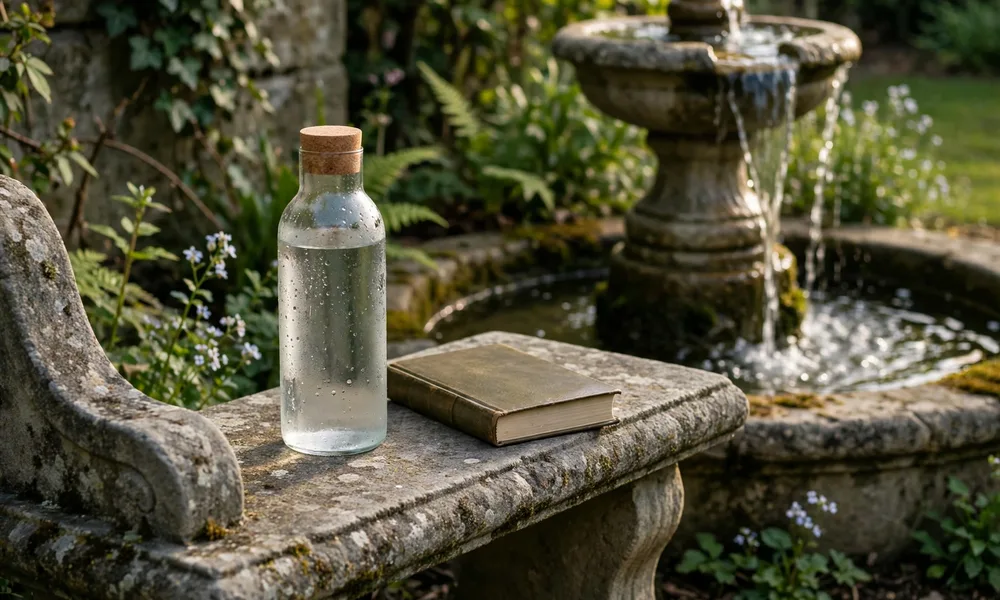
A fountain visit is a habit you can keep without owning anything new. Choose one fountain near your home, and visit it at the same hour each week, so the bench and the sound become familiar. Bring the same bottle each time, filled at home, and the same small cloth.
At home, keep the habit alive with a glass of water in a quiet corner, a chair by the window, and a few minutes of doing nothing. The fountain stays in the park, and that is as it should be: the visit is the point, and the walk there and back is part of it.
Staying Safe Around Public Water
Public water is for looking at, not for drinking. Never drink from the basin, never splash fountain water on your face, and never let small children paddle in it. Wash your hands after touching the stone rim, and before eating, and keep your bottle capped.
If the water looks cloudy, or the basin looks dirty, enjoy the sound from further away and choose another fountain next time. This is gentle general information only, not medical advice, and if you have a health worry, please ask your own doctor. A fountain will not heal anything, and a glass of your own water is only water, so enjoy both for what they are.
Your Fountain Visit Checklist
- Fill your bottle at home, and cap it tight.
- Find a bench in the shade, and wipe it dry.
- Sit still, drink slowly, and listen to the water.
- Wash your hands before you lift your glass again.
- Take your bottle and cloth home with you.
- When a health worry appears, please ask your own doctor about it, never a fountain.
Frequently Asked Questions
What is a fountain?
A fountain is stonework built to move water where people can see and hear it. The water is pumped up and let fall again into a basin, so the sound never stops.
Can I drink the water from a fountain?
No, you should not drink water from a public fountain. Fountain water is open to the air, to birds, to leaves, and to dust, so always bring your own bottle, filled at home.
How is a fountain visit different from a garden walk?
A garden walk is a slow journey along paths between the beds. A fountain visit is a pause: you arrive, sit on a bench, and let the falling water move while you stay still.
How is a fountain visit different from a garden party?
A garden party is a shared afternoon with friends, a table under the trees, and a jug of cold water for guests. A fountain visit needs no guests, and it is just as pleasant alone, with only a bottle and a book.
What should I bring to a fountain?
Bring your own bottle, filled at home, a small glass if you like one, and a cloth to wipe a damp bench. A book is welcome too.
Where is the best place to sit at a fountain?
Choose a bench in the shade, close enough to hear the falling water and far enough to stay dry. If the bench is damp, spread your cloth first.
The Bottom Line
A fountain fits a fresh ritual: your own water in your own bottle, a bench in the shade, and falling water doing the talking.
A Note for Fountain Mornings
Stone, falling water, a full bottle — a fountain morning asks for nothing more.