Evenings arrive too fast: dishes done, phone buzzing, body tired while the mind still races. A quiet evening needs something slow for the hands.
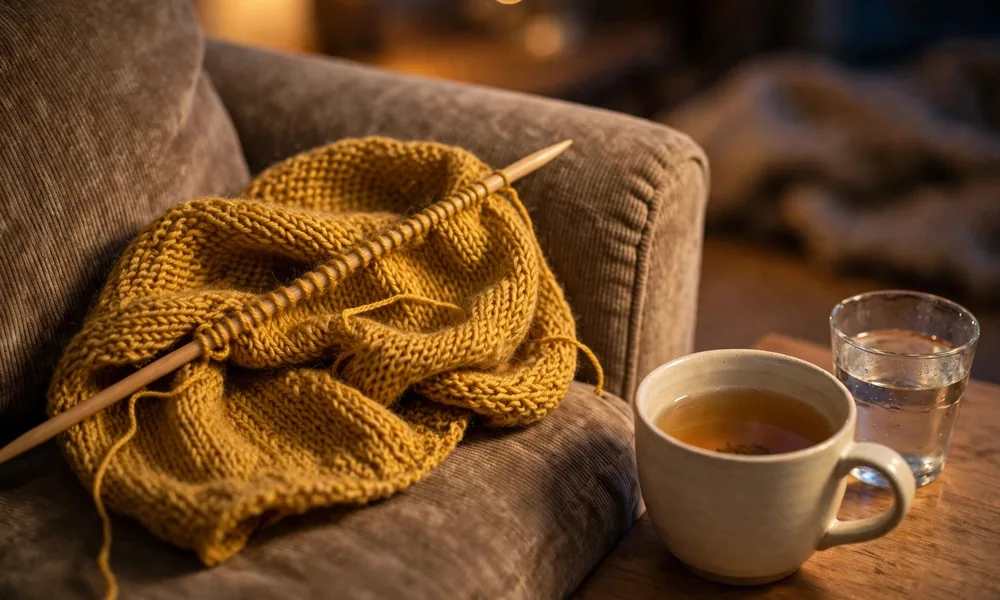
Knitting is that kind of work: two needles, a ball of yarn, and stitches growing one loop at a time, while a small glass of water waits on the side table. Nothing here is rushed, and nothing needs to be perfect.
This guide sets out a simple knitting evening: what you need, how to begin, how water fits in, and how to end the evening well. It is gentle general information only, not medical advice, and it promises no cure.
Key Takeaways
- A knitting evening is yarn, needles, and slow stitches in the evening hours.
- A small glass of water sits nearby for sips and damp fingers.
- Knitting calms an evening because busy hands slow the mind down.
- A plain scarf in garter stitch is the best first project.
- One hour of knitting, one glass of water, and a lamp are enough.
What a Knitting Evening Is
A knitting evening is an hour or two after the day is done, with a chair, a lamp, and knitting in progress. The work is simple: loops of yarn pulled through other loops, row after row, until a scarf slowly appears.
The yarn matters more than the pattern. A soft wool in a colour you like, thick enough to see each stitch clearly, makes the evening pleasant from the first row.
Water has two small jobs here: you sip it while you knit, and you dampen your fingertips when the yarn feels dry and stiff.
Why Knitting Calms an Evening
Hands that are busy cannot reach for the phone. That is the whole secret, and it works better than any lecture about screens. While your fingers count stitches, your eyes follow the yarn, and the noise of the day fades.
The rhythm helps too. Cast on, knit, turn, knit again: the same small motions, repeated without hurry, give the mind something steady to rest on. Stitches slip, and none of it matters.
By the end of the hour the shoulders have dropped and the breathing has slowed, and the evening feels finished rather than merely spent. The knitting did not fix the day, but it gave the evening a shape.
Choosing Your Yarn and Needles
Start with a medium-weight wool in a plain colour, mustard or cream or sage, and wooden needles to match. Wood grips the yarn gently, so stitches do not slide off while you learn, and the needles feel warm.
Check the ball band label: it tells you the needle size the yarn likes. Buy one ball more than the pattern asks, so a mistake does not leave you short halfway through a scarf.
Avoid dark yarn for a first project, since it hides the stitches, and slippery silk blends, since they slide too fast. Plain wool, wooden needles, and a comfortable chair are all this evening needs.

Your First Knitting Evening
Fill a small glass with fresh water and set it on the side table, away from the yarn. Put the lamp on, settle into the chair, and lay the basket at your feet where the ball can turn freely.
Cast on twenty loose stitches and knit every row in plain garter stitch. Just knit, sip the water now and then, and dampen your fingertips when the wool feels dry.
After an hour, stop. Put the needles down with the work still on them, fold the scarf over the chair arm, and drink the last of the water. Stop when you choose.
Water Beside Your Knitting
Water earns its place on the side table in three quiet ways. First, it keeps you drinking, so you do not end the hour thirsty and stiff. Second, a damp fingertip smooths a dry strand of wool and stops it catching on the needle.
Third, the glass marks the evening as a ritual rather than a chore. Filling it is the first step, emptying it the last, and between the two the knitting has its own small ceremony. Keep the glass away from the basket.
If the water spills, lift the knitting clear at once and blot the table dry. Keep the glass on the far side of the table.
A Knitting Evening at a Glance
| Yarn and needles | Glass of water | Lamp and chair |
|---|---|---|
| Wool, wooden needles | Sips, damp fingers | One hour, slow |
| Garter stitch, plain scarf | Glass far from yarn | Phone away, quiet |
| Basket, ball band kept | Refill, finish glass | Stop, fold, rest |
Knitting Evening and Watercolours
Watercolours are the closest craft cousin to a knitting evening, and the two share the same small glass of water. Water and watercolours covers a simple creative ritual with a jar of clean water, a brush, a palette, and one sheet of paper, where water carries colour across the page.
Knitting uses water differently: here it is for drinking and damp fingers, not for mixing paint, and the work grows stitch by stitch rather than wash by wash. Watercolours need a desk, knitting a chair.
Both are quiet making, and both end with something to show for the hour. Choose paint for colour on paper, yarn for warmth in your hands.
Knitting Evening and Puzzles
Puzzles are the other quiet evening in this family, and they could not be more different in the hands. Water and puzzles covers a simple quiet evening with a tall glass at the table edge, while pieces spread under the lamp and the picture grows one edge at a time.
A puzzle is solved piece by piece, until the picture is complete and the box goes back on the shelf. Knitting grows a little, then waits for tomorrow. Puzzles ask for a table and a sharp eye, knitting for a lap and patient fingers.
Both evenings are silent, slow, and free of screens. Choose a puzzle for a picture to complete, knitting for something soft to carry into the next day.
Knitting Evening, Craft Day and Sewing Day
Two more making posts arrive in this same batch, each differing from the knitting evening here. Craft day, the sibling post numbered 759, is a broad daytime session, moving between several small crafts, cutting and gluing and trying new things.
Sewing day, the sibling numbered 761, is also daytime, built around needle and thread and fabric, cutting cloth and stitching seams before dark.
A knitting evening is narrower and later: one craft only, yarn and needles, after dark, in a chair, with a lamp and a glass of water. No cutting, no machine, no daylight, just slow stitches until bedtime.
Knitting Evening and the Other Quiet Evenings
The house holds more quiet evenings besides these. Water and board games covers a fresh evening with a jug at the table centre, a clear glass for each player, and sips between turns, a sociable evening that needs company and a table.
Film night is a screen evening, one film watched start to finish on a sofa, with a blanket and a glass of water close by. It asks nothing of the hands.
Reading, candles, and a music bath each have their own hour too, yet none leaves you with a scarf growing row by row, and none keeps your fingers busy the way knitting does.

Caring for Your Knitting
Finished knitting likes the same gentle care as the evening itself. Fold scarves loosely and store them in a dry drawer, away from damp and moths, with a cedar block beside them if you like the scent.
Wash wool by hand in cool water with mild soap, press the water out gently without wringing, and lay the piece flat on a towel to dry. Heat and tumbling will shrink it, and a radiator will stiffen it, so patience is the only tool.
Keep the needles in their case and the spare yarn in its basket. A tidy basket means the next evening starts in minutes.
Gentle Notes for Tired Hands
Knitting should feel comfortable, and tired hands deserve a pause. If your fingers ache, put the work down, stretch slowly, and sip the water.
If pain, numbness, or swelling keeps coming back, stop the craft and speak to a doctor. This guide is general information only, and a doctor is the right person for a health problem that will not settle.
Warm hands knit better than cold ones, so hold the glass or a cup of tea between rows when the room feels chilly.
Your Calm Evening Checklist
- Fill a small glass of water and set it far from the yarn.
- Put the phone away and switch the lamp on.
- Cast on loosely and knit plain garter stitch.
- Sip the water and dampen dry fingertips when needed.
- Stop after an hour and fold the work over the chair.
- If hands keep aching, see a doctor; a craft holds no answers for you.

Frequently Asked Questions
What is a knitting evening?
A knitting evening is an hour or two after the day is done, in a chair with yarn, needles, a lamp, and a small glass of water. You knit slow rows while the evening settles.
What do I need to start knitting?
You need a ball of medium-weight wool, wooden needles to match, a small glass of water, a lamp, and a comfortable chair. A basket keeps the yarn from rolling away.
Why keep water beside my knitting?
The water is for sipping while you knit, and for dampening fingertips when the wool feels dry and stiff. It also marks the start and end of the ritual.
Is knitting hard for a beginner?
No. Plain garter stitch, knitting every row, is the easiest start, and a scarf in that stitch needs no pattern. Mistakes pull out easily.
How long should a knitting evening last?
About an hour suits most people, long enough to settle the mind and grow the scarf a little, short enough to keep hands comfortable. Stop when you feel ready.
Can knitting help me sleep better?
A calm evening can help the night feel easier, but knitting is not a treatment for sleep problems. If poor sleep keeps troubling you, speak to a doctor.
The Bottom Line
A knitting evening is simple: yarn, needles, a lamp, and a glass of water, one slow hour of stitches that gives the evening its shape.
A Note for Calm Evenings
Put the phone away, fill the glass, and knit one row at a time. A quiet evening, a growing scarf, and a glass of water are enough.