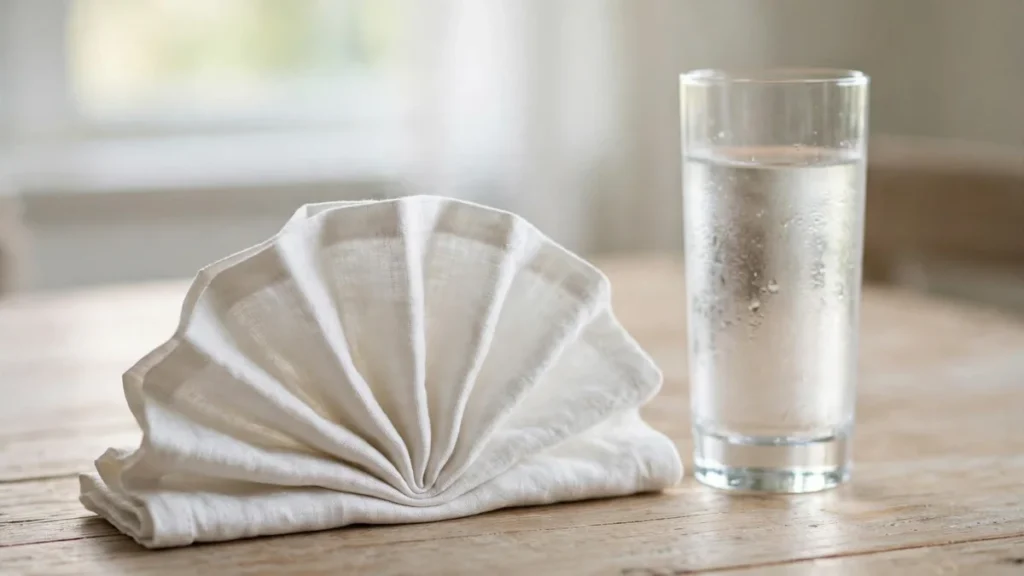
Evening falls slowly, and the house grows dim room by room. One small light is enough to change the mood of the whole hour: a lantern on the table, its flame steady behind glass, throwing a warm circle across the wood.
A glass of water belongs beside that light. It is the simplest thing in the house, and it keeps the evening slow: a tall glass, filled fresh, standing a hand-span from the lantern. The pair asks for almost nothing — a flat table, a steady hand, and a few quiet minutes.
This guide is for a beginner: what a lantern is, how to choose one that stands steady, how to set it out with a glass of water, and how to keep the evening safe. It is gentle general information only, not medical advice, and for any health worry, a doctor is the person to ask.
Key Takeaways
- A lantern is one enclosed light you can carry in one hand and set down anywhere.
- A glass of water beside it keeps the evening slow and simple.
- Fairy lights are different: a string of many small lights, not one enclosed flame.
- Keep the flame from curtains, paper, and children, and never leave it burning alone.
- This guide is gentle general information only; for any health worry, ask a doctor.
What a Lantern Is
A lantern is a light with a case around it: a flame or a bulb held inside glass panels, set in a metal frame, with a handle on top for carrying. The case shields the flame from a draught, keeps the light steady, and lets you pick the whole thing up and move it without the flame going out.
The common kinds are simple to tell apart. A candle lantern holds a thick pillar candle behind glass and gives a soft, flickering light. An oil lantern burns with a small wick and a clear fuel tank, and it burns longer through a whole evening. A battery lantern gives the same shape with no flame at all, which suits a room where children run about.
Why One Warm Light Calms an Evening
One light makes a room feel smaller in a good way. The corners fall away into shadow, the table comes forward, and the eye has only one bright thing to rest on. A lantern lights only what is near, and the rest of the room can wait until morning.
Warm light helps the feeling along. A candle flame is amber and low, the colour of late sun through a window. On a cold night, a warm layer helps the mood along, and Water and a Wool Scarf: When to Wear It keeps the same slow pace for winter evenings. Sit beside the lantern with a glass of water, and the evening slows down on its own.
Choosing a Lantern
Lift the lantern by its handle and set it down on a flat table, checking that it stands steady, the glass sits square, and the little door closes cleanly. A good lantern feels solid, not rattly, and the handle should sit firm without wobbling. Look for chips or cracks in the glass, and check that the candle fits its holder without leaning.
Pick a size you can carry in one hand without strain, and a shape that suits where it will live. A tall storm lantern suits a porch, a short round one suits a bedside table, and a battery lantern suits a house with small children. Buy from a seller who answers plainly when you ask how it burns.
A Calm Evening with a Lantern
Wait until the light outside turns blue, then clear one end of the table. Set the lantern down first, so it stands square on the wood, and put a tall glass of water a hand-span away, with a book beside the glass. Light the candle only when you are staying in the room.
Drink the water slowly while the room darkens around the table. The flame does not hurry, and neither should you. When the glass is empty and the hour feels done, blow the flame out before you leave the table.
Water and a Lantern: How the Pair Works
The glass and the lantern share the table the way a stone and a glass share a tray: close enough to enjoy together, far enough apart that nothing spills toward the flame. Never set the glass so close that a knock could splash it onto the hot panels.
Drink from the glass while the lantern burns. The water is for drinking, the lantern is for light, and neither one should ever meet the other. If a splash reaches the panels, wipe them dry once the lantern has cooled, and never pour water over a lit flame.

A Lantern at a Glance
| One enclosed light | Flat table, evening | Never leave alone |
|---|---|---|
| Glass, metal, flame | Calm nights, slow hours | Keep from curtains |
| Warm steady glow | One lantern, one glass | Trim wick weekly |
| Fits in one hand | Wood, cloth, dusk light | Blow out nightly |
Lanterns and Fairy Lights: One Light or Many
A lantern holds one enclosed light: a single flame or bulb behind glass that you can carry in one hand and set down on a table. Fairy lights are the opposite idea: a long string of many small lights draped along a branch or a wall, each one too small to light a room on its own. One gives a single steady pool of light; the other scatters dozens of tiny points.
The difference matters when you choose. A lantern suits a quiet hour at a table, because its light stays in one place and your eye stays with it. Fairy lights suit a celebration, because they spread light everywhere at once. Green Goldstone Sparkle Green for Festive Days mentions fairy lights strung among the decorations of a festive night. This guide stays with the single light you can pick up and move.
Water and Festivals: Light for a Busy Day
Water and Festivals: Simple Fresh Rituals sets out a loose frame for any festival day, opening with water in the quiet morning and closing with a slow wash before sleep. A festival day fills fast, and the quiet parts slip away unless something marks them.
A lantern marks the quiet close. When the guests have gone and the table is cleared, set the lantern down where the meal was, put a fresh glass of water beside it, and sit for ten minutes before sleep. The lantern asks nothing of the day except its last quiet minutes. That is enough for a festival to end well.
A Lantern Among the Other Guides in This Batch
Five water guides and five stone guides share this batch, and the lantern keeps the evening corner among them. Among the water guides, fairy lights come first, a string of many small lights for a festive night; a sun hat follows, for bright light on a long walk; a parasol comes next, for shade in the afternoon sun; and gloves close the set, for cold water and cold mornings.
The stone guides take a different kind of rest. Lemurian quartz is clear and finely ridged, nosean is deep blue-grey, sulphur is bright yellow, wavellite is green and radial, and wollastonite is clear white, a pale mineral of fibrous blades on a dry tray.
Where a Lantern Lives at Home
Give the lantern a cool, dry shelf where it stands upright and nothing can fall on it, away from curtains, paper, and small hands. Keep spare candles in a tin beside it, and matches in a jar with a lid. A small notebook beside the tin holds the evenings you liked best, if you keep one.
Hang a storm lantern by its handle from a hook on the porch when the weather is calm, and bring it inside before rain. Once a week, wipe the glass panels with a dry cloth and check the handle for looseness.

Keeping a Lantern Safe
A live flame is a small responsibility, and most of the rules are plain common sense: keep it upright, keep it watched, and keep it away from anything that can catch. Never leave a burning lantern alone in a room, never set it near a curtain or paper, and always blow it out before sleep or before you leave the house. A battery lantern is the safer choice for a child's room.
If a scented candle leaves you coughing or your eyes watering, blow it out and open a window. For any health worry that stays with you, ask a doctor. A lantern gives light, and nothing more than that.
Your Calm Evening Checklist
- Set the lantern on a flat table, with the glass of water a hand-span away.
- Light the candle only when you are staying in the room.
- Drink the water slowly while the flame settles into a steady glow.
- Blow the flame out before you leave the table or go to sleep.
- Keep matches and spare candles in a tin, out of children's reach.
- For any health worry, ask a doctor — a lantern gives light, not answers.
One light, one glass, one quiet hour: that is the whole evening.

Frequently Asked Questions
What is a lantern, in plain words?
A lantern is a light with a case around it: a flame or a bulb held inside glass panels, set in a metal frame, with a handle on top for carrying.
How is a lantern different from fairy lights?
A lantern holds one enclosed light you can carry and set down, while fairy lights are a long string of many small lights draped along a branch or a wall.
Can I leave a lantern burning overnight?
No. Never leave a burning lantern alone, and always blow it out before sleep or before you leave the house. A battery lantern is safer for overnight light.
Where should a lantern sit on the table?
On a flat, steady surface, away from curtains and paper, with the glass of water a hand-span away.
Is it all right to carry a lit lantern outside?
Yes, if the evening is calm and the lantern stands steady in your hand. A storm lantern suits the outdoors best; bring it inside before rain or strong wind.
What kind of lantern suits a beginner?
A short candle lantern with a steady base and a firm handle suits a beginner best: simple to light, simple to carry, and simple to blow out.
The Bottom Line
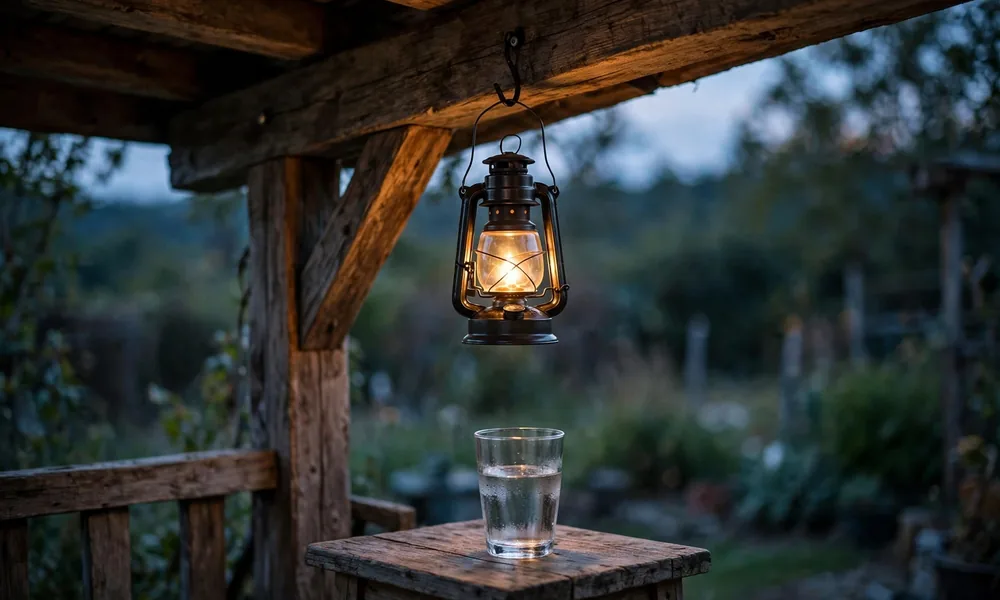
One steady light, a full glass, and an evening that slows down on its own.
A Note for Calm Evenings
A lit lantern, a full glass, and nowhere to hurry to.