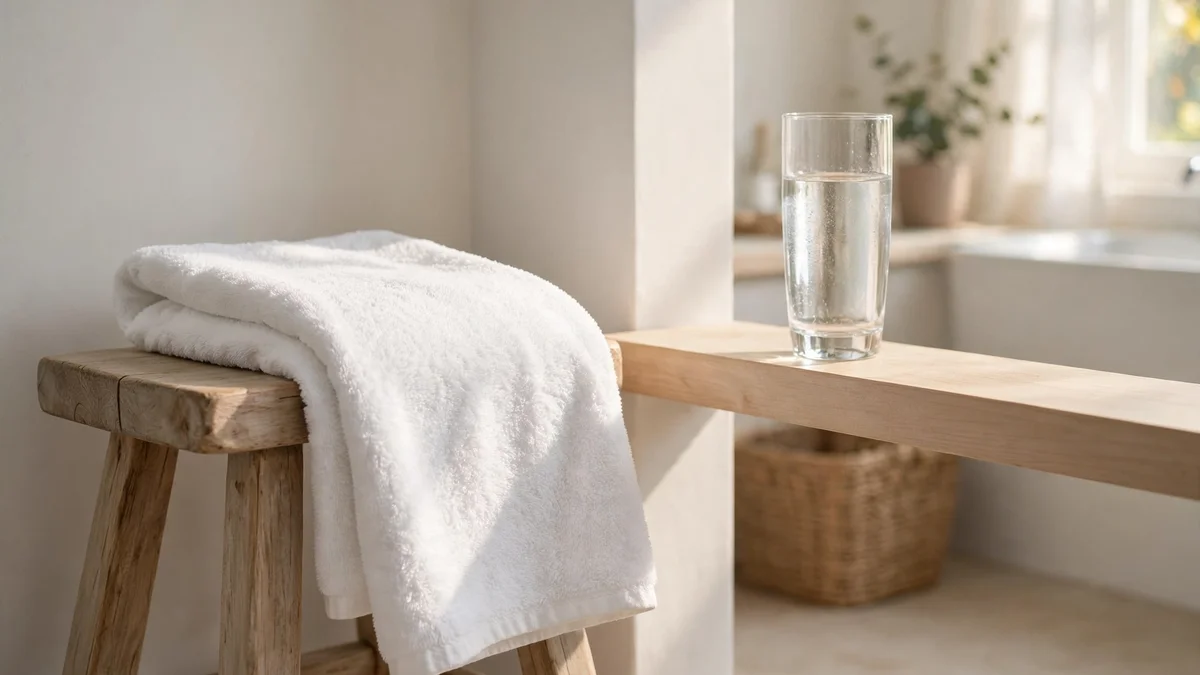
A wash ends, and the hair is heavy with water. Drops run down the neck, the lengths stick together, and most hands reach for the nearest towel, rubbed hard from side to side. The hair comes out of that hurry roughed up, and the morning starts with a tangle instead of a calm.
A hair towel asks for a slower minute: a soft cotton towel kept for the hair alone, folded on a stool beside a glass of water. Its work is simple — it soaks up the wetness while the hands stay still. No rubbing, no wringing, no rush, just cloth held against damp strands until the dripping stops.
This guide follows that one towel through a wash day: the glass first, the wash, the cloth, the pat-dry, a loose wrap, and the care that keeps the towel fresh. Everything here is plain everyday guidance, not a remedy for hair or scalp trouble; a worry that lingers belongs with a doctor.
Key Takeaways
- A hair towel is a soft cotton towel kept for hair alone, for patting dry, never rubbing.
- Lukewarm water washes kindest; the towel dries after.
- Pat in sections, squeeze softly, and let a loose wrap rest.
- A hair towel dries hair; it is not a face cloth, a kitchen cloth, or a covering.
- Keep the towel clean and dry; ask a doctor about lasting scalp worries.
What a Hair Towel Is
A hair towel is an ordinary towel with one job: a soft cotton cloth, about the size of a bath towel, kept apart from the towels that dry hands and bodies. Its only work is to take water from freshly washed hair, gently, without pulling.
The towel works by drinking, not by scrubbing: cotton loops hold water inside their fibres, so a towel pressed against damp hair pulls the wetness away on its own. That is the whole secret — the cloth works while the hands stay quiet.
Choosing a Hair Towel
Pick a towel that feels soft against the inside of your wrist, with loops that spring back instead of lying flat and shiny. Plain cotton is easiest, washed once before its first use. A pale colour shows at a glance whether it is clean.
Size matters more than thickness. A towel that wraps once around the head and tucks at the nape is right; a huge bath sheet pulls at the neck when wet, a small hand towel cannot hold longer hair. Keep a second of the same kind for wash days.
A Glass of Water First
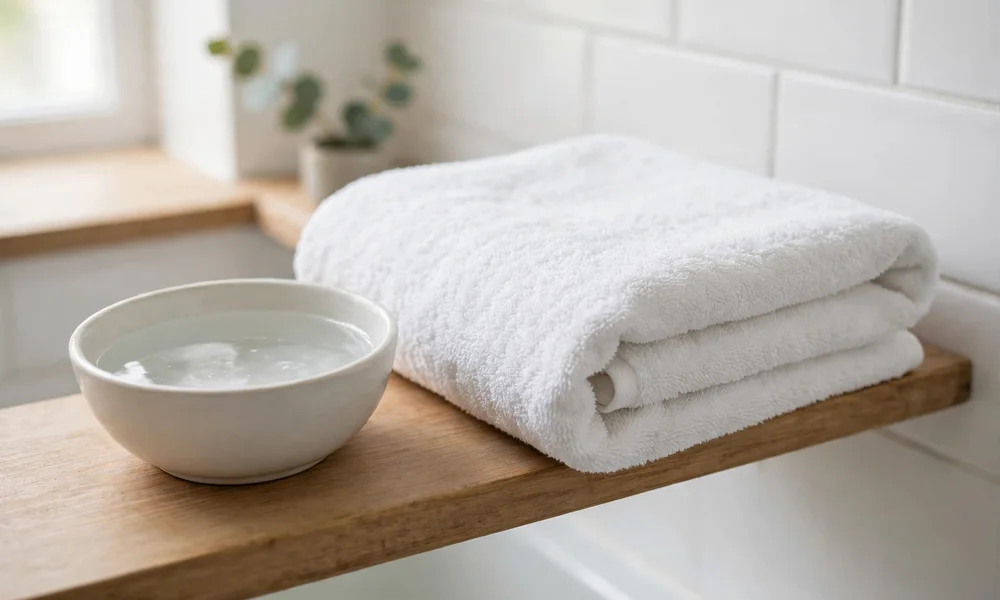
Begin with drinking, before the shower is turned on. Fill a glass the night before, leave it on the bedside table, and take slow sips after waking, standing by the window. One unhurried glass gives the wash ahead a calm start.
The Pat-Dry, Step by Step
Wash as usual in lukewarm water, a little mild shampoo through the roots, rinsed until the water runs clear. Step out and let the lengths drip over the bath, so the towel meets damp hair rather than a flood.
Open the folded towel over both hands. Lift a section of hair, lay the cloth around it, and press softly for a slow count of three before moving on. Work from the roots toward the ends, then the back, then the sides, refolding when one patch grows wet.
When the hair feels damp rather than dripping, spread the towel over the head, gather the lengths into the cloth, and twist the front edge once into a loose turban, tucking the end at the nape. Leave it on for five to ten minutes while you dress, then unwrap.

Water and a Hair Towel at a Glance
| Lukewarm wash first | Soft cotton towel | Pat, never rub |
|---|---|---|
| Glass before shower | Dry patch each time | Loose wrap rests |
| Drip, then press | Sections, roots down | Comb ends upward |
| Plain water only | One towel, hair only | Doctor for worries |
A Hair Towel and Wavy Hair
Water and wavy hair follows soft S-shaped waves from wetting to drying, and the towel plays a small part there: a gentle press, then air drying. This ritual makes that part the whole story.
Both guides agree on the hands: fingertips for washing, a wide-tooth comb for damp detangling, and no hard rubbing. Where they part is the focus: the wavy guide is a wash-day guide for one kind of hair, this one a towel guide for every kind.
A Hair Towel and Blow Dries
Water and blow dries is a short routine built on warm air: wash, towel-dry, low heat that keeps moving, and a cool finish. Its towel step is brief on purpose, a quick press before the dryer switches on.
A hair towel ritual stops where the dryer starts: no plug, no heat, no cool blast — just cloth, patience, and air. The towel suits a quiet morning with ten minutes to spare, while the dryer suits a morning in a hurry. Both begin with the same wash and soft press; only the tool changes.
A Hair Towel and Bath Towels
Water and towels covers bath towels and hand towels: how to wash them gently, dry them in fresh air, and store them folded loose on a dry shelf. Its towels dry bodies and hands, and its ritual is about laundry — clean water, mild soap, sunlight, and tidy storage.
A hair towel shares those laundry habits but not the job: the bath towel dries skin, while the hair towel touches only hair, hangs on its own hook, and is washed when it smells stale. One is the household towel, the other the hair's own cloth.
A Hair Towel and a Warm Flannel
A warm flannel, the Batch 86 sibling arriving beside this guide, is a small square of soft cotton flannel soaked in lukewarm water and pressed against the face, its warmth resting on the cheeks, forehead, and chin for a few slow breaths.
A hair towel is a different cloth for a different place: larger, dry when it meets the hair, and made to soak water up, not to carry warmth in. The flannel presses warm and damp against the face; the hair towel presses dry and soft against wet hair. One cleans the face with warmth, the other dries hair.
A Hair Towel, Headscarves and Muslin
A headscarf, live post 5464, is a square of silk or cotton smoothed over damp hair and tied in a neat knot, worn out as a finished look. It covers the hair and lets it dry slowly underneath, shielding it from sun and wind. That is styling, not drying: the scarf stays on, and the hair dries hidden beneath it.
A hair towel does the opposite work and then leaves: it presses, wraps for a few minutes, and comes off, and the hair is worn free. A muslin cloth, planned as topic 927, is lighter still — a thin cloth for wiping the face, too fine to drink water out of a head of hair. Three cloths, three jobs: towel dries hair, scarf covers it, muslin wipes the face.
Keeping a Hair Towel Fresh
A hair towel stays fresh only if it dries fully between wash days. After the wrap comes off, shake it out and hang it spread wide on its own hook, where air reaches both sides. A bunched towel stays wet inside and starts to smell.
Wash it every three or four uses, sooner if it smells stale or feels rough, in lukewarm water with a drop of mild soap and no fabric softener, which coats the loops and stops them drinking. Rinse well, shake it out, and hang it in fresh air until dry, then fold it loosely.

Gentle Care Around Hair and Scalp
A towel is among the softest things hair can meet, yet a new habit still calls for a little care. Try the pat-dry on one wash day: soft and calm when dry is right, while roughness or tangles mean the hands pressed too hard or the towel has gone stiff. Ease off, refold more often, and let the wrap sit looser.
A towel gives comfort, not medicine: it cannot mend a sore scalp, stop shedding, or cure any trouble that keeps returning. The other hair guides say the same in their own ways — coily hair needs extra moisture, curly hair needs its spirals kept separate, damaged hair needs gentle repair, oily hair needs a light wash, dry scalp needs a gentle routine, and hair masks are a weekly pause, not a fix — while hair removal, waxing, shaving, and manicures belong to skin and nails. When soreness, itching, or heavy shedding hangs around, ask a doctor and let the towel rest meanwhile.
Your Fresh Ritual Checklist
- Drink a full glass of water first.
- Wash in lukewarm water, then let the lengths drip briefly.
- Press the towel around each section softly.
- Wrap the hair loosely for five to ten minutes.
- Hang the towel spread wide for air on both sides.
- When soreness or shedding keeps returning, ask a doctor.

Frequently Asked Questions
What is a hair towel ritual?
A short drying habit after washing: lukewarm water, a soft cotton towel kept for hair alone, gentle pressing in sections, and a loose wrap, then air drying.
How is a hair towel different from a bath towel?
A bath towel is a large cloth for drying the body, shared with the household. A hair towel is a medium cloth kept for hair alone, on its own hook, washed when stale.
How long should I leave a towel wrapped around my hair?
Five to ten minutes is enough, while you dress or make the bed. Longer wraps add little, and hair bundled for hours dries in odd bends.
How often should I wash a hair towel?
Every three or four uses, sooner if it smells stale or feels rough. Lukewarm water, a drop of mild soap, no softener, and fresh air until dry.
Can a hair towel suit wavy or curly hair?
Yes, because pressing softly keeps waves and curls from roughing up. Pat in sections, refold often, and stop while the hair is still damp.
When should I ask a doctor about my hair or scalp?
When soreness, itching, or heavy shedding hangs around or keeps coming back. A towel is a soft everyday habit, never a remedy, and a stubborn worry belongs with a doctor.
The Bottom Line
Water and a hair towel make a fresh pair: a glass first, a lukewarm wash, a soft towel pressed gently, and a loose wrap.
A Note for Fresh Hair
Keep the water lukewarm, the towel soft, the hands still: that is all a fresh hair ritual needs.


