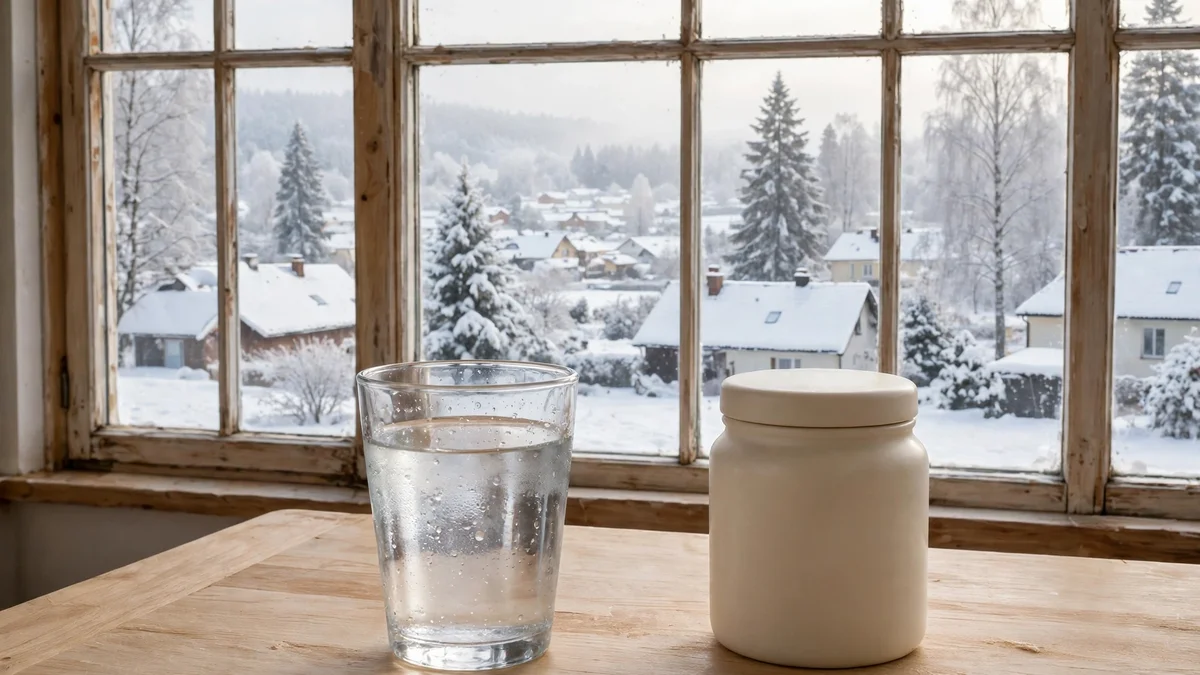
A snow day is a day the world turns white and quiet. The roofs are soft with snow, the trees wear white sleeves, and every sound feels a little further away.
Snow is beautiful, but it is hard on skin. Snow days mean cold air, wet snow, cold wind, and long hours indoors with the heating on. The hands get wet and cold, the cheeks sting in the wind, and the lips dry out fast. The good news is that a snow day asks for very little: lukewarm water, a plain cream on damp skin, and soft layers against the cold.
This guide explains what snow days do to skin, how water helps in a gentle way, and how to build a simple snow-day routine for mornings, outings, and coming back indoors. It is gentle general information only, never medical advice, and real skin problems belong with a doctor or a dermatologist.
Key Takeaways
- Snow days mean cold air, wet snow, cold wind, and dry indoor heating.
- Lukewarm water protects skin better than hot water, which strips its natural oils.
- Plain cream works best on skin that is still slightly damp, morning and evening.
- Wet hands and cheeks need drying and cream as soon as you come indoors.
- Plain water does not replace sunscreen: snow reflects sunlight, so protect the skin.
What a Snow Day Means for Skin
A snow day is any day when snow falls or lies on the ground: a fresh snowfall in the morning, a white garden at noon, or a cold evening when the snow crunches underfoot. The air is cold, and the wind carries tiny flakes that melt the moment they touch warm skin.
Snow is water, but it is cold water, and cold water on skin is not the same as a gentle wash. Wet snow soaks gloves and scarves, chills the hands, and leaves the skin damp and cold for hours. Then you come indoors, where the heating has dried the air, so the skin loses water all day.
Why Snow Days Dry the Skin
Snow days dry the skin because the cold air holds very little moisture. Every breath of cold air takes a little water from the skin, and the wind takes more, especially from the cheeks and the hands. Wet snow makes it worse, because damp skin in cold wind loses warmth and water faster.
Think of the skin's outer layer as a soft brick wall: skin cells are the bricks, and the natural oils between them are the mortar that holds the water in. Cold air, wind, wet snow, and hot water all wear that mortar thin, so water escapes more easily. The result is familiar: tight cheeks, rough hands, and dry lips.
Lukewarm Water, Not Hot
Lukewarm water is the kindest water for skin on snow days. Hot water feels good on a cold morning, but it strips the natural oils that hold moisture in and leaves skin drier. Lukewarm water cleans just as well, without taking so much protection. The same idea runs through water and cold weather for warm skin, where lukewarm water and plain cream carry the skin through cold days.
Keep washes short, and use only a little plain soap where you need it, not all over. Rinse well, then pat the skin dry with a soft towel instead of rubbing, because rubbing roughs up the surface and takes more moisture away. The wash should feel gentle, never harsh, and your skin should feel calm afterwards.

Cream on Damp Skin
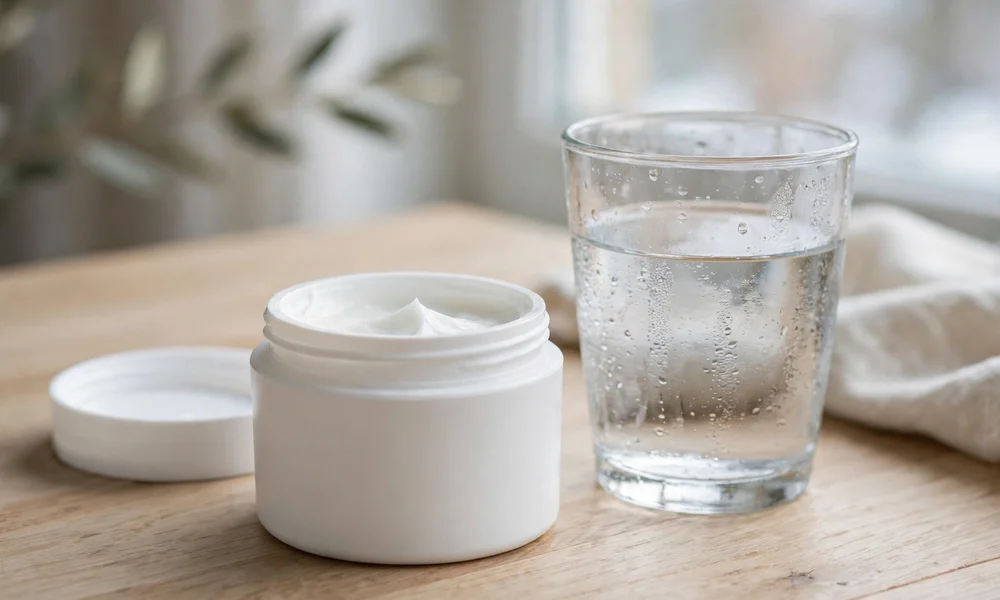
Cream works best on skin that is still slightly damp, and this is the most useful habit on a snow day. After washing, pat the skin lightly so it is damp but not dripping, then smooth on a plain unscented cream while the surface is still open. The cream seals the water in, and the skin stays soft far longer than cream on dry skin.
Choose a plain cream, not a scented lotion, because fragrance can irritate cold, dry skin. A simple jar of unscented cream, used morning and evening, is enough for most people. Use a little more on the hands and cheeks, which snow days reach first.
A Simple Snow Day Morning
A snow day morning takes about five minutes and starts with water. Wash with lukewarm water, pat dry gently, and leave the skin slightly damp. Smooth on a plain cream, a pea-sized amount warmed between the hands. Then dress warmly before you step out.
Start the day with a warm drink: a mug of warm water, a cup of tea, or a simple broth, sipped slowly while the house warms up. Warm drinks do not heat the skin directly, but they make a cold morning kinder. Let hot drinks cool a little before sipping, and never put hot tea on the skin.
Coming In from the Snow
Coming in from the snow is the moment that matters most for skin. The hands are wet and cold, the cheeks are red, and the gloves are soaked through. Take the wet gloves and scarf off straight away, and hang them to dry, because wet cloth against the skin keeps stealing warmth.
Wash the hands with lukewarm water, pat them dry softly, and smooth on plain cream while they are still slightly damp. Do the same for the cheeks if they feel tight. Then change into dry, warm clothes and sit somewhere warm for a few minutes. The skin should feel calm again soon.
Hands, Lips and Cheeks in the Snow
Hands, lips and cheeks are the parts snow days reach first, so they need the most care. Hands lose moisture every time they are washed, and snow soaks through gloves, so cream them after every wash and before going out.
Lips dry fast on snow days, because they have no oil glands of their own, and cold wind dries them further. A plain lip balm, used often through the day, keeps them comfortable. Cheeks need a scarf more than anything else: a soft scarf over the lower face shields them from the wind and the flying snow.
What to Wear in the Snow
What you wear in the snow matters as much as what you put on your skin. A soft scarf, warm waterproof gloves, and a hat are the whole snow-day kit, protecting the skin the wind and snow reach first. Choose soft wool or fleece, never anything scratchy.
Layer your clothes so you can add or remove one as the day warms up, because sweating under too many layers can irritate skin. Cover the hands before you step out, not after they are already cold, and keep the scarf loose enough to breathe through easily. Dry gloves matter most: wet gloves chill the hands fast, so carry a spare pair on long snow days.

Sunlight on Snow
Snow days can be bright, and bright snow needs a word of its own. Fresh snow reflects sunlight strongly, so the light reaches the face from below as well as from above, even on a cloudy day. Sunglasses help the eyes, and a hat shades the forehead, but the skin still meets that reflected light.
Plain water does not replace sunscreen, and drinking water cannot protect the skin from the sun. If you spend a long time outdoors on a bright snow day, use sunscreen on the face as you would on a sunny summer day. Gentle care and sun protection are different jobs, and both belong in a snow day.
Snow Days at a Glance
| Snow outside | Warm water | Skin care |
|---|---|---|
| Wet snow falls | Lukewarm wash only | Cream on damp skin |
| Cold wind blows | Pat dry softly | Lip balm often |
| Bright snow shines | Warm drink slowly | Sunscreen on face |
| Heating dries air | Short gentle washes | Scarf and gloves |
Your Snow Day Skin Checklist
- Wash with lukewarm water only, never hot, and keep washes short.
- Pat skin dry softly and smooth on plain cream while it is still damp.
- Take wet gloves and scarves off indoors and hang them to dry.
- Keep a scarf, waterproof gloves and a hat by the door for every outing.
- Use sunscreen on bright snow days; plain water does not replace it.
- See a doctor or dermatologist if skin is cracked, bleeding or very sore.

Frequently Asked Questions
Why do snow days make my skin feel tight?
Snow days bring cold air, wet snow and cold wind, and cold air holds very little moisture, so it draws water from the skin all day. The skin's outer layer loses water faster than it can replace it, and the tight feeling follows. Lukewarm water, a soft pat dry, and plain cream on damp skin are the gentlest answer.
Is hot water good for snow-day skin?
No. Hot water feels good on a cold morning, but it strips the natural oils that hold moisture in, and it leaves skin drier than before. Lukewarm water cleans just as well, without taking so much of the skin's own protection with it.
When should I put on moisturiser on a snow day?
Put moisturiser on while the skin is still slightly damp, right after washing. Damp skin holds the cream better, and the cream seals the water in. A plain unscented cream is best, because fragrance can irritate cold, dry skin. The same damp-skin habit runs through water and winter skin for a layered routine, where thin layers in a calm order do the work.
Does drinking water help snow-day skin?
Drinking water slowly through the day supports general hydration, and warm drinks make a cold morning kinder. But drinking water cannot replace moisturiser: the cream on damp skin is what seals moisture in.
Do I need sunscreen on a snow day?
Yes, on bright snow days. Fresh snow reflects sunlight strongly, so light reaches the face from below as well as from above, even on a cloudy day. Plain water does not replace sunscreen, so use sunscreen on the face for long outings.
When should I see a doctor about snow-day skin?
See a doctor or dermatologist if the skin is cracked and bleeding, very red, swollen or painful, if itching keeps you awake, or if a rash does not improve after a week or two of gentle care. One good explanation of the skin's outer layer is in water and skin barrier for a gentle repair, where lukewarm water and plain cream help a tired barrier rest.
The Bottom Line
Snow days ask for very little: lukewarm water, cream on damp skin, dry gloves, and a soft scarf.
Keep it warm, keep it gentle, keep it simple.
A Note for Snow Days
Warm the water, warm the hands, warm the morning. The snow can wait outside.