Winter changes the skin before it changes anything else. The first cold morning leaves the cheeks a little tight after washing, and by the afternoon the hands feel rough and the lips feel dry.
A layered routine is a calm answer to that dryness. Instead of one thick cream slapped on in a hurry, it means thin layers, one after another, each one given a minute to settle: water first, then a light layer, then a richer one to hold the moisture in. Nothing is heavy, and the whole routine still fits into a few unhurried minutes.
This guide explains what winter does to skin, what a layered routine means, and how to build one for cold mornings and quiet evenings, step by step. It is gentle general information only, never medical advice, and real skin problems belong with a doctor or dermatologist.
Key Takeaways
- Winter skin feels tight because cold air holds little moisture and indoor heating dries the air further.
- A layered routine means thin layers in a calm order, from the most watery to the richest.
- Lukewarm water and patting dry protect winter skin better than hot water and rubbing.
- Moisturiser works best on skin that is still slightly damp, morning and evening.
- A scarf, gloves and a plain cream are the whole winter kit for going out.
Why Winter Changes Skin
Winter changes skin because cold air holds very little moisture. Every breath of cold air takes a little water from the skin, and the wind takes more, especially from the cheeks and the hands. Then you come indoors, where the heating has dried the air again, so the skin loses water all day without a break.
The skin's outer layer, the barrier, tries to hold moisture in, but winter makes its job harder. Hot showers, harsh soap and rough towels can weaken it further, and then the skin feels tight, dry and easily irritated by things that never bothered it before.
What a Layered Routine Means
A layered routine means putting one thin product on top of another, in a calm order, from the most watery to the richest. Water comes first, because damp skin holds the next layer better. Then a light, watery layer, then a cream, and in the morning a final layer of protection before you go out.
Layering is not about owning many bottles. Three or four layers are plenty for most winter days, and more rarely adds comfort.
Step One: Lukewarm Water First
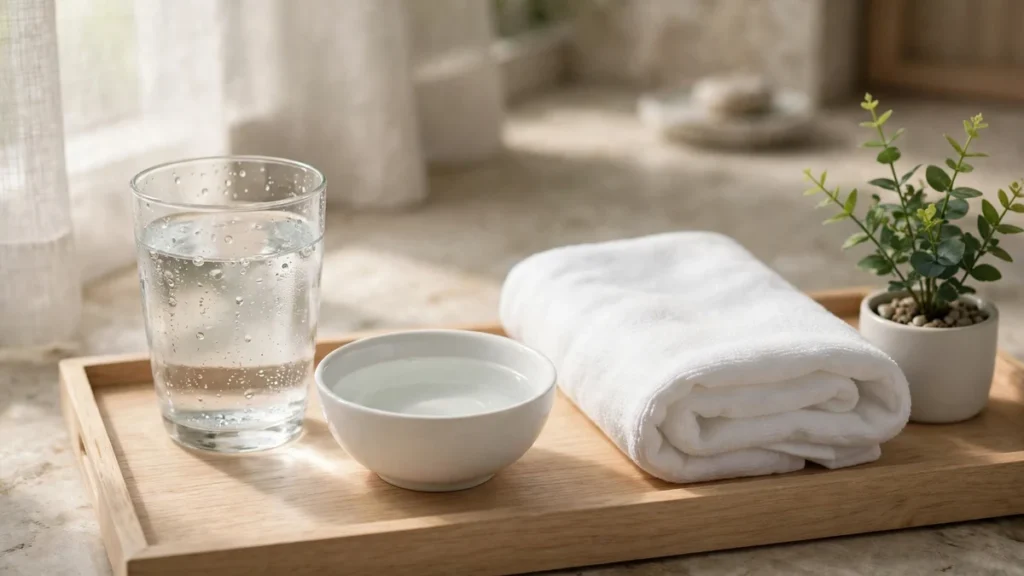
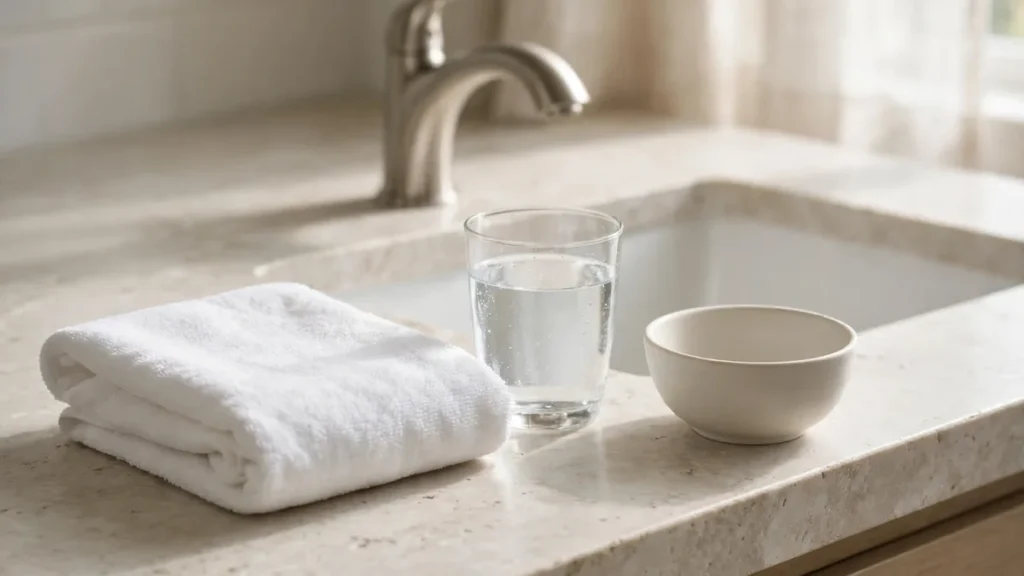
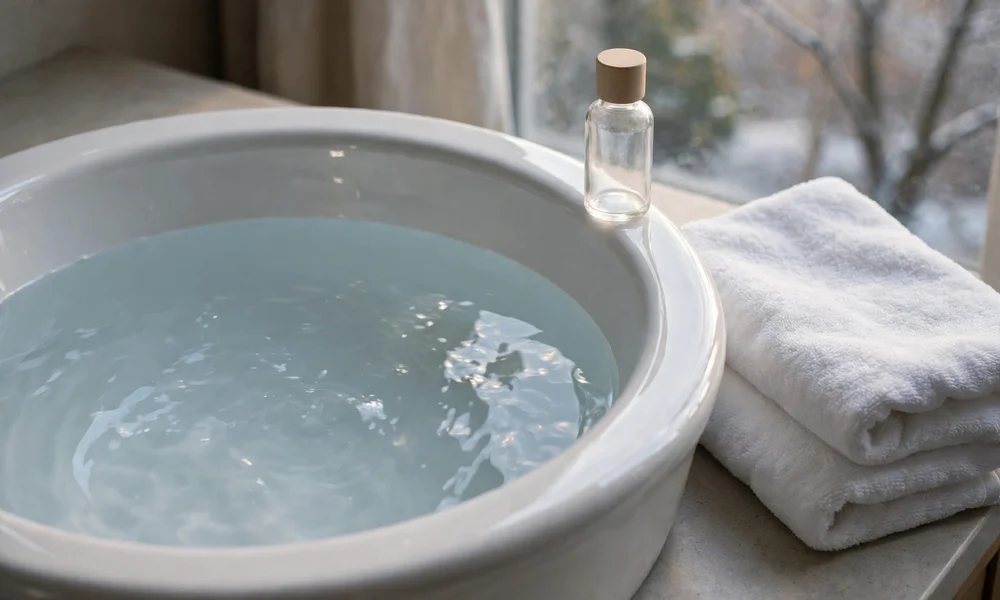
Every layer starts with water, and in winter the water must be lukewarm, never hot. Hot water feels lovely on a cold morning, but it strips the natural oils that protect the skin, and winter skin has little oil to spare. Lukewarm water cleans gently and leaves the skin calm.
Pat the skin dry with a soft towel instead of rubbing, and leave it slightly damp: the next layer goes on while the skin is still a little wet, because damp skin holds moisture far better than skin that is bone dry.
Step Two: Thin Layers, One at a Time
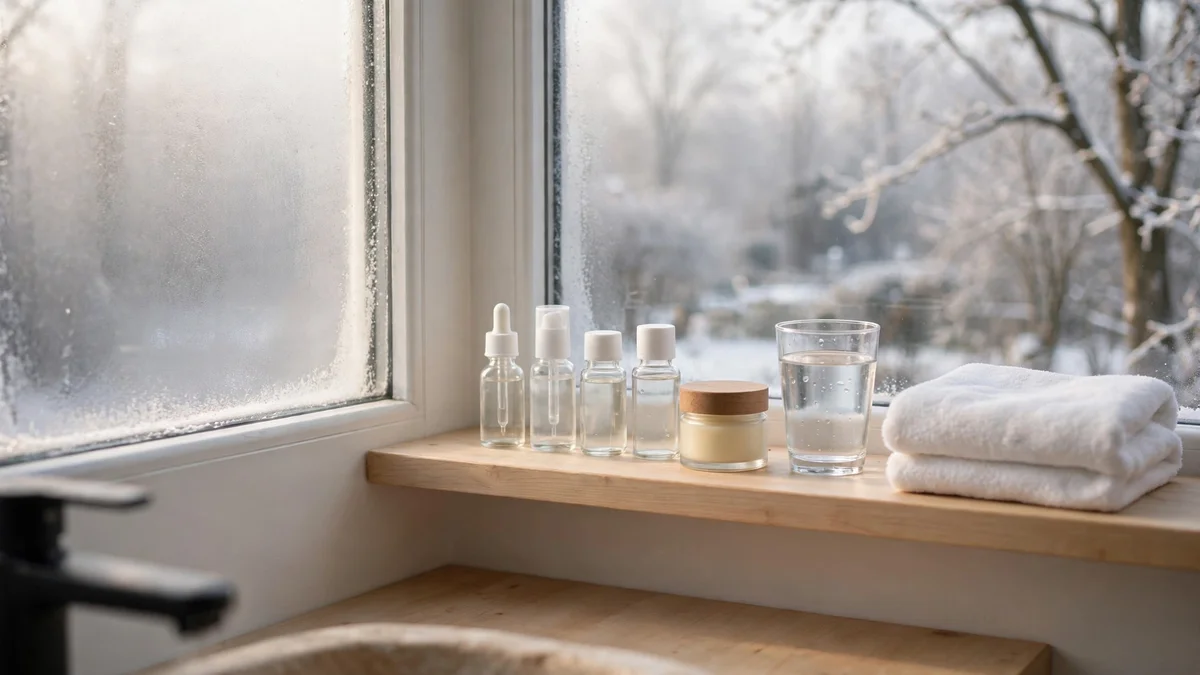
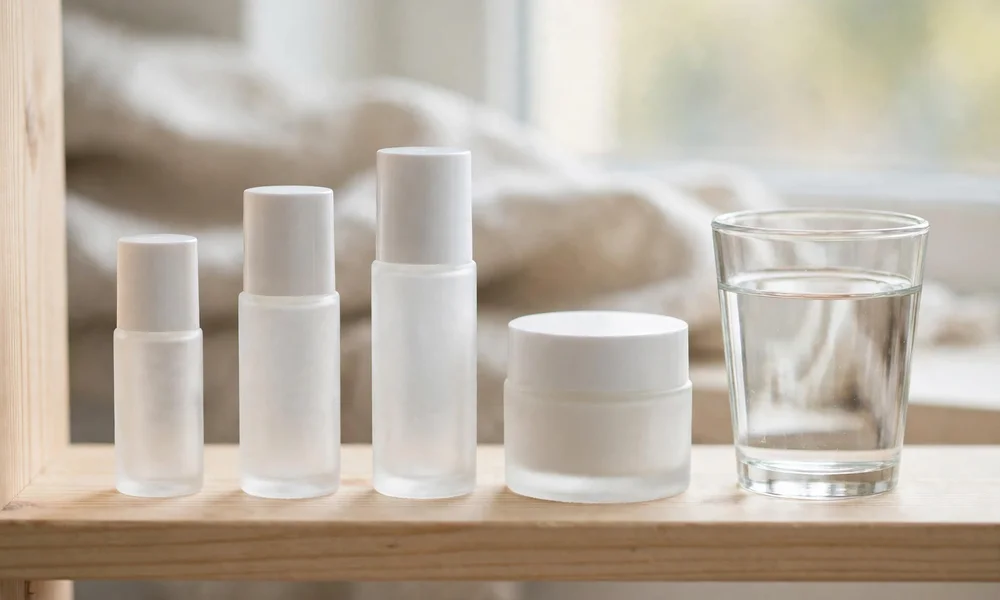
The second step is the thin layers, one at a time, thinnest first. A few drops of a light, watery product go on first, pressed gently into the damp skin with clean hands. Wait about a minute, and let it settle: the skin should feel comfortable, not wet and not sticky.
Then comes the next layer, a little richer than the first, in the same small amount. Use less than you think at each step: a few drops or a pea-sized amount is usually enough. If the skin feels sticky, shiny or pilled, you have used too much, or waited too little. The same plain idea runs through how to layer light skincare without overdoing it, where thin layers in a calm order do the work.
Step Three: Seal in the Moisture
The third step seals the moisture in. A plain cream, richer than the layers before it, goes on last, over the damp, layered skin. It acts like a lid: it slows the water leaving the skin through the cold day, and it softens the tight feeling that winter brings.
Choose a plain, fragrance-free cream if your skin is easily irritated, and warm a pea-sized amount between your hands before pressing it on. In the morning, this cream is the last layer before you dress and go out. In the evening, it is the last thing before bed, so it can work quietly through the night.
A Winter Morning Routine
A winter morning routine takes about five minutes, and it starts with water. Wash with lukewarm water, pat dry gently, and leave the skin slightly damp. Then the thin layers, one at a time, with a minute between them, and the cream to seal it all in.
A Winter Evening Routine
A winter evening routine is slower, because the night is long and the skin has all evening to drink the layers in. Wash with lukewarm water, pat dry gently, and layer again, thin to rich, with the same minute between layers. There is no rush, and no need to go anywhere after.
Keep the bedroom cool rather than hot, so the skin can rest through the night. The same steady idea runs through a simple guide to glowing skin in winter, where a few gentle habits carry the skin through the cold months. In the morning, the skin should feel comfortable, not tight, and if it still feels dry, add one more thin layer tomorrow, not a whole new product.
Going Out in the Cold
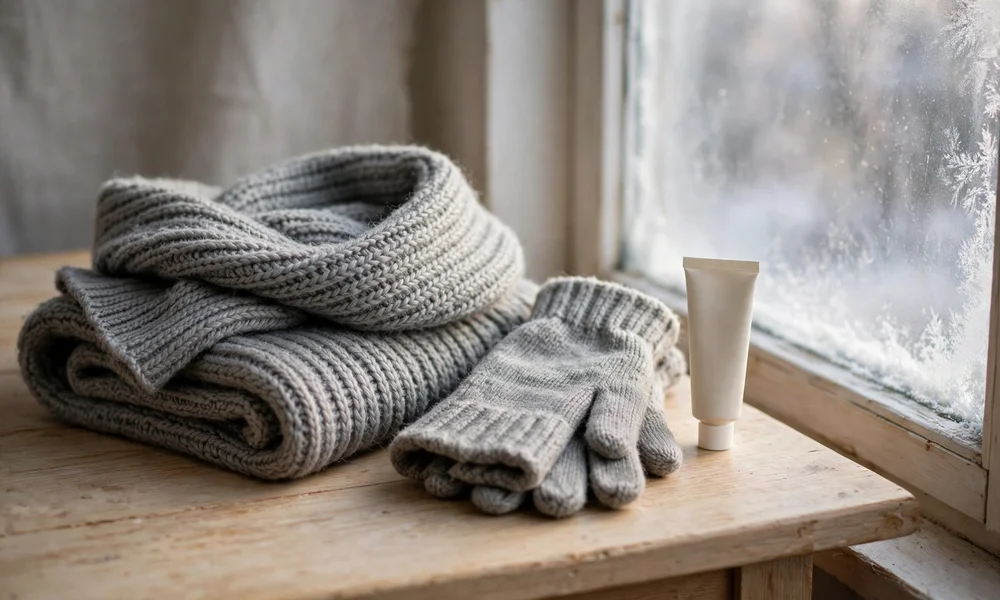
Going out in the cold needs a different kind of layer: warm clothes. A soft scarf over the lower face keeps the wind off the cheeks and lips, and gloves keep the hands from drying and cracking. Put the cream on before you dress, so the scarf and gloves protect the layers underneath, not bare skin.
Carry a small tube of plain cream for the hands, and use it after every wash, because winter hands lose water all day. When you come back indoors, wash with lukewarm water again, pat dry, and cream the hands once more. The cold is outside: the layers and the wool keep the warmth in.
When to See a Doctor
Most winter dryness is ordinary, and a gentle layered routine is enough for it. But some skin problems need a doctor, not a new cream. See a doctor or dermatologist if the skin is cracked and bleeding, if it is very red, swollen or painful, if it itches so much that sleep is hard, or if a rash does not improve after a week or two of gentle care.
Do not try to treat a real skin problem at home with stronger products, scrubs or home remedies. A doctor can tell you plainly what the skin needs, and that advice is worth far more than any bottle. Gentle care is for comfort: real problems belong with a professional, and asking for help is the kindest thing you can do for your skin.
| Winter step | Water rule | Layer rule |
|---|---|---|
| Wash gently | Lukewarm, never hot | Thin layers first |
| Pat dry softly | Leave skin damp | Wait one minute |
| Cream to seal | Drink water slowly | Pea-sized amount |
| Dress warmly | Cool bedroom air | Scarf and gloves |
Your Water and Winter Skin Layered Routine Checklist
- Wash with lukewarm water, never hot, and pat dry with a soft towel.
- Leave the skin slightly damp before the first thin layer goes on.
- Layer thinnest to richest, waiting about a minute between layers.
- Seal with a plain cream, a pea-sized amount warmed between the hands.
- Wear a scarf and gloves outside, and cream the hands after every wash.
- See a doctor or dermatologist if the skin cracks, bleeds, or does not improve.

Frequently Asked Questions
What is a layered routine for winter skin?
A layered routine means thin layers, one after another, from the most watery to the richest: lukewarm water first, then a light layer, then a plain cream to seal the moisture in. Each layer settles for about a minute before the next goes on, so the skin feels comfortable, not coated.
Why does winter make skin feel tight?
Winter air is cold and dry, so it holds very little moisture, and indoor heating dries the air further. The skin loses water all day, and hot water, harsh soap and rough towels can weaken its outer barrier. Lukewarm water, gentle drying and thin layers help the skin hold moisture again.
Should I use hot water on winter skin?
No. Hot water strips the natural oils that protect the skin, and winter skin has little oil to spare. Lukewarm water cleans gently and leaves the skin calm, and patting dry with a soft towel protects it better than rubbing.
How many layers does winter skin need?
Three or four layers are plenty for most winter days: water, one or two thin layers, and a plain cream to seal them in. More layers rarely add comfort, and sticky, shiny or pilled skin usually means too much product or too little waiting between layers.
How does the skin barrier fit into a layered routine?
The skin barrier is the thin outer layer that keeps moisture in and irritation out, and gentle layering supports it. One good explanation is in water and skin barrier: a gentle repair guide, where lukewarm water and a plain cream help a tired barrier rest.
When should I see a doctor about winter skin?
See a doctor or dermatologist if the skin is cracked and bleeding, very red, swollen or painful, if itching keeps you awake, or if a rash does not improve after a week or two of gentle care. Do not try to treat a real skin problem at home with stronger products or scrubs.
The Bottom Line
Water and winter skin need a layered routine: lukewarm water, thin layers, and a plain cream to seal them in.
Keep it gentle, keep it thin, and let winter pass softly.
A Note for Winter Skin
Keep it warm, keep it damp, keep it calm. Spring will come soon enough.