
A favourite silver ring grows dull slowly. One day the chain has lost its shine, the ring looks grey, and the bracelet you loved looks tired. It has not broken; it has simply gathered the dust, skin oils and cream of everyday life, and it is asking for a wash.
Silver dulls because it meets the air: the metal reacts gently with the air and with the things it touches, and a soft grey film forms over the shine. The fix is simpler than most people think — plain lukewarm water, a soft cloth, gentle hands and a little patience. No strong cleaner is needed.
This guide explains how silver works, why it dulls, and how to build a short shine ritual around plain water. Everything here is gentle general information only, and if a piece is valuable, loose or damaged, take it to a jeweller instead of washing it yourself.
Key Takeaways
- Silver dulls slowly because it reacts gently with air, skin oils and everyday creams.
- Plain lukewarm water and a soft cloth are enough for most silver jewellery.
- Never use harsh chemicals, abrasive powders or hard scrubbing on silver.
- Stones set in silver need different care, and some must stay dry.
- Dry every piece fully, and store each piece separately in a soft pouch.
What Silver Is and Why It Dulls
Silver is a soft, bright metal, and the silver in jewellery is usually sterling silver — silver mixed with a small amount of another metal to make it strong enough to wear. That softness is why silver needs gentle care.
Silver dulls because of tarnish, a thin grey or yellow film that forms when the metal meets sulphur in the air and on the skin. Tarnish is not damage: it sits on the surface, and a gentle wash lifts it away.
Why Plain Water Works
Plain water works because most of the dullness on silver is ordinary dirt on top of the tarnish: skin oils, cream, dust and the fine film of daily wear. Lukewarm water loosens it, and a soft cloth lifts it away — nothing stronger is needed for a regular shine ritual.
Lukewarm water, about the warmth of your hand, is the kindest choice. It softens dirt without shocking the metal or loosening a setting, and plain water cannot stain or eat into silver, so it is the safest place to start.
The Simple Shine Ritual
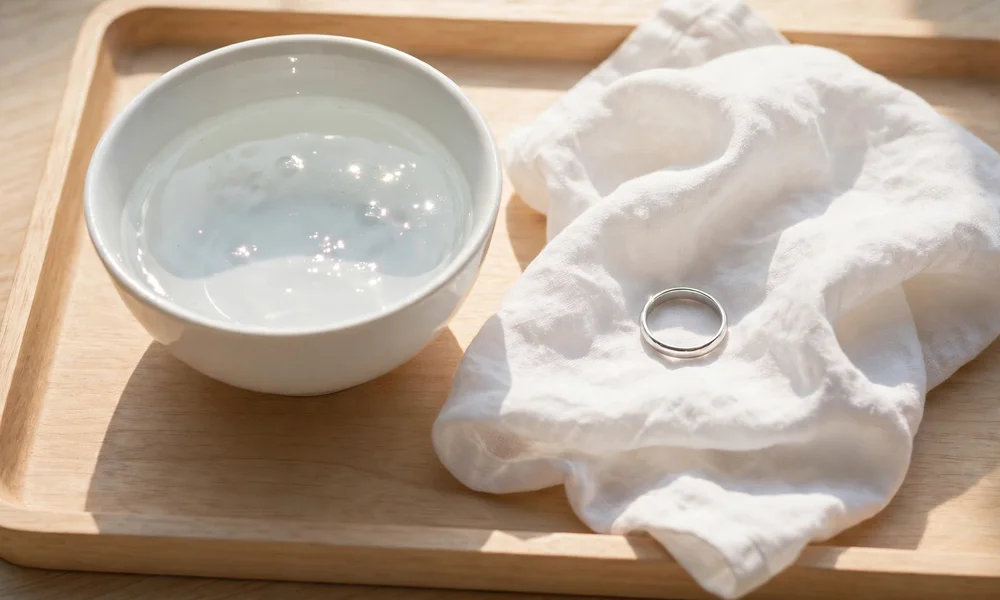
The simple shine ritual takes only a few minutes, and it starts with a clear tray: lay a soft white cloth on it, and set a small bowl of lukewarm water beside it. Take off one piece and look at it in daylight. Check that any stone sits firmly, and that no clasp is bent and no link is open. If anything moves or looks loose, do not wash it: put it aside and take it to a jeweller.
Dip a corner of the cloth in the water and wipe the silver gently, in small slow strokes. Rinse, wipe again, and keep going until the grey film lifts and the shine comes back. Then dry the piece at once with a dry corner of the cloth.
What You Need for the Ritual
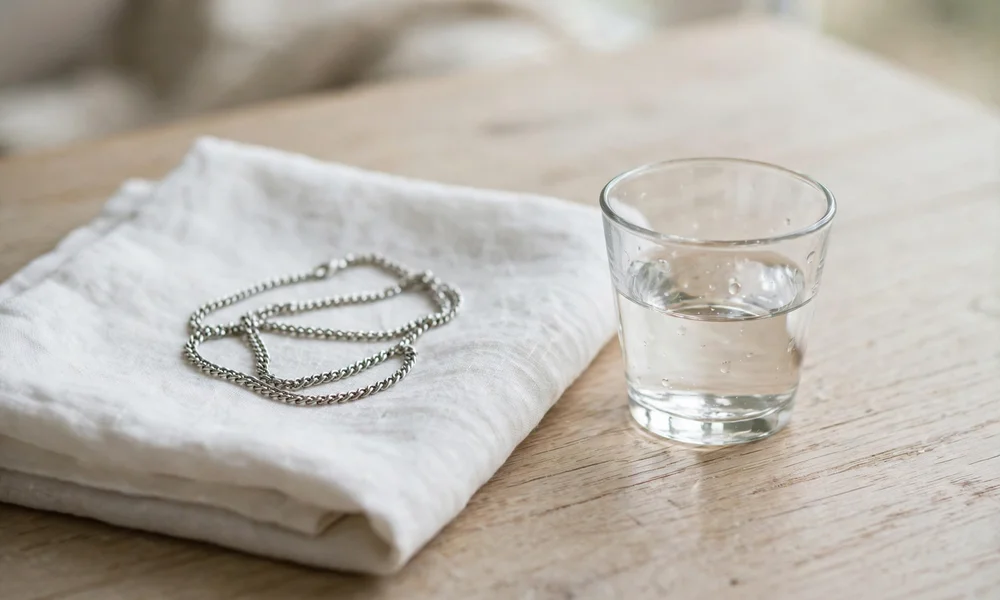
You need very little for the shine ritual, and most of it is already in your home: a small plain bowl, a jug of fresh water, one soft white cloth, and a clean tray to work on.
Choose a cloth that is soft and plain, with no rough weave or printed pattern that could scratch — an old cotton cloth, a soft linen cloth or a plain jewellery cloth all work well. Keep the cloth clean and dry between uses.
Caring for Chains and Rings
Chains and rings dull fastest, because they touch the skin all day: a chain gathers cream and sweat in every link, and a ring gathers soap and lotion under the band. Both need the same gentle wash.
For a chain, lay it flat on the cloth and wipe along its length, a few links at a time, so the cloth reaches into the gaps. For a ring, wipe the band inside and out, and wipe around the setting with the tip of the cloth. Dry both fully, because water left in a link or under a band will dull the silver again.
Stones Set in Silver
Stones set in silver need different care, and this is where most damage happens. A plain silver band can take a gentle water wash, but a stone in a silver setting may not: soft stones can cloud, dissolve or lose their polish in water, and a loose stone can slip out.
Where clean crystal jewellery without damage explains how to tell a hard stone from a delicate one, this guide follows the same rule for silver: know the stone before the water. If you do not know the stone, wipe around it with a dry cloth only, and take the piece to a jeweller. Never soak a piece with a stone in it.
Water and Silver Care at a Glance
| Plain lukewarm water | Soft white cloth | Dry fully |
|---|---|---|
| Gentle slow wipes | One piece at time | Store apart |
| No harsh chemicals | No hard scrubbing | Jeweller for damage |
| Bowl, tray, cloth | Check clasps first | Shine returns slowly |
A Shine Corner for Your Silver
A shine corner gives the ritual a home, and a home makes it easier to keep. Choose a small, clear surface near a window — a vanity, a shelf, or a corner of a desk — and set down a small tray with a folded soft cloth on it.
Keep the corner the same from week to week, so the shine ritual becomes a habit instead of a chore.
Silver, Mother of Pearl and Delicate Stones
Silver is not the only thing that shines softly, and the others each need their own care. Mother of pearl is a pale shell with a soft rainbow glow, and it suits classic days of slow mornings and quiet vanities. Delicate stones need dry hands and a dry cloth, never water.
Where mother of pearl soft shine classic days keeps a pale shell for classic days, this guide keeps silver for a plain-water shine ritual. Where care delicate stones daily wear keeps soft stones dry and safe, this guide keeps plain silver bright with water, and stones set in silver out of the bowl.
What Never to Use on Silver
Some things must never touch silver, because they can ruin its shine for good. Never use harsh chemicals, bleach or strong household cleaners on silver. Never use abrasive powders, baking soda pastes or toothpaste, and never scrub with a hard brush or a scouring pad — these scratch the metal and dull it further.
Never use a silver dip unless a jeweller has told you to, and never put silver in an ultrasonic cleaner at home: dips can strip dark detail from patterned silver, and a home cleaner can shake a stone loose. If a piece is badly tarnished, take it to a jeweller.
When Silver Needs a Jeweller
Some silver problems belong with a jeweller, not with a cloth. If a clasp is bent, a link is open, a stone moves in its setting, or a chain is tangled tight, do not force it — put the piece aside and take it to a jeweller.
The same is true of a piece that is very old, very valuable, or handed down in the family: a jeweller can clean it safely and check every setting. A gentle home ritual is for everyday shine; a jeweller is for everything fragile, loose or precious.
Keeping Silver Bright Between Washes
Silver stays bright longest when worn often and stored well: a piece worn every day tarnishes more slowly than one left in a drawer.
Store each piece separately, in its own soft pouch or small box, so chains cannot tangle and rings cannot scratch each other. Keep the pouches dry, away from perfume and damp bathrooms — a piece stored dry and apart needs the shine ritual far less often.
Your Silver Shine Checklist
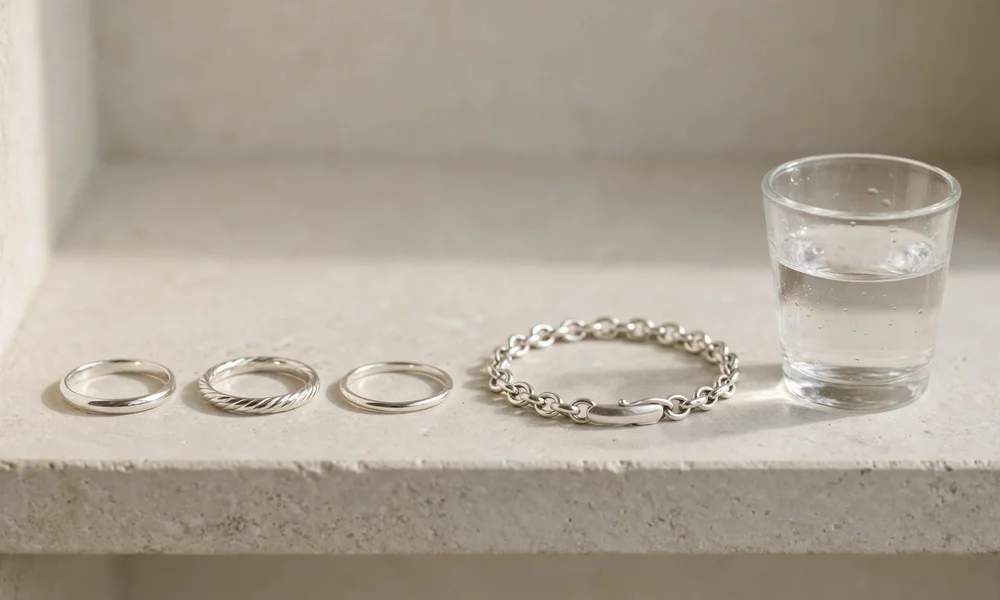
- Lay a soft white cloth on a tray with a bowl of lukewarm water.
- Check each piece in daylight: firm stone, straight clasp, closed links.
- Wipe one piece at a time with a damp cloth, slowly and gently.
- Never use harsh chemicals, abrasives, dips or hard scrubbing.
- Dry every piece fully, then store it in its own soft pouch.
- Take loose, bent or precious pieces to a jeweller, never force them.

Frequently Asked Questions
What is the simplest way to shine silver?
Wipe it gently with a soft cloth dampened in plain lukewarm water, in slow strokes, then dry it at once. That is enough for most everyday dullness.
Can I soak silver in water?
No, do not soak silver — a brief wipe with a damp cloth is enough. Soaking can leave water in links and under settings, and it risks any stone set in the silver.
Can I use toothpaste or baking soda on silver?
No. Toothpaste and baking soda pastes are abrasive, and they leave fine scratches that dull silver further. Use only plain water and a soft cloth, and take badly tarnished pieces to a jeweller.
How do I clean silver with a stone in it?
Wipe the silver around the stone with a dry cloth only, unless you know the stone is safe with water. If you do not know the stone, or it moves in its setting, take the piece to a jeweller.
How often should I shine my silver?
Wipe a piece you wear often with a dry cloth when you take it off, and give it the water ritual when it starts to look dull — most pieces need a wash only every few weeks.
How should I store silver so it stays bright?
Store each piece separately in its own soft pouch or small box, away from perfume and damp bathrooms — a piece stored dry and apart tarnishes far more slowly.
The Bottom Line
Water and silver care is simple: plain lukewarm water, a soft white cloth, gentle slow wipes, and a full dry before the piece goes away. No harsh chemicals, no scrubbing, and a jeweller for anything loose or precious.
A Note for Shine Rituals
Keep it gentle, keep it plain, keep it bright. A bowl of water, a soft cloth, and a few quiet minutes can bring silver back to shine.


