Silver goes quiet slowly. A favourite spoon or ring loses its shine a little at a time, as air, skin and cream leave a thin grey film over the metal, and one day the piece looks tired even though nothing is broken. A silver polish is the small job of bringing it back: plain water, a soft cloth, and five gentle ways to shine.
The five ways cover the whole life of a silver piece. A dry wipe after each wear keeps the film from settling. A damp cloth with plain lukewarm water lifts ordinary dullness. A drop of mild soap helps a stubborn film. A long, slow buff brings big pieces like a teapot back to life. And when tarnish runs deep or a setting feels loose, a jeweller takes over.
This guide sets out the five ways in plain words, how a silver polish differs from a mirror polish, from silver care and from jewellery care, and what it cannot do. Everything here is gentle guidance, not medical advice, and nothing in it treats any condition.
Key Takeaways
- A silver polish is a short, gentle shine ritual for silver objects, not a deep clean.
- Plain lukewarm water and a soft cloth do most of the work.
- Five ways cover daily wipes, water washes, mild soap, slow buffs and jeweller help.
- Never use toothpaste, baking soda paste, bleach or hard scrubbing on silver.
- Patch-test any new product, and take health questions to a doctor.
What a Silver Polish Is
A silver polish is the polishing of silver objects with a soft cloth: spoons, rings, chains, bracelets, teapots, anything made of silver that has gone dull. Silver dulls because of tarnish. The grey film forms when sulphur in the air and on the skin reacts with the metal, dulling the shine a little at a time.
Silver bends easily, so the sterling silver used in jewellery blends pure silver with a little of another metal, giving a ring or spoon the strength to hold its shape through daily wear. That softness is why silver needs gentle care.
A Silver Polish and a Mirror Polish
Water and a mirror polish: a simple fresh ritual gives a bathroom mirror five minutes with plain water and two cloths: mist the glass, wipe in slow circles, buff it dry. The surface there is glass, the dirt is steam and toothpaste spray, and the room is the bathroom. The mirror is polished so a face can be seen clearly in the morning.
A silver polish works on a different surface altogether. The surface is metal, the dullness is tarnish from the air, and the place is a tray, not a bathroom wall.
A Silver Polish and Silver Care
Water and silver care: a simple shine ritual is a water wash for silver jewellery: lukewarm water, a soft cloth, one piece at a time, dried fully, with stones in silver needing different care.
A silver polish is wider than that wash. The water wash is one of the five ways here, the second one, and the polish adds four more: a dry wipe after wearing, a mild soap wash for a dull film, a slow buff for big pieces, and a jeweller for deep tarnish.
A Silver Polish and Jewellery Care
Water and jewellery care: a simple shine ritual is one ritual for the whole jewellery box: gold, silver and gemstones together, water with a drop of mild soap, clasps and prongs checked in daylight.
A silver polish is silver only, and it reaches beyond the box. Jewellery care gives gold one chapter and gemstones another; this guide gives silver all five chapters, and it adds the flatware and the teapot that never lived in a jewellery box. A silver ring with a stone in it still follows the jewellery rule: know the stone before any water touches it.
Five Ways to Shine
The first way is the dry wipe. After you take a piece off, give it a few strokes with a dry, soft cloth before it goes away. The cloth lifts skin oils and cream while they are still fresh, and a piece wiped daily tarnishes far more slowly than one put away dirty.
The second way is the water wipe. Dampen a corner of the cloth in plain lukewarm water, about the warmth of your hand, and wipe the silver in slow strokes until the dullness lifts. Rinse the cloth, wipe once more, then pat the piece dry straight away with the clean end.
The third way is the mild soap wash. For a film that water alone will not lift, fill a small bowl with lukewarm water and add a single drop of mild soap. Stir it gently, wash one piece in it for a minute or two, then rinse in a second bowl of plain water and pat dry at once.
The fourth way is the slow buff. Big, flat pieces like a teapot or a tray need time rather than strength. Work in long, slow strokes with a dry cloth, a section at a time, and let the shine build up gradually.
The fifth way is the jeweller. Deep tarnish, a bent clasp, a loose stone or a very old piece belongs with a professional, not with a cloth.
Polishing Silver, Step by Step
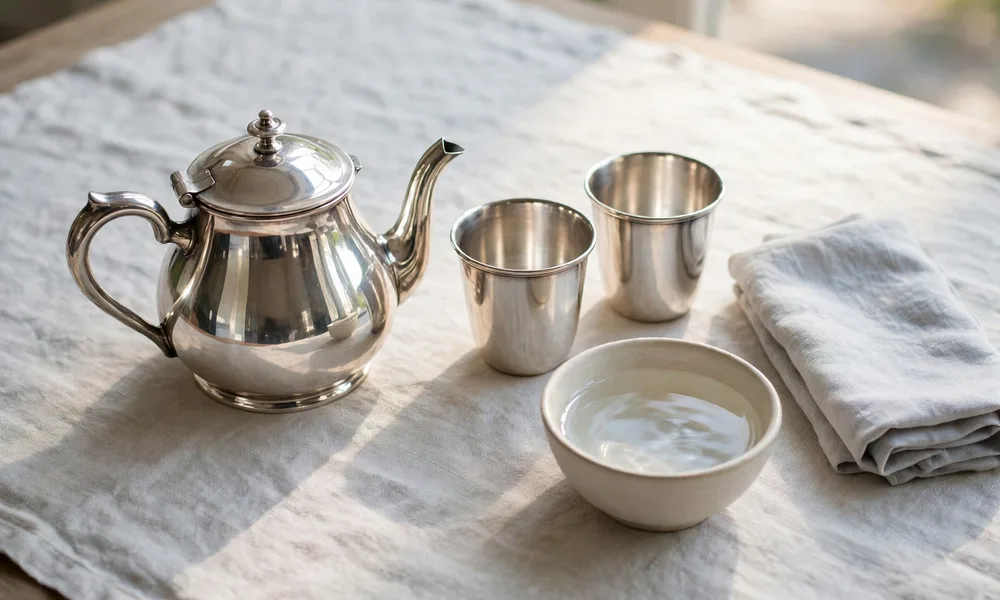
Begin with the tray, not the silver: spread the cloth over it, set the bowl of lukewarm water down beside it, and lay one piece out in daylight. Look the piece over closely. The stone should sit firm, the clasp should shut straight, and every link should be closed.
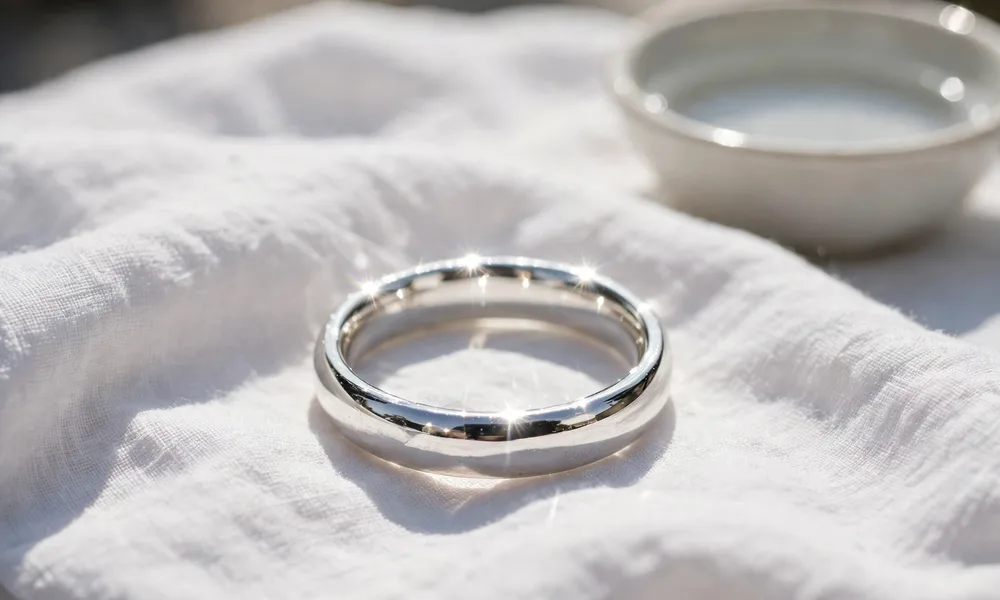
Dampen a corner of the cloth and wipe the silver in slow strokes, a few links or a small patch at a time. Rinse the cloth when it picks up dirt, wring it out, and keep going until the dull veil gives way and the brightness returns. Then pat the piece dry straight away with the clean, dry end of the cloth, and turn it toward the window to check the finish.

A Fresh Morning with Polished Silver
At the dressing table, with the morning light coming in sideways, the polish takes five minutes and asks for nothing else. Set the tray down, fold the cloth beside it, and take one ring from the box. Wipe it slowly with the damp corner, dry it with the dry corner, and hold it up to the window to see the shine come back.
Silver Polish at a Glance
| Dry wipe daily | Water, soft cloth | Patch-test first |
|---|---|---|
| Water wipe weekly | One piece, slow | Dry fully after |
| Jeweller for tarnish | Five ways, small | Store apart, dry |
Silver Polish Among the Other Water Guides in This Batch
This batch holds four other water guides beside the silver polish, and five stones beside them. The linen spray is a simple guide to misting linen with water, the car wash is a beginner's guide to washing a car outdoors, the scalp rinse is a set of top tips for rinsing hair, and the hand soak is a gentle guide to soaking hands. One mists linen, one washes a car, one rinses hair, one soaks hands, and the silver polish shines silver objects with a soft cloth.
The five stones keep their own places too: rutile, gold needles for bright days; triphane, yellow warmth for the same bright days; chloritoid, grey depth for quiet ones; tugtupite, pink softness for tender ones; lithium quartz, violet calm for quiet ones.
Keeping Silver Bright Through the Week
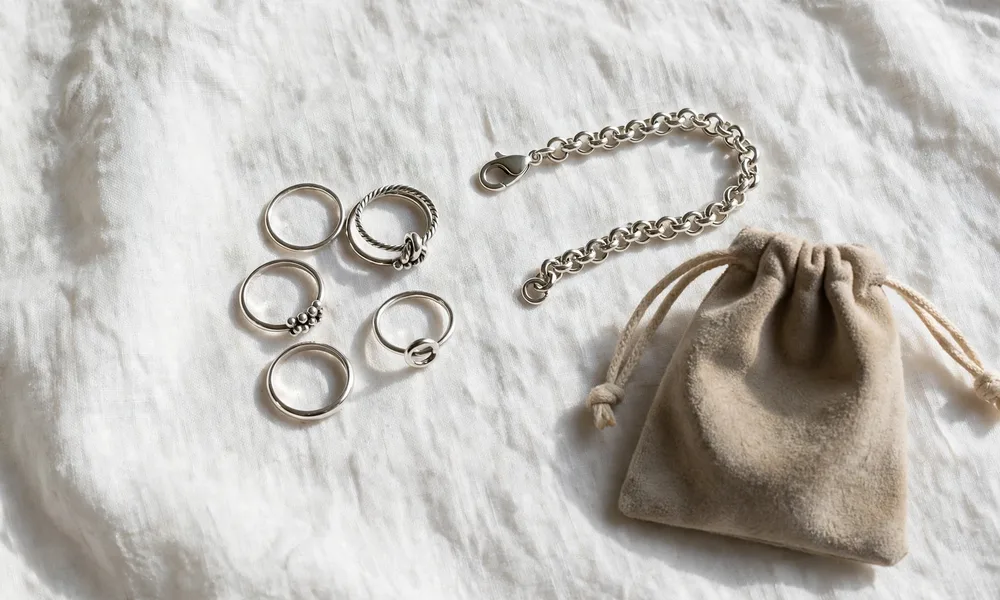
Silver keeps its shine best when it is used and put away with care. A ring worn daily stays brighter than one forgotten in a drawer, and a piece that is worn often asks for the polish far less than one left sitting. Give every piece its own pocket in the box, so chains cannot tangle and rings cannot scratch each other, and keep the box somewhere cool and dry, far from the bathroom steam.
Wipe each piece with a dry cloth before putting it away, and put jewellery on last, after perfume and creams have dried.
What Silver Polish Will Not Do
A silver polish will not fix what is broken. It cannot repair scratches, straighten a bent clasp, tighten a loose stone or bring back a teapot that has been dented.
It will not treat skin or health, either. If a new cloth or product leaves your skin sore, stop using it, and test any new product on a small patch of skin first, waiting a day before using it more widely. Stones set in silver need care of their own: soft stones like opal, pearl, turquoise, amber and malachite must stay dry, so wipe the metal around them with a dry cloth only. If a ring holds a stone you cannot name, ask a jeweller before any water touches it.
Your Fresh Days Checklist
- Spread the cloth over the tray, bowl of lukewarm water beside it.
- Check each piece first: firm stone, straight clasp, closed links.
- Wipe one piece with the damp corner, slow strokes, no hurry.
- Dry each piece straight away, then pouch it on its own.
- Never reach for toothpaste, baking soda, bleach or a hard brush.
- A skin worry or a health question belongs with a doctor, not with a polish.
Frequently Asked Questions
What does a silver polish actually do?
A silver polish lifts the thin grey tarnish film from silver objects with plain water and a soft cloth, leaving the metal bright again.
Which of the five ways should I start with?
Start with the dry wipe after each wear, and add the water wipe when a piece looks dull.
Can I polish silver that holds a stone?
For a stone you cannot name, keep water off it: rub the metal nearby with a dry cloth, and let a jeweller decide how the setting should be cleaned.
Will a silver polish remove deep tarnish?
No. A home polish lifts everyday dullness; tarnish that has sat for years belongs with a jeweller.
How often should silver be polished?
Wipe a piece with a dry cloth when you take it off, and wash it when it looks dull — most pieces need a wash only every few weeks.
Where should I keep the cloth and bowl between polishes?
Keep the bowl, the cloth and the tray together on one shelf, so the ritual starts in a minute and nothing wanders off.
The Bottom Line
Five ways, one habit: plain water, a soft cloth, slow hands, and silver put away dry.
A Note for Fresh Mornings
A little shine, often, and gently: water, cloth, and five quiet minutes are all silver asks.