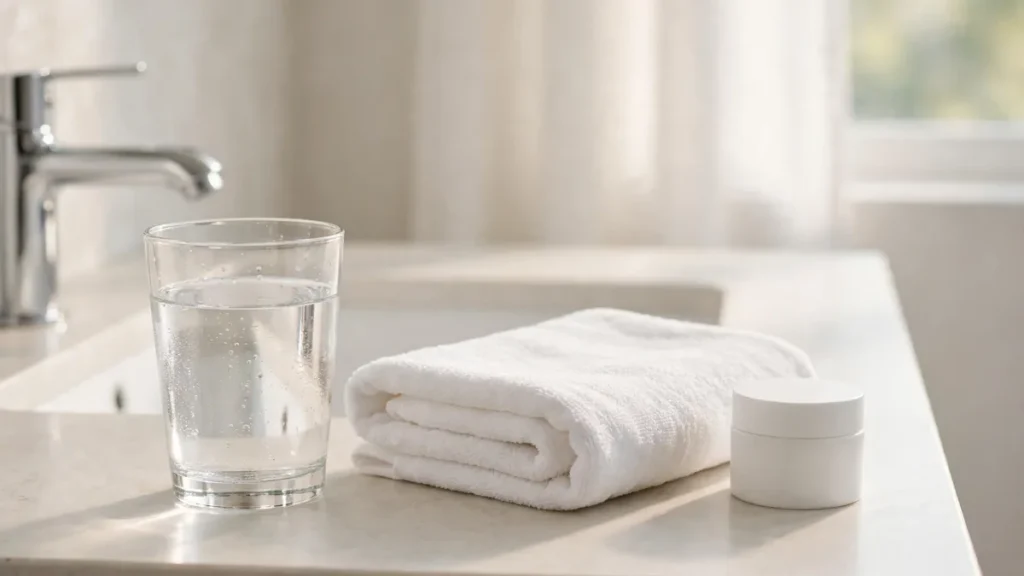
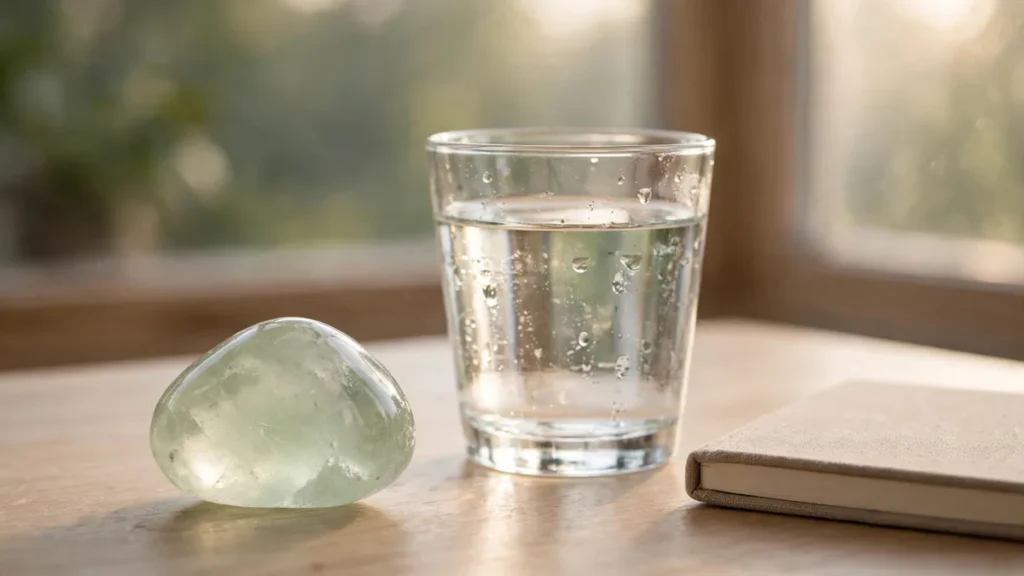
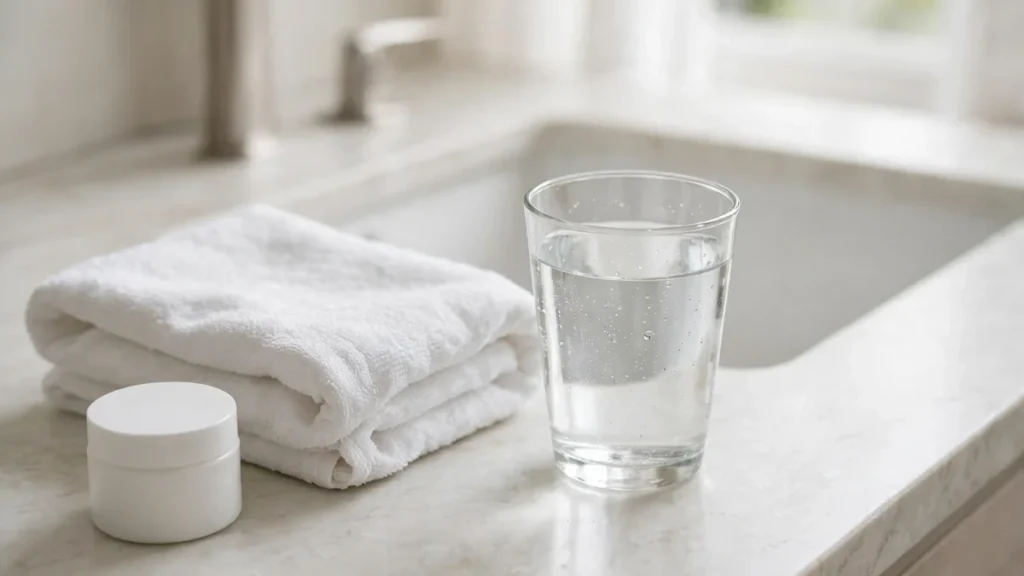
A favourite ring grows dull slowly. One day the stone has lost its shine, the chain feels sticky, and the bracelet you loved looks tired. It has not broken. It has simply gathered the dust, skin oils, and cream of everyday life, and it is asking for a wash.
Cleaning crystal jewellery is easy once you know the rules, and the first rule is that not every stone can be washed the same way. Hard stones forgive a little lukewarm water and mild soap. Soft stones do not forgive at all: water can dissolve them, dull them, or cloud them for good.
This guide explains how to clean crystal jewellery without damage: telling a hard stone from a delicate one, the gentle wash that suits most pieces, and what to do differently for rings, pendants, and bracelets. It also names the stones that must never touch water.
Key Takeaways
- Clean gently: lukewarm water and mild soap suit hard stones, a dry soft cloth suits delicate ones.
- Eight stones must never touch water: selenite, malachite, angelite, lepidolite, turquoise, opal, pearl, amber.
- Never use harsh chemicals, ultrasonic or steam cleaners, or hot water.
- Clean the setting too: clasps, chains, and prongs hold most dirt.
- Dry every piece fully, and store each piece separately in a soft pouch.
What Clean Means for Crystal Jewellery
Clean jewellery is not jewellery that has been scrubbed hard. It is jewellery that has had its dust and oils lifted away without scratching the stone, loosening the setting, or dulling the polish. The aim is gentle: a little warm water, a little soap, and a soft cloth.
Most dirt on jewellery is ordinary. Skin oils gather under rings, cream collects behind pendants, and dust settles into the tiny gaps around prongs and clasps. None of this needs a strong cleaner: strong cleaners strip polish, cloud soft stones, and eat into thin metal.
Before you wash anything, look at the piece closely in daylight. Check that the stone sits firmly, no prong is bent, and no bead is cracked. If anything moves or looks loose, do not wash it: put it aside and take it to a jeweller. A loose stone can slip out.
Know Your Stone Before Water
The single most important step is knowing your stone, because water that is safe for one stone can ruin another. Hard, non-porous stones usually tolerate a brief wash in lukewarm water: clear quartz, amethyst, rose quartz, citrine, garnet, and sapphire. A gentle wash suits them well.
Eight stones must never touch water. Selenite is soft and dissolves in water, losing its shape and shine. Malachite must never go in water, because its dust can be harmful. Angelite and lepidolite are soft and porous, and water dulls them quickly. Turquoise is porous and can stain or crack. Opal holds water inside itself, and soaking can cloud it. Pearl is a thin layer of nacre that water and soap can damage. Amber is soft resin that clouds with moisture.
For these eight, the rule is simple: a dry, soft cloth only. Wipe them gently, keep them dry, and store them separately. If you are unsure what stone you have, treat it as delicate: a dry wipe never harms a hard stone, but water can ruin a soft one in minutes. Telling the groups apart is covered in how to cleanse crystals with water safely, and daily-wear care in how to care for delicate stones in daily wear.

The Gentle Wash, Step by Step
Start with clean hands and a clean, flat surface. Lay a soft towel on the table so nothing rolls away, and work over a bowl, never over an open drain. A dropped ring in an open drain is gone in a second.
Mix a small bowl of lukewarm water with one drop of mild, plain soap: no perfume, no dye, no strong detergent. Lukewarm means comfortable to your hand, never hot, since hot water can loosen glue in settings.
Place the piece in the bowl for two or three minutes, no longer. Lift it out and rub it very gently with a soft cloth or a soft brush kept only for jewellery, working around the stone, under the prongs, and along the chain or band. Rinse briefly in a second bowl of clean lukewarm water, never under a running tap, and pat dry. Let it air-dry fully before you wear it or put it away, because damp metal tarnishes and damp cords weaken.
Rings, Pendants, and Bracelets
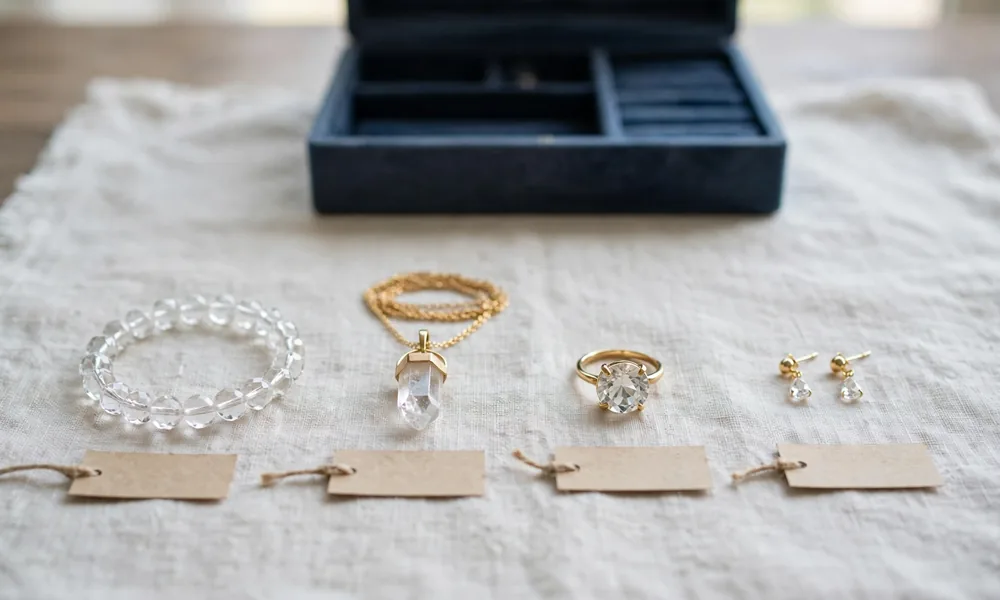
Each type of jewellery collects dirt in its own place. Rings gather cream and soap under the band and behind the stone, where the skin stays warm all day. Pay attention to the inside of the band and the small gaps around the prongs.
Pendants are easier to clean but easier to damage. The chain holds most of the dirt, while the stone itself usually needs only a wipe. Hold the pendant by its bail, the small loop at the top, and clean the chain separately. Never hang a wet pendant up to dry: lay it flat on the towel.
Bracelets, especially beaded ones, need the most care. The cord inside the beads weakens when it stays damp, so never soak a beaded bracelet. Wipe each bead with a barely damp cloth if the stone allows water, or a dry cloth if it does not, and lay the bracelet flat to dry. Wearing these pieces every day is covered in a beginner's guide to wearing crystals every day.
What to Avoid
The fastest way to damage crystal jewellery is the wrong cleaner. Never use bleach, acetone, nail polish remover, or any household cleaner with strong chemicals: they cloud stones, strip polish, and eat into thin metal. Never use toothpaste, baking soda paste, or any gritty scrub, because the grains scratch polished stone and soft metal.
Never use an ultrasonic or steam cleaner on crystal jewellery unless a jeweller tells you it is safe for that exact piece. Ultrasonic cleaners shake dirt loose with sound, and the same shaking can crack a stone, loosen a prong, or shatter a bead. Steam cleaners are worse: the heat can crack stones and loosen glue. Both are made for plain gold and hard diamonds, not crystal jewellery.
Hot water is another quiet danger. It can loosen glue, weaken elastic cords, and shock stones that hold water inside themselves, like opal. Keep the water lukewarm, keep the soak short, and keep the piece out of the dishwasher and the washing machine.

Drying, Polishing, and Storing
Drying matters as much as washing. A piece put away damp will tarnish, and damp cords weaken. After rinsing, pat the piece dry with a soft, lint-free cloth, then leave it on a clean towel until it feels completely dry. Do not use a hairdryer, and do not rub hard.
Polishing is the final touch, and it should be light. A soft, dry cloth, rubbed gently over the stone and the metal, brings back the shine without scratching. For silver chains, a silver polishing cloth works well, but keep it away from the stone. Never use a polishing paste on crystal jewellery.
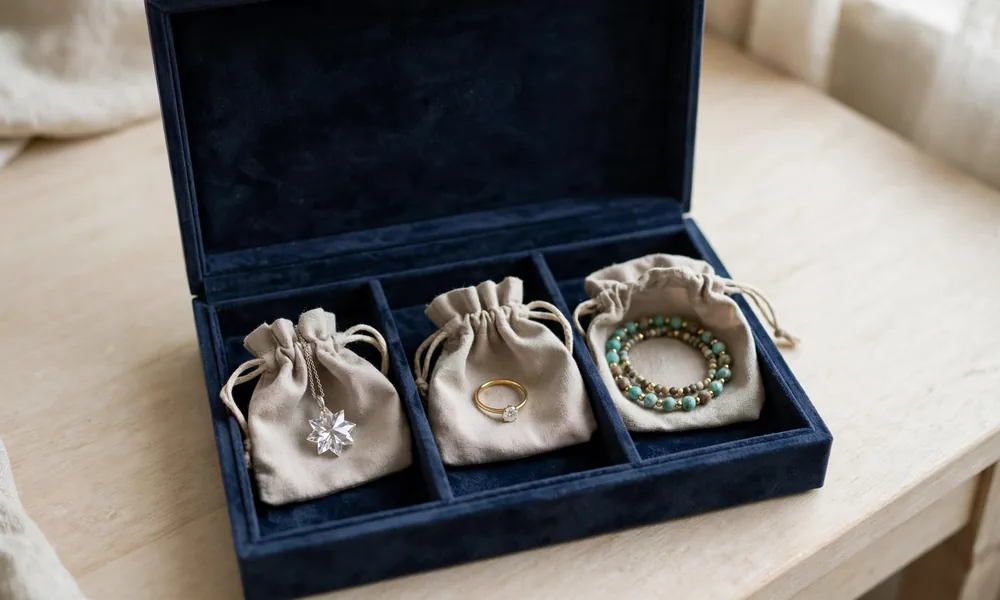
Storage is where clean jewellery stays clean. Store each piece separately in a soft pouch or a lined box with dividers, so pieces cannot scratch each other. Keep them dry, cool, and out of direct sunlight, away from perfume, hairspray, and cream. Put your jewellery on last, after perfume and cream have dried.
| Piece type | Wash method | Dry and store |
|---|---|---|
| Hard stone ring | Lukewarm soapy water | Pat dry, pouch |
| Delicate pendant | Dry soft cloth | Flat, lined box |
| Beaded bracelet | Wipe, never soak | Flat, keep dry |
| Silver chain | Soft cloth polish | Separate pouch |
When to Ask a Jeweller
Some jobs belong to a jeweller. Take the piece in if a stone wobbles, a prong is bent or missing, a clasp no longer closes, or a bead is cracked. Take it in too if the metal is deeply tarnished or the stone is scratched.
A jeweller can tighten prongs, replace a clasp, restring a bracelet, and clean a piece with tools you do not have at home. Tell the jeweller if you know it is a delicate stone: a good jeweller will clean it by hand. If a shop offers an ultrasonic cleaner without asking what the stone is, take the piece back and find another shop.
Your Crystal Jewellery Cleaning Checklist
- Look at the piece in daylight and check the setting is firm.
- Name the stone and keep the eight no-water stones dry.
- Mix lukewarm water with one drop of mild plain soap.
- Soak hard stones briefly, wipe delicate stones with a dry cloth.
- Rinse in clean water, pat dry, and air-dry fully before storing.
- Store each piece separately in a soft pouch, away from perfume.
Frequently Asked Questions
Can I wash crystal jewellery with soap and water?
Yes, if the stone is hard, like clear quartz, amethyst, or rose quartz. Use lukewarm water with one drop of mild plain soap, soak briefly, rinse, and dry fully. Never wash selenite, malachite, angelite, lepidolite, turquoise, opal, pearl, or amber.
How often should I clean crystal jewellery?
Wipe pieces you wear daily with a soft dry cloth once a week, and give hard stones a gentle soapy wash once a month. Delicate stones need only the dry wipe.
Is it safe to use an ultrasonic cleaner?
No, not for crystal jewellery. They can crack stones, loosen prongs, and shatter delicate beads. They are made for plain gold and hard diamonds. Ask a jeweller to clean a crystal piece by hand.
What should I do if my ring stone feels loose?
Do not wash it and do not wear it. Put it aside in a soft pouch and take it to a jeweller, who can tighten the prongs. A loose stone can slip out.
Can I clean a beaded crystal bracelet in water?
Only if the beads are hard stones, and even then, never soak it. Wipe each bead with a barely damp cloth and lay the bracelet flat to dry. The cord inside weakens when it stays damp.
How should I store crystal jewellery after cleaning?
Dry every piece fully first, then store each one separately in a soft pouch or a lined box with dividers. Keep pieces dry, cool, and out of direct sunlight, away from perfume and cream.
The Bottom Line
Clean crystal jewellery gently: lukewarm water and mild soap for hard stones, a dry soft cloth for the eight no-water stones, never a harsh cleaner or a machine. A few minutes, once a month, keeps every piece bright.
Start with one piece today.
A Note for Beautiful Pieces
Keep it gentle, keep it dry, keep it separate. A piece cleaned with care will shine for years.