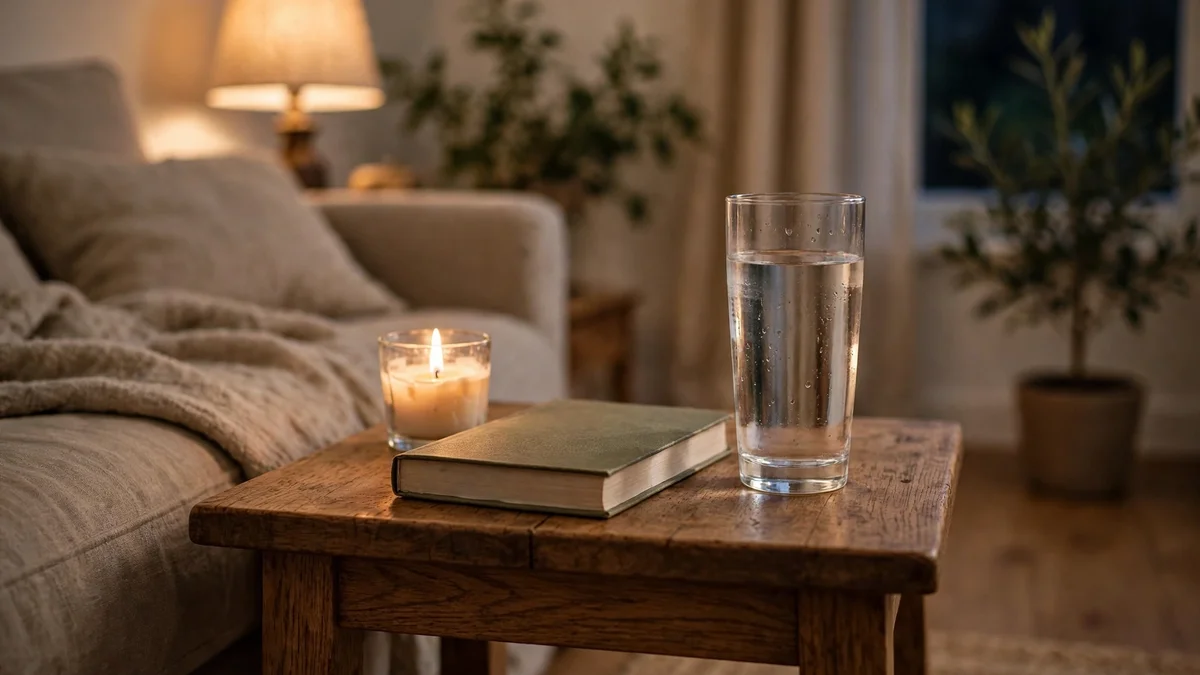
Dinner is finished, the plates are washed, and the evening stretches ahead. This is the hour when the phone usually comes out again, the television flickers on, and the last quiet part of the day slips away in scrolling. By bedtime, the eyes feel tired and the mind feels full.
A screen-free evening changes that hour without adding anything to it. After dinner, every screen goes dark: the phone rests in another room, the laptop stays shut, and the television stays off. What remains is simpler, a glass of water, a book, a lamp, and time that belongs to you again.
This guide explains how to build that evening: a calm corner, water sipped slowly, and a gentle close to the day. It is gentle general information only, never medical advice, and it will not treat or cure anything. If sleep or eyesight troubles keep coming back, please see a doctor.
Key Takeaways
- A screen-free evening means no screens at all after dinner, until bedtime.
- Keep plain water within reach and sip it slowly through the evening.
- A book, a lamp and a quiet chair are all the evening needs.
- The phone rests in another room, so the evening belongs to you.
- Treat this as friendly guidance only; a doctor handles real health worries.
What a Screen-Free Evening Is
A screen-free evening is the part of the day after dinner when no screen is switched on. The phone is put away, the laptop is closed, the tablet is left on its shelf, and the television stays dark. The evening runs on lamplight and conversation instead of glowing rectangles.
It is not a ban on the whole day. The screens were there all day, and they will be there again in the morning. This is only the last few hours, set aside so the eyes can rest and the mind can slow down before sleep.
Why Evenings Without Screens Feel Calmer
Screens keep the mind busy in a way that a book never does. Each notification pulls the attention sideways, and the evening passes in small jumps from one thing to the next. Without them, the hours stretch out and settle, and the room feels quieter even when nothing has changed in it.
Water helps the evening slow down too. Each sip is a small pause, a reason to sit back in the chair and look out of the window. A glass that needs refilling gives the hands something gentle to do, and the evening finds its own calm pace.
Setting Up a Screen-Free Corner
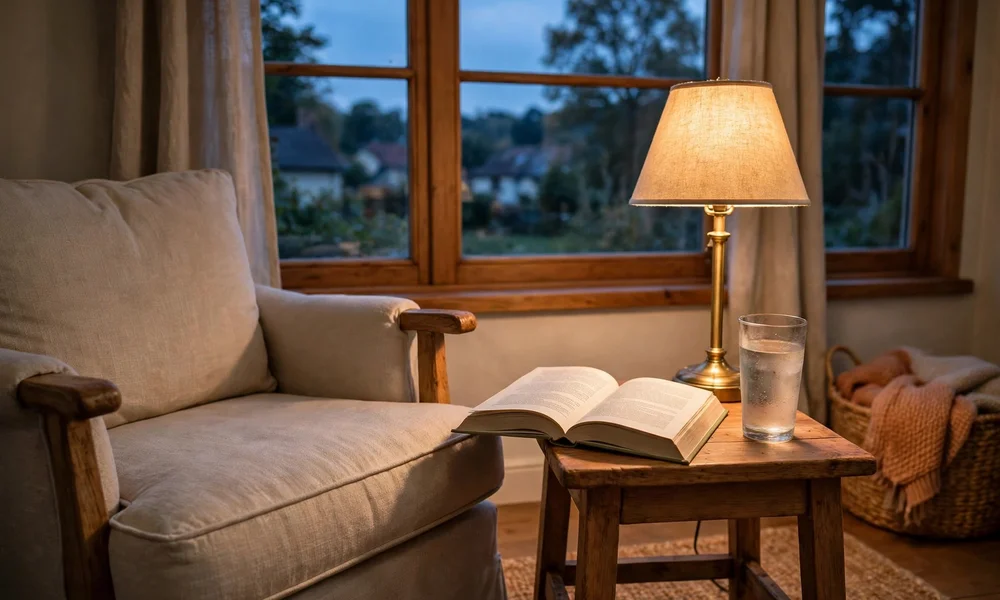
A screen-free corner needs very little: a comfortable chair, a small table, a lamp with warm light, and a glass of water close at hand. Pick a spot away from the television, where the glow of a screen cannot reach you, and put the phone to charge in another room before dinner ends.
Lay out the things the evening will use: a book, a pen and a scrap of paper, a cup for tea. Keep the corner tidy, with only the things the evening needs.
Water Through a Screen-Free Evening
Water through the evening is best taken a little at a time, in unhurried sips through the hours. Fill a clear glass after dinner and keep a bottle nearby, so fresh water is always within reach of the chair. Take a slow sip each time you finish a chapter or a page, and refill the glass when it runs low.
Plain water is enough, and it needs nothing added to it. Sip slowly, and do not force yourself to over-drink. If the glass is empty by bedtime, the evening has carried its simplest habit well.

A Simple Evening Ritual
Begin the ritual the moment dinner is done. Wash the plates, wipe the table, and pour a fresh glass of water. Carry the glass to the corner, light the lamp, and set the phone down in the kitchen to charge, where its buzz cannot reach you.
Then sit down with the book and read until the chapter ends. When the eyes grow heavy, close the book, stretch slowly, and take the glass to the bedroom. That is the whole ritual: plates, water, lamp, book, and bed.
Screen-Free Evenings at a Glance
| Water within reach | Screens off early | Calm close |
|---|---|---|
| Slow sips often | Phone in kitchen | Book and lamp |
| Glass and bottle | Television stays dark | Stretch and breathe |
| Refill at chapters | Laptop stays shut | Water by bed |
Screen-Free Evenings and Screen Days
Water and screen days is the whole-day habit guide for long hours at a screen: water within reach, short eye breaks, good posture, and a calm close when the work ends.
A screen-free evening is a smaller piece of that day, only the hours after dinner, when every screen goes dark at once. Where the screen days guide keeps eyes and posture fresh through long working hours, this guide takes the evening out of the screen entirely. The screen day is all day; the screen-free evening is the calm ending.
Screen-Free Evenings and a Calm Mind
Water and a calm mind is about keeping the mind steady through the day: plain water, slow sips, quiet pauses, and small habits that settle a busy head. Its calm is carried through the working hours.
A screen-free evening borrows that same calm and gives it a fixed hour. Instead of pausing between tasks, the evening itself becomes the pause, with the lamp lit, the book open, and no screen to pull the mind sideways. The calm mind guide steadies the day; this ritual rests the evening.
Screen-Free Evenings and a Good Mood
Water and a good mood is about small fresh habits that lift the day: water sipped slowly, light through the window, a short walk, and a tidy desk. Its mood is built from little pleasures spread across the day.
A screen-free evening lifts the mood in a different way, by taking things away rather than adding them. With the screens gone, the evening feels roomy again, and the simple pleasures, a warm lamp, a good chapter, a cool glass of water, have space to be noticed. The good mood guide adds light to the day; this ritual clears the evening.
Where the Evening Belongs
The screen-free evening belongs in the quietest part of the house. A chair by the window, a corner of the living room, or the bedroom with the lamp lit all work, as long as the television is out of sight and the phone is in another room.
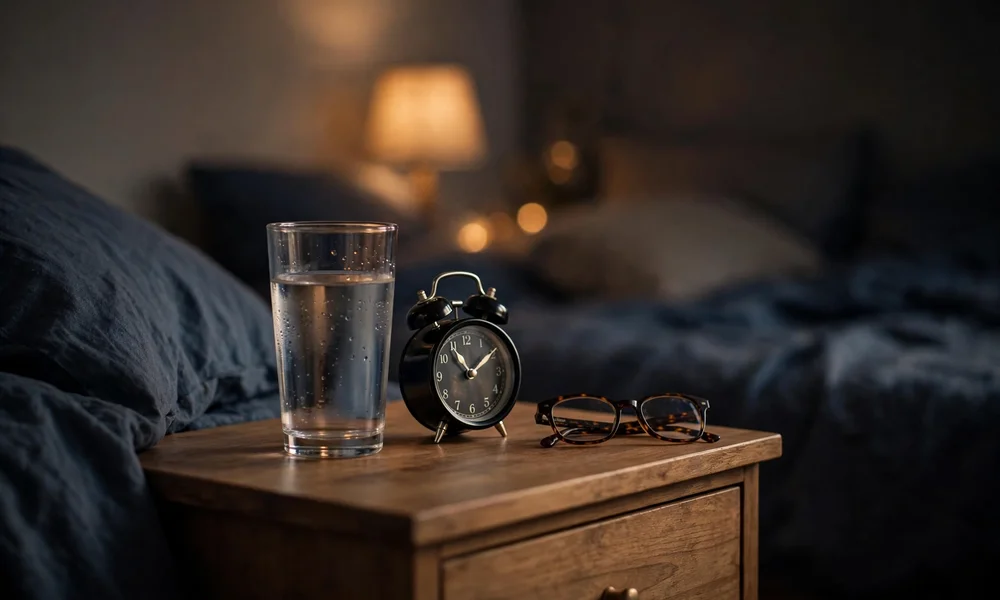
Keep the bedside ready too: a glass of water, a small clock, and the book with a page marked. When the evening ends, the bedroom should already feel calm.
Keeping the Ritual Simple
A ritual only survives if it stays easy. Keep the same chair, the same glass, and the same hour each evening, so the body learns the pattern and the evening begins without a decision. If one evening slips and the television comes on, let it go and begin again the next night.
Do not add rules to the ritual. A new lamp will not make the evening calmer. The glass, the book and the dark screens are already enough, and the habit grows stronger each night it is kept.
Gentle General Information
This guide is gentle general information only, and it is not medical advice. It will not treat poor sleep, sore eyes, anxiety, or any other health problem, and no evening habit can replace a doctor. If your eyes stay sore, your vision changes, or sleep troubles keep coming back, please see a doctor.
Patch-test anything new that touches your skin, such as a new tea or a new cream, on a small patch first, and stop at the first sign of redness or itching. Drink plain water when you feel thirsty, sip slowly, and never force yourself to over-drink. The evening is meant to be restful, and a restful evening asks very little of anyone.
Your Screen-Free Evening Checklist
- Put the phone to charge in another room before dinner ends.
- Pour a fresh glass of water and keep a bottle within reach.
- Switch off the television and leave the laptop shut.
- Read a book in the lamplight, sipping water at each chapter.
- Stretch slowly, then carry the glass to the bedroom.
- If sleep or eyesight troubles return, please see a doctor.
Frequently Asked Questions
What is a screen-free evening?
A screen-free evening is the part of the day after dinner when no screen is switched on: the phone rests in another room, the laptop stays shut, and the television stays dark. The evening runs on lamplight, a book and a glass of water instead.
How is a screen-free evening different from a screen day?
A screen day is a whole day spent mostly in front of a screen, with water sips and eye breaks to keep it fresh. A screen-free evening is only the hours after dinner, when every screen goes dark at once and the evening belongs to rest.
How is a screen-free evening different from a phone-free morning?
Water and Phone-Free Mornings covers only the phone, and only the first hour after waking. A screen-free evening covers every screen, television and laptop included, and it runs from after dinner until bedtime. They are different times, and different devices.
When should I put the screens away?
Put the screens away as soon as dinner is done, and keep them dark until bedtime. If dinner ends late, start with the last hour before bed, and stretch the screen-free time a little longer each week.
How much water should I drink in the evening?
Everybody is different, so take plain water in slow, steady sips through the evening, and refill the glass when it runs low. Drink when you feel thirsty, and do not force yourself to over-drink.
What can I do instead of screens in the evening?
Read a book, write a short note, stretch slowly, talk with family, or sit by the window with a glass of water.
The Bottom Line
Water and screen-free evenings need only small, calm habits: water within reach, slow sips, dark screens, and a quiet close. Put the phone away, light the lamp, and let the evening belong to rest.
A Note for Screen-Free Evenings
Keep it dark, keep it slow, keep it calm. A glass of water, a good book, and an early close can carry a long day well.