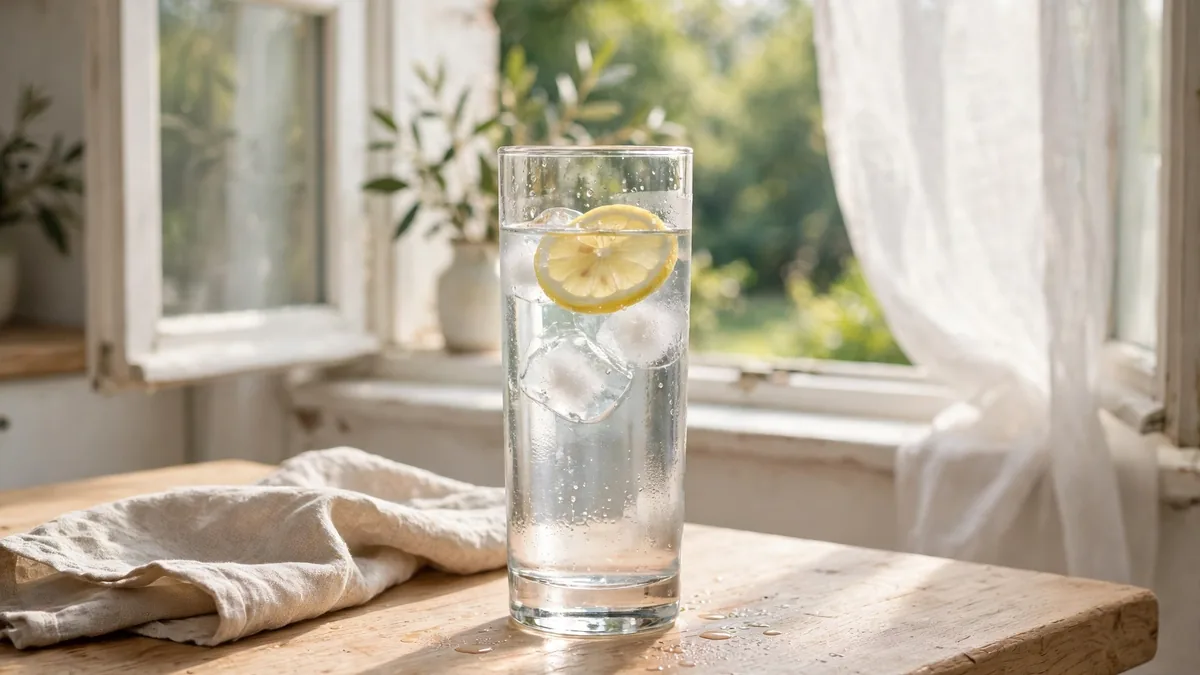
Some mornings the day feels easy before it has properly begun. The window is open, the light is kind, and the first glass of water tastes cool and clean. Nothing grand has happened, yet the hours ahead look friendly.
That easy feeling is a good mood: not excitement, not a celebration, just spirits sitting a little higher than usual, ready for the day. It comes from small things done kindly, a glass of water drunk slowly, a window opened, a short walk in fresh air, kept going with habits so plain they cost nothing.
The guide below gathers those habits into one simple day: water, daylight, fresh air, short pauses, and a little movement. It is gentle general information only, never a treatment, and it will not heal low mood or anxiety. Water lifts an ordinary day; it does not fix a troubled one.
Key Takeaways
- A good mood is light, lifted spirits, not excitement and not a cure.
- Plain water, drunk slowly through the day, is the centre of these habits.
- Daylight, fresh air and a short walk lift a day as water does.
- A good mood is built in small steps, morning to evening.
- This guide is general information; lasting low mood belongs with a doctor.
What a Good Mood Means Here
A good mood, in this guide, means waking up willing. The shoulders sit lower, the first task looks doable, and a message from a friend brings a smile instead of a sigh. It is a quiet brightness, like a room with the curtains drawn back.
Nobody needs to feel thrilled to be in a good mood; chasing a thrill usually ends in tiredness. A good mood is steadier: a light step, a clear head, and patience for the small frictions of an ordinary day.
Why Fresh Water Lifts a Day
Water lifts a day because it gives the day a shape. A glass filled, drunk slowly, and refilled is a small rhythm that repeats from morning to evening, and each repetition is a pause. The mind gets a minute away from the screen.
Thirst is easy to miss, and a dry mouth makes everything feel a little harder than it is. A tall glass of cool water, taken in slow sips, settles that dry feeling, and the day feels kinder at once. The water does nothing dramatic; it keeps the hours gentle.
Starting the Morning Well
A good mood is easiest to catch early, before the day can hurry you. Fill a glass jug the night before and leave it on the table, so water waits for the morning. When you wake, pour a tall glass and drink it slowly by the window, before the phone lights up.
Eat something plain, open a window wide, and let the morning air in. Ten unhurried minutes at the start beat an hour of rushing later, and the glass of water marks those minutes as yours.

Water Through the Day
Set a glass or a bottle in plain sight, on the desk or the counter. The moment it runs dry, fill it again, so water is never out of reach. Drink in slow sips rather than large gulps, a little at a time, all day long.
Midday is when the habit matters most. The morning brightness has worn off, the light feels flat, and the jobs waiting look larger than at breakfast. Step away, pour a fresh glass, drink it by the window, and choose one small next task. The water will not finish the work, but it gives the afternoon a clean beginning.
Light, Air and Movement
Water works best with company: daylight, fresh air and a short walk. Open the curtains when you wake, and sit near a window for your first glass. Light tells the day it has begun, and a bright room feels kinder than a dim one.
Step outside for a few minutes, even if only to the garden gate or the end of the street. Walk slowly, breathe the fresh air, and look at the sky. A short walk between tasks beats an hour spent scrolling, and it costs only a few minutes.
A Good Mood at a Glance
| Slow sips | Daylight | Short walks |
|---|---|---|
| Glass in sight | Open windows | Fresh air |
| Little and often | Bright rooms | Gentle steps |
A Good Mood and the Afternoon Slump
The afternoon slump is the nearest neighbour of a good mood, and the two are easy to confuse, because both live in the middle of the day. Water for the afternoon slump covers a tired, slow feeling after lunch, when the eyes feel heavy and the mind feels slow, met with a short reset of water, light, air and a pause.
A good mood is not a rescue from that tiredness. The slump is a dip to climb out of, with a five-minute reset and a quiet pause. A good mood is a lift to keep going, built across the day from morning water, daylight and short walks. One fixes a flat hour; the other keeps the day bright.
A Good Mood and Colour Rituals
Colour can change how a room feels, and one ritual on this journal pairs water with a single soft colour for the day. Water and colour for mood covers a glass of fresh water and one soft colour, pale blue for calm, soft green for fresh, warm peach for gentle, chosen slowly each morning.
A good mood needs no colour chosen for it. The habits here are plainer: water, light, air and movement, the same every day, with no choosing at all. Colour is a lovely extra for a quiet morning, but a good mood is built from the water itself, not the shade of the cloth beside it.
A Good Mood and a Calm Mind
The sibling article numbered 749, Calm Mind, sits close to this one, and the two deserve a clear line between them. A good mood is light, lifted spirits: the step feels springy, the day looks friendly. A calm mind is quiet, unhurried thoughts: the head feels still, the noise has settled, and nothing pulls for attention.
They are different things, and they can arrive separately. A person can feel bright and cheerful with a busy mind, or calm and still on a grey day. This guide is about the bright side, the lifted spirits, while Calm Mind is about the quiet side, the unhurried thoughts. Both are worth having, and neither is the other.
A Good Mood, Stress and Study
Stress and study have their own water habits on this journal, and both differ from a good mood. Water and stress covers a whole-day routine of small calm habits for tight, pressured days, when the list is long and the shoulders have crept up. A good mood is for ordinary days, not pressured ones, and it lifts spirits rather than loosening tension.
Study water habits are narrower: a tidy desk, a timer, and short timed blocks of reading, with slow sips marking the pauses. A good mood has no timer and no task to finish. It is not about focus or work; it is about the day feeling friendly.
A Good Mood and Sleep
Sleep and a good mood are good neighbours, because a rested night makes a bright day more likely. Water and sleep habits keep evening sips small, stop large drinks an hour or two before bed, and build a short wind-down of dim light, a quiet book and a cool room.
But a good mood is a daytime thing. It is built in daylight, with open windows, fresh air and short walks, not in the hour before bed. Sleep habits close the day gently; good-mood habits open it brightly. Each belongs to its own half of the day.
When a Low Mood Needs a Doctor
A low mood that stays for weeks, or keeps returning, is not a matter for a glass of water. If the days feel heavy for a long time, if sleep will not come, if food loses its taste or the things you loved feel flat, please see a doctor and say so plainly.
No habit in this guide treats anxiety, low mood, or any illness, and none replaces rest, sleep, or professional help. Water, light and short walks can make an ordinary day kinder, but a troubled mind deserves professional care, and asking for it is sensible.
Your Fresh Habits Checklist
- Fill a jug the night before, so water waits in the morning.
- Drink your first glass slowly by the window, before the phone lights up.
- Keep a glass in sight, and refill it the moment it empties.
- Open the curtains, and step outside for a short walk between tasks.
- Take your last large drink with dinner; keep evening sips small.
- If low spirits linger for weeks, see a doctor; water is no treatment.

Frequently Asked Questions
What is a good mood?
A good mood is light, lifted spirits: the day looks friendly, small jobs feel easy, and patience comes more readily. It is quieter than excitement, built from small habits rather than big events.
How does water help a good mood?
Water gives the day a shape. A glass filled, drunk slowly and refilled is a small rhythm that repeats from morning to evening. It keeps thirst away and turns each drink into a pause.
Is a good mood the same as a calm mind?
No. A good mood is light, lifted spirits, while a calm mind is quiet, unhurried thoughts. The two can arrive together or apart; this guide covers the bright side, while the sibling article Calm Mind covers the quiet side.
Can water cure low mood or anxiety?
No. Water and fresh habits can make an ordinary day kinder, but they do not treat low mood, anxiety, or any illness. If low spirits linger for weeks, please see a doctor rather than waiting for a habit to fix them.
How much water should I drink in a day?
No one amount fits everybody. Bodies differ, days differ, and warm weather asks for more than cool weather does. Sip when you feel thirsty, keep water close by, and let pale yellow urine tell you that you have had enough.
When should I stop drinking water at night?
Take your last large drink with dinner, then only small sips before bed. That way you go to bed neither thirsty nor overfull, and the night stays unbroken.
The Bottom Line
Water and a good mood go together simply: slow sips, daylight, fresh air and short walks, repeated through the day, keep an ordinary day bright.
A Note for Good Days
Keep the glass full and the window open. A little water, a little light, and a few kind minutes are all a good day needs.