Some days are screen days from the first hour to the last. The laptop opens before breakfast is finished, the phone lights up between tasks, and by the afternoon the eyes feel dry, the shoulders feel stiff, and the glass of water on the desk is still full.
A screen day does not need a new gadget or a strict new rule. It needs a few small, fresh habits: water within reach, short breaks, and a clear end to the day.
This guide explains simple fresh habits for water and screen days: how to set up a desk, when to sip water, how to rest tired eyes, and how to close the screen well. It is gentle general information only, never medical advice, and it will not treat or cure anything. If your eyes or body feel unwell, please see a doctor.
Key Takeaways
- A screen day means long hours at a screen, with tired eyes and stiff shoulders.
- Keep plain water within reach and sip it slowly through the day.
- Rest your eyes often with short breaks away from the screen.
- Stand, stretch and breathe between screen blocks, not only at lunch.
- This guide is general information only; see a doctor for real problems.
What a Screen Day Is
A screen day is a day spent mostly in front of a screen: a laptop for work, a tablet for reading, a phone for messages. The hours pass quickly, but the body feels them slowly — the eyes grow dry from staring, the neck stiffens from looking down, and the water glass stays untouched because the work never pauses.
Screen days are common now, and they are not a sign of doing something wrong. Water, breaks and fresh air are the simplest answers, and they cost almost nothing.
Why Screen Days Feel Tiring
Screen days feel tiring because the eyes and the body stay in one position for hours. When we stare at a screen, we blink less often than usual, and the eyes can feel dry and heavy. The neck bends forward, the shoulders rise, and the back stays still in one chair for far too long.
The tired feeling builds quietly, hour by hour, and it is easy to miss until the afternoon arrives. A glass of water helps because each sip is a small pause, and each pause is a chance to blink, breathe and sit up straight.
Setting Up a Fresh Screen Desk
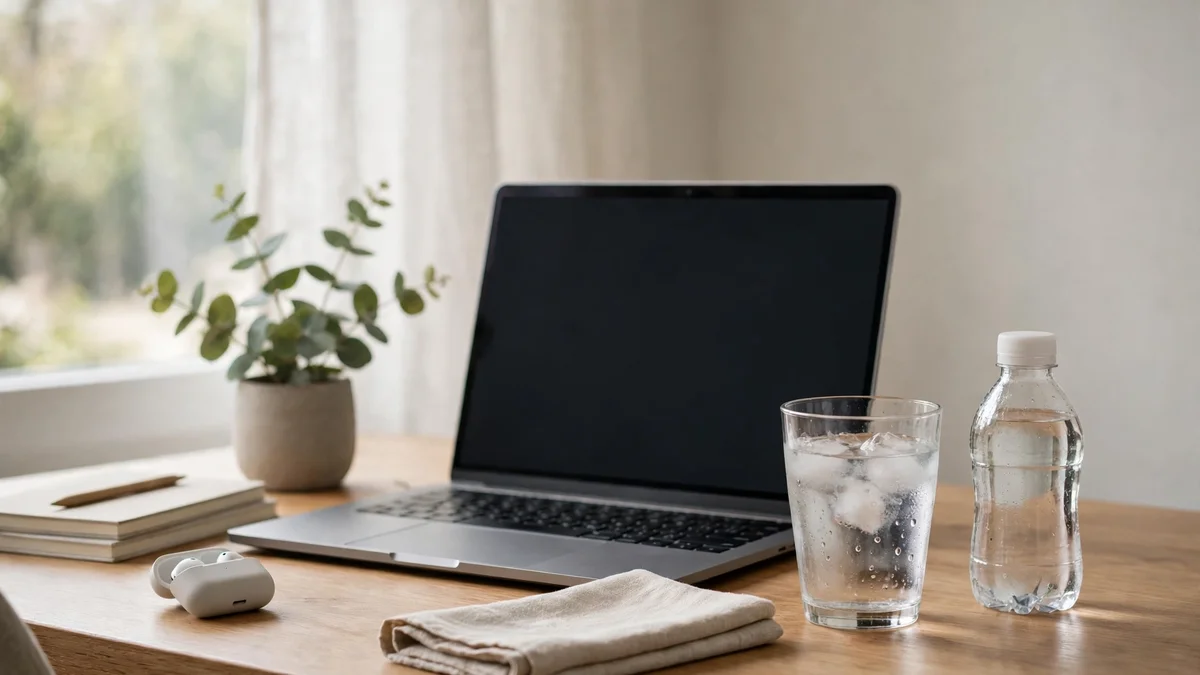
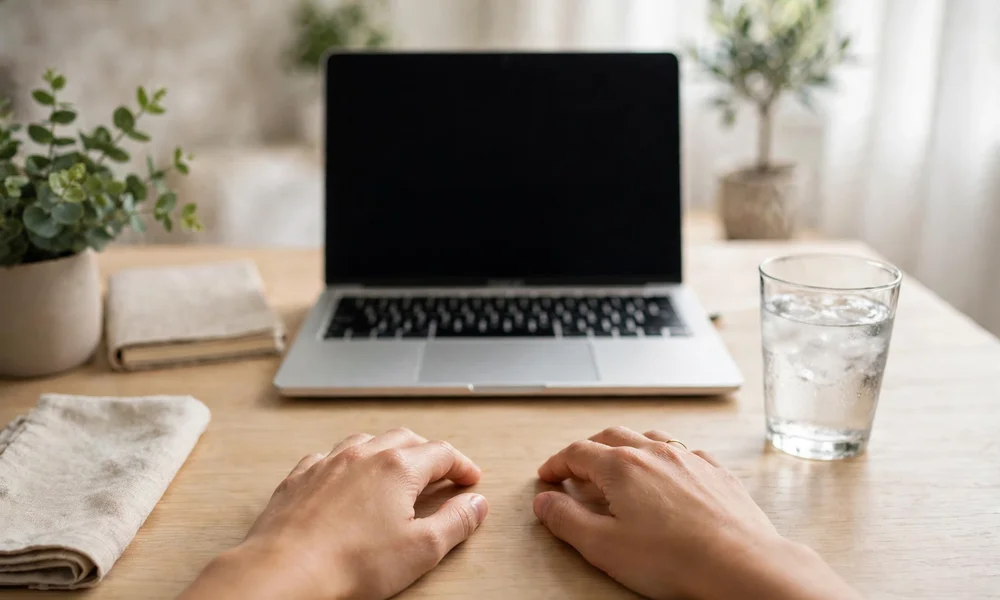
A fresh screen desk needs very little: a clear space, soft light, and a glass of water close at hand. Set the laptop so the top of the screen is near eye level, and sit close enough that you do not lean forward to read. Keep the glass on the same side as your writing hand, so each sip is easy to reach.
Open a window or a curtain for daylight and fresh air, and keep the desk tidy, with only the things the day needs.
Water Through a Long Screen Day
Water through a long screen day works best in small sips, often, rather than in large drinks all at once. Fill a clear glass in the morning and keep a bottle on the desk, so fresh water is always within reach. Take a slow sip each time you finish a small task, and refill the glass at every break.
Plain water is enough, and it needs nothing added to it. If the glass is empty by midday, refill it and start again, and if the bottle is still full at dusk, the day has passed without its simplest habit.
The 20-20-20 Breaks
The 20-20-20 break is a simple habit for tired eyes: every twenty minutes, look at something about twenty feet away, for about twenty seconds. It is a small pause, not a long rest, and it fits easily between tasks. Stand up, look out of the window, and let the eyes rest on something far away.
Set a quiet timer or use the end of each small task as the signal to pause. The break is a good moment to take a slow sip of water, blink a few times, and roll the shoulders once.
Blinking, Posture and Fresh Air
Blinking is easy to forget at a screen, yet it is the simplest way to keep the eyes comfortable. When the eyes feel dry, close them gently for a few seconds, blink slowly a few times, and look away from the screen. Sit up straight, drop the shoulders, and let the hands rest in the lap for a moment.
Fresh air helps too: open the window, step outside for a minute, or stand by the door and breathe slowly. A short walk to the kitchen for a glass of water is a break for the eyes, the back and the mind all at once. If the eyes stay sore, or the vision changes, please see a doctor.
Screen Days at a Glance
| Water within reach | Short eye breaks | Gentle close |
|---|---|---|
| Slow sips often | Look far away | Screen off early |
| Glass and bottle | Blink and breathe | Water by bed |
| Refill at breaks | Stand and stretch | Rest the eyes |
Screen Days and Study Sessions
Screen days and study sessions look alike, because both happen at a desk with a glass of water, yet they are different kinds of day. A study session is a timed focus ritual: one task, a timer, short blocks of reading and notes, and a clear end when the session closes.
A screen day is longer and looser, with many different tasks, messages and calls across the whole day. Where water and study sessions a simple focus ritual keeps one study task in short timed blocks, this guide keeps eyes, posture and water sips through long screen hours. Study is about focus; screen days are about staying fresh.
Screen Days and the Afternoon Slump
Screen days and the afternoon slump often meet in the middle of the day, when the eyes feel heavy and the mind feels slow after lunch. The slump is a short, tired feeling that follows lunch, and its reset is simple: plain water, drunk slowly, with a short pause, some light and a gentle stretch.
A screen day is the whole day, not one tired hour, and its habits run from morning to evening: water sips, eye breaks, posture and a calm close. Where water for the afternoon slump a simple reset fixes one slow hour after lunch, this guide keeps the whole screen day fresh. The slump is one hour; screen days are all day.
Screen Days and Home Offices
Screen days and home offices share the same desk, the same laptop and the same glass of water, yet they are not the same subject. A home office is a place: a small room or a desk by a window at home, with its own morning start, midday reset and evening close across the whole working day.
A screen day is a kind of day, and it can happen anywhere — at home, in an office, or on the move with a phone. Where water and home offices staying fresh at your desk covers the whole working day at home, this guide covers long screen hours wherever the screen sits. Home office is a place; screen days are the hours.
An Evening Close After Screens
An evening close after screens is a small ritual that tells the day it is done. Put the laptop to sleep, close the extra tabs, and step away from the desk. Fill a glass of fresh water and set it by the bed, then wash the face with cool water and change into comfortable clothes.
Keep the last hour of the day free of bright screens, and let the eyes rest on the room, a book, or the view from the window.
Your Screen Days Checklist
- Fill a glass and a bottle with fresh water before the screen opens.
- Sip water slowly through the day, and refill the glass at every break.
- Take a 20-20-20 eye break every twenty minutes, and blink often.
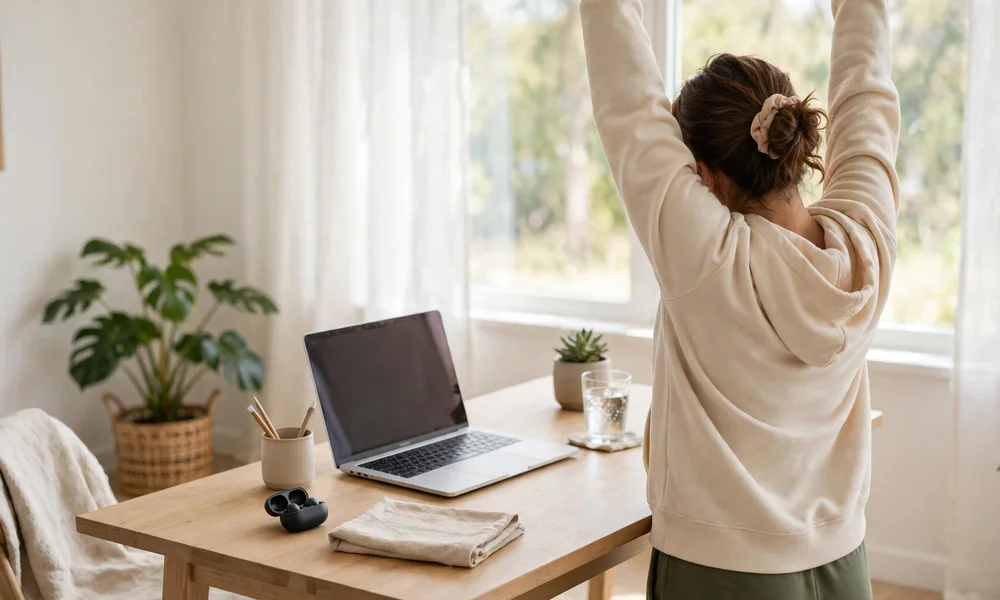
- Stand, stretch and breathe between screen blocks, not only at lunch.
- Keep the desk tidy, the screen near eye level, and the window open.
- Close the screen early in the evening, and see a doctor for eye problems.
Frequently Asked Questions
How much water should I drink on a screen day?
There is no single amount that suits everyone, so sip plain water slowly and steadily through the day, and refill the glass at every break. Drink when you feel thirsty, and do not force yourself to over-drink.
What is the 20-20-20 rule for screens?
Every twenty minutes, look at something about twenty feet away for about twenty seconds. It is a simple habit for tired eyes, and a good moment to sip water and blink.
Why do my eyes feel dry at a screen?
At a screen we blink less often than usual, so the eyes can feel dry and heavy after long hours. Blink slowly, look away often, and take short breaks; if the eyes stay sore, please see a doctor.
Should I keep water on my desk all day?
Yes, keep a glass and a bottle of fresh water within reach of your desk, and sip slowly through the day. Each sip is a small pause, and each pause rests the eyes.
How can I sit better at a screen?
Sit up straight with the screen near eye level, keep the shoulders down, and take short standing breaks between tasks. A tidy desk and a chair that supports the back make long hours easier.
When should I stop using screens in the evening?
Try to close the screen early in the evening and keep the last hour free of bright screens, so the eyes can rest before sleep. If sleep or eyesight troubles keep coming back, please see a doctor.
The Bottom Line
Water and screen days need only small, fresh habits: water within reach, slow sips, short eye breaks, and a calm close. Keep the desk tidy, rest the eyes often, and let the evening belong to rest.
A Note for Screen Days
Keep it fresh, keep it simple, keep it calm. A glass of water, a short break, and an early close can carry a long screen day well.