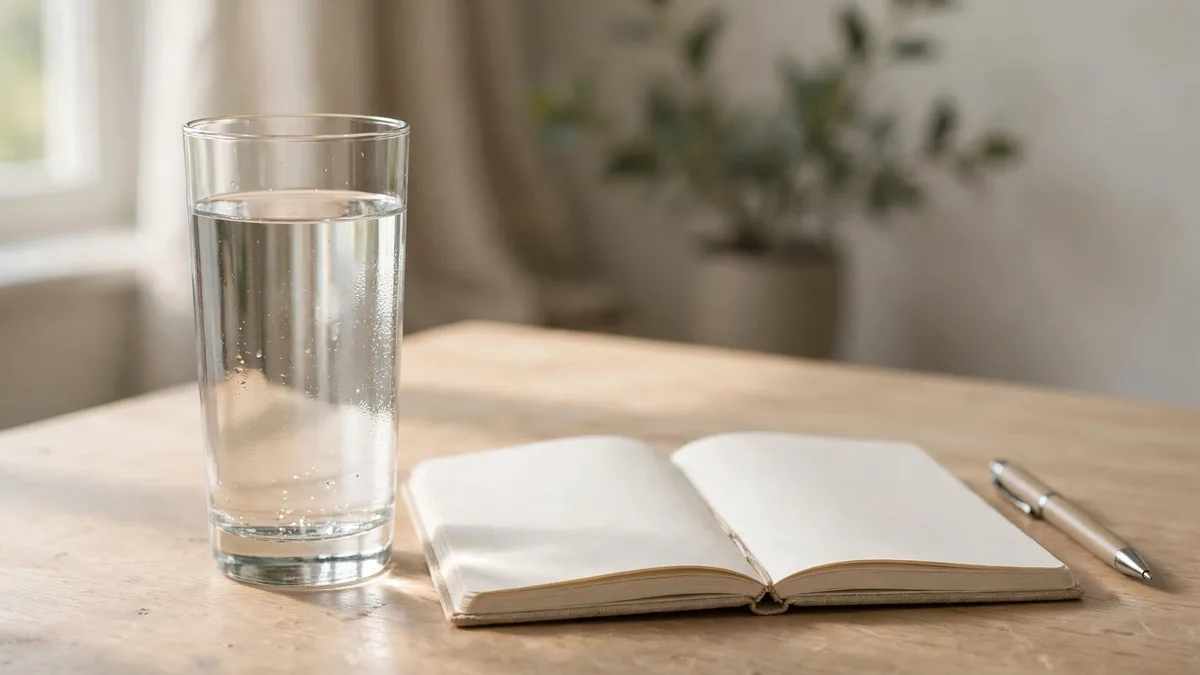
Some days the mind runs ahead of the body. The thoughts arrive in a crowd before breakfast, each one tugging at the next, and by mid-morning the head feels full even though nothing much has happened. The day is not hard, exactly. It is simply noisy inside, and the noise makes everything take longer.
Water gives that noise a gentler shape. A glass of fresh water, drunk slowly, with a short pause attached to it, turns a crowded hour into a series of small quiet steps.
In the pages that follow, water and a calm mind get a simple treatment: what a calm mind means here, why plain water suits it, how to carry the habit from morning to evening, and how it differs from the stress, slump, breathing, study, and sleep guides this journal already holds. This is gentle general information only. It will not heal anxiety or low mood, and lasting trouble belongs with a doctor.
Key Takeaways
- A calm mind means quiet, unhurried thoughts, not an empty head.
- Water and a calm mind means plain water, slow sips, and short pauses.
- A calm-mind habit runs through a whole ordinary day, morning to evening.
- The habit needs very little: a glass, fresh water, and a few quiet minutes.
- This is gentle general information only; persistent problems belong with a doctor.
What a Calm Mind Means Here
A calm mind, in this guide, means thoughts that move at walking pace instead of running. One thought arrives, it is noticed, and then the next one comes, without three more crowding in behind it. The mind is not empty and it is not asleep; it is simply unhurried, like a room with the windows open and nothing rattling.
Water suits that space because water is itself unhurried. It pours slowly, it is drunk slowly, and a glass of it asks for a pause before anything else begins.
Why Water Suits a Calm Mind
Water suits a calm mind because it gives the hands something plain to do while the thoughts settle. Filling a glass, carrying it to a chair, and drinking it in small sips takes a minute, and in that minute the mind has one simple job instead of ten.
A glass of water also marks time. The morning glass marks the start of the day, the midday glass marks a pause in the middle, and the evening glass marks the closing of it. Three glasses, three pauses, and the day gains a shape that the thoughts can rest inside.
A Calm Morning with Water
Begin the night before, if you like: set a clean glass and a bottle of fresh water by the bed, so the morning starts without a search. When you wake, sit up slowly, pour the glass, and drink it in small sips before the phone lights up and the day begins.
Then write one line in a notebook: the single thing that matters most today. One line, not a list, because a list is where the crowding starts. Keep the morning slow after that — a plain breakfast, the glass refilled, and nothing else until the day has settled.

Water Through the Middle of the Day
Noon is when a calm mind very often starts to unravel. The morning's gentle opening has faded, notes have stacked up, and the thoughts start racing once more. This is the moment to stop deliberately, before the bustle chooses for you.
Leave the desk alone for ten minutes. Fill a fresh glass of water, push a window open, and drink it unhurriedly, on your feet. Gaze outside for a minute, let your shoulders sink once, and then pick one tiny next job, and just one. One plain job is lighter to hold than a whole afternoon, and beginning it gently keeps the mind still.
An Evening Wind-Down with Water
Nightfall is when the day must shut, even though the thoughts have not stopped. A small worry going round, a task left undone, a note still unanswered: by dusk the labour is over, yet the mind keeps worrying it, and quiet sleep arrives before the day has really closed.
End the day with water and quiet. Fill a glass of fresh water, sip it very unhurriedly, and rinse your hands softly with cool water, patting them dry slowly. Then jot three brief lines in a notebook: what went well, what can rest until tomorrow, and one small thing to anticipate. Lay the notebook aside, and let the evening stay hushed.
Water and a Calm Mind at a Glance
| Plain water | Short pause | One step |
|---|---|---|
| Morning glass first | Slow sips, quiet minute | One line today |
| Midday refill again | Ten hushed minutes | One next job |
| Last glass tonight | Rinse hands softly | Jot three lines |
Calm Mind and Stress Habits
Stress and a busy mind overlap, yet they are not the same thing, and the guides for them differ. Water and stress habits offers a whole-day routine for days that feel tight and overloaded, with three small tasks planned for morning, afternoon, and evening.
This guide is quieter than that one. Where the stress guide plans tasks to carry a heavy day, this guide plans pauses to keep an ordinary day unhurried. A calm mind is not a stressed mind being managed; it is a mind that never speeds up in the first place, because the water and the pauses keep arriving on time.
Calm Mind and the Afternoon Slump
The afternoon slump is a dip in energy after lunch, heavy eyelids and a slow head, and it has its own reset. Water for the afternoon slump describes a short five-minute reset: plain water, light, fresh air, and a gentle stretch, done when the tiredness arrives.
A calm mind is not a slump being fixed. The slump guide waits for the tired hour and then resets it; this guide runs all day, so the tired hour finds a mind that is already moving slowly. The two can sit side by side — a calm morning, a slump reset in the afternoon — and neither replaces the other.
Calm Mind and Two Minutes of Breathing
Breathing is the closest partner water has in a short pause, and it has its own two-minute guide. Water and breathing pairs a glass of water with two minutes of slow, easy breathing, in through the nose and out through the mouth, with no counting to get right.
That guide is a single short pause, fitted between tasks. This guide is the day around the pause: the morning glass, the midday refill, and the evening wind-down, with breathing tucked inside them rather than standing alone. A two-minute breath can steady one hour; a calm-mind habit steadies the whole day.
Calm Mind, Study Sessions and Sleep
Two more live guides sit near this one, and both are worth telling apart. Study sessions use water to shape short timed blocks of reading, with a timer and a tidy desk, while sleep guides use water to balance evening sips so the night is not broken. Exams and interviews have their own calm-habit guides too, built for one hard day with a clear start and end.
Calm Mind and a Good Mood
A sibling guide joins this batch, and the pair deserves a careful distinction. Good mood, the sibling numbered 751, is about light, lifted spirits: the day feels bright, the steps feel easy, and a smile comes without effort. A calm mind is different. It is quiet and unhurried, thoughts moving at walking pace, with no lift and no sparkle required.
Keeping the Habit Small
A calm-mind habit only works if it stays small. One glass at a time, one pause at a time, one line in the notebook at a time — that is the whole routine, and adding more to it is how it falls apart. If the morning glass is missed, the midday glass still counts. If the midday pause is skipped, the evening glass still closes the day.
Your Calm Mind Checklist
- Pour a glass of fresh water first thing, and drink it in slow sips.
- Write one line in a notebook: the single thing that matters most today.
- Refill the glass at midday, and pause ten quiet minutes by a window.
- Choose one small next step, and only one, before you sit back down.
- Close the evening with a slow glass and three short lines in the notebook.
- If low mood or worry keeps returning, see a doctor; water cannot treat it.
Frequently Asked Questions
What does water and a calm mind mean?
It means pairing plain water with short pauses through an ordinary day: a morning glass, a midday refill, and an evening glass, each drunk slowly. The water gives the day a shape, and the pauses keep thoughts moving at walking pace instead of running.
Is a calm mind the same as a good mood?
No. A calm mind is quiet and unhurried, with thoughts arriving one at a time. A good mood is light and lifted, with bright spirits and easy steps. The two can visit on the same day, but they are different things, and this guide is about calm, not mood.
How is this different from the stress guide?
The stress guide plans three small tasks to carry a tight, overloaded day, while this guide plans pauses to keep an ordinary day unhurried. Stress habits manage a heavy day; calm-mind habits keep a normal day from speeding up in the first place.
How much water should I drink for a calm mind?
There is no special amount, and this guide sets no target. Drink when you are thirsty, keep a glass nearby, and let the three glasses of the day mark the pauses. Too much water late in the evening can break the night, so keep evening sips small.
Can this habit help with anxiety?
No, not as a treatment. These are gentle general habits for ordinary days, and they will not heal anxiety or low mood. If worry or low mood keeps returning, or if it interferes with daily life, please see a doctor for proper help.
What if I miss a glass or a pause?
Nothing is lost. If the morning glass is missed, the midday glass still counts, and if the midday pause is skipped, the evening glass still closes the day. A calm-mind habit is built to survive a missed step, not to punish one.
The Bottom Line
Water and a calm mind means plain water, slow sips, and short pauses through an ordinary day: a morning glass, a midday refill, and a quiet evening close.
A Note for Calm Days
Keep the glass full and the thoughts slow. One glass at a time, one pause at a time, and the day stays quiet.


