
Some mornings the skin wakes feeling tired before the day has begun. The mirror shows a dull face, the hair lies flat, and the routine feels like too much effort. A small fresh ritual can change that in five quiet minutes.
Rose rinses are one of the simplest of those rituals. A handful of rose petals, a jug of water, a little patience while the petals steep: that is all it takes to make a pale pink water that smells of a garden in June. Poured gently over skin or hair, it leaves everything feeling clean and lightly scented.
What follows gathers a simple fresh ritual around water and rose rinses, from the first morning pour to a calm rinse at the end of the day, for skin and hair both. These are gentle general ideas, not medical advice, and any lasting skin worry belongs with a doctor.
Key Takeaways
- A rose rinse is water steeped with rose petals, poured and patted dry.
- A rinse is not a toner: a toner stays on the skin, a rinse is washed away.
- Rose rinses suit skin and hair, in one short morning ritual.
- Rose rinses differ from lemon, rice water, and green tea rinses.
- If a skin worry lingers, speak to a doctor, not a rinse.
What a Rose Rinse Is
A rose rinse is water that has sat with fresh rose petals until it takes on their colour and scent. Petals go into a clean bowl, hot water goes over them, and the bowl rests covered while the water turns a soft pink and the room fills with the smell of roses. Once cool, it is strained into a jug.
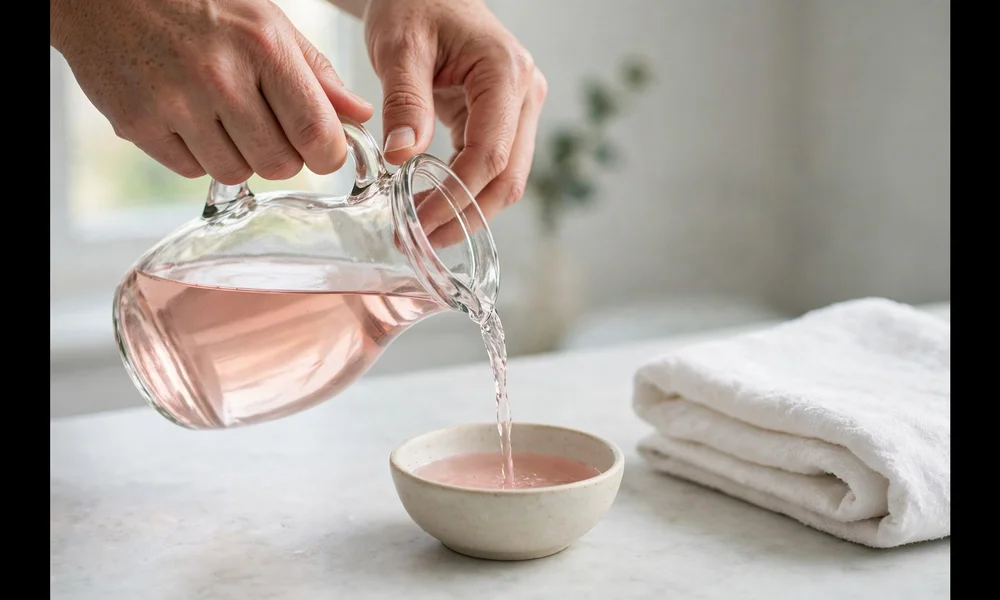
The rinse itself is the pouring. Cup the pink water in your hands or pour it slowly from the jug over your face or through your hair, then pat dry with a soft towel. Nothing is rubbed in and nothing is left to sit: the water passes over the skin and is gone, which makes it a rinse.
Why Rose Rinses Feel Fresh
Rose water feels fresh because it is light. It carries no cream, no oil, and no heavy scent, only cool water and the clean smell of a flower, so the skin feels washed rather than coated. On a warm morning, that lightness is the whole point: a cool pour wakes the face up without asking anything of it.
Steeping petals takes a few unhurried minutes that belong to no one else. The kettle, the bowl, the pink water in the jug: a small ceremony before the day begins, and the freshness comes as much from the slowness as from the roses.
A Morning Rose Rinse
Start the day with the rinse before anything else. The night before, put a few petals in a bowl and pour hot water over them, then cover the bowl and leave it on the kitchen counter. When you wake, the water will be cool and pink, ready to strain into a jug.
Pour it slowly over your face at the basin, or splash it on with cupped hands, then pat dry and dress for the day. Eat something light and open a window. The day will turn busy soon enough, so these first quiet minutes belong to you alone today.
A Rose Rinse for Skin
For skin, a rose rinse suits a face that feels dull or warm after sleep. After washing with plain water, pour the cool pink water over your cheeks and forehead, letting it run down into the basin, then pat your face dry with a clean towel. The skin feels clean and lightly scented, and nothing sticky is left behind.
Use the rinse once a day, in the morning: fresh petals, clean water, clean jug. If the skin feels tight or sore after a rinse, stop, rest it, and ask a doctor if the soreness stays.

A Rose Rinse for Hair
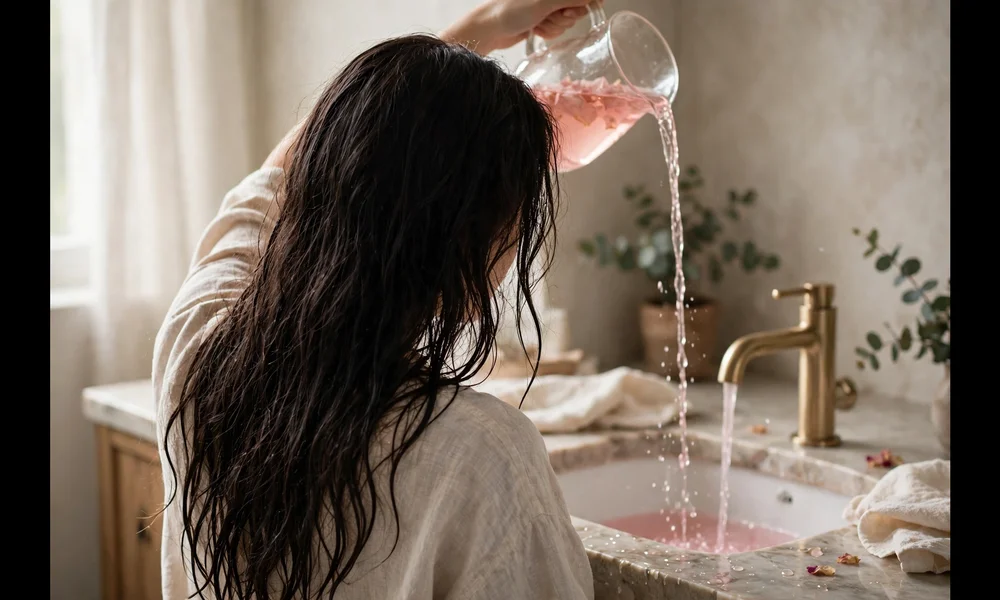
For hair, a rose rinse is a final pour after washing. Shampoo and rinse as usual, then tip the jug slowly over your hair, working the pink water through the lengths with your fingers, and let it drip into the basin before you towel dry. The hair smells faintly of roses and feels soft rather than coated.
Long hair drinks a whole jug, so make a generous bowlful on wash days. Do not rub hard while you pour, and let it dry naturally when you can. A rose rinse will not repair damaged hair: it is a fresh-smelling finish, nothing more.
Rose Rinses at a Glance
| Rose petals, water | Fresh skin | Keep it gentle |
|---|---|---|
| Steep, strain, cool | Morning rinse | Patch test first |
| Pour, pat dry | Hair, face, hands | Doctor for worries |
| One jug a day | Light scent, clean feel | Fresh petals only |
Rose Rinses and Rose Water Toner
A rose water toner looks like a close cousin, but the two are used quite differently, and the difference is worth knowing. Rose water toner, and how to use it well gathers guidance for a light, fragrant water that you pat onto the skin and leave there.
A rinse is not a toner. A toner stays on the face after you pat it in, working quietly through the day, while a rinse is poured over the skin and patted dry within the minute. One lingers; the other passes through. A rose rinse suits a morning wash, and a toner suits the step that follows it.
Rose Rinses and Lemon Rinses
Lemon rinses are the bright, sharp cousin in the rinses family, and they feel very different on the skin. Water and lemon rinses for a fresh habit gathers a habit built on cool water and one thin slice of lemon.
A lemon rinse wakes the skin with a clean citrus bite, while a rose rinse soothes it with a soft floral calm. Lemon suits a hot morning when you want alertness, rose a slow morning when you want gentleness. One is brightness; the other is petals.
Rose Rinses and Rice Water Rinses
Rice water rinses are the old, practical cousin, made from the water left after soaking rice. Rice water rinse, an old beauty habit made simple gathers a habit that costs almost nothing and uses what the kitchen already has.
A rice water rinse feels plain and starchy, suiting hair that needs a simple, steady wash. A rose rinse feels floral and light, suiting a morning of scent and softness over thrift. One comes from the pantry; the other from the garden.
Rose Rinses and Other Rinses
Other rinses fill the shelf beside rose water, and each one has its own mood. Green tea rinses suit hair that feels dull, and they leave a clean, grassy scent behind. Chamomile rinses suit a calm evening, and mint rinses suit a hot afternoon when the skin wants cooling.
Aloe rinses suit skin that feels warm after a long day, herbal rinses suit a garden smell, and coffee rinses suit hair wanting a darker shine. Rose rinses stand apart: no other rinse smells of a rose garden, and none turns the water such a soft, pretty pink.
Keeping Rose Rinses Simple
The best rose rinses are the simple ones. Use petals from roses you know are clean, never petals from a florist's sprayed bouquet, and keep the whole ritual to one bowl, one jug, and one towel. A fresh batch each morning beats a jug kept for days.
Five minutes is plenty, and ending while the morning still feels calm beats dragging the ritual out. Make the rinse, pour it, pat dry, and let the day begin.
Gentle Care Around Rose Water
Rose water habits are mild general ideas, and they fit nearly everyone, though a touch of caution belongs in the morning. Keep glasses and jugs clean, wash the bowl before steeping, and use fresh water rather than a jug left standing since yesterday.
Try a small patch first: dab a little rose water inside your wrist and wait a day. Remember too that rose water is comfort, not medicine. It cannot settle a lasting skin worry or stand in for a doctor's guidance, and it must never be passed off as medicine. If the skin stays sore or a problem will not go away, pause and call your doctor.
Your Rose Rinse Checklist
- Put rose petals in a clean bowl the night before.
- Pour hot water over them and cover the bowl.
- Strain the cool pink water into a clean jug.
- Pour it gently over skin or hair, then pat dry.
- Keep the ritual to five minutes, once a day.
- If a skin worry stays, call a doctor, not a rinse.

Frequently Asked Questions
What is a rose rinse?
A rose rinse is water steeped with fresh rose petals until it turns soft pink and smells of roses, strained into a jug, poured over the face or through the hair, then patted dry.
How is a rose rinse different from a rose water toner?
A rinse is poured over the skin and patted dry within the minute, while a toner is patted on and left to work through the day. One passes over the face; the other stays.
Can I use a rose rinse every day?
Yes, once a day in the morning suits most skin and hair. Use fresh petals and water each time, and if the skin feels tight or sore, stop and rest it for a few days.
Which roses should I use for a rinse?
Use petals from garden roses you know are clean and unsprayed, such as garden roses grown without chemicals. Never use a florist's bouquet, which may carry sprays that do not belong on skin.
Is a rose rinse good for hair?
A rose rinse makes a pleasant final pour after washing, leaving hair soft and faintly scented. It will not repair damaged hair, and it is no fix for a hair problem.
Should I patch test before a rose rinse?
Yes, dab a little rose water inside your wrist and wait a day before using it on your face. If the skin answers with redness or itching, skip the rinse and ask a doctor if it stays.
The Bottom Line
Water and rose rinses make a gentle pair: a bowl of petals steeping overnight, a jug of cool pink water in the morning, and a slow pour over skin and hair, for a fresh start to the day.
A Note for Fresh Days
Let the mornings stay slow and the water stay pink. One bowl of petals, one jug of water, and five quiet minutes are all a rose rinse needs.


