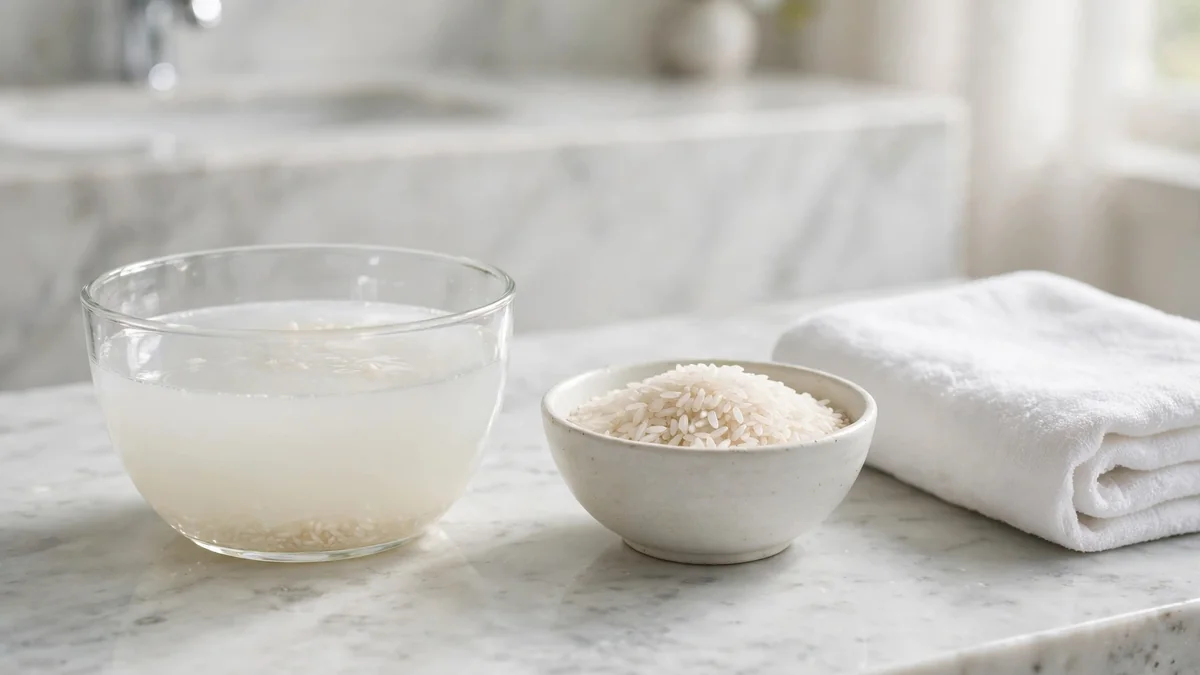
Some beauty habits arrive with a long list of ingredients and promises. A rice water rinse is the opposite: a handful of rice, a bowl of water, a few minutes, and a clean container.
Rice water is the cloudy water left after rice has been rinsed or soaked. For generations, people in parts of Asia have used it as a final rinse for skin and hair, valuing the soft, fresh feeling it leaves. It is not a treatment, and it is not a shortcut to perfect skin.
This guide explains what a rice water rinse is, how to make it at home, how to use it on skin and on hair, and how to keep the habit safe and fresh. Take what fits your routine, and leave the rest.
Key Takeaways
- A rice water rinse is the cloudy water left after rinsing or soaking rice, used as a final rinse.
- It is a rinse, not a drink, and it is never a treatment for a skin or hair condition.
- Patch-test first, stop if irritation appears, and make small fresh batches, discarding leftovers after a day or two.
- Start slowly, once or twice a week, and watch how your own skin and hair respond.
- The habit works best as one small step inside a simple routine, not as a replacement for cleansing or sun protection.
What a Rice Water Rinse Is, and Is Not
A rice water rinse is water that has held rice for a short time, then been strained and used to rinse the skin or the hair. The water turns cloudy because a little starch moves from the rice into it. That cloudiness is normal, and it is the whole point.
It is not a cleanser on its own, and it will not remove makeup or sunscreen. It is not a moisturiser, and it will not replace the cream your skin already likes. It is not a medicine, and it cannot cure acne, eczema, hair loss, or any other condition. Anyone with a persistent skin or scalp concern should speak to a qualified dermatologist.
What it can be is a pleasant finishing step: after washing, a cool rinse feels refreshing, and rinsed hair often looks a little smoother.
A Short History, Told Simply
Rice water has been used for hair care for a long time in parts of Asia, most famously in Huangluo in China, where Yao women have traditionally rinsed their long hair with it. In Japan, too, the water left from washing rice was saved for bathing and skin care. In both places, the habit grew out of thrift.
That history is worth keeping in proportion. The women who kept these traditions also washed gently, combed carefully, and protected their hair from the sun. The rice water was one small part of a careful routine, not a single secret.
How to Make Rice Water at Home
There are two easy ways to make rice water. For the soaking method, put half a cup of uncooked rice in a clean bowl, rinse it once, and tip that water away. Add two cups of clean water, stir, and leave the rice to soak for thirty minutes. Stir again, strain into a clean jug, and it is ready.
The boiling method gives a cloudier liquid: cook rice in extra water, strain off the excess before it is fully cooked, and let it cool. Dilute it with plain water the first few times.

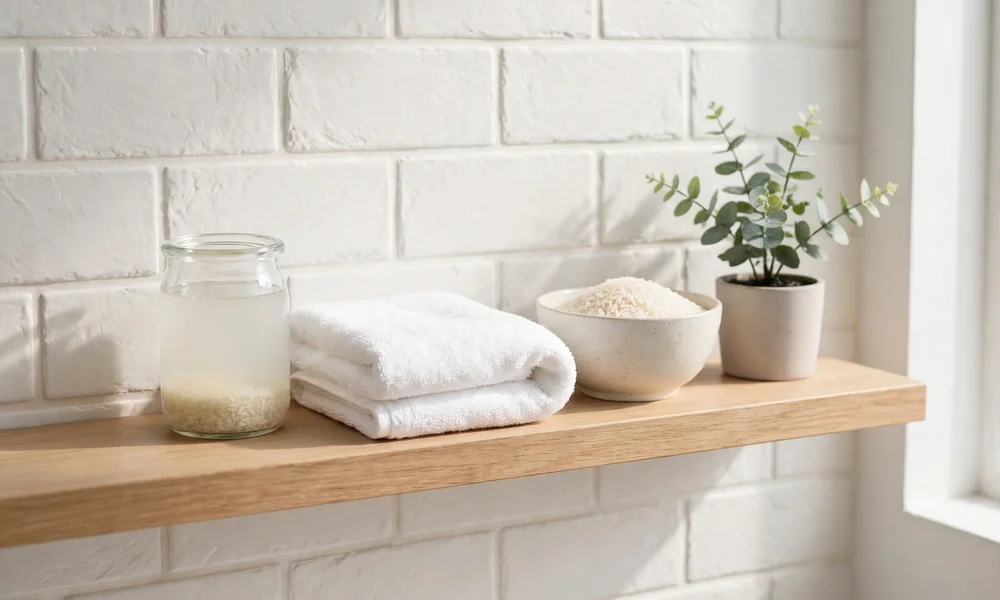
Whichever method you choose, use clean equipment and clean water, and keep the batch small. A jug made today is for today and tomorrow, not for next week. If it smells sour or looks different from when you made it, throw it away. Freshness is not a small detail here; it is the habit.
Using It on Skin, Step by Step
Start with clean skin. Wash as you normally would, rinse well, then smooth a small amount of rice water over the skin with your hands or a soft cloth. Leave it for a minute or two, then rinse lightly or pat dry.
The first time you try it, keep the test small. Choose one area, such as one cheek or the inside of your forearm, and wait a day before using it more widely. This is the patch test, and it matters even for something as plain as rice water. If you notice redness, itching, or stinging, stop, rinse with plain water, and wait until the skin has settled.
After the rinse, continue with your usual routine: a light moisturiser on damp skin, and sunscreen during the day. A skin routine with room to breathe is built on cleansing, moisturising, and protecting, with small extras added one at a time.
Using It on Hair, Step by Step
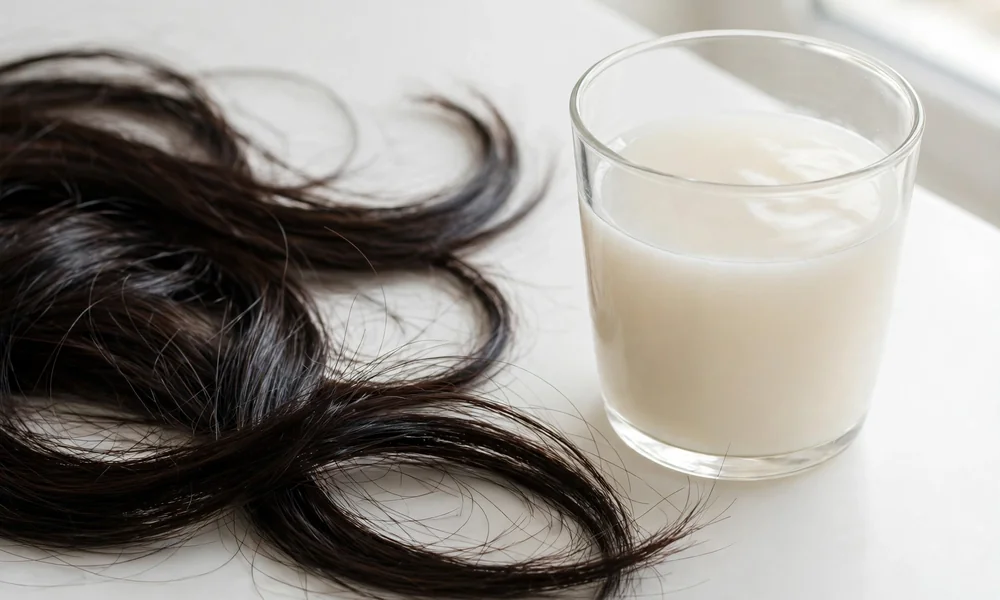
Hair is where most people first meet rice water. Wash with shampoo, rinse thoroughly, and pour the rice water slowly over it, working it through from roots to ends. Leave it for three to five minutes, rinse, and follow with conditioner.
Some people prefer it as a final rinse after conditioning, and that is fine too. Try each way for a few washes. Fine hair often likes a lighter touch, so dilute the rice water at first. Thicker hair may enjoy the fuller version, but still needs a thorough rinse, because leftover starch can leave hair stiff.
Keep the habit modest: once a week is a good start. If your hair feels softer and looks a little shinier, try twice a week. If it feels dry, heavy, or coated, use it less often or dilute it more. Do not change everything at once, or you will not know which change caused which result.
How Often, and How to Tell If It Suits You
How often depends on you. Dry or sensitive skin usually prefers a lighter schedule, while oilier skin and hair may enjoy a rinse more often. The table below is a starting point, not a rule, and your own response matters more than any schedule.
| Routine | How often | What to watch for |
|---|---|---|
| Skin rinse | Once or twice a week | Softness, calm skin, no redness or itching |
| Hair rinse | Once a week to start | Shine, smoothness, no stiffness or heaviness |
| First test | One small patch, once | Any redness, stinging, or rash within a day |
| Taking a break | One week off, as needed | Whether skin or hair feels better without it |

If you are unsure, slower is safer. A rinse used once a week for a month tells you far more than one used every day for a week and then abandoned. Using too much, too often, can leave skin tight and hair coated.
Keeping It Fresh and Safe
Freshness deserves the most attention. Rice water is made from food and water, and it contains no preservatives. Make only as much as you will use in a day or two, keep it in a clean, covered container in the fridge, and discard leftovers after a day or two at most. If it smells sour or sharp, throw it away. Do not use it on broken or irritated skin.
Patch-test every new batch method, not just the first time: a stronger batch is a different product from a diluted one. Stop if irritation appears, rinse with plain water, and give your skin time to settle. If irritation is persistent or painful, speak to a qualified health professional.
Do not drink rice water; it is a rinse for skin and hair, not a drink. Do not use it on a sore or badly flaking scalp, or on a baby or small child without advice from a clinician. Wash the container with hot soapy water between batches.
Fitting It Into a Smaller, Calmer Routine
A rice water rinse fits best in a routine that is already simple. If your shelf is crowded with half-used bottles, a new step will only add to the noise. Look at what you actually use, and set aside anything untouched for months. A smaller shelf is not about having less for its own sake; it is about seeing what you own and using it up before it goes stale.
Choose one regular slot, such as a Sunday evening wash, and keep it there. A habit with a fixed place in the week is far easier to keep. Make the batch while the rice for dinner is soaking.
Your Rice Water Checklist
- Rinse half a cup of rice once, then soak it in two cups of clean water for thirty minutes.
- Strain the cloudy water into a clean jug or bottle, and use it within a day or two.
- Patch-test on a small area first, and wait a day before using it more widely.
- Use it as a final rinse on clean skin or freshly washed hair, then rinse lightly.
- Stop if irritation appears, rinse with plain water, and let the skin settle.
- Discard any leftover rice water that smells sour or has sat for more than two days.
Frequently Asked Questions
Is a rice water rinse safe for sensitive skin? It is generally gentle, but patch-test first: try a small area, wait a day, and stop if you notice redness or itching.
Can I drink rice water? No. It is for skin and hair only, not a drink.
How long does rice water keep? Make small batches and use them within a day or two, kept in a clean covered container in the fridge. Discard it if it smells sour.
Should I use fermented rice water? Fermented versions are stronger and more likely to irritate skin, so they are not recommended for a first try. Start with fresh rice water.
Can I use rice water every day? Daily use is usually too much, and can leave skin tight and hair coated. Once or twice a week is better.
Does a rice water rinse replace shampoo or moisturiser? No. It is a finishing rinse after washing, not a replacement for cleansing, conditioning, or sun protection.
The Bottom Line
A rice water rinse is an old beauty habit that earns its place by being simple: rice, water, a clean container, and a few unhurried minutes. It will not transform your skin or your hair. Used fresh and gently, once or twice a week, it can leave both feeling soft and looking a little brighter.
Begin with a small batch, patch-test first, and notice what your skin and hair tell you over the next few weeks. If it suits you, keep it. If not, let it go. A good habit fits your life.
A Note on Wellbeing Without the Overwhelm
Beauty habits work best when they stay small. A single rinse, made fresh and used once a week, is easier to keep than a shelf full of promises. That is the spirit of wellbeing without the overwhelm: choose a few things, do them well, and let the rest go. Stay curious. Stay clear. Keep it simple.



