
Most mornings begin the same way. The alarm sounds, a hand reaches for the phone before the eyes are fully open, and the first minutes of the day fill up with messages, headlines and little red badges.
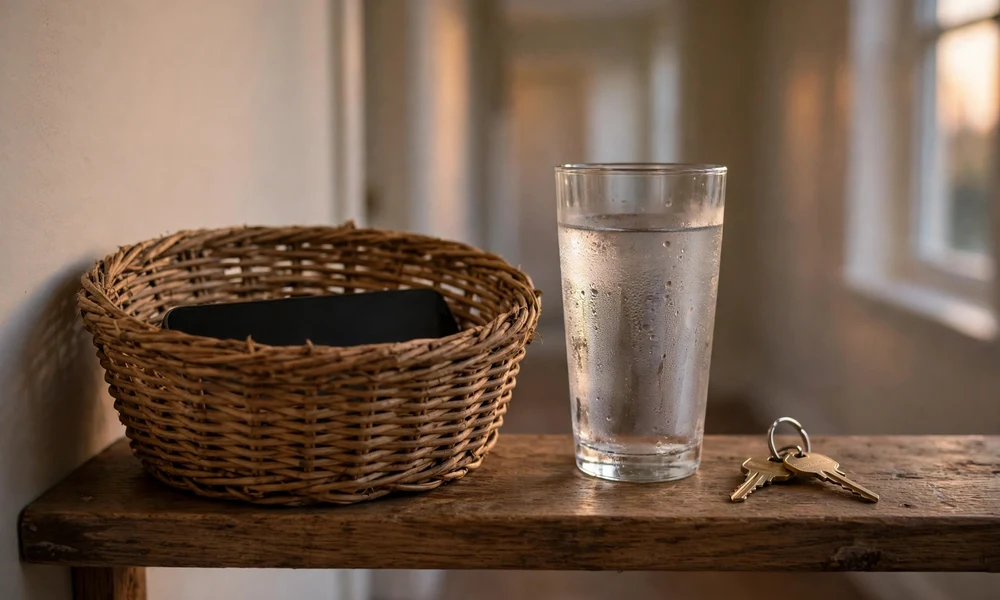
A phone-free morning changes only the first hour. The phone stays in its basket in another room, the kettle goes on, and a tall glass of water waits on the table.
This guide is a simple fresh ritual for that first hour: water first, the phone put aside, and a slow start with a notebook, a newspaper or a quiet window. A paper book, a radio, or a few minutes at the window can fill the same hour just as well. This guide shares gentle, general information only, not medical advice, and nothing here treats or cures anything. If you feel unwell, or if tired eyes or poor sleep keep coming back, please see a doctor.
Key Takeaways
- A phone-free morning means only the phone is put aside, for the first hour after waking.
- Drink a tall glass of plain water first, before tea, coffee or breakfast.
- The phone sleeps in a basket outside the bedroom, so the morning starts without a screen.
- A notebook, a newspaper or a quiet window can fill the hour the phone used to take.
- This guide is general information only; see a doctor for real health problems.
What a Phone-Free Morning Is
A phone-free morning is a small, plain habit: for the first hour after you wake up, the phone stays out of reach and out of sight. The only change is the order of things. Water comes first, the room comes second, and the phone comes third, after the morning has had a chance to begin on its own terms. That is the whole idea, and it needs no app, no new gadget and no strict rule. The hour ends with the phone still charged and waiting, and nothing at all has been lost by the wait.
Why the First Hour Matters
The first hour sets the tone for everything that follows it. When the phone lights up first, the morning fills with other people's news, other people's questions and other people's urgency, before you have had a single quiet thought of your own. When the phone waits instead, the hour belongs to you. The difference is not dramatic, but it is steady, and it shows up in how the rest of the morning feels. The water gets drunk, the window gets opened, the day gets planned in a notebook rather than in a feed.
Setting Up the Night Before
A phone-free morning is decided the night before, because a tired morning self will always reach for the easiest thing. Before bed, fill a glass with fresh water and set it on the bedside table, or leave it covered on the kitchen counter if the bedroom feels too warm. Set an ordinary alarm clock, or ask someone in the house to wake you, so the phone is not needed as an alarm.

A Phone-Free Morning, Step by Step
The ritual itself is short, and it follows the same order every day so that it soon becomes automatic. Wake up, sit up, and drink the glass of water on the bedside table in slow sips, letting the morning arrive before you stand. Fill a second glass of water, open a window or a curtain for daylight and fresh air, and sit down with the notebook, the newspaper, or simply the view from the window. When the hour ends, collect the phone from its basket and begin the day, with the morning already yours. If the morning feels strange without the phone, that strangeness passes within a few days.
Water First Thing
Water is the first act of the ritual, and it earns that place for a simple reason: the body has gone hours without a drink, and a tall glass of plain water is the gentlest way to wake it up. Drink it slowly, in small sips, rather than all at once, and let each sip be a small pause before the next thing. Plain water is enough, and it needs nothing added to it. A second glass after breakfast keeps the habit going until the phone comes back into the day.
Phone-Free Mornings at a Glance
| Phone in basket | Water first | One quiet hour |
|---|---|---|
| Glass by bed | Slow sips | Notebook, paper |
| Alarm clock | Window open | No screen |
| Basket outside room | Refill glass | Phone after |

Phone-Free Mornings and Screen Days
Water and screen days is the whole-day habit guide, and a phone-free morning is only its first chapter. A screen day stretches across the whole day, with work, messages and calls filling the hours from breakfast until evening, and the body feels it by late afternoon. A phone-free morning is narrower and shorter. It covers only the phone, and only the first hour after waking, with water first and a quiet start.
Phone-Free Mornings and Screen-Free Evenings
Screen-free evenings are the mirror image of this ritual, and the pair belong together like the two ends of one day. A phone-free morning puts only the phone aside, and only for the first hour after waking, while the rest of the day carries on as usual. A screen-free evening, the subject of the sibling guide Water and Screen-Free Evenings, puts every screen aside after dinner: the phone, the laptop and the television, all of them, for the last hour before bed. Morning is one device for one hour; evening is all screens after dinner.
Phone-Free Mornings and Morning Tea
Water and morning tea is a close companion to this ritual, because tea and a phone-free hour share the same table. Morning tea is a slow ritual of its own: the kettle, the warm cup, the steam rising while the house wakes, and a glass of water beside the tea so the morning stays fresh. A phone-free morning adds one rule to that table: the phone stays in its basket while the tea is poured and drunk.

Where the Phone Sleeps
The phone needs a home for the night, and the best home is a small, definite place outside the bedroom. A woven basket on a hallway shelf works well, because it is easy to reach in the morning and easy to ignore at night. The charger can live beside the basket, so the phone charges overnight without entering the bedroom at all. A basket with a lid keeps the screen hidden as well as silent, which helps the habit hold. A phone that sleeps in its own place is a phone that stays asleep until the hour is done.
Gentle Care for Tired Eyes
Eyes that spend the day on screens deserve a gentler morning, and the first hour can give it to them. Start the day looking at the room, the window and the garden, rather than at a small bright rectangle, and let the eyes wake up slowly in daylight. Blink often, and close the eyes gently for a few seconds whenever they feel dry, letting them rest before the screen hours begin. This guide is general information only, and tired eyes that keep coming back belong with a professional. For a slower way to settle the mind before the screens return, water and a calm mind offers a few quiet habits for the morning.
Habits That Keep the Morning Calm
A calm morning is built from small habits that repeat without effort. Keep the bedroom cool and dark at night, so sleep comes easily and waking feels less abrupt. Put the phone in its basket at the same time every evening, so the night routine and the morning routine join into one unbroken habit. Try any new drink, tea or skin product on a small patch first, and stop using it if the skin feels sore or itchy, because a fresh morning should never begin with discomfort.
Your Fresh Mornings Checklist
- Fill a glass of water before bed and set it by the bed.
- Put the phone in its basket outside the bedroom, face down.
- Drink the water slowly when you wake, before anything else.
- Open a window, sit at the table, and let the first hour pass quietly.
- Collect the phone only when the hour is done, then begin the day.
- See a doctor if tired eyes or poor sleep keep coming back.
Frequently Asked Questions
What is a phone-free morning?
A phone-free morning means the phone stays in its basket, out of reach and out of sight, for the first hour after waking.
Do I have to give up my phone all day?
No, not at all. The phone is put aside for the first hour only, and it waits in its basket the whole time. When the hour ends, collect it and carry on with the day as usual.
How is a phone-free morning different from a screen day?
A screen day is the whole day, with laptops, tablets and phones from morning to evening.A phone-free morning covers only the phone, and only the first hour after waking.
How is a phone-free morning different from a screen-free evening?
A phone-free morning puts only the phone aside for the first hour after waking. A screen-free evening puts every screen aside after dinner, for the last hour before bed, so the two differ in time and in devices.
What if I need the phone as an alarm?
Use an ordinary alarm clock instead, or ask someone in the house to wake you at the right time. That way the phone can stay in its basket all night and the morning can begin without a screen.
What should I do in the phone-free hour?
Drink water, wash your face, open a window, and sit with a notebook, a newspaper, or the view from the window.
The Bottom Line
Water and phone-free mornings need only a basket, a glass of water, and one quiet hour. It costs nothing, and it asks for nothing more than a basket and a glass. Put the phone aside, drink the water first, and let the morning begin on its own terms.
A Note for Fresh Mornings
Keep the water close and the phone in its basket. One quiet hour, one tall glass, and a slow start can carry the whole morning well.


