
A calm day does not arrive with a fanfare. It slips in through the kitchen window while the kettle is still warming, and it settles over the table. Nothing on the list is urgent, and the hours ahead feel wide enough to breathe in.
Nephrite is the stone that fits that kind of morning. It is a soft green jade, muted rather than bright, with a smooth waxy surface and the colour of shaded leaves. Carvers have worked it for thousands of years because it is tough and forgiving.
This guide looks closely at soft green nephrite: what the mineral is, how it differs from its brighter jade cousin, how to pick a piece you will enjoy, and how to rest it on a tray beside a glass of water while keeping the stone dry. It is a beautiful object to keep near you, and nothing more.
Key Takeaways
- Nephrite is a soft green jade mineral, tough and fibrous, with a muted leafy colour.
- Its gentle green suits slow mornings, quiet rooms, and days with no rush in them.
- It is an ornament for the eye and the hand, and it changes nothing about your health.
- The glass holds the drinking water; the stone stays apart from it, always dry.
- One small tumbled piece is plenty for a whole calm day.
What Nephrite Is
Nephrite is one of the two minerals that the world calls jade, and it is the older and tougher of the pair. It is made of tiny interlocked fibres of a mineral called actinolite, packed so tightly that the stone resists chipping far better than most gems. That fibrous build is why carvers in China, New Zealand, and Siberia chose it for tools and ornaments long before steel was common.
The soft green colour comes from iron held inside those fibres, and it stays muted even in bright light. A good piece is an even sage or moss green, with a waxy glow rather than a glassy shine, and it feels cool and dense in the hand.
Soft green suits calm days because it never shouts for attention. It is the green of a garden seen through a window on a grey morning, restful beside plain wood, pale linen, and a glass of clear water.
Picking a Nephrite Piece
Choose a nephrite piece in ordinary daylight, away from the bright lamps of a shop counter. The green should look even across the stone, soft rather than patchy, with no painted-looking streaks and no chalky crust. Turn it over and check the edges, which should feel smooth all the way around.
A walnut-sized piece is light in the palm, quick to wipe clean, and simple to carry between shelf and tray. When its green stays gentle under every light and it rests comfortably in your closed hand, you have found a keeper. Find out from the seller which place it came from, and leave behind any stone offered with a claim that it will make you well.
A Calm Day with Nephrite
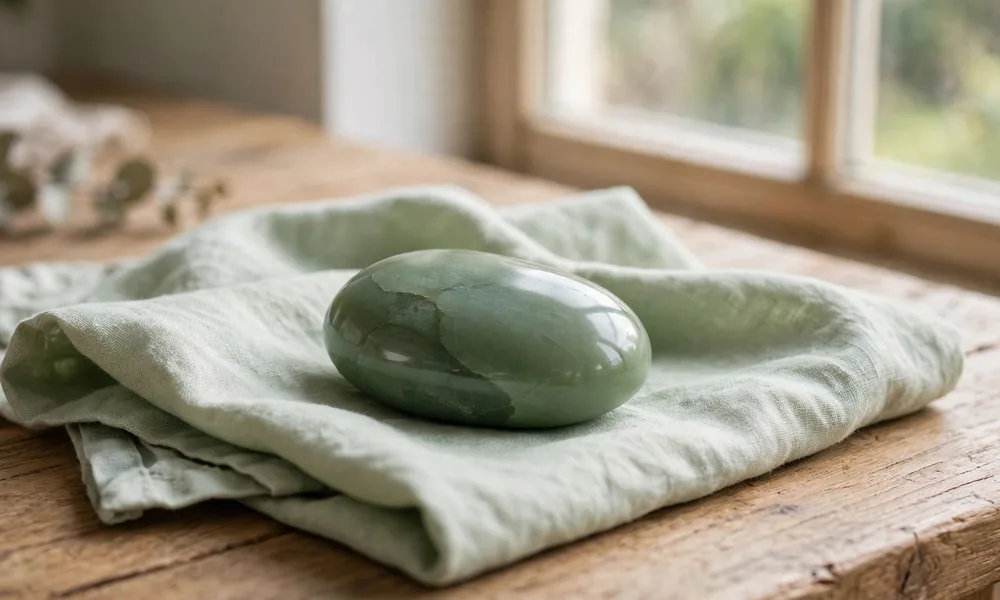
A calm day with nephrite needs no plan and no ceremony. Lay a pale sage cloth on the side table, set the stone near one corner, and stand a tall glass of water at the opposite corner, leaving dry cloth between them. Drink the water in slow sips while the stone catches the window light.
Then lift the stone for a moment, feel its cool weight, and set it back down where it was. The stone is there to be glanced at between other small things, not to fill the day on its own.
Nephrite Beside Water
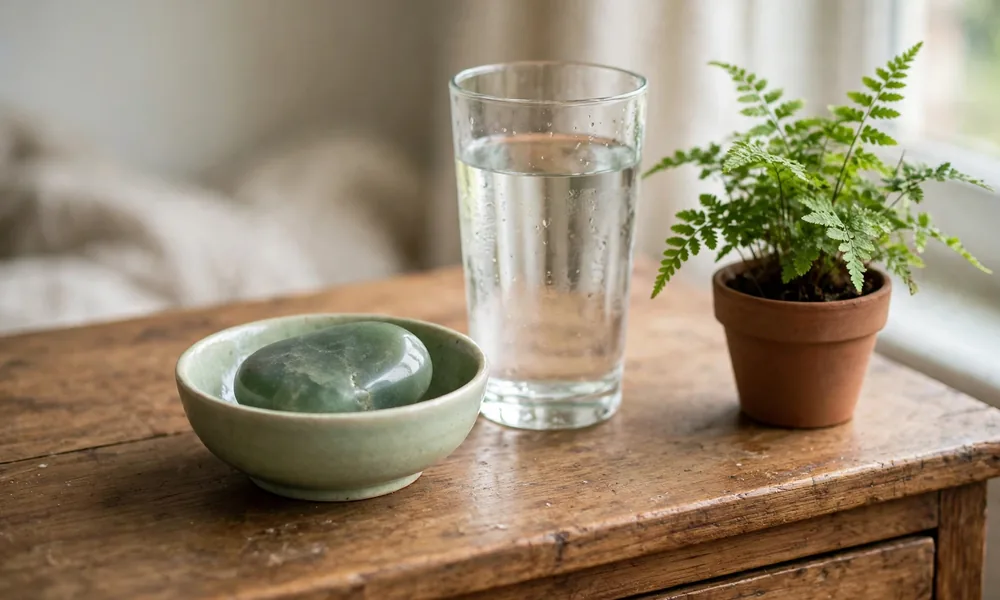
A glass of water and a nephrite stone make a peaceful pair on a tray, yet the two never touch. Put the drink at the far end of the cloth and the stone at the near end, dry fabric lying between them, so the water stays pure and the stone stays free of damp.
After the stone is placed, clean your hands with soap and water before taking up the glass. Never lower the stone into a glass, a jug, or a bath. A long soak would take the shine from its waxy surface, so keeping it dry is part of caring for it.
Nephrite at a Glance
| Soft muted green | Calm tray, desk | Dry hands only |
|---|---|---|
| Fibrous, very tough | Slow mornings, calm | Glass kept apart |
| Cool, waxy stone | Low light, hush | Never in drinks |
| Walnut-sized piece | One tray, one glass | Dust dry weekly |

Nephrite and Jadeite
Jadeite for calm days is the nearest stone to this one, and the difference between them is the heart of this guide. Jadeite is the other jade mineral, a vivid fresh green stone with a glassy surface, bright as a leaf just after rain. Nephrite is softer in colour, with a waxy glow, and far tougher because of its interlocked fibres.
Where jadeite catches the eye at once, nephrite rewards a longer look. If a day calls for brightness, jadeite fits; if it calls for steadiness, nephrite fits better. The two are both called jade, yet they are different minerals.
Nephrite and Green Jade
Green jade for slow mornings is a soft calm green stone for unhurried starts, and it shares much of nephrite's mood. Green jade is the familiar name for the green stone most people picture when they hear the word jade, while nephrite is the mineral name for the tough fibrous stone itself.
The difference is one of naming: green jade describes the colour and the look, and nephrite names the mineral that gives that look its strength. A soft green nephrite piece is, in plain terms, a green jade with its mineral identity spelled out.
Nephrite and Olive Jade
Olive jade for calm days is the muted yellow-green member of the family, the grey-green of olive leaves in late afternoon sun. Nephrite is a clearer soft green, more leaf than olive, with a cooler tone.
Olive jade leans warm and earthy, like a grove at dusk, while nephrite leans cool and fresh, like shaded leaves at midday. Both suit calm days, yet they paint the room in different greens.
Nephrite and the Other Jades
The rest of the jade family spreads out in every colour from this soft green. Grey jade is a hushed mist-grey stone for quiet days, and white jade is a soft creamy white for calm mornings. Imperial jade is the deep vivid green of a well-kept garden, far brighter than this muted piece, and brown jade is a warm steady brown for ordinary days.
Mutton fat jade is a creamy-white nephrite, the same mineral as this stone in a different colour, prized for centuries by carvers. Purple, blue, red, yellow, black, and lavender jades each wear a different colour of the same jade name, yet none of them is the soft green nephrite of this guide.
Where Nephrite Sits at Home
Nephrite belongs where daylight is gentle and the room is unhurried. A shelf at waist height, a desk corner, or a tray on top of drawers all suit it, provided the stone can be seen and nobody's elbow can knock it. Early light brings out its muted green most clearly.
Site the tray far from taps, kettles, and steamy washrooms, and high enough that small children cannot reach it. A fixed place, picked once and then left undisturbed, suits the stone best.
Keeping Nephrite Clean and Dry
Nephrite is hard-wearing, so it needs almost nothing, though soft handling suits it best. A weekly wipe with a dry soft cloth is the whole of its care. Leave soap, polish, and sprays in the cupboard, because damp only wears away the shine.
When the stone is not being shown, wrap it alone in a soft cloth bag, away from keys, coins, and harder gems. Do not leave it on a sunny sill, where fierce sun can pale its soft green across the months.
Stones to Keep Far from Water
Certain stones should never meet water, and a handful of them hold substances that belong nowhere near a drink. Malachite carries copper through its green bands, and copper is not something to swallow. Hematite goes rusty if it stays wet, and the rust marks everything it rests on.
Angelite melts away little by little in water, while amber is ancient tree resin rather than stone, and soaking turns it cloudy. Apatite flakes apart in a bath, lepidolite hides lithium in its pale layers, and pyrite decays in damp air. Keep all of them far from anything you drink, and give nephrite the same treatment: next to the glass, never inside it.
Your Calm Days Checklist
- Lay the stone on dry cloth, glass standing beside it.
- Drink the water in slow, unhurried sips.
- Lift the stone, breathe once, and put it back.
- Clean your hands with soap once it is down.
- Choose a seller who tells you the stone's origin.
- For any worry about your health, seek a clinician's guidance.

Frequently Asked Questions
What is nephrite?
Nephrite is a tough fibrous jade mineral, made of interlocked actinolite fibres, with a soft muted green colour and a waxy glow. A polished piece feels cool and dense in the hand.
How is nephrite different from jadeite?
Jadeite is the other jade mineral, a vivid fresh green stone with a glassy surface. Nephrite is softer in colour and far tougher, because its fibres lock together and resist chipping.
How is nephrite different from green jade?
Green jade is the familiar name for the soft green stone most people picture when they hear the word jade. Nephrite is the mineral name for the tough fibrous stone behind many of those green pieces.
How is nephrite different from olive jade?
Olive jade is a muted yellow-green stone, warm and earthy like olive leaves at dusk. Nephrite is a clearer soft green, cooler and fresher, like shaded leaves at midday.
Is nephrite safe to hold?
Holding a tumbled piece for a minute or two is fine for most people. Return it to its tray afterwards, clean your hands with soap, and store it out of children's reach, apart from food and drink.
Where should I keep nephrite at home?
Pick a quiet, dry corner: a low shelf, a desk edge, or a tray on drawers. Leave a gap between stone and glass, and keep the tray away from fierce direct sun.
The Bottom Line
Nephrite keeps calm days company: a single soft green stone in gentle light, water in its own glass close by, the stone never inside it.
A Note for Calm Days
Slow hours, a dry stone, a full glass: that is all a calm day needs.


