
The first ten minutes of the day set the tone for the rest of it, and most mornings rush past them: the alarm goes, the phone lights up, and the day is already hurrying before you have properly woken. A morning cleanse is a small stand against that rush — water, a wash, and a few unhurried minutes before anything else begins.
It is not a treatment and not a beauty project: simply the habit of starting the day with a glass of plain water and a gentle wash of the face, done slowly and in the same order every morning, so the body and the day both get a calm beginning.
What follows sets out the whole habit: the glass of water first, the wash itself, what to keep on the shelf, and how this cleanse differs from the other morning guides in this journal. It is gentle general information only, claiming nothing for your health — a glass of water and a wash are a pleasant start, not a remedy.
Key Takeaways
- A morning cleanse is a glass of plain water followed by a gentle face wash.
- The water comes first, drunk slowly, before the wash begins.
- Keep the wash short and lukewarm, with clean hands and a soft cloth.
- The cleanse is a habit, not a treatment, and it cures nothing.
- Try any new product on a small patch of skin first, and take skin worries to a doctor.
What a Morning Cleanse Is
A morning cleanse is the first thing you do for yourself in the day, and it has only two parts: a tall glass of plain water, drunk in slow sips by the window, and a wash of the face with lukewarm water, hands and a soft cloth, then patting the skin dry with a clean towel.
Nothing is added to the water, and nothing fancy is needed for the wash: no stones in the glass, no powders in the water, no scrub or strong product on the face. The whole thing takes about ten minutes, most of it simply standing still and letting the morning arrive.
Why Mornings Suit a Gentle Cleanse
Overnight the skin gathers a little oil and dust, and the mouth feels dry after hours without water. A gentle cleanse answers both at once: lukewarm water for a face still half asleep, and a slow glass of water instead of a hurried gulp.
Mornings also suit a cleanse because the day has not yet filled up: later there will be work, messages, and errands, and the wash will be squeezed between them. At the start of the day there is a small gap, and a cleanse fills it with something calm.
Setting Up the Night Before
A morning habit survives when the morning asks nothing of you, and that starts the night before: a clean glass and a jug of water on the counter, a clean towel over the rail, the cloth you wash with laid out. If you use a gentle cleanser, set the bottle beside the sink so you are not hunting for it half awake.
The point is to remove every small decision from the morning, so the cleanse happens almost by itself and the day begins before the rush can start.
Water First: A Cool Glass
Drink the water before you wash, not after: fill the tall glass, stand by the window, and take it in slow sips until it is empty. The water is plain, with nothing added, and it is there to be drunk, not to wash with — the wash has its own water at the sink.
Keep a jug nearby and take a second glass if you like, but one full glass is enough to begin. This is a drink, not a dose: it makes no promise about your health and treats nothing — a calm way to start drinking water for the day.

Washing Your Face Gently
Wet your hands first, then splash the face with lukewarm water, never hot and never cold. If you use a cleanser, take a small amount, work it over the skin, and rinse it away; a soft cloth can help, but it should glide, not drag.
Pat the skin dry with a clean towel instead of rubbing it, and let the face rest for a minute. The wash is done when the skin feels clean and calm, not tight or red; if it feels tight, the water was too hot or the product too strong, and tomorrow it should be plainer still.
Face washing, article 893 in this batch, is the longer guide to washing the face itself; this cleanse is wider, with the face wash as one step inside a morning, not the whole morning.
A Morning Cleanse at a Glance
| Water first, slow | Gentle wash, lukewarm | Ten quiet minutes |
|---|---|---|
| Plain glass, jug | Clean hands, soft cloth | Shelf set nightly |
| Nothing added | Pat dry, no rubbing | Doctor for worries |
 |
Morning Cleanse and Morning Tea
Water and morning tea is the closest companion to this cleanse: the same first glass of water, then a plain cup of hot tea, drunk slowly by the window, sharing the same slow start.
The difference is what follows the water: morning tea adds a hot drink and ten minutes of sitting, while a morning cleanse adds a wash at the sink and a clean towel. They fit together — water, then wash, then tea — but either one stands alone when there is time for only one.
A citrus morning, live post 5236, is a third neighbour: sliced fruit on a plate beside the glass, sharp scent and bright colour, where this cleanse keeps the tray plain and the focus on the wash.
Morning Cleanse and Micellar Water
Micellar water done right is a no-rinse cleanse for the face, done with a damp cotton pad instead of a sink, for mornings when the face needs only a light refresh and travel days with no basin at hand.
The link between the two guides is a single line: live post 828 keeps a small table, and one row of it reads "Morning cleanse", with one damp pad as the step — a passing mention inside a guide about pads, not a morning routine of its own. This article is that routine, while micellar water is the pad-based shortcut for days when the sink is out of reach.
Morning Cleanse and a Golden Morning
A golden morning is a whole first hour built around low golden light: an early alarm, a glass of water by the bed, a gentle wash, and a simple breakfast by the window — the most planned morning in this journal.
A morning cleanse is the smaller habit inside it: it takes the water and the wash from the golden morning and leaves out the early alarm and the breakfast, so it fits mornings when the sun is already high. On a golden morning it is the first ten minutes; on an ordinary morning, the whole ritual.
Morning Cleanse, Hand Washing and Face Washing
This batch holds three washing guides, each washing something different. Hand washing, article 889, is about the hands alone: soap, water, and clean hands through the day. Face washing, article 893, is about the face alone: lukewarm water, a soft cloth, and a gentle wash.
A morning cleanse is wider than either: it begins with a glass of water to drink, then includes the face wash as one step, and ends with a few quiet minutes. The hand-washing guide never mentions a glass to drink or a morning at all, and the face-washing guide never leaves the sink — so this cleanse alone is a morning routine rather than a wash.
Keeping the Cleanse Gentle and Safe
A cleanse should be the gentlest part of the day: try any new cleanser or cloth on a small patch of skin first, such as the jaw, and wait a day before using it on the whole face. Stop at once if the skin stings, turns red, or feels tight, and go back to plain lukewarm water.
This guide makes no claim about drinking water and health: a glass of water in the morning is a pleasant habit, not a treatment, and it will not cure spots, dryness, or anything else. If a skin worry keeps coming back, or a new product leaves a mark that will not fade, ask a doctor rather than adding more products — a doctor hears the worry; a shelf full of bottles does not.
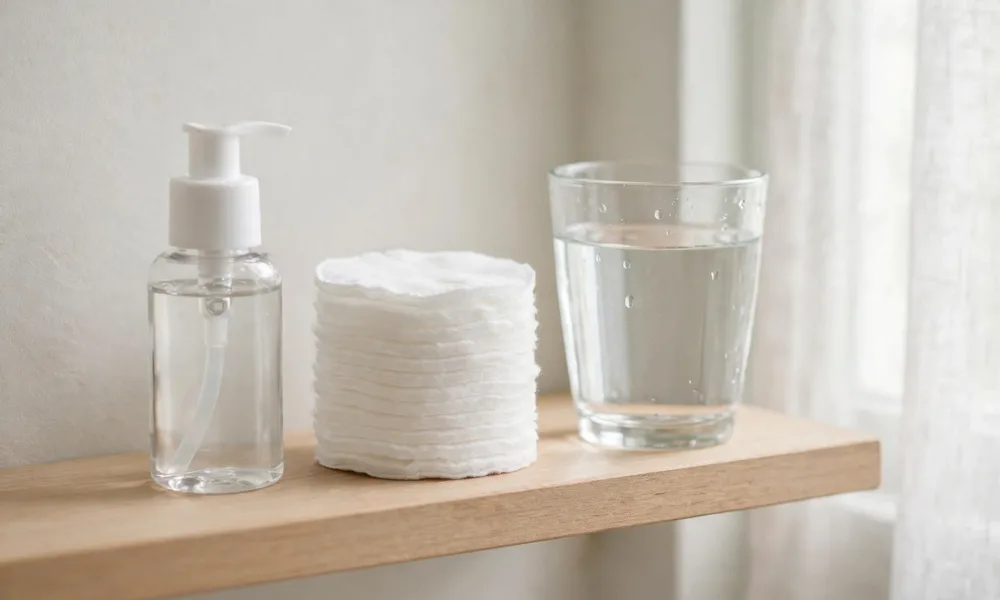
Your Morning Cleanse Checklist
- Set the glass, jug, towel, and cloth out the night before.
- Drink one full glass of plain water in slow sips by the window.
- Wash your face with lukewarm water and clean hands.
- Pat the skin dry with a clean towel, and let it rest a minute.
- Keep the wash short; skip any product that stings or reddens.
- If a skin worry will not settle, ask a doctor rather than adding new products.

Frequently Asked Questions
What is a morning cleanse?
A morning cleanse is a short habit at the start of the day: one tall glass of plain water, drunk slowly, then a gentle wash of the face with lukewarm water and a soft cloth.
Should I drink the water or wash first?
Drink the water first, in slow sips by the window, then wash your face at the sink. The drink wakes you up gently, and the wash follows once you are properly awake.
Do I need a cleanser for a morning cleanse?
No. Plain lukewarm water and a soft cloth are enough for most mornings; a mild cleanser is optional, and only if your skin likes it.
How long does a morning cleanse take?
About ten minutes from the first sip to the last pat dry, most of it simply standing still, drinking slowly, and letting the morning arrive.
Is a morning cleanse the same as micellar water?
No. Micellar water is a no-rinse cleanse done with a damp cotton pad, while a morning cleanse is a wash at the sink, plus a glass to drink. The pad is a shortcut; the sink is the full habit.
When should I talk to a doctor about my skin?
Talk to a doctor if redness, spots, or dryness keep coming back, or if a product leaves a mark that will not fade — this guide is gentle general information only.
The Bottom Line
A morning cleanse is a small, calm opening: one glass of plain water, one gentle wash, ten quiet minutes, and nothing else asked of the morning.
A Note for Fresh Mornings
Set the glass out tonight, wash gently, and let the day begin slowly. A clean face, a full glass, and a few unhurried minutes are all a fresh morning needs.


