
Most rooms in a house are used every day, and they show it: the kitchen keeps last night's cooking smell, the living room holds the dent of the usual chair, and the bedroom keeps the shape of whoever slept in it. A guest room is different. It waits. Its bed is made for someone who has not arrived yet, its towels are folded for hands that have not touched them, and its quiet comes from being kept ready rather than being lived in.
That waiting is what makes the room special, and also what makes it easy to forget. A room nobody sleeps in gathers dust on its sill, its bedding grows stale, and its air turns still. A little plain water, used gently and often, keeps it fresh: a damp cloth over the surfaces, aired linen, and a carafe filled on the day a guest arrives.
What follows is a set of plain, gentle habits for that one room: airing it, washing and storing its bedding, setting the bedside table, and keeping it welcoming between visits. Everything here rests on plain water, with no mixing of chemicals and no claims about health or cures. If a health worry comes up, ask a doctor.
Key Takeaways
- A guest room is kept ready for someone else, not lived in every day.
- Plain water, fresh air, and clean linen do most of the work.
- A carafe and a glass by the bed are the kindest welcome a guest can find.
- Air the room, wash the bedding gently, and keep the bedside clear.
- This is general information only; ask a doctor about any health worry.
What a Guest Room Means
A guest room means a room that feels clean, dry, and aired the moment a visitor opens the door. The bed is made, the pillows stand plumped, and the air carries nothing but the open window. Nothing in the room is loud or busy, and sitting on the edge of the bed feels easy.
A guest takes all of this in at once. Clean cloth, a clear sill, and air through an open window are enough to make the room feel cared for.
Why a Guest Room Deserves Its Own Ritual
Your own bedroom forgives a lot: you know which drawer sticks and which window needs a push. A guest knows none of that. They arrive tired, often late, and the room is the first thing that tells them whether they are truly welcome. A made bed and a glass of water say welcome more warmly than any speech.
The room also sits empty for weeks at a time, which is exactly when it needs attention. Dust settles, linen grows stale, and a closed room turns musty faster than one aired daily. A short ritual, done the day before a visit and again between visits, keeps it from sliding into neglect.
Getting the Room Ready
Begin the day before your guest arrives, while there is still time to air the bedding. Open the windows for an hour. Strip the bed, shake the pillows outside, and lay the sheets and duvet cover over a chair near the window.
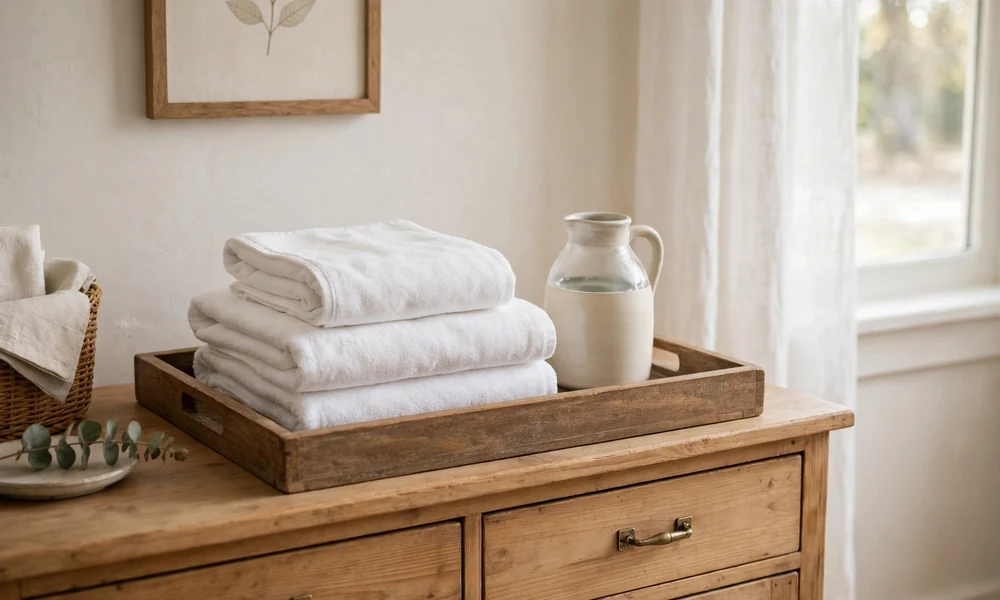
While the bedding airs, wipe the bedside table, the windowsill, and the dresser with a cloth dampened in plain water. Make the bed with fresh linen, smooth the cover, and plump the pillows. Set a carafe of fresh water and a clean glass on the bedside table, fold two towels on the foot of the bed, and leave a small space on the dresser.
A Guest's First Evening
Picture the arrival: the door opens, the bag goes down, and the guest stands in the doorway a moment, taking the room in. The bed is made, the window is open a crack, and on the bedside table sits a carafe of water with a clean glass beside it. No fuss, no ceremony, just a room plainly prepared with care.
The guest pours a glass, drinks it slowly, and sits on the edge of the bed to rest.
Water in the Guest Room
Water belongs in a guest room in three places: the carafe by the bed, the jug in the bathroom, and the cloth you wipe with. Fill the carafe on the morning of the arrival, not the night before. Rinse it with plain water and let it dry upside down between visits, so it never carries a stale smell.
In the bathroom, a small jug of water beside the basin is a thoughtful touch for washing hands and face. Keep the tap area wiped dry, and check the taps weekly for drips, since a slow drip can stain a basin while the room sits empty.

The Guest Room at a Glance
| Made bed, clean linen | Carafe, glass, towels | Air room daily |
|---|---|---|
| Fresh air, open window | Wipe, dust, tidy | Wash linen gently |
| Soft light, clear floor | One jug, plain water | No strong scents |
| Quiet corner, spare chair | Towels folded neat | Check taps weekly |
The Guest Room and a Fresh Bedroom
Water and a fresh bedroom covers your own bedroom: its bed, its bedding, its windows, and its bedside table, kept fresh with plain water.
A guest room differs because it is not yours. Your bedroom is slept in every night, aired every morning, and forgiven its small messes. A guest room is kept for someone else, used now and then, and judged in one glance by a tired traveller. The bedroom guide is a daily habit; this one is a habit of readiness, a room held in welcome for a person who has not arrived yet.
The Guest Room and a Fresh Living Room
Water and a fresh living room covers the room a household shares all day: its shelves, its table, its cushions, and its windows, freshened with plain water and air.
The living room is the room a household shares all day, cushions sinking under daily use, shelves gathering dust. A guest room is the opposite shape: private, quiet, and used by one or two people for a night or two. The living room needs constant small care; the guest room needs a thorough readying before each visit and a light check between them.
The Guest Room and Room Sprays
Water and room sprays is about scenting a room with water-based sprays before someone walks in.
A guest room differs because its freshness does not come from a bottle. A spray can mask a stale room for an hour, but a guest sleeping in it will notice by morning: the bedding, the air, and the dust on the sill. This guide builds freshness from water, air, and clean linen instead. If you do use a spray, keep it light and air the room afterwards, since a strong scent can bother a guest more than no scent at all.
The Guest Room Among the Other Water Rituals in This Batch
Beyond the room guides, this batch holds four more water rituals, each belonging to a smaller corner of the home. A dish rack is a kitchen habit, a place for washed plates to drip dry beside the sink. A kettle is the small vessel that boils water for tea, a morning job rather than a room. A soap dish is a bathroom detail, keeping a bar of soap dry between washes. A spice rack is a shelf of small jars, a cook's corner rather than a sleeper's room. The guest room is the only one of the five about a whole room kept ready for a visitor.
Keeping the Room Fresh Between Visits
An empty guest room still needs a weekly visit of its own. Open the window for half an hour, shake the pillows, and wipe the bedside table and the sill with a damp cloth. If the bedding has sat untouched for a month, wash it again before the next guest: linen folded too long can smell stale.
Store spare bedding in a dry cupboard, folded loosely for air. Keep the carafe upside down on a shelf and the towels in a drawer, where they gather no dust. A room checked weekly never needs a frantic clean the night before a guest arrives.

Gentle Care Notes
Keep your products gentle too. If you wash the guest bedding with anything new, test it first on a hidden corner of one pillowcase. Plain water and a mild wash are enough for most linen, and strong scents or harsh cleaners have no place where someone will sleep.
This guide offers general information only. It does not diagnose, treat, or promise anything about health. If a guest mentions sensitive skin or a breathing worry, listen kindly, keep the room plain and fragrance-free, and suggest they speak with a doctor.
Your Guest Room Checklist
- Open the windows and let the air move through the room.
- Make the bed with fresh linen and plump the pillows.
- Set a carafe of fresh water and a clean glass by the bed.
- Fold two clean towels on the foot of the bed.
- Wipe the bedside table, the sill, and the dresser with a damp cloth.
- Leave a small clear space on the dresser for your guest's things.
A made bed, a full carafe, an open window: once those three are done, the room is ready.
Frequently Asked Questions
How often should I air a guest room?
Open the windows for half an hour once a week, and for a full hour the day before a visit.
What should I leave on the bedside table?
A carafe of fresh water and one clean glass — a clear bedside is easier to use in the dark than a crowded one.
Can I use scented sprays in a guest room?
You can, but keep it light and air the room afterwards: a strong scent can bother a guest more than no scent at all.
How do I keep guest bedding fresh between visits?
Wash it before each visit, air it weekly, and store spare sets loosely folded in a dry cupboard.
Is plain water enough for wiping the room?
Yes — for everyday dust and light marks, a cloth dampened with plain water is enough.
What if my guest has sensitive skin?
Keep the room plain and fragrance-free, wash the bedding with a mild product, test anything new on a hidden corner, and suggest a doctor.

The Bottom Line
A guest room asks for very little and gives a great deal back: a made bed, a glass of water by it, and air through an open window.
A Note for Guests
A fresh room, a full glass, an open window — that is how a house says welcome.