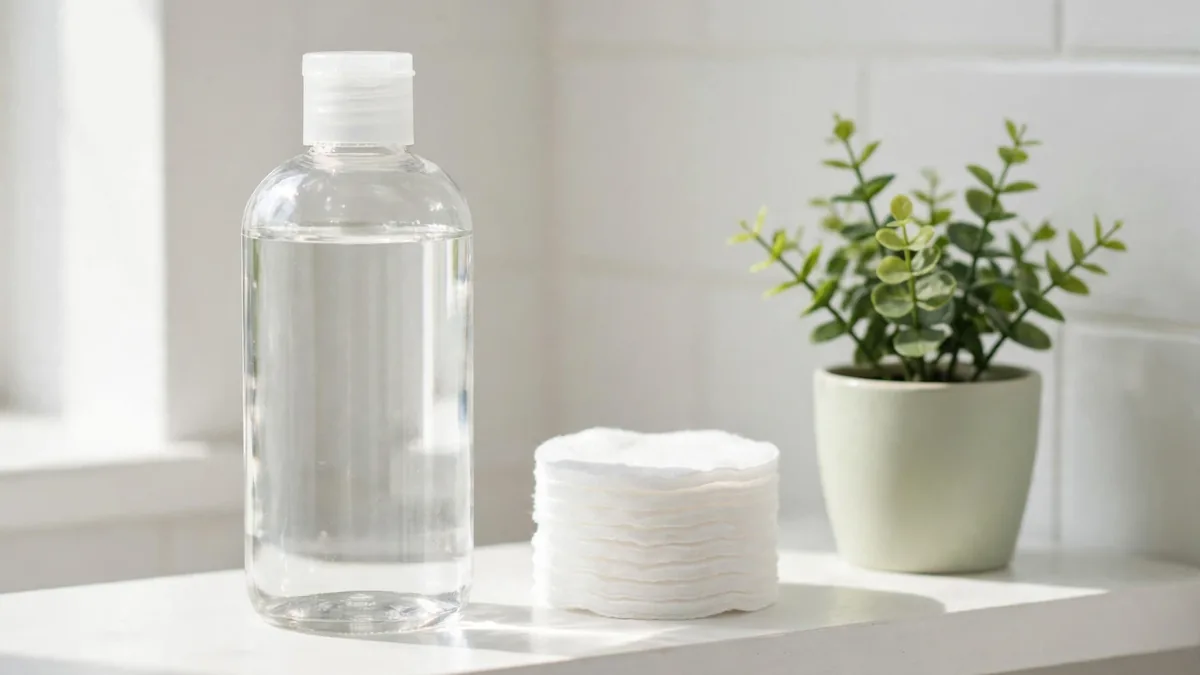
Some skincare steps feel like a chore before they even begin. The sink, the splashing, the wet sleeves, the face that feels tight afterwards. Micellar water was made for the opposite feeling: a clear liquid on a soft cotton pad, swept gently across the face, with no sink and no rinsing. It takes about two minutes.
The idea is simple. Micellar water holds tiny cleansing particles, called micelles, that lift away dirt, oil, and light makeup as the pad moves across the skin. You do not scrub, and you do not rinse. A fresh pad tells you when the face is clean.
This guide explains micellar water done right: what it is, how to choose a bottle, which pads to use, and the steps for morning, evening, and after makeup. It is cleansing guidance only, and it makes no medical claims.
Key Takeaways
- Micellar water is a no-rinse cleanser: micelles lift dirt, oil, and light makeup onto a pad.
- Always use a fresh, soft cotton pad, and sweep gently; never scrub or press hard.
- Soak the pad well, hold it briefly, then sweep once and check the pad.
- It suits mornings, light-makeup evenings, and travel, but heavy makeup needs a separate first step.
- Micellar water cleans; it will not cure spots, dryness, or any skin problem.
What Micellar Water Is
Micellar water looks like plain water, but it is not. It is a gentle cleansing liquid of purified water with tiny clusters of cleansing molecules, called micelles. Each micelle has one end that likes water and one that likes oil, so it picks up oily dirt and holds it until the pad carries it away.
The result is a cleanser that needs no foam and no rinsing. You pour a little onto a cotton pad, and the pad becomes the washcloth, the water, and the rinse all at once. When the pad comes away grey, you can see what it removed, and a clean pad tells you the job is done.
Why No-Rinse Cleansing Works
Rinsing with water is not always gentle. Hard water can leave the skin feeling tight, hot water can strip it, and a rough towel can undo a careful wash. A no-rinse cleanse avoids all three. The pad is soft, the liquid is cool, and nothing rubs the skin dry. For mornings, when the face only needs a light refresh, that gentleness is exactly right.
The method also saves time and mess. There is no wet sink, no splashed mirror, and no dripping sleeves. You can cleanse sitting down, in a bedroom, or in a hotel room with a small mirror. That ease is why so many people keep micellar water for mornings and travel, even if they wash with water at night.
Choosing the Right Bottle
Choose a bottle made for your skin type, and keep the choice simple. A plain micellar water for sensitive skin suits most people: few added ingredients, no strong scent, a gentle formula. If your skin is oily, a version for combination skin may feel fresher, but it should still feel mild, never tight.
Read the label before you buy. The ingredient list should be short, and the bottle should say it is a cleanser for the face. Avoid heavy fragrance, added colour, or alcohol high on the list, since those can irritate. A clear, unscented bottle is the safest first choice.
The Cotton Pad Matters
The pad is half the product, and a poor pad ruins a good bottle. Choose soft, thick cotton pads that hold liquid well and do not shed fibres onto the face. Thin, rough pads drag on the skin and fall apart when wet, while a thick pad stays smooth and lets you use one pad per area instead of several.
Round pads are the usual shape, and they fit the cheek and forehead well. Larger square pads suit the whole face, and small pads are handy for the eyes. Keep a small stack in a clean jar or box on the shelf, so you are never tempted to reuse a dirty pad. Used pads go straight in the bin, never back in the jar.
The Method, Step by Step
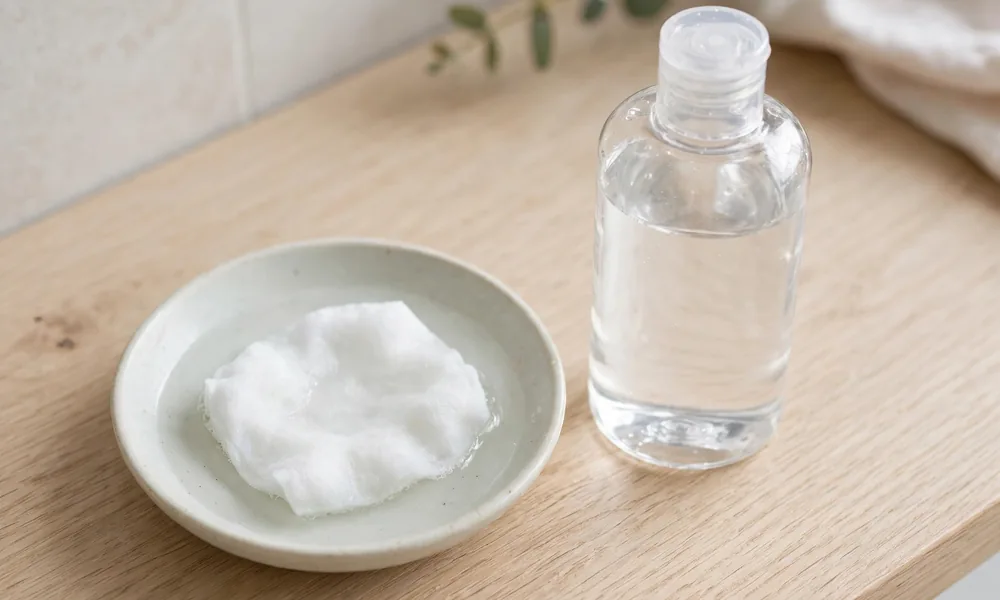
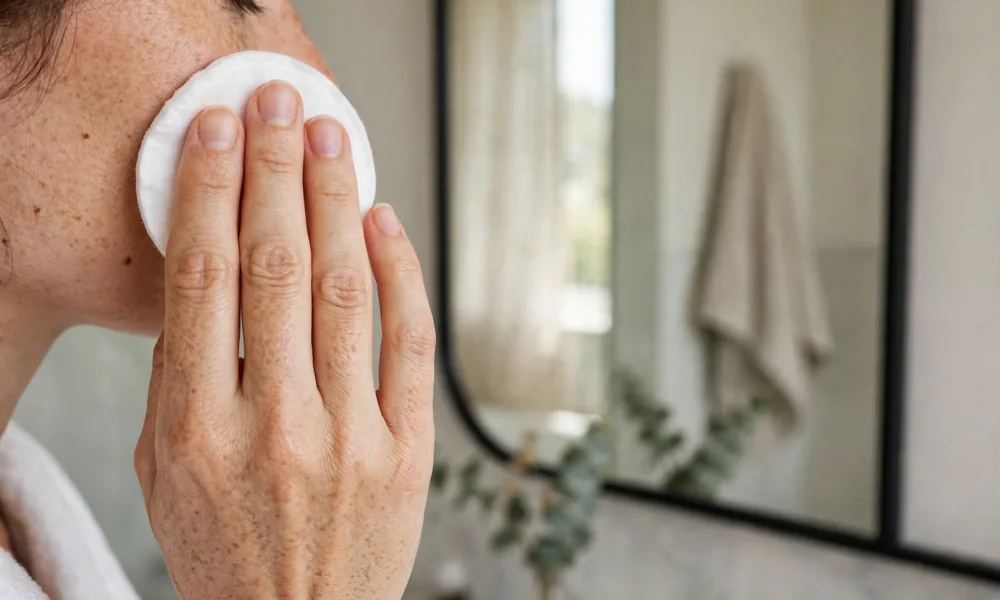
Start with clean, dry hands, and tie your hair back so the face is clear. Pour micellar water onto a fresh cotton pad until it is damp through, not dripping. A pad that is too dry will drag, and a pad that is dripping will run into your eyes. Damp through is the right amount.
Hold the pad against the cheek for a few seconds, then sweep it gently across the skin in one direction, from the centre of the face outward. Use a fresh side of the pad for the forehead, then the other cheek, then the chin. Move slowly, and let the pad do the work. When a pad looks grey or marked, take a fresh one and continue.
Finish with the eyes last, using a small fresh pad. Hold it gently over closed lids for a few seconds to soften light makeup, then sweep downward once, without rubbing. Check the final pad: if it comes away clean, the cleanse is done. Let the skin dry on its own, and wait a minute before anything else.
Morning, Evening and After Makeup
Mornings are the simplest time for micellar water. The face has only the night on it: a little oil, a little dust, nothing heavy. One or two pads, swept gently, are enough, and the skin is ready for moisturiser or sunscreen. A calm morning wash pairs well with the same slow approach as a calm guide to washing your face well.
Evenings ask for more. If you wore light makeup, two or three fresh pads will usually clear it, and the final pad should come away clean. Heavy foundation, waterproof mascara, or long-wear lipstick need a dedicated makeup remover first, then micellar water as the second step.
After makeup, a fine mist can refresh the skin without a full cleanse, as how to refresh makeup with a fine water mist explains. The mist is for the afternoon, when makeup has settled. Micellar water is for the end of the day, when the makeup comes off.
Mistakes That Undo the Gentleness
The most common mistake is scrubbing. Micellar water works by lifting, not by force, and pressing hard only reddens the skin. If a pad is not lifting makeup, the answer is a fresh, well-soaked pad held a little longer, never harder rubbing. Gentle pressure and patience clear more than force.
The second mistake is reusing pads. A used pad carries the dirt it just removed, and wiping with it again spreads that dirt back across the face. Take a fresh pad whenever the first looks marked. Pads are cheap, and the skin is not a place to economise.
Micellar Water and the Rest of Your Routine
Micellar water is a cleanser, so it sits at the start of a routine, not the end. After cleansing, the skin is ready for the next step: a light moisturiser in the morning, or a richer cream at night. Wait a minute after the last pad, then apply the next product with clean hands.
It pairs well with simple water habits. A cool green tea rinse in the morning gives a fresh feeling that suits the same gentle mood, as green tea water for a fresher morning face describes. Cleanse with micellar water first, and rinse afterwards only if your skin likes it. Keep the routine short: cleanse, moisturise, and stop.

A Simple Weekly Rhythm
A good routine is a weekly rhythm, not a daily battle. Most days need the same simple cleanse: one or two pads in the morning, two or three in the evening. Once a week, check your supplies: enough fresh pads, a bottle that is not nearly empty, and a clean shelf.
On a busy week, the routine should shrink, not vanish. Even a single pad in the morning is better than skipping the cleanse. The habit survives when it is small enough to keep on tired days.
| Skin moment | Pad use | Next step |
|---|---|---|
| Morning cleanse | One damp pad | Rinse or moisturise |
| Light makeup | Two fresh pads | Check final pad |
| Heavy makeup | Remover first step | Cleanse after remover |
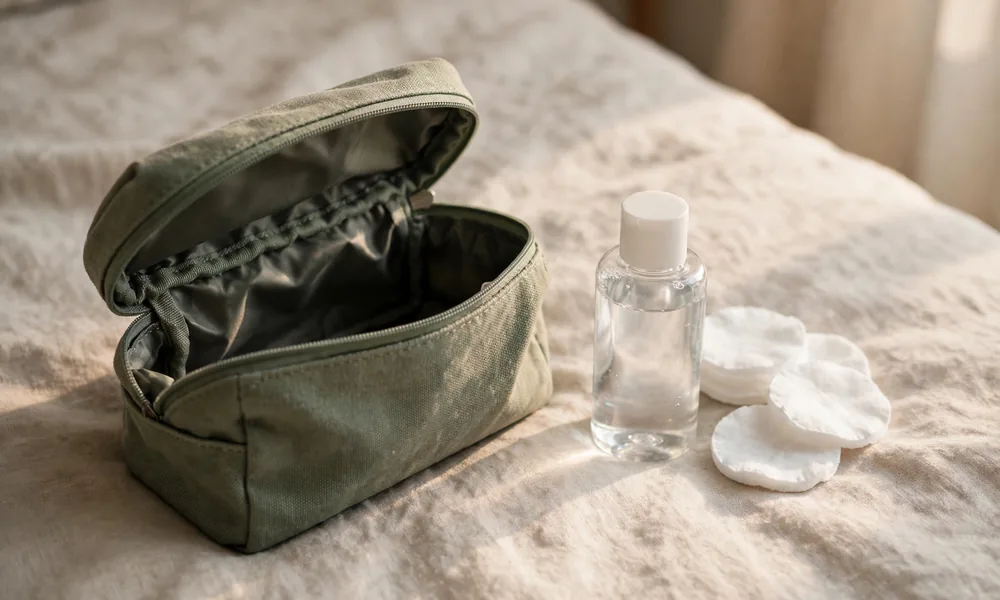
| Travel day | Pads in pouch | Seal bottle bag |
Your Micellar Water Checklist
- Choose a plain, unscented micellar water for your skin type.
- Keep soft, thick cotton pads in a clean jar; never reuse a pad.
- Soak the pad until damp through, never dripping and never dry.
- Sweep gently outward, and take a fresh pad when marked.
- Check the final pad: it should come away clean.
- Store the bottle upright, away from sun, and pack it sealed for travel.
Frequently Asked Questions
What is micellar water?
Micellar water is a gentle no-rinse cleanser: purified water with tiny cleansing clusters, called micelles, that lift dirt, oil, and light makeup onto a cotton pad. You do not rinse.
Do I need to rinse after micellar water?
No. Micellar water is made to be left on the skin, with no rinsing. Let the skin dry on its own after the last pad, wait a minute, and then apply moisturiser or sunscreen as usual.
Can micellar water remove makeup?
Yes, for light makeup. Two or three fresh pads will usually clear light foundation and everyday makeup. Heavy makeup needs a dedicated remover first, then micellar water as the second step.
Is micellar water good for sensitive skin?
A plain, unscented micellar water for sensitive skin suits many people, but every skin is different. Try it on a small area first, such as the jaw, and stop if the skin stings or turns red.
How many cotton pads should I use?
As many as it takes for the final pad to come away clean. Most mornings need one or two pads, and light-makeup evenings need two or three. Take a fresh pad whenever one looks marked.
Can I use micellar water every day?
Yes. Used gently, with fresh pads and no scrubbing, micellar water can be used morning and evening every day. If the skin feels dry or tight, use fewer pads, or cleanse once a day instead of twice.
The Bottom Line
Micellar water done right is a small, gentle habit: a plain bottle, a soft pad, and two slow minutes, morning and evening. It cleans without a sink or scrubbing. Choose a simple bottle, keep fresh pads ready, and let the final clean pad tell you when the job is done.
A Note for Simple Skin Days
Keep it plain, keep it gentle, keep it short. The skin asks for very little.