Your legs carry you through every day, and they rarely get thanked for it. They walk you to work, climb the stairs, stand in queues, and hold you up while you cook and clean. By evening they can feel heavy, dry and tired.
Water and legs is one of the simplest kindnesses there is. A basin of lukewarm water, a clean towel, a little plain moisturiser and fifteen quiet minutes are the whole list.
This guide is a simple care routine for your whole legs — thighs, calves and shins — from washing gently to drying well and resting them raised. It is gentle general information only, not a treatment, and it will not cure anything.
Key Takeaways
- Water and legs means plain lukewarm water and gentle care for the whole leg.
- Always use lukewarm water, never hot, and test the temperature first.
- Wash thighs, calves and shins gently, then pat dry and moisturise while damp.
- Rest your legs raised for ten or fifteen minutes, and move them slowly.
- Patch-test any new product, and see a doctor for persistent problems.
What Water and Legs Means
Water and legs means caring for the whole leg with water, from the thigh down to the ankle. The thigh is the long part above the knee, the calf is the soft muscle at the back of the lower leg, and the shin is the smooth front, where the skin sits close to the bone.
Each part dries out in its own way. Thighs rub against clothes all day, calves tighten after long standing, and shins catch cold air and dry out fast. A whole-leg routine gives each part the same gentle wash, soft drying and light moisture, instead of leaving one part cared for and the rest forgotten.
Why Water Comes First
Water comes first because it is the gentlest thing that touches your legs each day. It softens dry skin, rinses away dust and sweat, and leaves the skin slightly damp, which is exactly what a moisturiser needs.
Water also slows the routine down. A few minutes of lukewarm water over the legs is a small pause, and a pause is what tired legs need. No strong products, no scrubbing, no hurry — just water and a towel.
Lukewarm Water, Clean Hands
Lukewarm water feels neither hot nor cold on the inside of your wrist, close to body temperature. It softens dry skin without stripping it bare. Hot water can leave the legs tight and red, and cold water can feel sharp on dry shins.
Clean hands matter just as much as clean water. Wash your hands with soap and water before they touch your legs, and keep the wash itself short. A short wash is enough, and it is kinder than a long soak in hot water.
A Simple Morning Routine
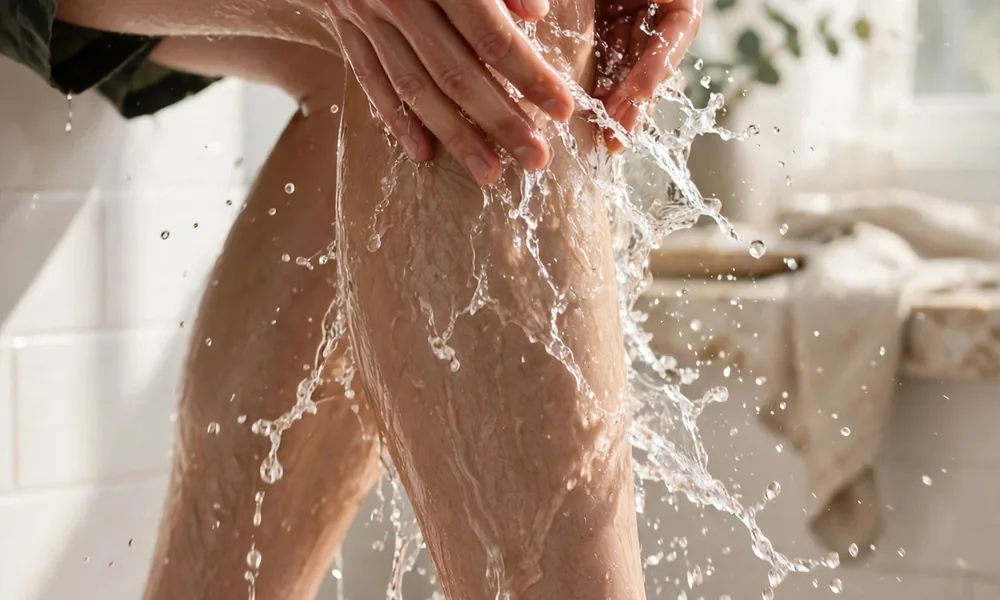
A simple morning routine takes only a few minutes. Start by washing your hands, then splash lukewarm water over your legs, using your fingertips in slow, light circles from the thigh down to the ankle. If you use a cleanser, choose a mild one, in a small amount, rinsed away fully.
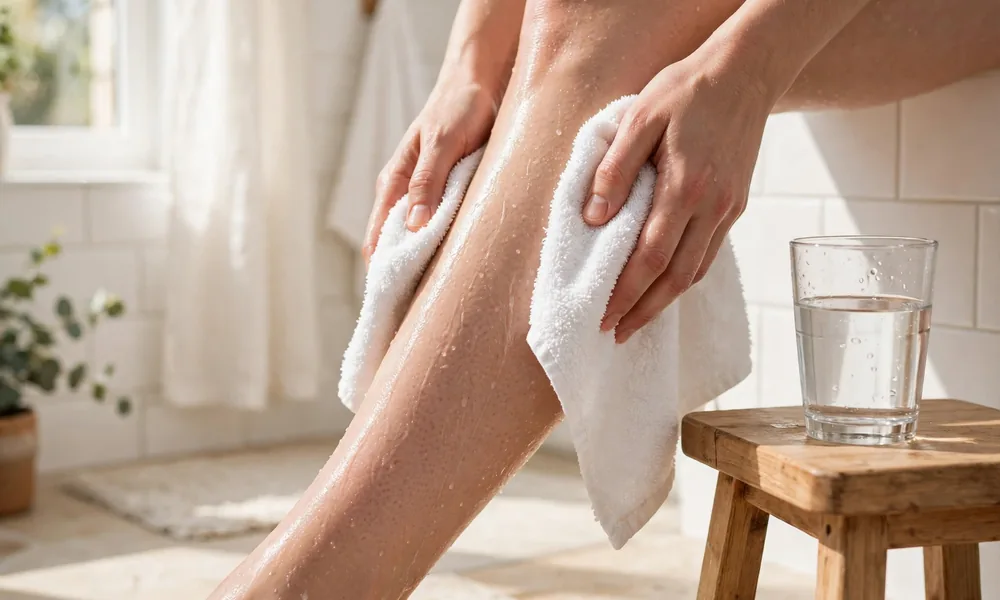
Pat the skin dry with a soft towel, pressing gently instead of rubbing, and leave the skin slightly damp. While the legs are still slightly damp, apply a plain moisturiser, using a small amount and a gentle hand. Then dress as usual.
A Simple Evening Routine
The evening routine is the same as the morning, with one extra step: the day itself. Wash your hands, splash lukewarm water over your legs, and rinse away the dust and sweat of the day. A mild cleanser can help here, in a small amount, rinsed away fully.
Pat dry softly, apply a plain moisturiser while the skin is still slightly damp, and then rest your legs raised for ten or fifteen minutes. No extra products and no scrubbing. The evening routine is the morning routine, slowed down.
Washing Thighs, Calves and Shins
Wash each part of the leg in turn, and keep the touch light. Start at the thigh, where the skin is softer and rubs against clothes, and wash with slow circles of your fingertips. Move down to the knee, and wash around it gently, without pressing hard.
Then wash the calf, using the same slow circles on the soft muscle at the back, and finish with the shin, where the skin is thin and close to the bone. The shin needs the lightest touch of all: plain water, a soft hand, and no scrubbing. Rinse everything away fully, because soap left on dry skin only dries it further.
Drying Gently and Moisturising
What you do after the water matters as much as the water itself. Pat your legs dry with a soft towel, pressing rather than rubbing, and take extra care around the knees and ankles, where water likes to hide. Rubbing dry skin only roughens it further.
While the skin is still slightly damp, smooth on a little plain, unscented moisturiser, and work it gently into the thighs, calves and shins. Patch-test any new moisturiser first, and wait a day before using it on the whole leg.
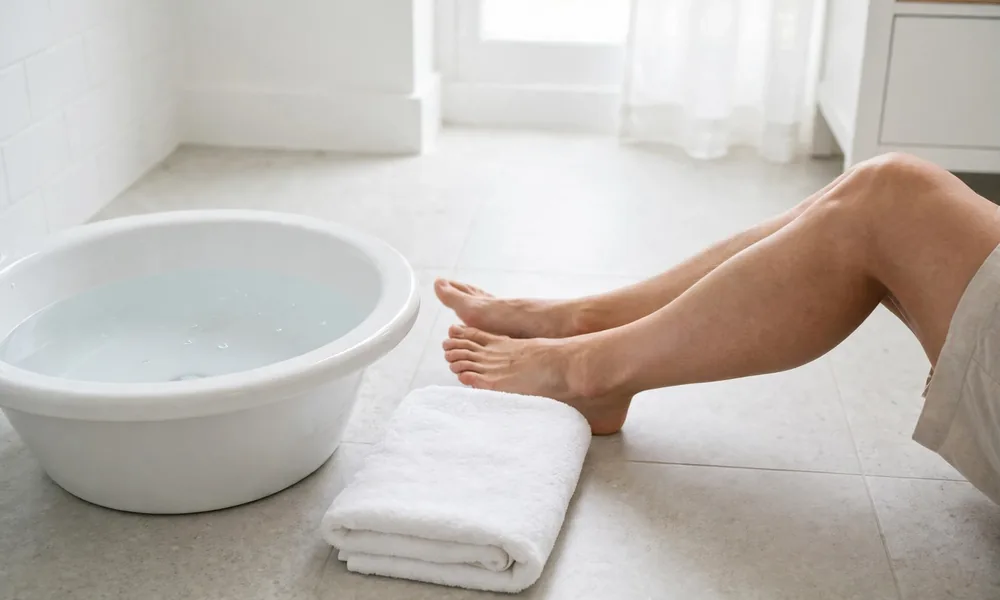
Water and Legs at a Glance
| Lukewarm water | Whole leg | Gentle care |
|---|---|---|
| Test with hand | Thighs, calves, shins | Wash, dry, rest |
| Never hot water | Ten to fifteen minutes | Patch-test first |
| Plain water only | Raise and move slow | See a doctor |
Water and Legs and Water for Knees
Water and legs and water for knees are close cousins, but they care for different things. Water and knees: a simple softening ritual is a ritual for rough knee skin only: dry, greyish patches that feel rough to the touch, softened with lukewarm water and moisturiser while damp.
Water and legs is wider than that: it cares for the whole leg, from thigh to ankle, not just the knees. The knees get their gentle wash inside this routine, but so do the thighs, calves and shins. If your knees are the only rough part, the knees guide is enough; if the whole leg feels dry and tired, start here.
Water and Legs and Water for Ankles
Water and legs and water for ankles are close cousins, but they care for different things. Water and ankles: a simple care routine is a care routine for the ankle joint itself: washing around the joint, drying carefully between the toes, and resting the ankles raised.
Water and legs is wider than that: it cares for the whole leg, from thigh to ankle, not just the joint at the bottom. The ankles get their gentle wash inside this routine, but the thighs and calves get the same care too. If your ankles feel heavy by evening, the ankles guide is the closer match; if the whole leg feels heavy, start here.
Water and Legs and Water for Cracked Heels
Water and legs and water for cracked heels are close cousins, but they care for different things. Water and cracked heels: a gentle routine is a gentle routine for dry heel skin that has split into small cracks, with a short lukewarm soak, careful drying and moisturiser.
Water and legs is wider than that, and it stops higher up: it cares for the whole leg, from thigh to ankle, and it does not soak the heels. The heels get their own routine in the heels guide. If your heels are cracked and sore, follow the heels guide, and see a doctor if the skin is broken.
Resting Legs Raised
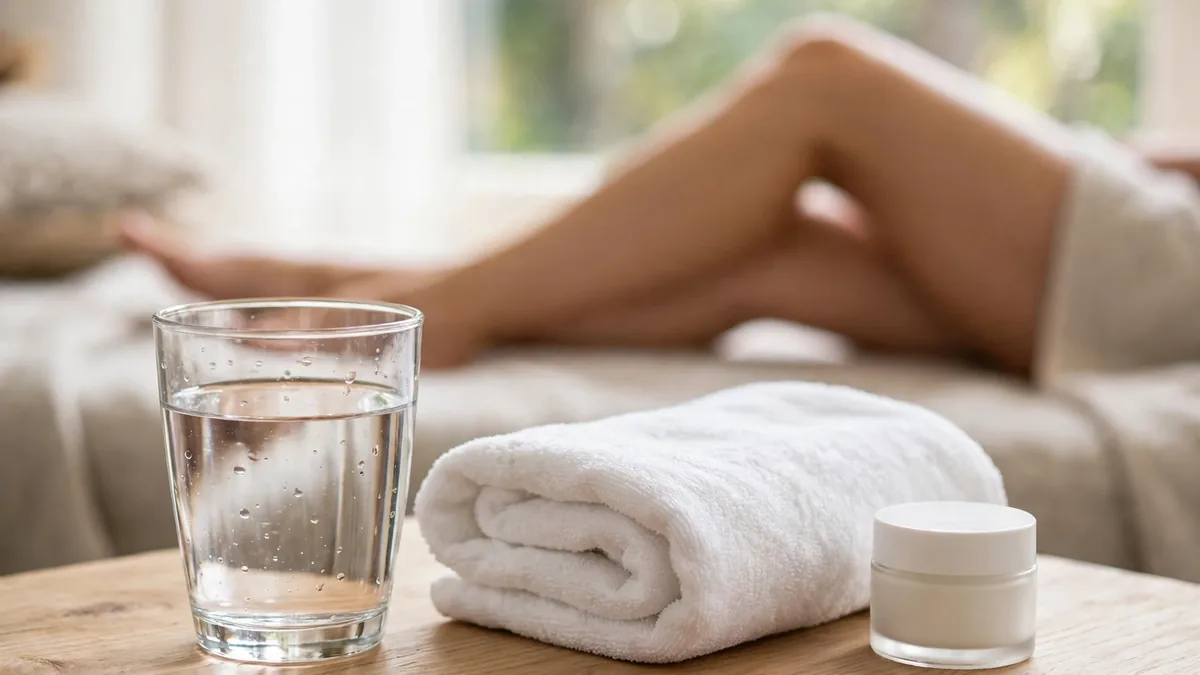
Resting your legs raised is the quietest part of the routine, and one of the kindest. After washing and moisturising, lie down and lift your legs onto a stack of pillows, so your feet sit a little higher than your hips. Stay there for ten or fifteen minutes.
Raised legs feel lighter at once, because the weight of the day comes off them. A glass of fresh water beside the bed and a few quiet minutes are all you need. If your legs feel uncomfortable when raised, lower them again and rest them flat instead.
Gentle movement helps tired legs feel lighter, and it needs nothing more than a few slow circles. While you rest, point your toes away from you, then flex them back toward you, slowly, a few times. Then circle each ankle slowly, first one way and then the other.
Then bend and straighten each knee slowly, a few times, without forcing it. Stop if anything hurts, and never push through pain. If a leg is swollen, sore or injured, rest it and see a doctor instead.
Your Leg Care Checklist
- Wash your hands, then wash your legs with lukewarm water.
- Test the water with your hand first, and never use hot water.
- Wash thighs, calves and shins gently, with no scrubbing at all.
- Pat legs dry softly, and moisturise while the skin is slightly damp.
- Rest your legs raised for ten or fifteen minutes, and move them slowly.
- Patch-test new products, and see a doctor for persistent problems.

Frequently Asked Questions
How long should a leg care routine take?
About fifteen minutes in the evening, and only a few minutes in the morning. The evening routine is longer, because it includes a short rest with your legs raised.
Should the water be hot or lukewarm?
Lukewarm, always. Test it on the inside of your wrist first: it should feel comfortably warm, neither hot nor cold. Hot water strips the skin and leaves it tight and dry.
Should I soak my legs in a basin?
A short soak of ten to fifteen minutes is enough, and a quick wash is often all you need. Do not soak for half an hour.
When should I apply moisturiser?
While the skin is still slightly damp, just after patting it dry. Slightly damp skin holds moisturiser well, while fully dry skin takes in very little.
How is whole-leg care different from the knees routine?
The knees routine cares for rough knee skin only. Whole-leg care washes, dries and rests the entire leg — thighs, calves and shins as well as the knees.
When should I see a doctor about my legs?
See a doctor for pain, swelling that does not settle, skin that is broken or sore, or any problem that keeps coming back. This guide is gentle general information only.
The Bottom Line
Water and legs is simple care for the whole leg: lukewarm water, a gentle wash from thigh to ankle, soft drying, moisturiser while damp, and a short rest with your legs raised. Keep it gentle, keep it short, and let water do the quiet work.
A Note for Tired Legs
Keep it lukewarm, keep it gentle, keep it short. A basin of water, a soft towel, and fifteen quiet minutes can carry tired legs through the evening.