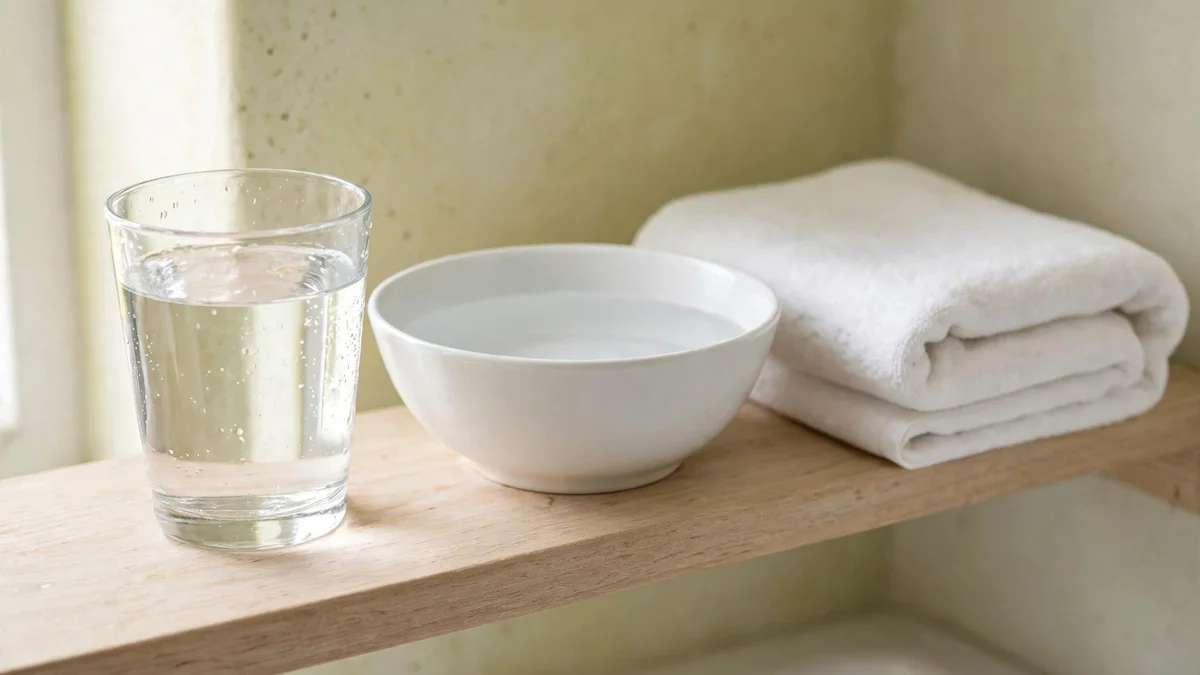
Rough knees are easy to ignore until you notice them. You sit cross-legged on the floor, you kneel to reach a low shelf, or you catch sight of them in a mirror, and there they are: dry, greyish patches of skin that feel rough to the touch. They are not painful, and they are not a crisis, but they can make you feel a little less comfortable in your own skin.
The good news is that rough knees answer to something very simple. Warm water, gentle washing, a soft towel and a plain moisturiser applied while the skin is still damp will do most of the work. No scrubbing, no strong products, no complicated routine.
This guide explains what rough knees are, why knees get rough, how water should be used, and how to build a simple softening ritual for morning and evening. It is gentle general information only, never medical advice, and it promises no cure.
Key Takeaways
- Rough knees are dry, thickened patches of skin that feel rough to the touch.
- Knees get rough because the skin there bends, kneels and dries out.
- Lukewarm water is the gentlest wash, close to body temperature.
- Wash briefly, pat dry softly, and moisturise while the skin is still damp.
- Never scrub rough knees, and see a doctor for real skin problems.
What Rough Knees Are
Rough knees are patches of skin on the knees that feel dry, thick and slightly grey or pale. The skin may look a little darker or lighter than the skin around it, and it may feel like fine sandpaper when you run a finger over it.
Rough knees are common, and they are not a sign of dirty skin. The skin on the knees is thicker than the skin on most of the body, and it holds less of its own natural oil. When it dries out, it turns rough. That is all it is: dry skin in a place that dries easily.
Why Knees Get Rough
Knees get rough because they work hard and get little care. They bend with every step, they press into hard floors when you kneel, and they rub against trousers and chairs. Each bend and rub takes a little moisture away, and the skin grows thicker to protect itself. That thick skin then feels rough to the touch.
Cold air, dry indoor heating, long hot showers and harsh soaps all make it worse. Hot water strips the skin bare, and a strong soap takes away the little oil the knees have.
Why Water Comes First
Water comes first because it is the gentlest thing that touches the knees each day. It softens the dry patches, rinses away dust and sweat, and leaves the skin slightly damp, which is exactly what a moisturiser needs. Dry skin takes in very little cream, but slightly damp skin holds it well.
Water also slows the ritual down. A minute of warm water over the knees is a small pause, and a pause is what rough skin needs.
Lukewarm Water, Clean Hands
Lukewarm water feels neither hot nor cold on the inside of your wrist, close to body temperature and comfortable. It softens rough skin without stripping it bare. Hot water can leave the knees tight and red, and cold water can feel sharp on dry patches. Lukewarm water is the middle that suits rough knees best.
Clean hands matter just as much as clean water. Wash your hands with soap and water before they touch your knees, and keep the wash itself short. A short wash with lukewarm water is enough, and it is kinder than a long soak in hot water.
A Simple Morning Ritual
A simple morning ritual takes only a few minutes. Start by washing your hands, then splash lukewarm water over your knees, using your fingertips in slow, light circles. If you use a cleanser, choose a mild one, use a small amount, and rinse it away fully.
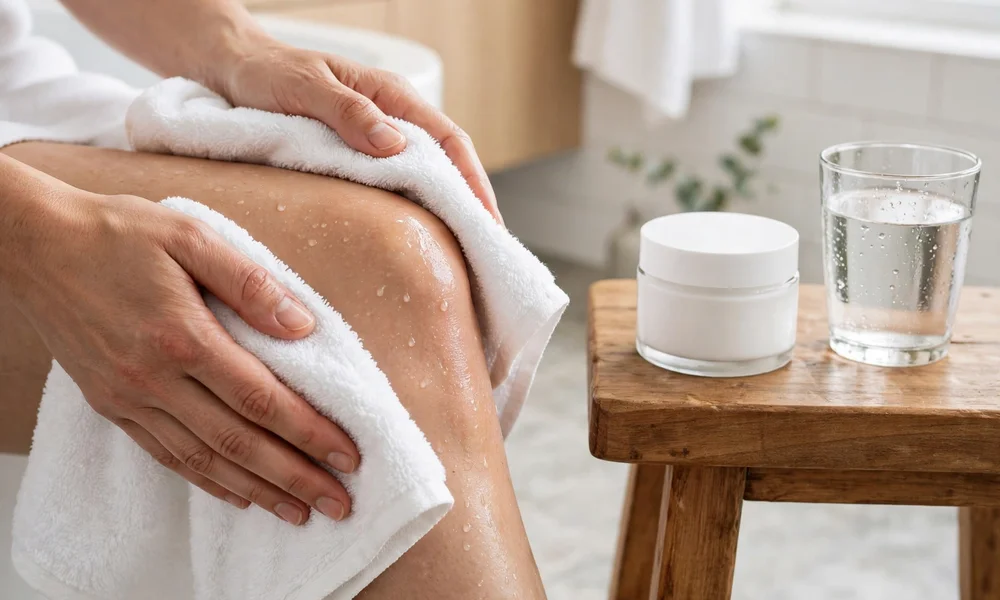
Pat the skin dry with a soft towel, pressing gently instead of rubbing, and leave the skin slightly damp. While the knees are still slightly damp, apply a plain moisturiser, using a small amount and a gentle hand.

A Simple Evening Ritual
The evening ritual is the same as the morning, with one extra step: the day itself. Wash your hands, splash lukewarm water over your knees, and rinse away the dust and sweat of the day. A mild cleanser can help here, used in a small amount and rinsed away fully.
Pat dry softly, apply a plain moisturiser while the skin is still slightly damp, and then leave the knees alone. No extra products, no scrubbing, no picking at the dry patches.
Moisturiser While the Skin Is Damp
Moisturiser works best on slightly damp skin, and this is the most important step of the whole ritual. After washing, pat the knees dry softly, but leave them a little damp, not dripping and not fully dry. Then apply a plain, fragrance-free moisturiser, using a small amount and a gentle hand.
The moisturiser holds the water in the skin, and that is what softens the rough patches over time. Use a small amount twice a day, morning and evening, and be patient. Softening takes weeks, not days.
Knees at a Glance
| Gentle wash | Moisturise damp | Never scrub |
|---|---|---|
| Lukewarm water first | Plain cream only | No harsh brushes |
| Clean hands always | Small amount twice | No picking patches |
| Pat dry softly | Damp skin holds | Softening takes weeks |
Knees and Elbows
Knees and elbows are the closest cousins in body care: both are dry, thickened patches where the skin bends and rests. Where water and rough elbows a simple softening ritual builds a softening ritual for the elbows, this guide builds one for the knees, and the two should never be mixed up.
The difference is the work each joint does. Elbows rest on desks and bend while you read; knees carry body weight, bend with every step and press into hard floors.
Knees and Dry Skin
Rough knees are one kind of dry skin, and the same gentle rules cover both. Where water and dry skin a gentle routine explains tight, dry skin in general, this guide looks at one place where dry skin gathers: the knees, where thick skin and daily kneeling do the damage.
Dry skin anywhere answers to the same short routine: a brief lukewarm wash, a soft towel, and a plain moisturiser while the skin is still damp.
Rough knees can also look dull as well as feel rough, because dry, thickened skin catches the light badly. Where water and dull skin a simple glow routine builds a glow routine for the face, this guide builds a softening ritual for the knees, and the two should never be mixed up. A plain moisturiser on damp skin is enough for the knees, and no brightening product belongs on rough patches. Softening comes first, and any glow follows slowly on its own.
What Not to Do
The hardest part of the ritual is what not to do. Never scrub rough knees. A rough brush, a harsh sponge or a strong scrub will strip the skin bare, and the knees will grow even thicker to protect themselves. Scrubbing makes rough knees rougher, not smoother.
Do not pick at the dry patches, and do not try a new strong cream every week. If a product stings, turns the skin red, or makes the patches worse, stop using it at once.
Patch Testing and When to See a Doctor
Patch testing is a small habit that protects the skin. Before a new moisturiser touches your knees, put a tiny amount on the inside of your wrist, and wait a full day. If the skin stays calm, with no redness, itching or sting, the product is probably safe to use.
If the skin turns red, itches or stings, do not use it. Some skin problems need a doctor or dermatologist, not a home ritual. See one if the knees are cracked, bleeding, very painful, spreading, or not changing after several weeks of gentle care. This guide is gentle general information only, never medical advice, and it will not cure any skin condition.

Your Softening Ritual Checklist
- Wash your hands before they touch your knees, every single time.
- Wash with lukewarm water, briefly, morning and evening.
- Pat the knees dry softly with a clean, soft towel, never rub.
- Apply a plain moisturiser while the knees are still slightly damp.
- Never scrub, pick or press the rough patches.
- See a doctor or dermatologist if knees crack, bleed or spread.
Frequently Asked Questions
What are rough knees?
Rough knees are patches of skin on the knees that feel dry, thick and slightly grey or pale. The skin may feel like fine sandpaper, and the patches often appear on both knees at once.
Will water cure my rough knees?
No. Plain water will not cure rough knees, and no home ritual can promise a cure. Water is the gentlest way to wash dry skin, and a gentle ritual gives the knees room to soften slowly over weeks.
Should I scrub my rough knees?
No. Scrubbing strips the skin bare, and the knees will grow even thicker to protect themselves. A gentle wash with lukewarm water and a plain moisturiser is kinder and works better.
Is hot water better for rough knees?
No. Hot water can leave the skin tight and red, and it can strip away the little oil the knees have. Lukewarm water, close to body temperature, is the gentlest wash for rough knees.
How do I patch test a new moisturiser?
Put a tiny amount on the inside of your wrist, and wait a full day. If the skin stays calm, with no redness, itching or sting, the product is probably safe to use on the knees.
When should I see a dermatologist?
See a dermatologist if the knees are cracked, bleeding, very painful, spreading quickly, or not changing after several weeks of gentle care. A professional can look at your skin and suggest a treatment that fits.
The Bottom Line
Water and rough knees need a simple softening ritual: lukewarm water, gentle washing, moisturiser while the skin is still damp, and no scrubbing. Keep it simple, keep it gentle, and ask a doctor when the skin needs more.
A Note for Softer Knees
Keep it lukewarm, keep it short, keep it gentle. Your knees are doing their best, and so are you.


