Some evenings ask for nothing loud at all. The dishes are done, the messages have slowed, and the house has settled into that small hour when the light turns soft and low. A puzzle waits on the table for evenings like these, patient and unhurried, asking only for slow hands.
Water and puzzles make a plain, gentle pair. A tall glass stands at the edge of the table, cool and clear, while the pieces spread out under the lamp and the picture grows one edge at a time. Nothing buzzes, nothing flashes, and the evening moves at the speed of one hand.
What follows is one simple quiet evening with puzzles at home: how to set the table, how to pick a puzzle that fits the hour, and how to keep the water close without wetting a piece. Take this as soft everyday guidance only; for anything that truly troubles you, a doctor is the person to see.
Key Takeaways
- Water and puzzles mean a jigsaw or a crossword, a glass of water, and a quiet table.
- A puzzles evening needs only a table, a puzzle, clean water, and a little time.
- Keep the glass at the table edge, far from the pieces, and sip slowly.
- Puzzles are hands-on quiet solving, not group play, not reading, not a screen.
- A quiet evening needs very little: water, warm light, slow hands, and rest.
What a Puzzles Evening Is
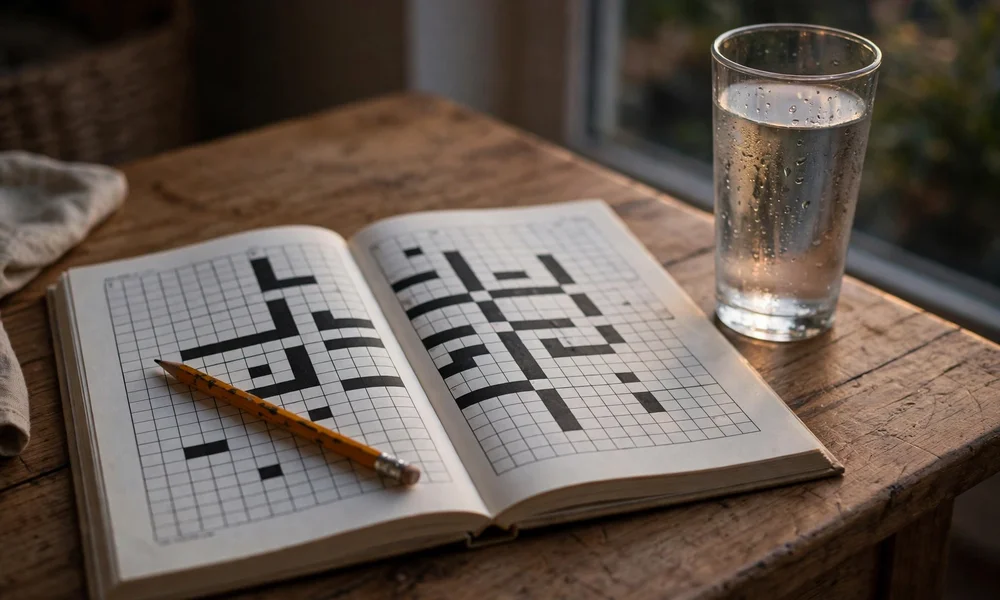
A puzzles evening is an evening solving something small with your hands at home: a jigsaw spread across the table, or a crossword book open beside a pencil. The pieces start scattered, the picture starts as a guess, and the hour passes in tiny wins as edges meet.
It is not a contest and not a race. Nobody keeps score, and the puzzle does not mind if you leave it half done and come back tomorrow. The point is the slow work itself, the way the hands stay busy while the mind grows quiet.
Why Puzzles Suit a Quiet Evening
Evenings grow noisy in ways we barely notice: screens glowing, messages arriving, the day still talking in your head. A puzzle gives the evening a different shape, asking for the eyes and the hands together, and leaving no room for the rest of the noise.
Each piece is a small decision, simple enough to hold and clear enough to finish. Finding where one piece belongs feels like a small knot coming undone, and after an hour the shoulders drop and the breathing slows.
Choosing a Puzzle for the Evening
Pick a puzzle that fits the hour you have, not the one you wish you had. A thousand-piece jigsaw suits a long winter night, while a three-hundred-piece one suits a single quiet hour after dinner. Look for a picture you enjoy, because you will stare at it all evening: a landscape, a garden, a harbour, a woodland path.
For a crossword, choose a book with clues that stretch you gently rather than ones that leave you stuck. A pencil beats a pen, because a pencilled answer can be rubbed out and tried again.
A Quiet Evening with Puzzles
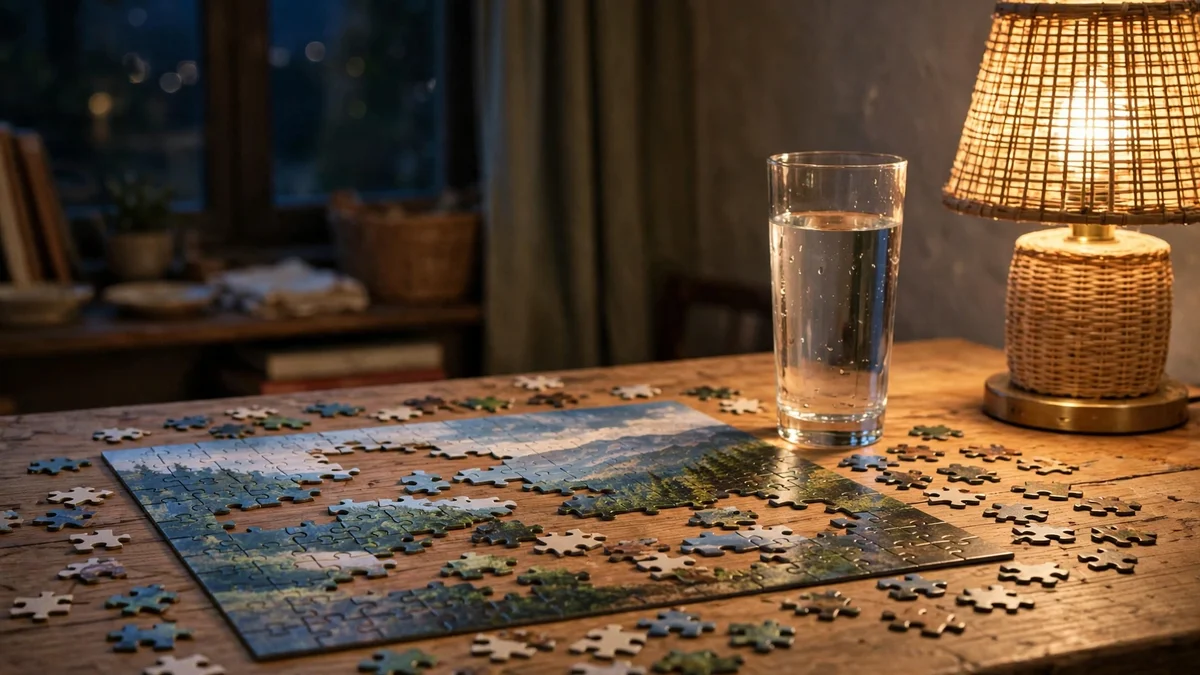
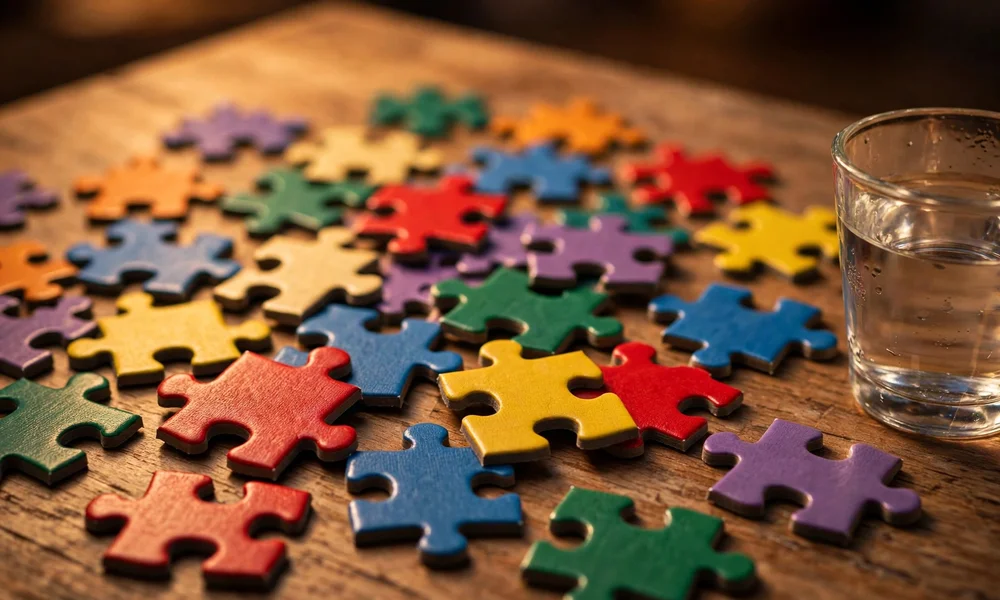
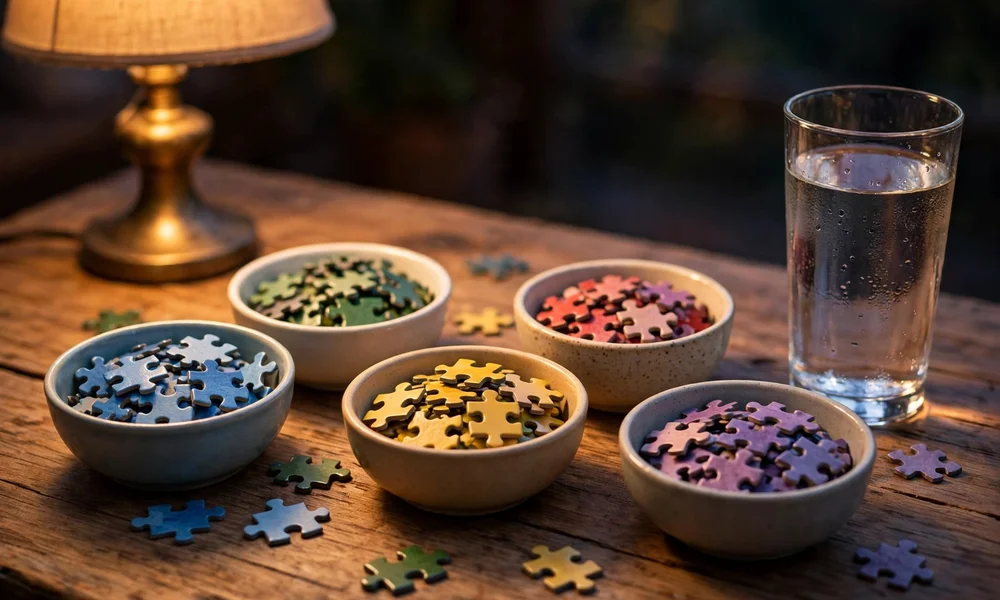
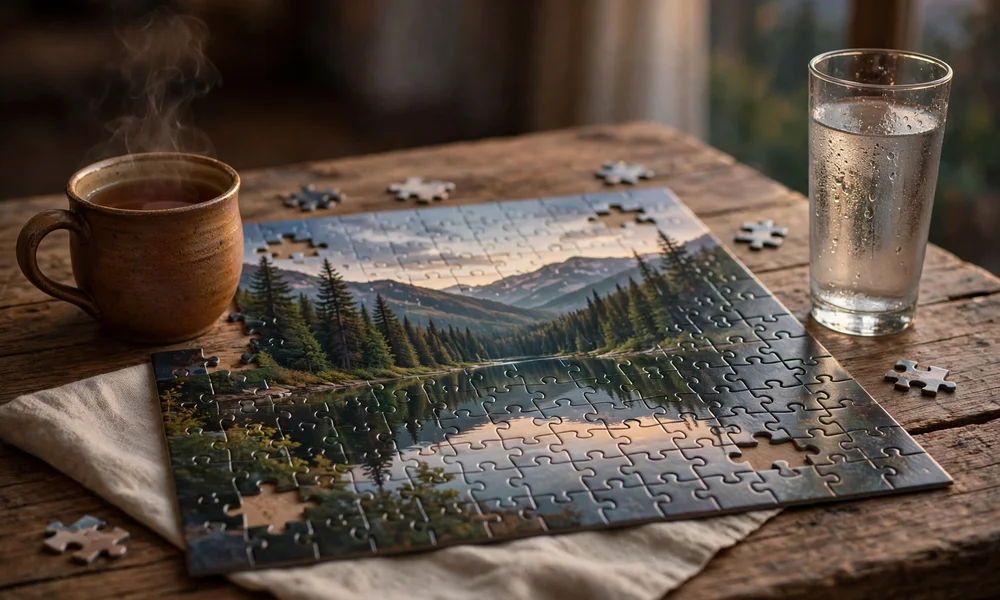
Clear the table and lay the puzzle out under a warm lamp, with a tall glass of cool water at the far edge. Turn the pieces face up, pull the straight edges aside, and build the border first, because a frame gives the hands somewhere to start.
Work slowly, in small stretches, sipping the water as you go. When the eyes tire, step away, open a window, and let the room breathe. Come back fresh, and the next piece often finds its place.
Water Beside Your Puzzle
Water belongs on the table, yet never above the pieces. Set the glass at the far corner, where an elbow cannot reach it, and keep it there all evening. A spill ruins the picture and warps the cardboard, so the glass stays put and the hands travel to it.
Drink in slow sips between pieces, and refill the glass when it runs low. Plain tap water is all the evening needs, cool rather than cold.
Puzzles at a Glance
| Jigsaw, crossword | Quiet evening | Hands, water, lamp |
|---|---|---|
| Pieces, edges first | Table, lamp, glass | Sip slowly, often |
| Sort by colour | Warm light, low | Keep pieces dry |
| Finish or box | Tea, rest | Tidy up after |
Puzzles and Board Games
Board games are the nearest neighbour to a puzzles evening, and the two can look alike until you sit down with them. Board games for a fresh evening covers an evening of table games at home: a board opened, pieces moved by hand, cards dealt, dice rolled, and a jug shared between players.
Puzzles are a quieter, lonelier thing. A board game wants company, turns, and talk across the table, while a puzzle wants one pair of hands and a still room. One evening plays together, the other solves alone.
Puzzles and Reading
Reading is the other quiet cousin, and it shares the lamp and the still hour. Reading for a quiet night covers a glass of fresh water on the table, a book lying open beside it, and an evening that asks for nothing more than a few unhurried pages.
The difference sits in what the hands do. A reader turns pages and follows a story someone else wrote, while a puzzler builds a picture piece by piece. One evening receives, the other makes, and both end the same way.
Puzzles and Candles
Candles bring a warm glow to a calm evening, and they share the hour with puzzles. Candles for a calm evening covers one glass of fresh water and one small lit candle for the last hour of the day, the flame low and watched, never left alone.
A puzzles evening keeps a lamp instead of a flame, because paper pieces and an open flame make poor company. The light is the same warm low light, yet one evening watches a flame and the other a picture grow.
Puzzles, Film Night and the Other Evenings
Other evenings on this site fill the same quiet hours in their own ways. Film night, the sibling numbered 757, is an evening of watching: a screen, a blanket, and a story that plays itself out. Puzzles are the opposite side of that coin, hands-on quiet solving, where the evening only moves when your hands move.
Music in the bath pairs warm water with soft songs, and the speaker must stay far from the tub, because water and electricity never mix. A quiet evening with tea keeps one cup, one glass, and a smooth stone on the table, the stone never going into the tea or the water. A cosy evening is warmth and quiet indoors with a mug and a blanket, a rainy evening listens to rain on the glass, and golden hour is the last low light before sunset. Puzzles borrow the lamp and the glass from them all, and give the hands the work.
Caring for Your Puzzle
A puzzle lasts longer when it is treated gently. Keep the pieces in their box with the lid on, away from damp corners and direct sun, and never let the box sit where a drink can spill. A small cloth bag inside keeps loose pieces from scattering when the box tips.
When a puzzle is finished, lift it carefully if you mean to frame it, or take it apart slowly and return the pieces to the box. The box will be ready next time.
Keeping the Evening Gentle
A quiet evening should stay kind to the body as well as the mind. Sit up straight rather than hunching over the pieces, and stand and stretch every half hour, because a still neck grows stiff fast. Good lamp light matters more than bright light: warm, low, and aimed at the table, so the eyes never strain.
This is gentle general information only, never a treatment for anything. If tired eyes, a sore neck, or a health worry keeps coming back, ask a doctor, not a puzzle and not a glass of water.
Your Quiet Evening Checklist
- Clear the table, lay out the puzzle, set the glass at the far edge.
- Sip the water slowly while the picture grows.
- Keep the lamp warm and low, the glass well away from the pieces.
- Work in short stretches, then stand and stretch.
- Pack the pieces away dry, wash the glass when the evening ends.
- If a health worry keeps nagging, speak to a doctor; a puzzle holds no answers.
Frequently Asked Questions
What is a puzzles evening?
A puzzles evening is a quiet hour at home solving something small with your hands: a jigsaw spread across the table, or a crossword book open beside a pencil. The pieces start scattered, the picture starts as a guess, and the evening passes in tiny wins.
How is a puzzles evening different from a board games evening?
A board games evening wants company, turns, and talk across the table, with a board, cards, and dice shared between players. A puzzles evening wants one pair of hands and a still room, solving alone.
How is a puzzles evening different from film night?
Film night is an evening of watching, where a story plays itself out on a screen. A puzzles evening is hands-on quiet solving, where nothing moves unless your hands move, and the picture grows piece by piece.
How do I keep water away from the puzzle?
Set the glass at the far corner, where an elbow cannot reach it, and keep it there all evening. Let your hands travel to the glass for a sip, never carry the glass over the pieces, and a spill will never reach the picture.
What size jigsaw suits one evening?
Match the puzzle to the hour you have. A three-hundred-piece jigsaw suits a single quiet hour after dinner, while a thousand-piece one suits a long winter night. Pick a picture you enjoy, because you will stare at it all evening.
How should I end a puzzles evening?
Stop while the evening still feels good, rather than pushing on until the eyes tire. Pack the pieces away dry, wash the glass, and let the night rest. The puzzle will wait for tomorrow.
The Bottom Line
Water and puzzles give a quiet evening slow hands and a growing picture: one jigsaw or crossword, one glass of water, one warm lamp, one hour asking nothing more.
A Note for Quiet Evenings
Let the lamp stay low and the pieces stay dry. One puzzle, one glass of water, a few unhurried hours are enough.