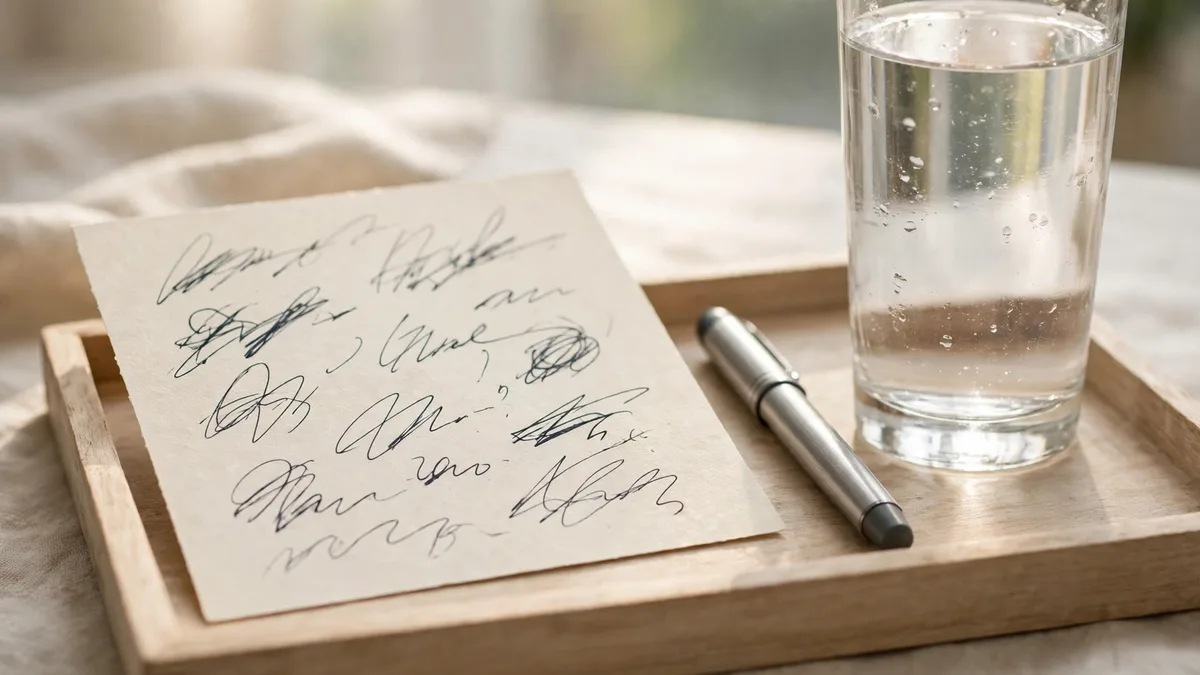
A thank-you note is a small piece of paper that carries a large feeling. Someone helped you, fed you, listened to you, or simply showed up when it mattered, and a few honest lines on paper say what a quick message cannot. Paper can be held and kept, and it tells the reader you stopped and thought about them.
Water belongs beside this ritual because it asks for a quiet minute. Pour a glass, sit down with your paper and pen, and drink in small sips before you write. The water is plain, the note is short, and the whole thing takes less time than the worry about it.
This guide shows how to write a thank-you note the simple way: what to write, and how to send it without fuss. It is gentle general information only, never advice for a serious problem, and it will not fix anything on its own.
Key Takeaways
- A thank-you note is a short written thanks, on paper, sent to one person.
- The note names one clear kindness, in plain words, and nothing more.
- Water first, then writing: a slow glass steadies the hand and the thoughts.
- Keep the note short, honest, and specific; three or four lines are enough.
- This is gentle general information only, and it will not heal anything.
What a Thank-You Note Is
A thank-you note is a short message written by hand on paper, meant for one person who did something kind. It is not a letter, which can run for pages, and it is not a card bought for the words already printed inside. It is a few lines in your own handwriting, naming the kindness and what it meant, sent by post or by hand.
The note works because it is specific. A vague thanks feels empty, but a note that names one clear thing, a lift home in the rain, a meal cooked when you were tired, a phone call at the right hour, feels real. The reader knows at once that you noticed and cared enough to write it down.
Choosing Paper, a Pen and Words
Choose plain paper, nothing fancy. A cream card, a folded sheet, or a simple notecard all suit a thank-you note, and a smooth surface matters more than a pretty pattern, since the pen should glide rather than scratch. Pick a pen that writes dark and steady, black or deep blue.
Keep the words plain too. Start with the name of the person, then the thanks, then the one clear thing they did, and finish with a warm line and your name. Write the way you talk to a friend, gently and without stiff phrases.

A Thank-You Note with Water
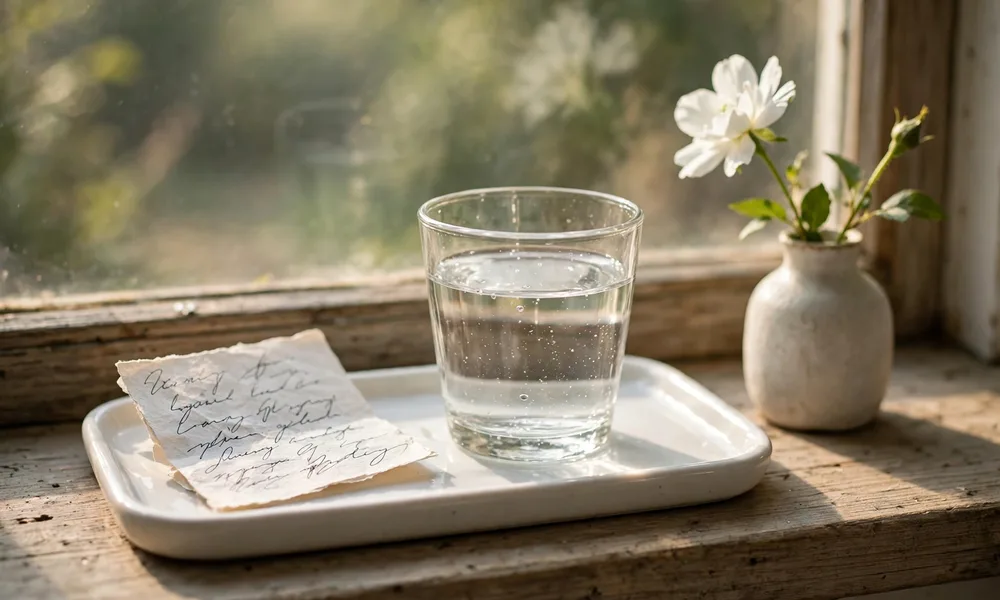
The water comes first. Set a small tray on the table, place a clear glass of fresh water at one end and your paper and pen at the other, with dry cloth between them. Sit down, drink in slow sips, and let your shoulders drop before you pick up the pen.
Water gives the writing a calm start. A dry throat and a hurried hand make for stiff words, while a slow drink gives you a minute to think about the person and the kindness. When the glass is empty, set it aside and write the note in one easy sitting.
Writing the Note, Line by Line
Write the note in four short lines, and stop there. First, the name: a simple greeting, the way you would say hello. Second, the thanks: one plain sentence that says thank you for the kindness. Third, the detail: one clear line about what they did and what it meant. Fourth, the close: a warm line, a wish, and your name.
Do not add a fifth line unless you truly need it. Long notes lose the reader, and the kindness gets buried under extra words. Read the note once when you finish, fix any spelling slip, and fold it into its envelope. A short note, sent the same day, is worth more than a long note that sits in a drawer.
A Thank-You Note at a Glance
| Paper, pen, glass | One kind person | Short, honest lines |
|---|---|---|
| Water first, slow | Four lines, then stop | Same day, send it |
| Plain cream card | One clear kindness | No stiff phrases |
| Dry tray, tidy | Warm close, name | Keep the note simple |
A Thank-You Note and Gratitude
Water and gratitude is a morning habit: a glass of water first, then three small thanks named quietly, in your head or in a notebook, before the day begins. The thanks are spoken to yourself, and nobody else ever sees them.
A thank-you note is the opposite in one way that matters. Its thanks are written down and sent to another person, and the reader is the point. Morning gratitude is a habit you keep for yourself; a thank-you note is a kindness you hand to someone else.
A Thank-You Note and Journaling
Water and journaling pairs a glass of water with a notebook for ten quiet morning minutes. Three short lines are enough: one for today, one for something you are glad for, and one for how you feel.
A thank-you note is not a journal entry. A journal is private writing, kept for yourself, while a note is written for one reader and sent to them. Journaling asks what today holds and how you feel; a note asks what one person did and why it mattered.
A Thank-You Note and Breakfast
Water and breakfast puts one calm thing first in the morning: a slow glass of fresh water, and then a simple meal at a tidy table, taken without rushing. The ritual covers the first hour, and it belongs to you alone.
A thank-you note can follow breakfast, but it is not breakfast. Breakfast feeds you, while a note feeds a friendship. One is a quiet start for yourself, and the other is a small gift for someone else. Both are simple and slow, and both fit into an ordinary morning.
A Thank-You Note and the Other Water Rituals in This Batch
This batch holds four more water rituals, and each one is easy to tell apart from a thank-you note. A fountain is water that moves in public, a jet rising and falling where anyone can watch it, and it asks for no paper and no pen. A new month is a fresh start, a quiet turning of the page, with no note to send. A garden bench is a place to sit outside with a glass of water, and it asks for rest rather than writing. Saturday mornings are a slow weekend start, an unhurried hour at home, with no envelope to seal.
The stress ritual in this journal is different again: small steady habits for tight days, a glass of water and a slow breath when the list grows long. A thank-you note is none of these things. It is a written thanks, on paper, to one person, sent the same day.
Keeping Your Notes Safe
Keep your notes in one place, and keep that place dry. A small box, a drawer, or a shelf near your desk will do, with the cards standing upright and the envelopes stacked flat. Keep the box away from taps and steam, and keep the paper out of direct sun, which fades ink.
Keep a spare card and a spare envelope in the box, so a note can be written whenever the moment comes. Wash your hands before you write, since ink smudges on damp fingers.
Sending the Note, or Keeping It
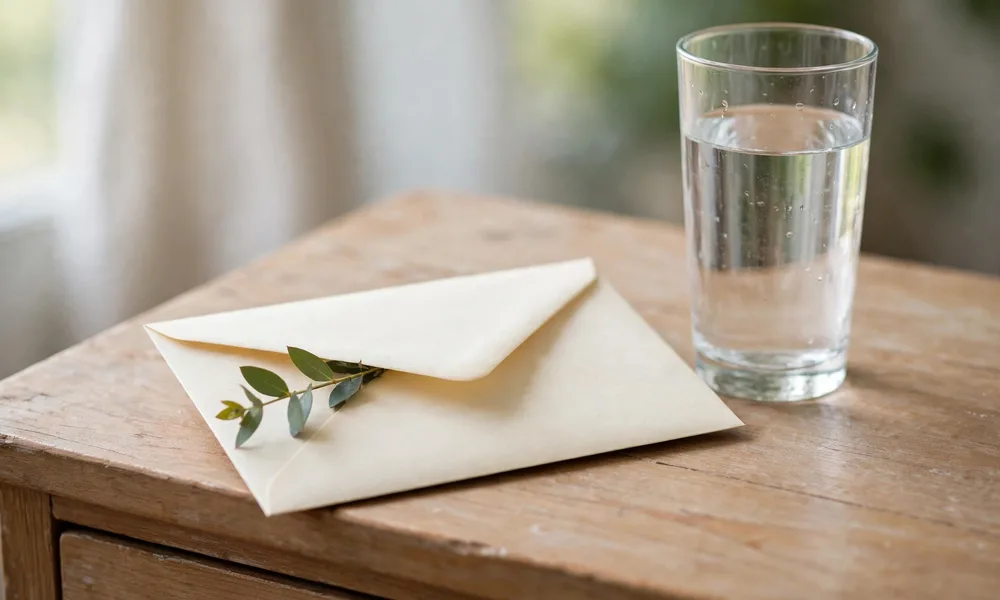
Most notes should be sent, and sent soon. Put the folded note in its envelope, write the name clearly on the front, and post it or hand it over the next time you see the person. A note sent the same day carries the warmth of the moment.
Some notes are better kept, and that is fine too. A note to someone who has died, or to a person you cannot reach, can stay in the box as a record of thanks, and writing it still counts. Send it when you can, keep it when you cannot.
When a Note Is Not the Right Step
A thank-you note is a small kindness, and it is not the right step for a serious problem. If you feel low for weeks, if sleep will not come, or if worry will not leave you alone, a note will not fix it. Those are matters for your own doctor.
This article is gentle general information only. It offers a simple habit, not advice for health, and it will not heal anything. If a health worry appears, please ask your own doctor about it.
Your Thank-You Note Checklist
- Pour a glass of water and drink it slowly.
- Lay out plain paper, a pen that works, and an envelope.
- Write four short lines, naming one clear kindness.
- Read the note once, fix any slip, and fold it.
- Send the note the same day, by post or by hand.
- If a health worry appears, ask your own doctor, not a note.

Frequently Asked Questions
What is a thank-you note?
A thank-you note is a short message written by hand on paper, for one person who did something kind. It names the kindness in plain words.
How long should a thank-you note be?
Three or four short lines are enough: a greeting, the thanks, one clear detail, and a warm close with your name. A short note, sent the same day, beats a long one kept in a drawer.
How is a thank-you note different from gratitude in the morning?
Morning gratitude is a private habit: three small thanks named quietly to yourself before the day begins. A thank-you note is written down and sent to another person.
How is a thank-you note different from journaling?
Journaling is private writing for yourself, three short lines about today and how you feel. A thank-you note is written for one reader and sent to them, naming what they did and why it mattered.
When should I send a thank-you note?
Send it the same day if you can, or within a few days at most, while the kindness is still fresh.
Where should I keep my cards and envelopes?
Keep them in a small box or a drawer near your desk, standing upright or stacked flat, away from taps, sun, and steam.
The Bottom Line
Water and a thank-you note fit any day: a slow glass of water, four short honest lines, and thanks sent to the person who earned them.
A Note for Thankful Days
One glass, one pen, four short lines — a thankful day asks for nothing more.


