A fern is a plant that shows you exactly how it feels. When its fronds are fresh and green, the room looks softer at once, and when they turn brown at the tips, something in its small world needs changing.
Most ferns fail for one simple reason: the soil swings between soaked and bone dry. A fern likes its soil to stay evenly damp, like a cloth that has been wrung out, and it forgives a missed day far more easily than a flooded pot.
This guide follows one fern through a week of care: how much water it wants, where to put it, how to read its fronds, and a short watering rhythm for busy mornings. It is gentle general information about a houseplant, and it promises nothing for health.
Key Takeaways
- A fern wants soil that stays evenly damp, never soaked and never dry.
- Soft, bright light without direct sun keeps fronds green and fresh.
- Water slowly at the base and let the extra water drain away.
- Brown frond tips usually mean dry air or uneven watering.
- A fern is a houseplant, not a cure, and skin troubles need a doctor.
What a Fern Is
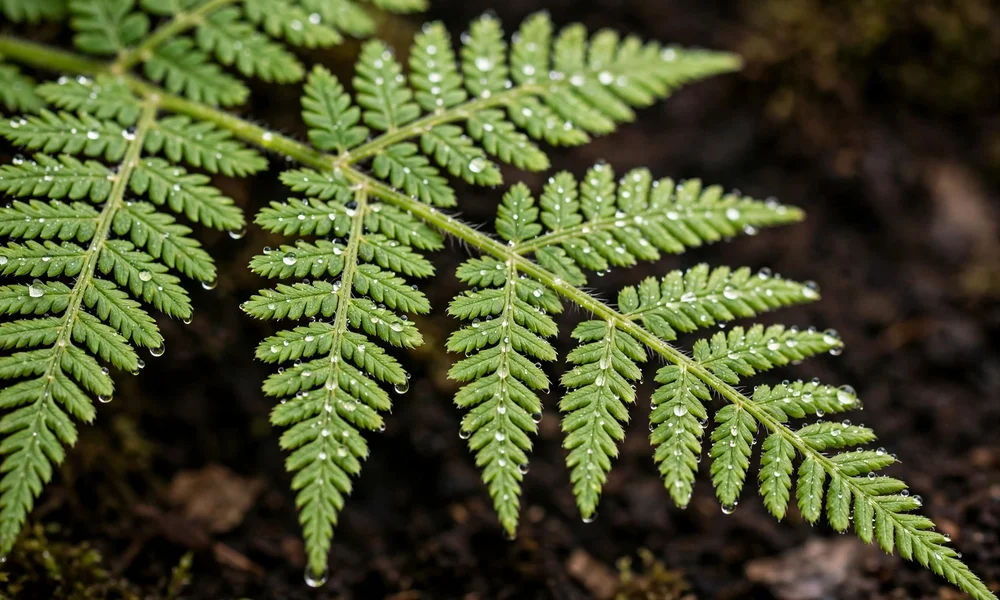
A fern is an old plant with soft, feathery fronds that uncurl from the centre, each one divided into small leaflets. It has no flowers and no seeds, and it grows by spreading new fronds from a crown at the base.
Ferns grow naturally in shady, damp places, under trees and beside streams, where the air stays moist and the light comes filtered through leaves. That history explains everything about keeping one indoors.
A fern is not a flowering plant, and it is not a cactus. Its fronds are thin and soft, so they dry out quickly in hot, still air.
Choosing a Fern for Your Home
Start with a small fern in a pot you can lift with one hand. Look for fronds green from base to tip, with new curls rising in the centre, and skip any plant with brown edges or bare stems.
Boston ferns suit beginners because their arching fronds are forgiving, while a maidenhair fern is prettier and far thirstier, so it suits a bathroom shelf better than a dry living room.
Check the pot before you buy it, too. It should have a hole underneath, and the soil should feel damp and springy, not soggy or crusted.
Light That Keeps Fronds Fresh
A fern likes bright light that never lands directly on its fronds. A spot a few steps back from an east window suits it well, or a north window that stays bright without strong sun.
Direct midday sun burns the thin leaflets, turning them pale and then brown at the edges, and the damage does not heal. If the only window you have faces south, move the fern back from the glass or hang a sheer curtain between sun and plant.
Watch the fronds for a week after you move the fern, since they tell you whether the light is right. Fronds that stay green and keep uncurling mean the spot works, while fronds that fade mean the light is too strong or the air too dry.
How Much Water a Fern Needs
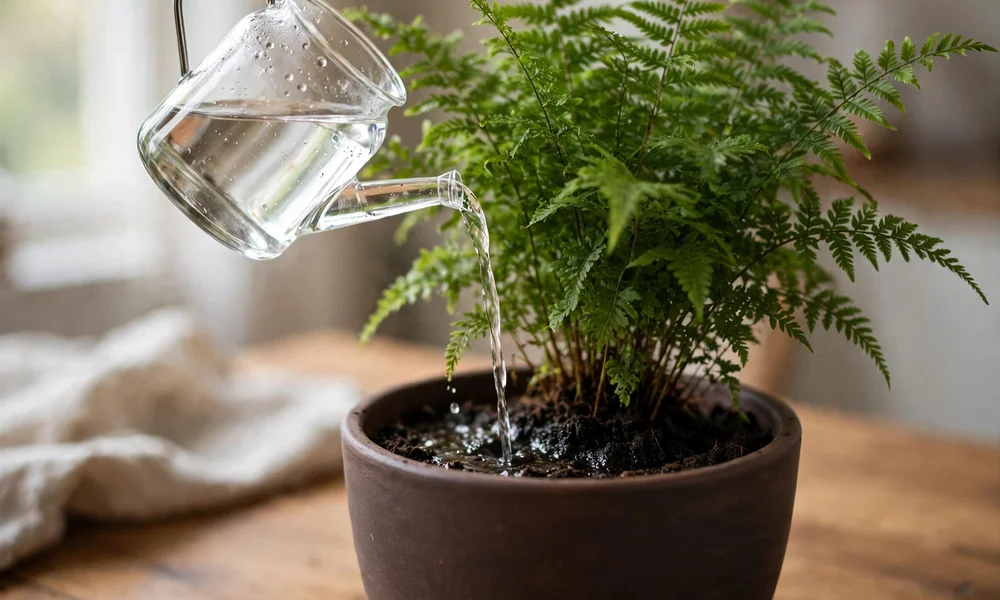
A fern drinks more often than most houseplants, but it still hates sitting in water. Water it when the top of the soil feels just dry, and give it enough that the soil darkens all the way through, then stop.
In a warm, bright week that may mean watering every three or four days, while in a cool, cloudy week once a week is plenty. The calendar cannot decide this for you, so let the soil and the season set the pace.
Never give a fern a tiny splash every day, because a splash wets only the surface while the roots below stay thirsty. One slow, thorough watering beats five little ones.
The Finger Test and the Saucer
Push one fingertip into the soil about an inch deep, beside the stem, before you water. If the soil feels cool and damp at that depth, wait another day, but if it feels dry, the fern is ready for a drink.
Water gently, in a slow pour around the stem, until a few drops escape underneath, then stop and wait ten minutes before tipping every drop out of the saucer. A fern that stands in a saucer full of water will droop, its fronds will yellow, and its roots will turn soft and dark.
If you have overwatered, stop at once and let the soil dry out fully before you water again. Move the pot to bright, airy light and tip the saucer dry each morning.
Fern at a Glance
| Damp soil always | Soft light only | Mist the fronds |
|---|---|---|
| Water at base | Tip saucer dry | No direct sun |
| Fronds show thirst | Test soil first | Bright airy spot |
| Morning watering | Damp air helps | Trim brown tips |
Water and Houseplants
Water and houseplants care ritual looks after a whole shelf of different potted plants, and most of them are happiest when the soil dries out between drinks. Its rule is to wait, feel the soil, and only then pour.
A fern turns that rule around: one plant, one pot, and soil that stays steadily damp instead of drying out. The houseplants guide waits for the soil to dry an inch down; this guide waters once the surface feels dry, since a fern's fronds wilt fast when the roots go thirsty.
Water and a Terrarium
Water and a terrarium: how to build one makes a tiny glass garden where several small plants share one container, and the moisture you add stays sealed inside for weeks. Its ferns live under a lid, in air that never dries out.
A potted fern lives in open air, not under glass, so it dries out faster and needs watering far more often. The terrarium guide gives water by the spoonful once a month; this guide waters a single fern every few days, and the fronds, not the glass, tell you when it is thirsty.
Water and a Watering Can
Water and a watering can: top tips for plants is about the tool itself: choosing a can with a thin spout, pouring slowly, and reaching the soil without soaking the leaves.
A fern shows why that slow pour matters more than the can. Its soil must darken evenly without puddling, and its fronds must stay mostly dry, so the water lands at the base and nowhere else.
Fern or Succulent?
A succulent and a fern want almost opposite things, and mixing up their care is the fastest way to lose both. A succulent stores water in its thick, fleshy leaves, so it wants a long dry spell between drinks and a sunny spot, and it rots quickly if its soil stays damp.
A fern stores almost nothing, so it wants steady moisture in the soil, soft light and damp air, and its thin fronds droop within days if the soil dries out. Give a succulent a fern's watering and its leaves will turn soft and rot; give a fern a succulent's drought and its fronds will crisp and fall.
Nine Neighbours in This Batch
Nine other guides stand beside the fern in this batch, and each one keeps a different corner of the home. The succulent guide loves a little water, the sand dollar guide keeps a pale shell for calm days, and the apache tear guide studies a deep black stone. The apron guide keeps a kitchen apron clean, the ajoite guide looks at a soft blue stone, and the tablecloth guide sets a table simply. The brookite guide follows a warm red stone for steady days, the napkin guide folds a napkin right, and the siderite guide explains a soft brown stone before you buy it.
Stones That Must Never Touch Water
A fern's pot is no place for a display stone, and the glass of water beside it is no place either. Apatite loses its shine after time in damp soil, and once the polish goes dull it stays dull. Lepidolite carries lithium in its pale flakes, so keep that stone dry and well away from jugs, glasses and wet earth.
Pyrite darkens when it sits wet, its bright face fading to flat grey, while angelite soaks water in and swells out of shape. Amber is old tree resin rather than a true stone, and a soak turns it milky, never to clear again.
Your Fern Checklist
- Test the soil with a fingertip before you water any fern.
- Water slowly at the base until the soil darkens through.
- Tip the saucer dry ten minutes after every watering.
- Keep the fern in bright, soft light, out of direct sun.
- Mist the fronds lightly on dry mornings, never at night.
- If a plant or your skin troubles you, ask a gardener or a doctor — a fern is a pastime, not medicine.

Frequently Asked Questions
How often should I water a fern?
A fern usually needs water every three or four days in warm weather, and about once a week when it is cool. Test the soil with a fingertip first, and water only when the top feels dry.
Can I mist my fern every day?
Yes, a light morning mist suits most ferns, especially in dry rooms. Mist the fronds only, never soak them, and skip the evening so the leaves dry before night.
Why are my fern's frond tips turning brown?
Brown tips usually mean dry air or uneven watering. Mist more often, keep the soil steadily damp, and trim the brown tips with clean scissors.
Does a fern need direct sunlight?
No, direct sun scorches the thin leaflets and turns them pale and brown. Bright light near a window suits a fern best, with the sun kept off the fronds at midday.
Can I keep a fern in the bathroom?
Yes, a bathroom suits many ferns because the air stays damp after a shower. Keep it near a window for light, and water less often than a fern in a dry room.
Where should I keep my fern at home?
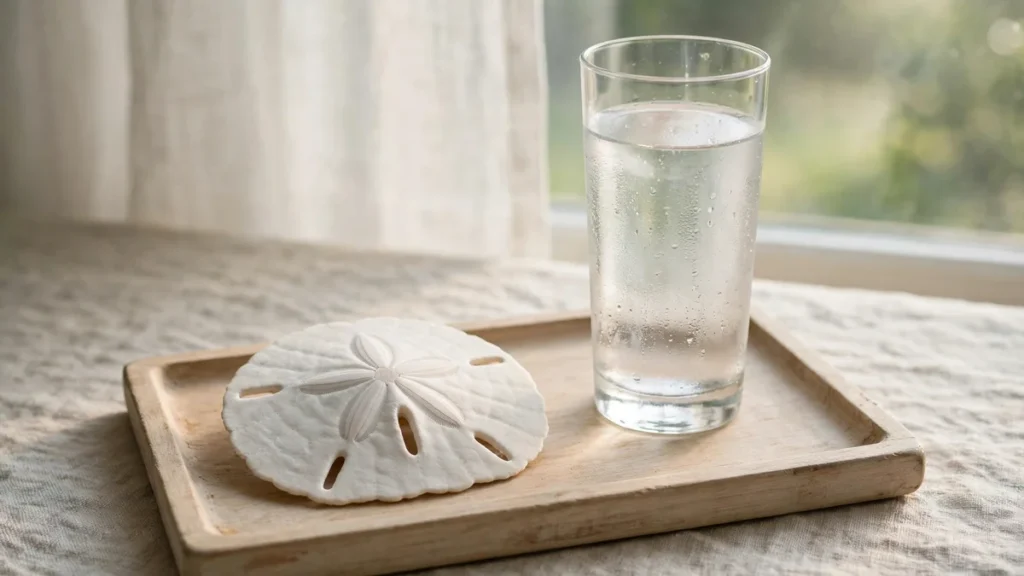
Keep it on a tray near a bright window, with air moving around the fronds and a glass of water beside the pot. A kitchen shelf or a bathroom sill both work well, as long as the spot is bright and not hot.

The Bottom Line
Water and a fern work together when the soil stays evenly damp, the light stays soft, and the water lands at the base.
A Note for Fresh Fronds
A green fern on a tray by the window, a glass of water beside it, and fronds that uncurl a little more each week — that is all a fern needs to stay fresh.