An apron is the quiet shield of the kitchen: a cloth that stands between your clothes and the splash of the pan, the dust of the flour and the drip of the sauce. It takes the mess so the rest of you stays clean.
Most aprons are spoiled not by the cooking but by the wash that follows. They are left crumpled in a damp heap, scrubbed hard at a fresh stain, or dried on a hot radiator until the cloth turns stiff and grey. A little care keeps one soft for years.
This guide sets out five plain ways to keep an apron clean: catching stains early, soaking briefly in cool water, washing gently, drying in fresh air and storing it folded and dry. It is gentle general information about kitchen cloth, and it promises nothing for health.
Key Takeaways
- An apron is a cloth shield that takes the kitchen mess.
- Catch a stain while it is fresh and it lifts easily.
- Soak briefly in cool soapy water, never hot and never long.
- Wash gently and dry in fresh air, away from harsh heat.
- An apron is kitchen cloth; it will not heal anything.
What an Apron Is
An apron is a piece of cloth worn over the front of the body while cooking, gardening or crafting: a bib that covers the chest, a waist tie that holds it in place, and often a pocket for a spoon or a cloth. It is the simplest garment in the kitchen, and the hardest working.
Most kitchen aprons are cotton or linen, plain and washable, because those cloths drink up splashes and survive the wash. Some are waxed for heavy work, and some are denim for a sturdier feel, but a plain cotton apron suits most kitchens best. The cloth should feel soft in the hand and lie flat against the body.
An apron is worn, not laid down, and it moves with you from the sink to the stove, so it meets stains no flat cloth ever does. The bib takes the splashes, the pocket gathers crumbs, and the hem brushes the counter as you lean in to stir.

Way One: Catch the Stain Early
The first way is also the simplest: look at the apron when you take it off, and catch the stain while it is still fresh. A damp cloth pressed on a new mark lifts most of it before it has time to settle into the weave.
Blot, never rub, because rubbing pushes the stain deeper and spreads it wider across the cloth. Press a damp cloth flat on the mark, lift it, and press again with a clean corner. Two or three gentle presses take more off than a hard scrub ever will.
Way Two: Soak Briefly in Cool Water
The second way is a short soak in cool water with a little mild soap. Fill a basin, stir in the soap until the water turns faintly cloudy, and lay the apron in flat so the whole cloth is covered. Fifteen minutes is enough for most marks.
Cool water suits cotton and linen best, because hot water can set a stain and shrink the cloth. The soak loosens what the damp cloth left behind, and the soap lifts the grease without harsh chemicals. Stir the apron once or twice, gently, and let the water do the work.

Way Three: Wash Gently, Not Hard
The third way is a gentle wash, by hand or on a cool machine cycle, with the apron turned inside out so the ties and pocket do not tangle. Mild soap is enough; strong bleach and harsh stain removers wear the cloth thin and fade its colour.
Rinse the apron twice before it leaves the basin, because soap left in the weave dries stiff and gathers dust. The water should run clear, and the cloth should feel soft, not slippery, when you lift it out to hang.
Way Four: Dry It in Fresh Air
The fourth way is drying in fresh air, hung by its loop or pegged to a line, with the cloth spread so air moves across both sides. Sunlight is kind to cotton in short spells, and a breeze does more than any dryer.
Way Five: Store It Folded and Dry
The fifth way is storing the apron folded and fully dry, on a hook or a shelf where air can reach it. A damp apron folded into a drawer turns musty within a day, and the smell is hard to wash out.
Apron Care at a Glance
| Blot stains early | Soak cool, brief | Wash gently |
|---|---|---|
| Rinse soap out | Dry in air | Fold when dry |
| Hook by door | Spare apron ready | Mild soap only |
| Cool water suits | No hot radiators | Fresh air wins |
Water and a Baking Tray
Water and a baking tray: when to wash it washes a flat metal sheet after oven cooking, where fat and sugar harden onto steel and the wash must be timed before the mess sets. Its tray is hard, flat and heated, and it is scrubbed clean after the food leaves it.
An apron is the opposite kind of kitchen care: soft cloth worn on the body, catching splashes as they happen rather than after the baking ends. The tray guide fights baked-on grease with soaking and scraping; this guide lifts fresh marks with a damp cloth and a short cool soak.
Water and a Rolling Pin
Water and a rolling pin: a beginner's guide shapes dough with a smooth wooden cylinder, rolling from the middle outward until the sheet lies even. Its pin is wood, dry and floured, and water stays in a glass nearby.
An apron never shapes anything, and it is never dry for long: it drinks the splashes the rolling pin never meets. The rolling pin guide keeps its tool clean and dry between bakes; this guide washes its cloth after every messy meal.
Water and a Cookie Jar
Water and a cookie jar: 5 ways to keep it fresh keeps biscuits crisp under a sealing lid, cooling the cookies right through and shutting out damp kitchen air. Its jar is a storehouse, and the whole guide is about keeping water away from what sits inside.
An apron welcomes the water the cookie jar keeps out: a short soak is its friend, and a damp cloth is its first help. The jar guide guards food from damp; this guide uses water to bring a working cloth back to fresh.
Nine Neighbours in This Batch
Nine other guides stand beside the apron in this batch. The sand dollar guide holds a pale shell for calm days, the tablecloth guide spreads a cloth over the table, and the siderite guide explains a soft brown stone. The brookite guide keeps a warm red stone for steady days, the napkin guide folds cloth for the table, and the ajoite guide asks whether a rare blue stone suits calm days.
The fern guide tends fresh fronds with a little water, the succulent guide waters a plant that loves very little, and the apache tear guide studies a deep black stone. The apron hangs by the sink, washed and ready.
Stones That Must Never Touch Water
An apron meets water all day, but the stones on the shelf beside the sink never should. Angelite soaks water in and swells out of shape, its smooth face turning rough and pale, so it stays far from every basin and damp cloth.
Pyrite dulls the moment it stays wet, its bright shine sinking to flat grey, while amber, old tree resin and not a true stone at all, clouds after a soak and never clears again. Apatite fades when it sits in damp cloth, its polished glow going soft and tired.
Lepidolite carries lithium in its pale flakes, so it is kept away from jugs, glasses and wet hands altogether. Keep every one of these on a dry shelf, and let the apron have the water to itself.
Your Apron Checklist
- Look at the apron when you take it off and blot fresh marks.
- Soak briefly in cool soapy water, never hot and never overnight.
- Wash gently, rinse twice, and shake it out before hanging.
- Dry in fresh air, away from radiators and tumble dryers.
- Fold it fully dry, pocket inside, on a hook or shelf.
- If a rash appears or a stain will not shift, stop and ask a doctor or a laundry care adviser — an apron is kitchen cloth, not a remedy.

Frequently Asked Questions
How often should I wash an apron?
Wash an apron after every messy cooking session, and at least once a week even when it looks clean. Flour dust and faint grease build up quietly, and a regular wash keeps the cloth soft and fresh.
Can I wash an apron in hot water?
Cool or lukewarm water suits most cotton and linen aprons best, since hot water can set stains and shrink the cloth. Check the care label first, and keep the water cool unless the label says otherwise.
What removes a tomato sauce stain from an apron?
Blot the fresh mark with a damp cloth, then soak the apron briefly in cool soapy water before washing gently. A sprinkle of baking soda on the fresh spot also helps lift the grease before the soak.
Should I use bleach on a white apron?
Mild soap is usually enough, and bleach thins cotton and yellows linen over time. If a white apron looks grey, a cool soak with a little oxygen cleaner is kinder than chlorine bleach.
How do I dry an apron without a washing line?
Hang it on a hook near an open window, spread flat so air reaches both sides. It dries in a few hours indoors, and a second hour near moving air finishes the pocket and ties.
Can an apron go in the tumble dryer?
A low, gentle cycle is fine for sturdy cotton, but linen aprons dry best in fresh air. Fierce heat stiffens the cloth and can scorch a hem, so take it out while still slightly damp if you must use a dryer.

The Bottom Line
Water and an apron stay friends when the stains are caught early, the soak is short and cool, the wash is gentle, and the cloth dries in fresh air.
A Note for Quiet Kitchens
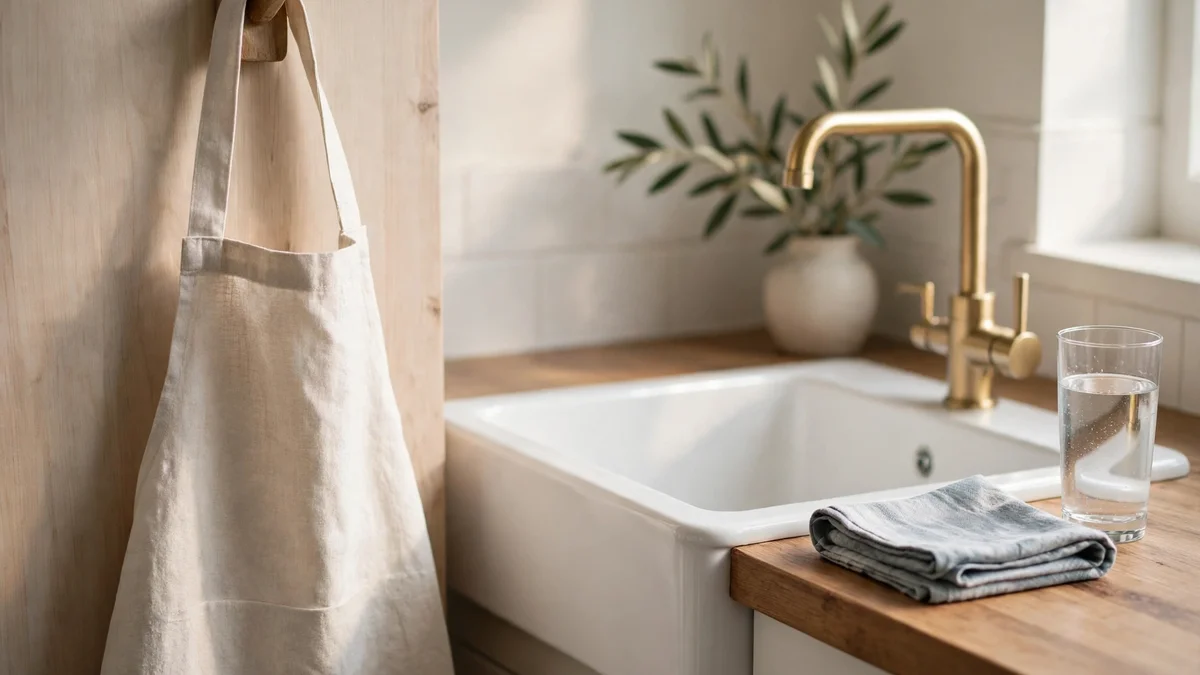
A clean apron on its hook, a glass of water on the counter, the cloth soft and smelling of fresh air — that is all a quiet kitchen needs.