A terrarium is a garden small enough to lift with both hands: a clear glass container holding soil, pebbles and tiny plants, where you can watch it grow.
Most people fail with a terrarium by loving it too hard. They pour in water as if it were a garden bed, and the glass, which has nowhere for the extra water to go, turns the soil sour and the roots soft.
This guide builds one from scratch: choosing the glass, laying the layers, picking small plants, and learning how little water it needs. It is gentle general information about a home garden, and it promises nothing for health.
Key Takeaways
- A terrarium is a small glass garden with soil, pebbles and tiny plants.
- A closed terrarium needs only a spoonful or two of water.
- Pebbles, charcoal and soil keep the roots from sitting wet.
- Choose plants that stay small and like damp air.
- A terrarium is a home garden, not a cure.
What a Terrarium Is
A terrarium is a miniature garden grown inside glass: a bowl, a jar, a box or an old fish tank. Because the glass holds moisture in, the plants drink slowly and go weeks between waterings.
The idea is older than it looks. In the eighteen hundreds, a London doctor named Nathaniel Ward found ferns grew better inside a sealed glass case than in smoky city air. A modern terrarium works the same way: glass keeps the air still and damp.
A terrarium is not an aquarium, and it is not a pot. It holds soil, not standing water, and its plants grow in that soil. The glass holds the dampness close, not a pond.
Open or Closed: Picking Your Glass
The first choice is the shape of the glass. A closed terrarium traps the moisture the plants breathe out, needing water only once a month. An open terrarium, like a wide bowl, lets the damp air escape and needs a drink every week or two.
A closed terrarium suits ferns and moss, which love damp air. An open terrarium suits succulents and small cacti, which prefer dry air and rot quickly in a sealed jar. Pick the plants first: damp lovers want a lid, dry lovers want an open mouth.
Whatever shape you choose, the glass should be clear and clean, with no tint that blocks the light. Wash it with plain water and let it dry before you pick a spot near a window, out of harsh midday sun.
The Layers Under the Soil
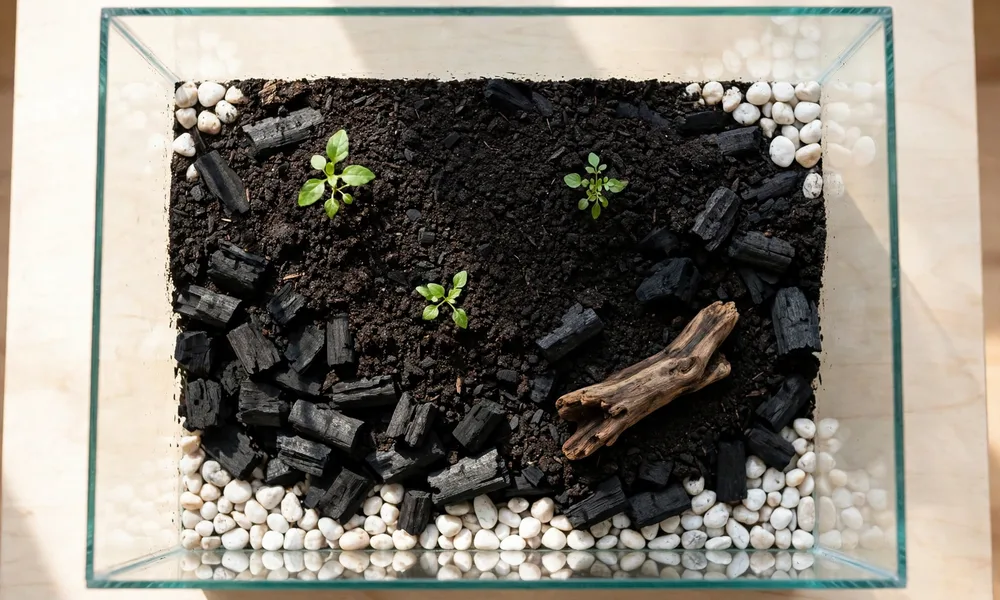
Every terrarium is built from the bottom up. With no drainage hole, the first layer must catch spare water: a finger's depth of pebbles or gravel, so it sits away from the roots.
Above the pebbles goes a thin scatter of charcoal, which keeps the damp layers sweet and stops the soil turning sour. A layer of moss over the charcoal keeps the soil from washing into the pebbles.
Only then comes the soil, a light mix holding a little moisture without turning to mud: ordinary potting soil with a handful of perlite or coarse sand, two or three inches deep. Press it down lightly, never hard.
Plants That Stay Small
Your plants decide whether the terrarium stays a garden or becomes a tangle. Its plants must stay small, growing slowly and never outgrowing the glass. Ferns suit it best, and moss covers the bare soil in green.
Small fittonias, with veined pink or white leaves, suit a closed terrarium, and tiny pileas and baby tears spread gently across the soil. Avoid anything fast or tall, and avoid flowering plants that need strong sun, since they stretch toward the light and crowd the glass.
Buy young plants, and check the leaves: green and firm, no yellow edges, no spots. Three small plants are plenty for a first terrarium.

Building It, Step by Step
Start with the clean container on a steady table, a folded towel underneath. Spoon in the pebbles first, spreading them level, then scatter the charcoal, then lay the moss or mesh, then the soil.
Take the plants out of their pots one at a time and loosen the roots. Dig a hollow with a spoon, settle the plant in, and firm the soil around it. Put the tallest at the back and the shortest at the front, so every plant can be seen.
Finish with a flat pebble or two and a scatter of moss over bare soil. Wipe the inside of the glass with a dry cloth, since soil smears dry into cloudy marks. Set the terrarium near a bright window, out of direct sun, and leave it a day before watering.
How Little Water It Needs
Water is where most terrariums are lost: far less than you think. A new terrarium needs only a few spoonfuls, trickled slowly onto the soil at the base of the plants, never over the leaves. The soil should look damp and dark, not wet and shining.
After that, a closed terrarium may need nothing more for three or four weeks. A light mist inside in the morning usually clears by midday. If the glass stays fogged all day, the soil is too wet, so take the lid off for a day. If the soil looks pale and dry, give one spoonful at a time.
An open terrarium dries faster, so check it weekly with a fingertip. If the top inch feels dry, water slowly, a spoonful at a time, until the soil darkens. Never use a jug or pour from a height: a spoon gives the control a terrarium needs.

Terrarium at a Glance
| Glass holds moisture | Pebbles catch water | Soil stays light |
|---|---|---|
| Ferns love damp air | Moss covers bare soil | Small plants only |
| Water by spoonfuls | Mist means damp enough | Bright light, no sun |
| Closed glass saves water | Open bowl dries fast | Wipe glass often |
Water and Houseplants
Water and houseplants care ritual tends potted plants in open pots on a windowsill, each with a hole at the bottom, and tests the soil with a finger before every watering. Its plants drink what you pour.
A terrarium keeps its plants differently: several small plants share one glass home, there is no hole at the bottom, and the water you give stays inside. The houseplants guide drains the extra water away; this guide gives so little that there is nothing to drain.
Water and a Seedling
Water and a seedling: seven ways to help it grow follows one young plant from its first two leaves toward the garden. Its seedling is meant to grow tall and move outdoors.
A terrarium asks the opposite of its plants: stay small, stay inside, and grow slowly under glass. The seedling guide is a beginning that leads out into the garden; the terrarium guide is a small world that stays where it is.
Water and an Aquarium
Water and an aquarium: a first tank builds a glass home full of water, where fish drift and plants sway, and the first week is spent waiting for the water to settle.
A terrarium holds the opposite: soil, not standing water, with plants rooted in it and only a spoonful of water at a time. The aquarium guide fills the glass to the brim; this guide keeps it mostly full of air.
Nine Neighbours in This Batch
Nine other guides stand beside the terrarium in this batch. The rainbow fluorite guide studies a bright banded stone, the baking tray guide washes a kitchen tray well, and the muscovite guide keeps a silvery stone for quiet days. The rolling pin guide starts a baker's morning, the linarite guide asks if a deep blue stone is safe to display, and the cookie jar guide keeps biscuits fresh.
The pumice guide explains a grey stone, the conch guide suits tender days with a pink shell, and the bonsai guide tends a tiny tree in an open corner, pruned by hand. The terrarium holds a garden sealed under glass.
Stones That Must Never Touch Water
Inside a terrarium the only things that belong are soil, plants, pebbles and a little water. Apatite loses its polished brightness after time in damp soil, and the dull surface stays dull once it dries. Lepidolite holds lithium inside its pale flakes, so it is kept far from every jug, glass and damp bed.
When pyrite sits wet it darkens, its shine fading to flat grey. Angelite drinks water in and puffs out of shape, its smooth face going rough. Amber, old tree resin rather than a true stone, turns milky after a soak and never clears again. None of these belong in a terrarium or a drink.
Your Terrarium Checklist
- Pick a clear glass container and wash it first.
- Layer pebbles, charcoal, moss, then light soil.
- Choose three small plants that like damp air.
- Water by spoonfuls onto the soil, never over the leaves.
- Set it near bright light, out of direct sun.
- If a plant rots or your skin troubles you, ask a gardener or a doctor — a glass garden is a hobby, not a cure.

Frequently Asked Questions
How often should I water a closed terrarium?
A closed terrarium usually needs water only once every three or four weeks. Check the glass in the morning: mist that clears by midday means the dampness is right, while pale soil means a spoonful is due.
Can I use tap water in a terrarium?
Yes, plain tap water left standing overnight suits most. Pour it by the spoonful onto the soil, and never use water with soap or fertiliser mixed in.
Why is the glass fogging up all day?
Glass that stays fogged all day means the soil holds too much water. Take the lid off for a day, and do not water again until the glass clears.
Which plants are best for a first terrarium?
Small ferns, moss, fittonia and baby tears are the safest first plants: they stay small, grow slowly and love damp air. Avoid fast growers and anything that needs strong sun.
Do terrariums need direct sunlight?
No, direct sun turns a closed terrarium into a hot box. Bright light near a window suits it best, with the sun kept off the glass at midday.
Can I put stones or shells inside a terrarium?
Plain pebbles and clean driftwood are fine, but keep display stones and shells out of damp soil unless you know they are safe wet. Several familiar stones are damaged by water, so keep a stone you love on a dry shelf.
The Bottom Line
Water and a terrarium work together when the glass is clear, the layers are right, the plants stay small, and the water comes by the spoonful.
A Note for Quiet Corners
A round bowl of green on a windowsill, mist on the glass, soil dark and damp below — that is all a terrarium needs.