Some mornings the skin feels tight before the day has even begun. The air is dry, the wash was a little too warm yesterday, and the face asks for something softer today. Dry skin is not a rare problem. It is simply skin that has lost a little more water than it kept, and it answers best to a gentle routine that puts water and moisture back in small, steady steps.
Water is the heart of that routine, but not in the way people often think. Splashing the face again and again does not fix dryness on its own. What helps is lukewarm water used gently, a soft touch, and a plain moisturiser applied while the skin is still slightly damp. The water cleans and softens, and the moisturiser holds that softness in place.
This guide explains what dry skin is, how plain water should be used, and how to build a simple gentle routine for morning and night. It is general information only, not medical advice, and it will not cure any skin condition. If your skin is cracked, bleeding, very painful, or not improving after a few weeks of gentle care, please see a doctor or a dermatologist.
Key Takeaways
- Dry skin is skin that has lost more water than it kept, and it often feels tight or rough.
- Lukewarm plain water, used gently, suits dry skin better than hot water or harsh scrubbing.
- A plain fragrance-free moisturiser, applied to slightly damp skin, helps hold moisture in.
- A gentle routine is short: wash softly, pat dry, moisturise, and repeat morning and night.
- Patch-test any new product first, and see a dermatologist for cracked, bleeding or painful skin.
What Dry Skin Means
Dry skin means the outer layer of the skin is holding less water than it should. When it dries out, water escapes and the skin feels tight, rough or flaky. Cold air, dry indoor heating, long hot showers and harsh soaps can all dry the skin out further.
Dry skin is common in winter and in dry climates, and it can appear on the face, hands, arms and legs. It often feels worse after washing, because washing removes some of the skin's natural oils along with dirt. That is why the routine matters more than any single product: gentle washing followed by moisture, done the same way every day, gives the skin a chance to settle.
Why Gentle Water Helps
Gentle water helps because it cleans without stripping. Lukewarm water loosens dirt and sweat softly, while hot water washes away the natural oils that keep the skin's outer layer sealed. A short wash with lukewarm water leaves the skin clean and slightly damp, which is the best moment to add moisture.
Plain water is enough for many mornings. If a cleanser is used, it should be a gentle, fragrance-free one, used in small amounts and rinsed away fully. No scrubbing, no rough cloths, and no strong foaming washes: dry skin needs a soft hand.
The Safety Rule First: Gentle Only
This routine is gentle general information only. It will not cure eczema, psoriasis, or any other skin condition, and it is not a replacement for medical care. Never apply strong acids, home remedies with lemon or vinegar, or any new active product to cracked or broken skin.
Patch-test every new product before using it on your face: put a small amount on the inside of your wrist or behind your ear, wait a full day, and watch for redness, itching or swelling. If any of those appear, stop using the product. Keep stones, crystals and bath salts out of drinking water and away from broken skin. If your skin is cracked, bleeding, very painful, or not improving after a few weeks of gentle care, please see a doctor or a dermatologist.
The Gentle Wash, Step by Step
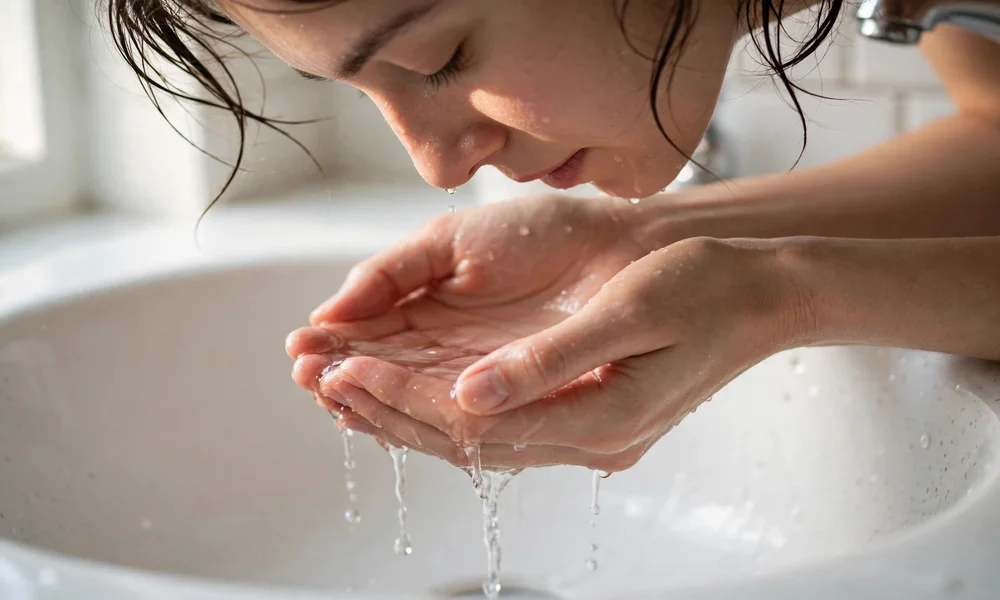
Start with clean hands and lukewarm water, never hot. Wet the face with cupped hands, letting the water run softly over the skin. If you use a cleanser, take a small amount of a gentle fragrance-free one, spread it with your fingertips in slow circles, and keep it brief. Rinse with lukewarm water until the skin feels clean and free of product.
Pat the skin dry with a soft, clean towel, pressing lightly instead of rubbing. Leave the skin slightly damp, not dripping and not fully dry. That damp moment is the right time for the next step, because moisture applied now is easier for the skin to hold. The whole wash takes about a minute, and a minute is enough.
Moisture While Skin Is Damp
Moisturiser works best on slightly damp skin. Take a small amount of a plain, fragrance-free moisturiser and warm it between clean fingertips, then press it gently over the face and neck. Do not rub hard or pull at the skin. A thin, even layer is enough; a thick layer will not work better and may feel heavy.
Choose a simple product with few ingredients and no added fragrance or strong scent. Creams usually suit dry skin better than light lotions, because they hold moisture in for longer. If the skin still feels tight after a few minutes, a second thin layer is fine.
A Gentle Morning Routine
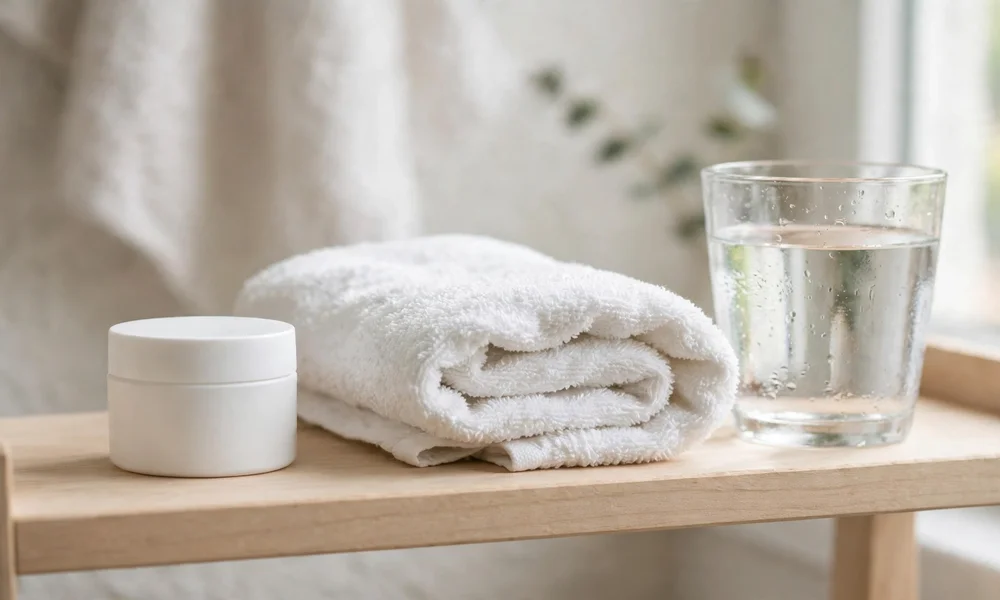
A gentle morning starts with water. Wash softly with lukewarm water, pat dry, and moisturise while the skin is still slightly damp. Drink a glass of fresh water, and let the morning be unhurried. If you go outside, a plain sunscreen is part of the routine too, applied after the moisturiser has settled.
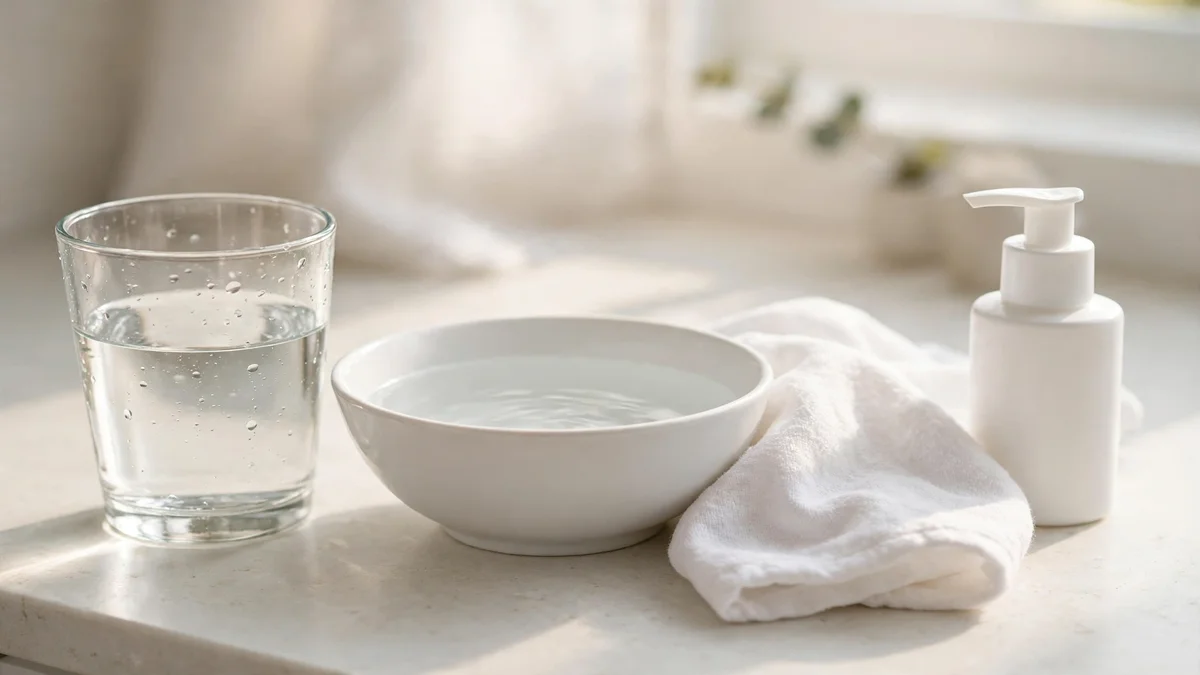
Keep the morning shelf simple: one gentle cleanser, one plain moisturiser, one soft towel, and a glass of water. That is the whole set. A short routine done every day beats a long routine done once a week, and dry skin rewards steady care more than any single new product.
A Gentle Night Routine
Night is when the routine can slow down. Wash gently with lukewarm water, pat dry, and apply a slightly richer layer of plain moisturiser. The night layer can be a little thicker than the morning one, because it has hours to settle while you sleep.
Where water and double cleansing at night explains a two-step night cleanse for makeup days, this routine stays simpler: one gentle wash and one good layer of moisture. On days when makeup or sunscreen was worn, the double cleanse fits in before the moisturiser step, and the rest of the routine stays the same.
Water and Dry Skin at a Glance
| Lukewarm water | Gentle wash | Plain moisture |
|---|---|---|
| Short wash only | Soft fingertips | Damp skin first |
| Never hot water | Pat, never rub | Thin even layer |
| Rinse fully clean | Clean soft towel | Fragrance-free cream |
| Plain water enough | One minute wash | Morning and night |
Habits That Help Dry Skin
Small daily habits matter as much as any product. Keep showers short and lukewarm, and apply moisturiser to the body while the skin is still slightly damp after washing. Use a soft towel and pat dry instead of rubbing. Wear soft fabrics against the skin when you can, and keep the home air comfortable rather than very dry.
Drink water through the day, and keep a glass beside you while you work. Water you drink will not fix dry skin on its own, but steady hydration supports the whole body. Avoid long hot baths, harsh soaps and strong scented products, because each of them can dry the skin further.

What a Gentle Routine Will Not Do
Be honest about what a gentle routine can and cannot do. It will not cure eczema, psoriasis, or any other skin condition. It will not repair cracked skin overnight, and it will not change the skin permanently. What it can do is clean gently, hold moisture in, and give the skin a calm, steady routine that lets it feel more comfortable day by day.
No routine or product will replace medical care. If the skin is cracked, bleeding, very painful, swollen, or not improving after a few weeks of gentle care, the answer is a doctor or a dermatologist, not a new product. Patch-test first, keep it simple, and ask for help when the skin needs more than a gentle routine.
Your Water and Dry Skin Checklist
- Wash with lukewarm plain water and soft fingertips, never hot water.
- Pat the skin dry gently and leave it slightly damp.
- Apply a plain fragrance-free moisturiser to damp skin, morning and night.
- Patch-test any new product on the wrist and wait a full day.
- Keep showers short and lukewarm, and moisturise the body while damp.
- See a dermatologist for cracked, bleeding or painful skin that does not improve.
Frequently Asked Questions
What causes dry skin?
Dry skin happens when the outer layer of the skin holds less water than it should, so water escapes and the skin feels tight or rough. Cold air, dry heating, long hot showers and harsh soaps can all make it worse.
Is hot water bad for dry skin?
Hot water washes away the natural oils that keep the skin's outer layer sealed, so it can leave dry skin feeling tighter. Lukewarm water cleans gently without stripping those oils.
Should I wash my face with water only?
Plain lukewarm water is enough for many mornings. If you use a cleanser, choose a gentle fragrance-free one, use a small amount, and rinse it away fully.
When should I apply moisturiser?
Apply moisturiser while the skin is still slightly damp, just after patting dry. Damp skin holds moisture more easily, so a thin even layer works well.
Can a sheet mask help dry skin?
A sheet mask can add a short burst of moisture, and water and sheet masks used well explains how to use one gently. It is an extra step, not a replacement for a daily wash and moisturise routine.
When should I see a dermatologist?
See a doctor or dermatologist if the skin is cracked, bleeding, very painful, swollen, or not improving after a few weeks of gentle care. Where water and clay masks as a weekly ritual suits a weekly mask step, a skin problem that will not settle needs a professional, not another product.
The Bottom Line
Water and dry skin need a gentle routine: lukewarm water, a soft touch, and plain moisture on damp skin, morning and night. Keep it simple, keep it steady, and ask a dermatologist when the skin needs more.
A Note for Dry Skin
Keep it lukewarm, keep it gentle, keep it simple. Your skin will thank you for the calm.