A dog walk begins with cool air and a wagging tail, and by the third hour it can feel very different. The sun is warm through the trees, the path climbs a little steeper, and the bottle you meant to fill is already half empty. Those are the hours when a little planning matters most, for you and for your dog.
Water is the simplest trail companion of all, for both of you. A bottle filled before you leave, a bowl for the dog, and a short stop every hour or so are all it takes to finish a walk feeling good.
This guide explains how to carry water on a dog walk, how to offer it well on the trail, how to rest in the shade, and how to rinse off at home. It is gentle general information only, never veterinary advice. Real problems belong with a vet.
Key Takeaways
- Carry fresh water from home for you and your dog, with a bowl to pour it into.
- Never let a dog drink from unknown water, such as streams or puddles.
- Offer small sips often, and rest in the shade when the sun feels strong.
- Keep the dog on a leash, and watch for heat, tired paws and heavy panting.
- Rinse paws and offer fresh water at home after every walk.
What Staying Fresh on the Trail Means
Staying fresh on the trail means finishing a dog walk feeling clean, calm and comfortable, not sticky, tired and thirsty. It is about small comforts: a cool drink, a clean face and a bag packed well. Freshness on a dog walk is built from water: water to sip, water to wash with, and water to cool a warm face.
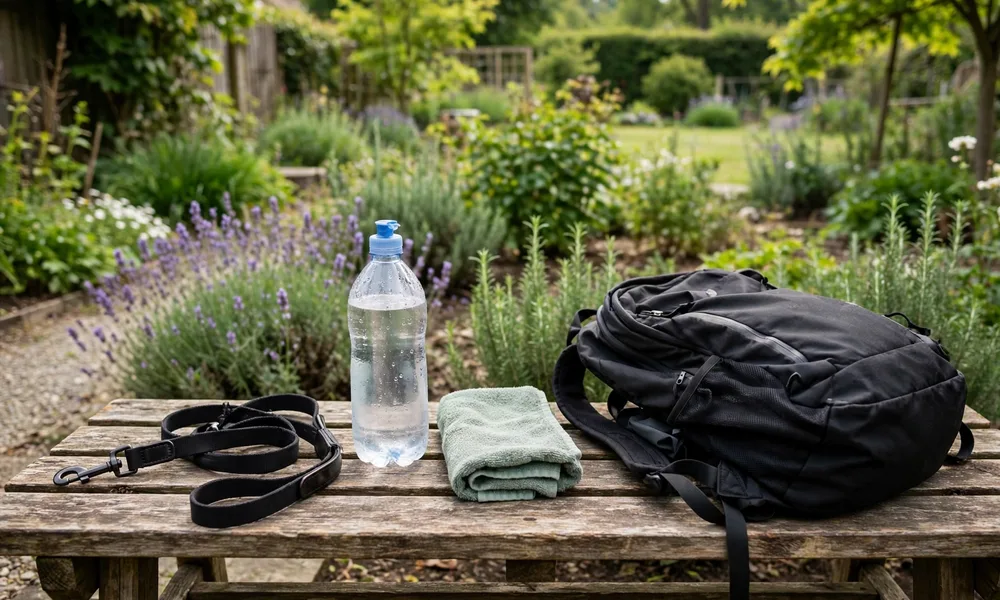
A bottle, a bowl, a leash and a little towel will carry you both through a whole morning. The dog needs the same care you do, only sooner, because a dog cannot ask for a drink.
Why Dogs Get Warm on the Trail
Dogs get warm on the trail because walking in warm air makes the body work hard, and dogs cool themselves mainly by panting, not by sweating the way people do. A long walk can leave a dog short of water, and the sun adds to it. Panting is the dog's way of asking for water, and it is worth listening to early.
A dry nose, a warm coat and heavy panting are signs to stop, find shade and offer water. Short walks in cool hours suit most dogs best.
Packing the Trail Bag
Packing the trail bag takes five minutes the night before, and it saves the whole walk. Start with fresh water from home in a clean bottle, enough for both of you, and a light collapsible bowl for the dog. Add the leash, a small towel, a few treats, and a bag for waste.
Check the leash clip before you leave, and make sure the collar fits snugly. A bag packed the night before means a calm start, with nothing forgotten.

Fresh Water from Home
Fill a clean bottle at home before you leave, with enough for the whole walk, for you and for your dog. Never let a dog drink from unknown water on the trail, such as a stream, a pond or a puddle, because it can carry germs that make a dog ill.
Pour the water into the dog's own bowl and let the dog drink in small sips. If the bottle runs low, head home rather than letting the dog drink from a stream.
Sipping Well on the Trail
Offer your dog water every twenty minutes or so, more often when it is warm, and drink some yourself at the same time. Pour a little into the bowl, let the dog drink, and pour a little more if it is still thirsty. Do not let the dog gulp a whole bowl at once after running.
Walk slowly while the dog drinks, and wait a minute before moving on.
Shade and Rest Stops
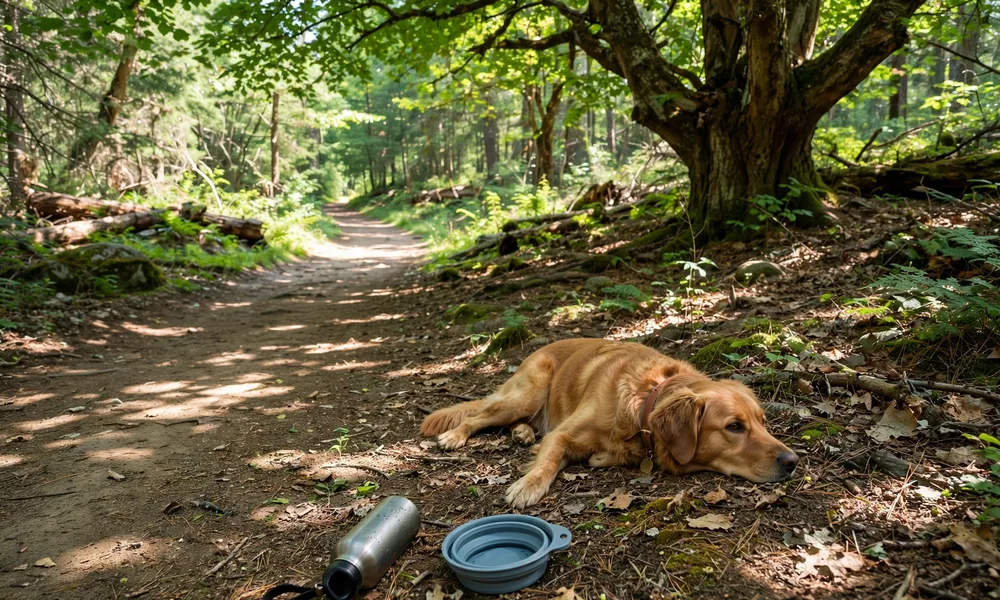
Shade and rest stops are the heart of a fresh dog walk. Stop every hour or so under a big tree, sit down, and let the dog rest in the cool. Offer water, wipe the dog's face with a damp cloth, and check its paws for stones. A short rest in the shade does more than a long push in the sun.
Watch the ground too: hot paths and rough stones can hurt paws, so choose shaded grass where you can. If the dog lies down and will not get up, let it rest, offer water, and head home slowly.
Dog Walking at a Glance
| Trail routine | Fresh water | Dog care |
|---|---|---|
| Leash and bag | Bottle from home | Shade and rest |
| Bowl and towel | Small sips often | Watch the heat |
| Paws and rinse | Never stream water | Vet for problems |
Dog Walking and the Pets Post
Dog walking and the pets post are different guides, and they cover different parts of a dog's day. The pets post is about life at home: which stones are safe to keep near pets, how to keep fresh bowls clean, and how to build a simple daily routine around them. The stones stay beside the water, never in it, and never within a pet's reach.
Where water and pets safe stones and fresh bowls keeps safe stones beside the bowl at home, this guide walks out of the door with a dog. Dog walking is a trail routine: a leash, a water bottle, a bowl, shade, paw care, and a fresh rinse after.
Dog Walking and Hiking
Dog walking and hiking share the same trail, but they are not the same walk. Hiking is a people-only routine: a bottle filled before you leave, a few small comforts in the bag, and a short stop every hour or so.
Where water and hiking staying fresh on the trail keeps a hiker fresh on the trail, this guide keeps a dog fresh too. Dog walking adds a leash, a bowl, shade stops for a panting dog, and paw care at the end. A hiker carries water for one; a dog walker carries it for two.
Dog Walking and Walking
Dog walking and walking share slow steps and fresh water, but they move at different speeds. Walking is a gentle daily reset for one person: a glass of fresh water, a slow walk, and a few quiet minutes in between, on a flat, familiar path, for as long as feels comfortable.
Where water and walking a simple daily reset keeps one person fresh with a slow daily walk, this guide walks with a dog. Dog walking adds a leash, a bottle and a bowl, sniffing stops, shade rests and paw care.
Paw Care After the Walk
Paw care after the walk takes five minutes and saves sore feet. When you get home, sit the dog on the doormat and wipe each paw with a damp cloth, checking between the toes for stones or mud. Rinse muddy paws with plain fresh water, never soap, and dry them well. Look for cuts or swelling, and see a vet if anything looks sore.
Paws carry the dog through the whole walk, so they deserve a gentle rinse and a careful look.
Heat Safety and the Leash
Heat safety and the leash go together on every dog walk. Walk in the cool hours of the morning or evening when the sun is strong, and keep the dog on a leash on every trail, even one that feels quiet. A leash keeps the dog away from roads, other animals and unknown water.
Never leave a dog in a hot car, even for a few minutes, and never walk a dog in the heat of midday. If the dog pants hard, staggers or seems confused, stop at once, find shade, offer water, and call a vet. Heat can harm a dog fast.
Your Trail Checklist
- Fill a clean bottle with fresh water from home for you and your dog.
- Pack the leash, a collapsible bowl, a towel, treats and waste bags.
- Offer small sips often, and never let the dog drink from streams or puddles.
- Rest in the shade every hour, and check paws for stones or rough ground.
- Keep the dog on a leash, and walk in the cool hours on hot days.
- Rinse paws at home, offer fresh water, and call a vet for real problems.

Frequently Asked Questions
How much water should I carry for a dog walk?
Carry enough fresh water from home for you and your dog for the whole walk, with a little extra: one bottle each on a short walk, and more on a long or warm one.
Can my dog drink from a stream on the trail?
No, never let a dog drink from unknown water such as a stream, pond or puddle, which can carry germs that make a dog ill. Always offer fresh water from home in the dog's own bowl.
How often should my dog drink on a walk?
Offer water every twenty minutes or so, more often when it is warm, in small sips. Watch for heavy panting, which means the dog is thirsty.
When is it too hot to walk a dog?
It is too hot when the sun is strong at midday, when the path feels hot to your hand, or when the dog pants hard. Walk in the cool morning or evening hours instead.
Should my dog stay on a leash on the trail?
Yes, keep your dog on a leash on every trail, even a quiet one. A leash keeps the dog away from roads, other animals and unknown water.
What should I do after a dog walk?
Sit the dog on the doormat, wipe and rinse its paws with plain fresh water, dry them well, and offer a bowl of fresh water. Call a vet if paws look sore or the dog seems unwell.
The Bottom Line
Water and dog walking go together: fresh water from home, a bowl, a leash, shade rests and paw care. Offer small sips often, and never let the dog drink from unknown water.
A Note for Trail Days
Keep it cool, keep it fresh, keep it kind. A bottle, a bowl, a leash and a shady tree can carry you both home happy.