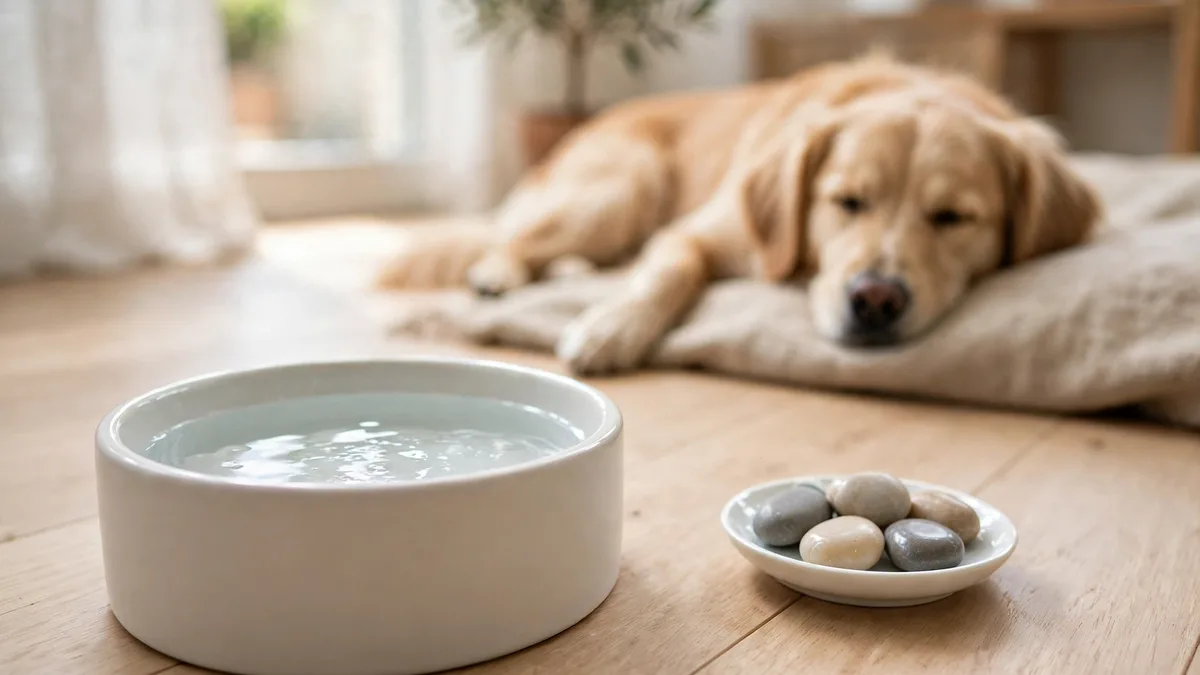
A pet's day is simple, and fresh water sits at the centre of it. A dog comes in from the garden and heads straight for the bowl. A cat pads across the kitchen in the morning and drinks in small, careful sips. The bowl is the one thing they both return to again and again, all day long, and it deserves the same care we give our own glasses.
Many crystal lovers want their pets to share the calm of a pretty home, and that is a kind wish. Stones can sit near a pet's corner and make it look cared for, just as a plant does. But pets explore the world with their mouths, their paws and their curiosity, and a stone that is safe on a high shelf can be a real danger in a bowl or on the floor.
This guide explains which stones are safe to keep near pets, how to keep fresh bowls clean, and how to build a simple daily routine around them. The stones stay beside the water, never in it, and never within a pet's reach. This is gentle general information only, never veterinary advice, and real problems belong with a vet.
Key Takeaways
- Pets need fresh, clean water every day, in a bowl that is washed often.
- Safe stones stay beside the bowl, never in the water, and never within reach.
- Only large, smooth, hard stones belong in a pet home, kept on a high shelf.
- Small stones are a choking risk, and some stones must never touch water at all.
- This guide is general information only; real pet problems belong with a vet.
What Safe Stones Mean for Pets
A safe stone for a pet home is a large, smooth, hard piece that cannot be swallowed, chewed or knocked into a bowl. Clear quartz, rose quartz and amethyst are the usual choices: all three are hard, smooth when tumbled, and easy to keep clean. The piece should be bigger than your pet's mouth, with no sharp edges and no loose chips.
Safe does not mean the stone does anything for the pet. A stone will not calm a dog, heal a cat, or change an animal's health in any way. It is simply a pretty object that makes the corner look cared for, like a plant on a high shelf. The pet's health comes from fresh water, good food, rest and a vet, never from a stone.
Why Fresh Bowls Matter Every Day
Fresh water matters because a bowl left all day grows stale, warm and slimy, and pets notice. A dog will drink less from a dirty bowl, and a cat may walk away from it altogether. In warm weather the water warms fast, and in winter a bowl near a heater can dry out sooner than you think.
A fresh bowl is also a quiet way to watch your pet. When you change the water each morning, you see how much was drunk overnight, and a sudden change in drinking is worth telling a vet about.
The Safety Rule First: Stones Beside Bowls Only
Stones stay beside the bowl only, never inside the drinking water, never soaked, and never used in a pet's water at all. If a stone ever falls into a bowl by accident, throw the water away, wash the bowl, and wash your hands.
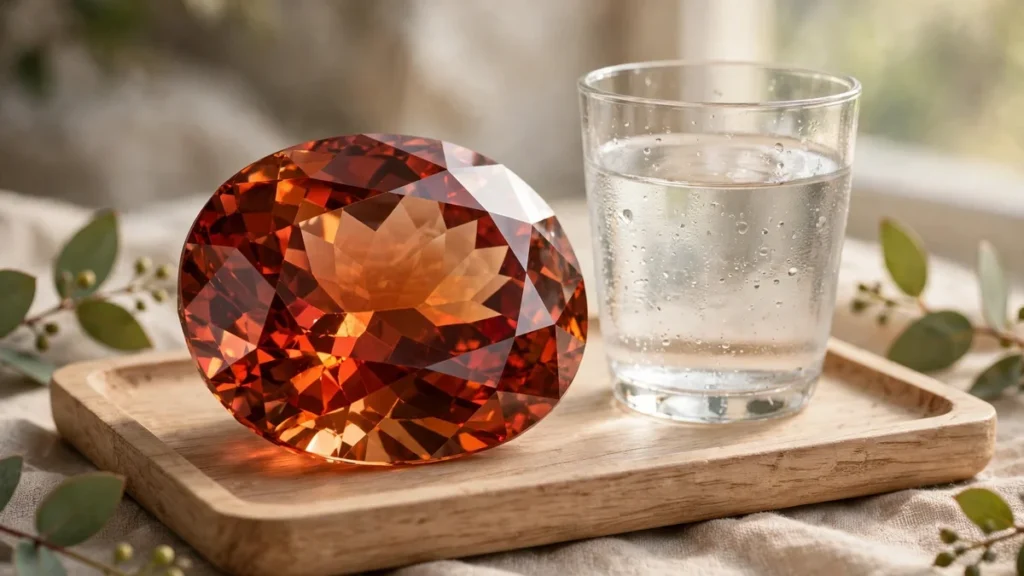
Some stones must never touch water at all, and they have no place near a pet's bowl. Malachite must never go in water or elixirs, apatite and lepidolite must never go in drinking water, lepidolite contains lithium, pyrite must never go in drinking water, angelite must never be soaked, and amber must never go in drinking water or soaks. Hematite must never go in drinking water either. Never put any stone in a pet's water, and never let a pet chew or lick a stone.
Choosing Safe Stones for a Pet Home
Choose a large, smooth tumbled stone that feels solid and has no sharp points or flaking surface. Clear quartz is a good first choice: it is hard, plain and easy to clean. Rose quartz is a soft pink stone that looks gentle on a shelf, and amethyst is a calm purple stone for a quiet corner. Buy from a trusted seller who can tell you plainly what the stone is.
Never choose small stones, rough clusters with sharp points, or stones with a powdery or crumbly surface. Never choose a stone because someone promised it will change your pet's health. A stone is decoration, and the safest stone is the one your pet can never reach.
A Fresh Bowl Routine, Morning and Night
A fresh bowl routine takes only a few minutes, and it starts the evening before: wash the bowl, dry it, and leave it ready by the sink. In the morning, fill it with fresh, cool water and set it in its usual spot, away from the food bowl and out of direct sun. In the evening, empty what is left, rinse the bowl, and fill it again for the night.
Keep the routine the same every day, because pets like a bowl that is always in the same place. One bowl per pet is best, plus one spare for a busy house.
Washing Bowls Well
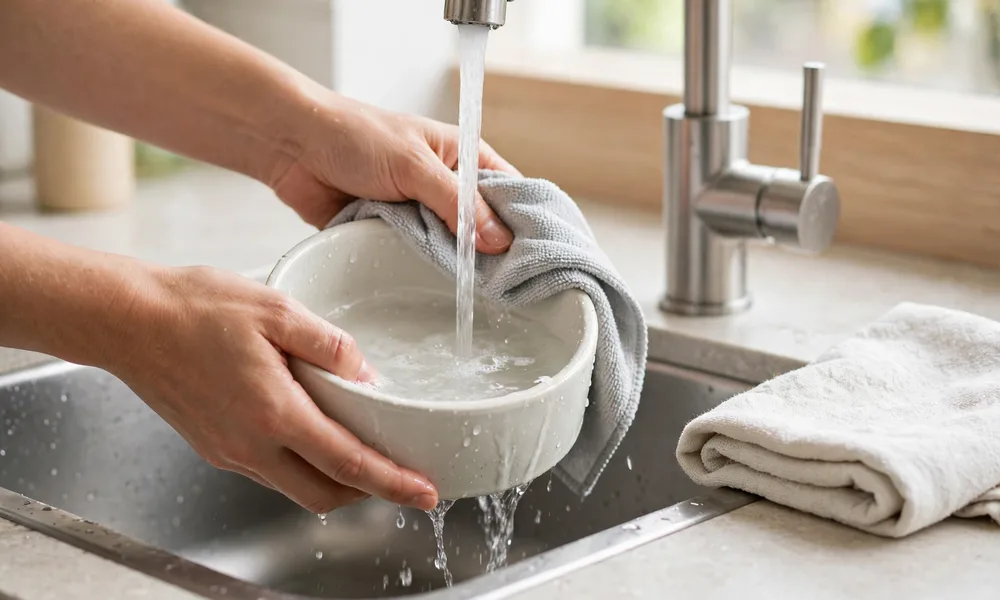
Wash the bowl every day with hot water and a drop of mild, plain soap, then rinse it well until no soap is left. A soft cloth reaches the rim where slime gathers. Ceramic and stainless steel bowls wash best, because they do not hold smells the way plastic can.
Where water and camping: a simple wash routine washes with very little water outdoors, this guide washes a pet bowl well at home, where plenty of clean water is close at hand. The habits are different: one saves water at a campsite, the other keeps a daily bowl spotless in the kitchen.
Stones on a High Shelf
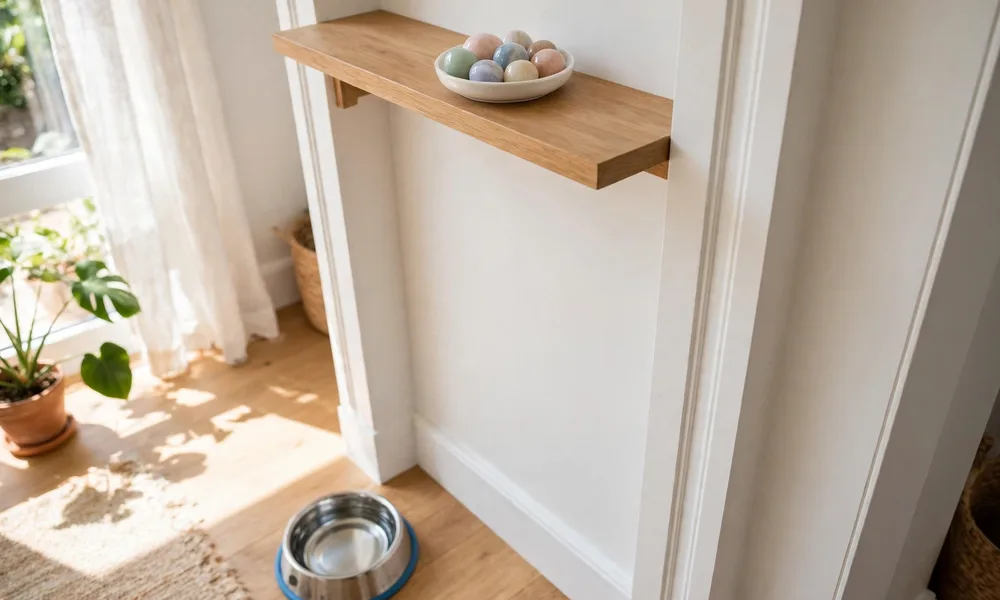
Stones belong on a high shelf, well above a pet's jump, climb or stretch. A small dish on a tall shelf keeps them tidy, and the dish should sit far back from the edge, where a wagging tail or a curious paw cannot knock it down. Never keep stones on the floor, on a low table, or on the mat beside the bowl.
Check the shelf once a week. If a stone has moved, chipped or gathered dust, clean it with a soft dry cloth and set it back, far from the edge. If a stone is ever found on the floor, pick it up at once and move it higher. A pet home is safest when every stone has a high, fixed place.
Safe Stones at a Glance
| Large smooth stone | High shelf spot | Fresh bowl daily |
|---|---|---|
| Clear quartz piece | Far from edge | Wash with soap |
| Rose quartz piece | Out of reach | Rinse well daily |
| Amethyst calm stone | Dust weekly | Cool fresh water |
| Never small stones | Never near bowl | Never stones inside |
Pets, Water and Travel Days
Travel days need a little extra care, because a pet drinks less in a strange place. Pack a familiar bowl, a bottle of fresh water, and a towel, and offer water at every stop. Never let a pet drink from puddles, streams or shared bowls you cannot clean.
Where water and road trips: staying fresh on the go keeps people fresh through long drives, this guide keeps pets fresh on the same kind of day, with their own bowl and their own water. The habits are alike, but the bowls are never shared, and the stones stay at home on their shelf.

What Stones Will Not Do
Be honest about what a stone can and cannot do. A stone will not heal anything: it will not cure an illness, calm an anxious pet, or change an animal's health in any way. It is a beautiful object, and an object is all it is. The fresh water is the part that helps, and the vet is the person who helps when something is wrong.
No stone will replace food, rest and veterinary care. If a pet stops drinking, drinks far more than usual, or swallows anything it should not have, the answer is a vet, quickly, not a new stone.
Your Water and Pets Checklist
- Fill a clean bowl with fresh, cool water every morning and evening.
- Wash the bowl daily with hot water and mild soap, then rinse well.
- Keep large smooth stones on a high shelf, far from the edge.
- Never put stones in the water, and never let a pet chew a stone.
- Keep one bowl per pet, in the same spot, away from direct sun.
- Call a vet quickly if drinking changes, or a pet swallows a stone.

Frequently Asked Questions
Can I put crystals in my pet's water bowl?
No. Never put stones in a pet's drinking water. Keep stones beside the bowl, on a high shelf, and never within the pet's reach.
Which stones are safe near pets?
Large, smooth, hard stones such as clear quartz, rose quartz and amethyst are the usual choices, kept on a high shelf. They are decoration only, and they must never be small enough to swallow.
Are small stones dangerous for pets?
Yes. Small stones are a choking risk, and a swallowed stone needs a vet at once. Only large stones belong in a pet home, and only out of reach.
How often should I wash a pet's water bowl?
Wash it every day with hot water and a drop of mild soap, then rinse well. A weekly deeper wash keeps the bowl fresh, and ceramic or steel bowls wash best.
Where should I keep stones in a pet home?
Keep them in a small dish on a high shelf, far back from the edge, well above a pet's jump or climb. Where how to build a simple crystal water station at home keeps stones beside water on a tray for people, a pet home keeps stones higher still, away from every paw.
When should I call a vet?
Call a vet quickly if a pet stops drinking, drinks far more than usual, seems tired or unwell, or swallows a stone. Real problems belong with a vet, never with a stone.
The Bottom Line
Fresh water in a clean bowl, safe stones high on a shelf, and a vet for anything real. That is the whole routine, and it keeps a pet home calm and cared for.
A Note for Pet Homes
Keep it fresh, keep it high, keep it safe. The bowl belongs to them.