Little hands are always busy. They pat dough, dig in sand, hold crayons, and pick up everything they find on the floor. Water is the gentlest way to look after them, and the simplest routines are the ones that last. A child who learns to wash hands slowly, bathe warmly and drink water through the day carries those habits for life, and they cost nothing at all.
The secret is to keep every routine short, warm and kind. Lukewarm water, a mild soap, a soft towel and a calm adult nearby are all a child needs.
This guide explains how to build gentle water routines for little hands: washing hands, bath time, drinking water through the day, and looking at a smooth stone together under close adult supervision. It is gentle general information only, never medical advice. Real problems belong with a doctor.
Key Takeaways
- Little hands need lukewarm water, mild soap and a soft towel, nothing stronger.
- Short, warm routines work better than long baths and hot water.
- Children are never left alone near water, not even for a moment.
- Stones stay beside water and are handled only with an adult, never in drinks.
- A gentle routine needs very little: warm water, a small glass, and a calm adult.
Why Little Hands Need Gentle Water
Little hands need gentle water because young skin is thinner and softer than adult skin. Hot water strips its natural oils quickly and leaves it dry and sore, while strong soaps can sting small cuts and dry the skin further. Lukewarm water cleans just as well without hurting, and a mild soap used only where hands are truly dirty is enough for most washes.
Gentle water also suits children because it feels kind. A child given warm water, time to play with the foam and a soft towel to pat dry learns that washing is a pleasant pause, and a routine a child enjoys is a routine that lasts.
The Safety Rules First
Safety comes before every routine in this guide. A child is never left alone near water, not in a bath, not at a sink, not beside a bucket or a bowl. An adult stays within arm's reach the whole time, and the water is always checked first: lukewarm on the inside of your wrist, never hot, never cold enough to make a child shiver.
Stones have their own safety rules. A stone is never put in a child's drinking water, never given to a child to hold alone, and never small enough to fit in a mouth. Only one large, smooth stone is used, held together with an adult, and it is kept on a high shelf when the routine is over. If a child puts a stone in their mouth, take it away calmly.
Washing Little Hands
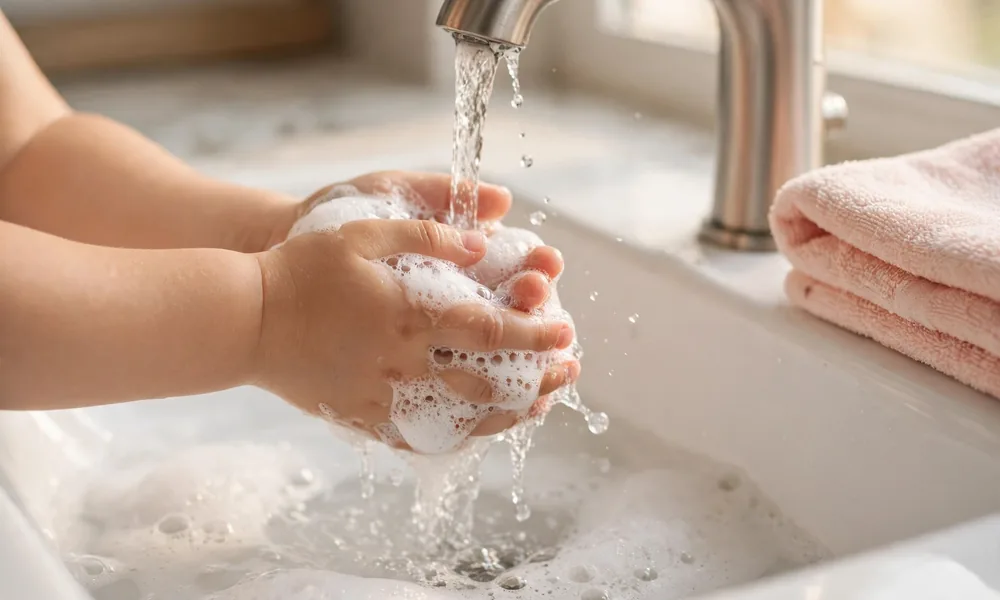
Washing little hands takes about a minute, and it works best as a song-length habit. Turn on the tap to lukewarm, wet the hands, and add a small drop of mild soap. Rub the palms together, then the backs of the hands, then between the fingers, then around the thumbs. Rinse slowly under the running water, and pat dry with a soft towel, never rub hard.
The best times to wash are easy to remember: after the toilet, after playing outside, after touching animals, and before eating. Keep a small step stool by the sink so the child can reach the tap safely. A child who can wash their own hands with an adult watching feels proud, and pride keeps the habit alive.
Bath Time, Warm and Short
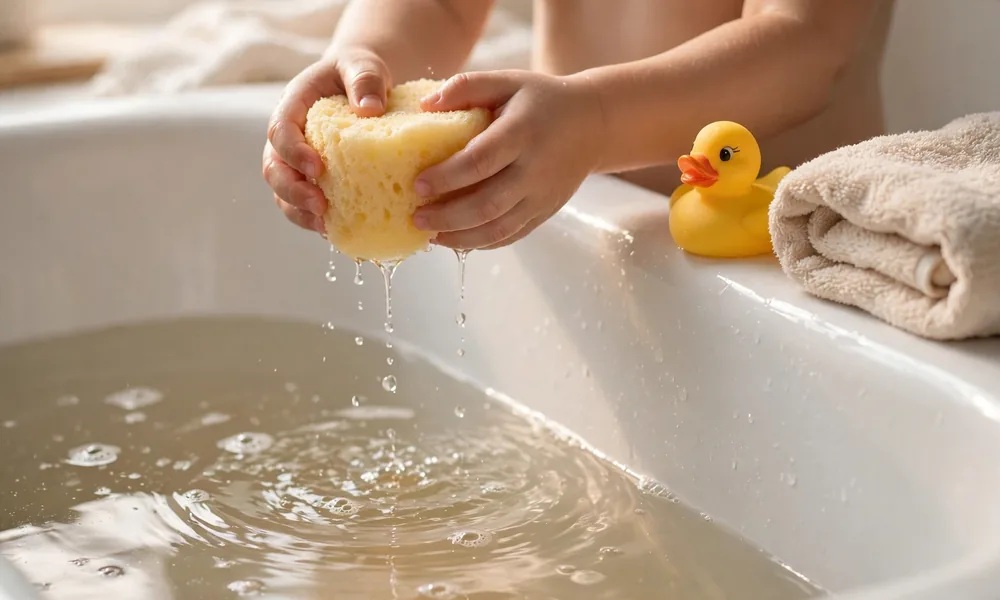
Bath time should be warm, short and calm. Fill the bath shallow, check the water on your wrist until it feels lukewarm, and keep the room warm. Five to ten minutes is enough for most baths. A soft sponge, a mild wash and a rubber duck are all the tools a bath needs.
Wash gently, from the face down, with plain water first and mild soap only where skin is truly dirty. Rinse well, lift the child out carefully, and wrap them at once in a soft towel. Pat the skin dry, never rub. Where water and skin at every age explains how skin changes through life, this guide keeps the focus on childhood alone: short warm baths, plain water and a gentle touch.
Drinking Water Through the Day
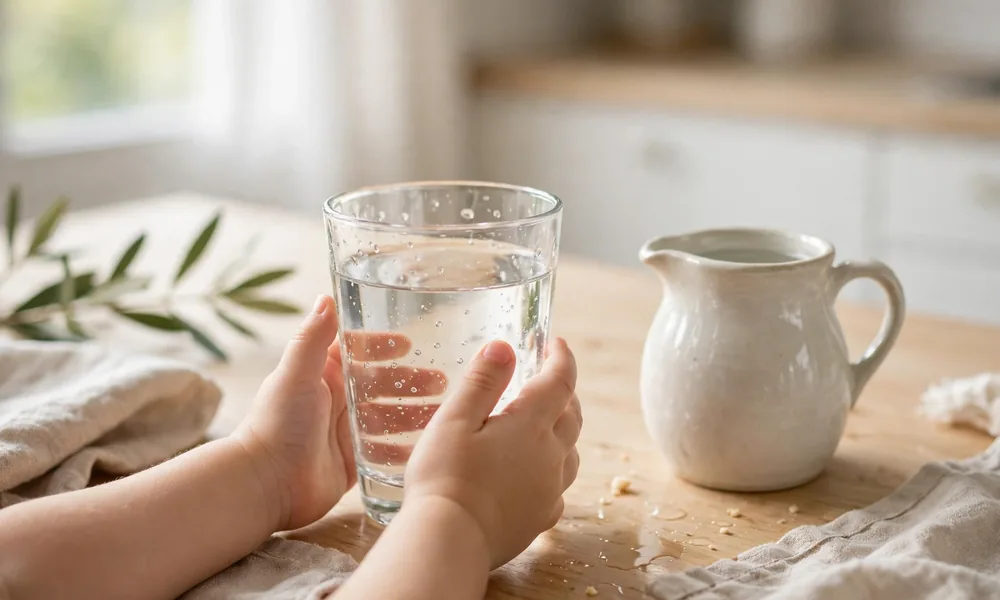
Drinking water through the day is a quiet habit worth building early. Give a child a small glass of fresh water with meals and between playtimes, and keep a small jug of water where they can see it. Little sips through the day are better than one big glass forced at once, and plain water is always the best choice.
A busy child forgets to drink, so a gentle reminder helps: a glass on the table at lunch, a glass after play, a glass before bed. Never add anything to the water, and never put a stone in a child's drink.
Water at a Glance
| Lukewarm water | Short routine | Soft towel |
|---|---|---|
| Wrist test first | One minute wash | Pat skin dry |
| Mild soap only | Five minute bath | Never rub hard |
| Small glass daily | Sips through day | Adult stays near |
A Stone Beside the Water
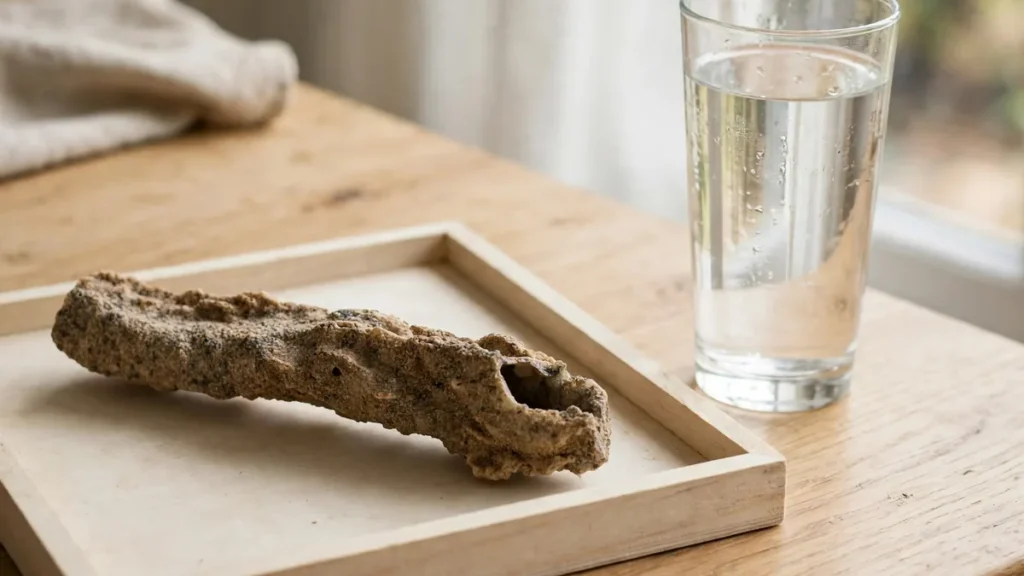
A smooth stone can be a lovely part of a child's water routine, as long as it is handled the safe way. Choose one large, smooth clear quartz stone, far too big to fit in a mouth, and keep it on a high shelf. At routine time, an adult takes it down and holds it together with the child for a moment, then puts it straight back on the shelf.
The stone is never in the water, never in a drink, and never left with the child. Stones that must never touch water at all are worth naming here for the adults reading: malachite must never go in water or elixirs, hematite must never go in drinking water, and apatite, lepidolite, which contains lithium, pyrite, angelite and amber must never go in drinking water or soaks. A child's stone is for looking and touching together, nothing more.
Drying and Soft Skin
Drying is half of the routine, and gentle drying protects young skin. After washing hands or a bath, pat the skin dry with a soft towel, paying care to the spaces between fingers and the folds of small elbows and knees. Rubbing hard can leave skin red and sore, while patting leaves it calm and comfortable.
If the skin looks dry, a plain cream on skin that is still slightly damp helps most, morning and evening. Use as little as you need, and choose a plain product with no strong scent. Where water and dry skin, a gentle routine explains gentle care for dry adult skin, the same rule holds for children. If skin stays sore, red or itchy for days, the answer is a doctor, not a new product.
A Simple Daily Rhythm
A simple daily rhythm ties the routines together without turning the day into a schedule. Morning: wash hands, drink a small glass of water, look at the stone together. Midday: wash hands before lunch, drink water with the meal. Evening: a short warm bath, pat dry, a small glass of water before bed.
Keep the rhythm loose and kind. If a bath is missed one night, a quick wash is enough. If a child is tired, shorten the routine rather than skipping the calm. A rhythm that bends without breaking is one a family can keep for years.
What Water Will Not Do
Be honest about what water and stones can and cannot do. Plain water will not cure an illness, fix a skin problem, or make a child healthier on its own. It is simply the gentlest way to clean and to drink, and that is enough. A stone will not heal anything either: it is a beautiful object for looking and touching together, and a stone is all it is.
No routine in this guide replaces rest, sleep and medical advice. If a child has a rash that spreads, a cough that stays, or any problem that worries you, see a doctor promptly.
Your Gentle Routines Checklist
- Check the water on your wrist first: lukewarm, never hot.
- Stay within arm's reach whenever a child is near water.
- Wash little hands with mild soap for about a minute, then pat dry.
- Keep baths short, warm and calm, five to ten minutes at most.
- Offer small sips of plain water through the day, with meals.
- Handle the large smooth stone together, then put it back on its high shelf.

Frequently Asked Questions
How often should a child wash their hands?
After the toilet, after playing outside, after touching animals, and before eating. A one-minute wash with lukewarm water and mild soap is enough each time.
How warm should bath water be for a child?
Lukewarm, checked on the inside of your wrist before the child steps in. It should feel warm and comfortable, never hot and never cold enough to make a child shiver.
Can a child hold a crystal stone?
Yes, but only together with an adult, and only one large smooth stone that is far too big to fit in a mouth. The adult holds it with the child and puts it back on a high shelf afterwards.
Can I put a stone in my child's drinking water?
No. Never put any stone in a child's drinking water. The water stays plain and safe, and the stone stays on its shelf beside the glass.
What if my child's skin stays dry or itchy?
Keep baths short and lukewarm, pat dry, and use a plain cream on damp skin. If the skin stays sore, red or itchy for days, see a doctor promptly.
How can I make hand-washing fun for a child?
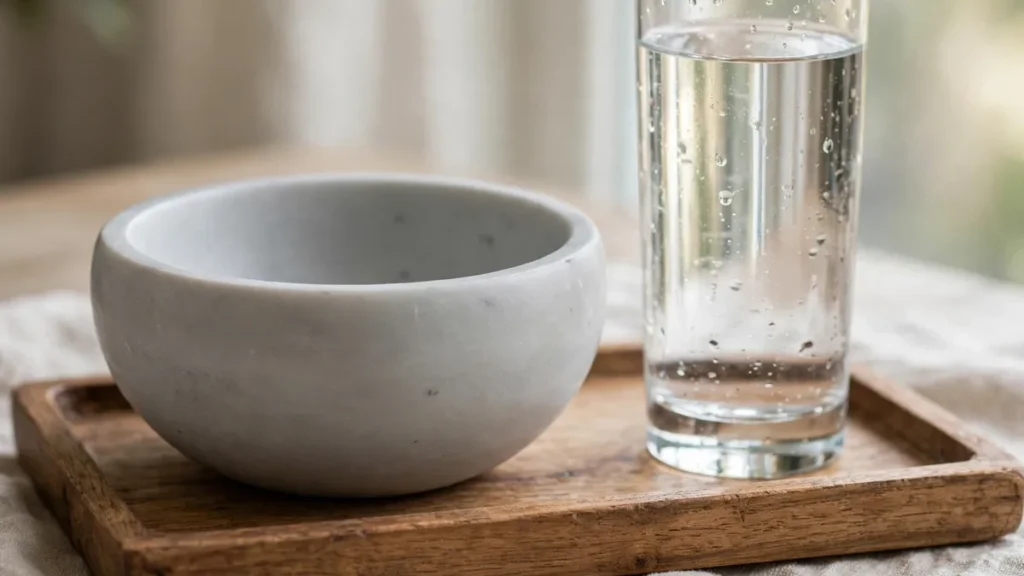
Make it song-length, let them play with the foam, and keep a small step stool and a soft towel of their own by the sink. Where a simple crystal water station at home keeps water things tidy in one place, a small tray by the sink does the same.
The Bottom Line
Water and children belong together gently: lukewarm water, mild soap, short baths and small sips through the day. Keep an adult close, keep the stone on its shelf, and let the routine stay kind.
A Note for Little Hands
Keep it warm, keep it short, keep it supervised. Little hands learn best gently.