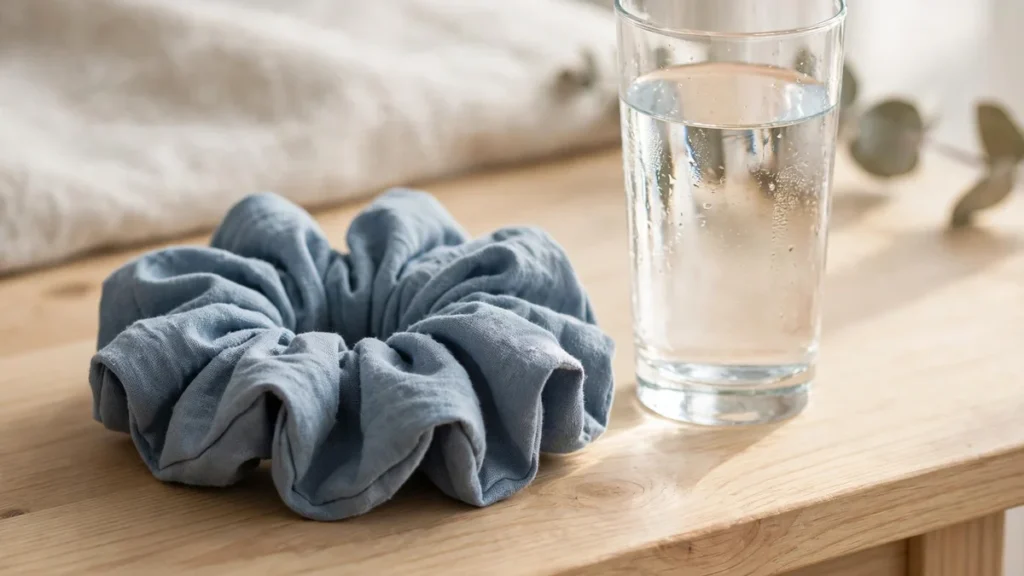
Some mornings ask for very little. The hair is washed yet restless, the morning is already crowded with jobs, and a slow mirror session is out of the question this morning. A ponytail answers that morning in a minute: gather the hair, tie it once, and the day feels tidier.
Water is what makes a ponytail look fresh instead of rushed. A light mist softens the strands just enough to smooth them, and the tie holds them where you want them. No heat, no heavy product, no special skill — only water, a soft tie and a gentle hand.
This guide walks through water and ponytails step by step: what a ponytail is, why water helps it sit neatly, how to tie a high, low and sleek ponytail, and how to keep the look fresh through the day. This is simple everyday guidance, not a treatment or cure. If your hair or scalp troubles you, see a doctor.
Key Takeaways
- A ponytail gathers the hair and ties it so it hangs free.
- A light mist of water softens the hair enough to smooth it.
- High, low and sleek ponytails suit different days.
- Tie loosely, never pull hard, and let it down at night.
- Patch-test new products first, and see a doctor for scalp worries.
What a Ponytail Is
A ponytail is the simplest tied-up look there is. All the hair is gathered, pulled back from the face, and held with a band so it hangs free behind the head, like the tail of a pony. It needs no pins, no coiling and no folding: one band does the whole job.
The look suits almost every length past the shoulders. Short hair makes a small ponytail, long hair a fuller one, and thick hair a heavier one. Whatever the length, the idea stays the same: the hair is up and the face is clear.
Why Water Suits a Ponytail
Water suits a ponytail because damp hair behaves better. Dry hair has a mind of its own: it sticks out at the sides, slips from the band, and shows every bend from the night before. A light mist softens each strand just enough to lie flat, so the brush can guide it into place without pulling.
Water also keeps the look honest. Heavy gels and sprays can leave the hair stiff and shiny, while water dries away and leaves nothing behind. The ponytail looks fresh because the hair itself is smooth, not because it is coated.
What You Need for a Fresh Ponytail
A fresh ponytail needs very little, and most of it is already in your bathroom. A small spray bottle of plain fresh water is the main tool, and a soft fabric hair tie is the second. Add a wide-tooth comb, a soft brush for longer hair, and a clean towel for drips.
Keep the spray light and the tie soft. A hard elastic can snag and snap strands, and a soaking wet head takes too long to dry. Water hair spray for simple styling uses the same plain-water idea, and it is the gentlest way to wake hair up.

A Simple Fresh Look Step by Step
Start with clean, mostly dry hair. Mist it lightly, two or three sprays over the top and sides, then wait a minute while the water settles in. Brush gently from the ends upward, so knots come out without pulling at the roots.
Gather the hair and lift it to where you want the ponytail to sit. Smooth the sides with your palms, wrap the tie around twice, and check the mirror. If strands stick out, mist them again and smooth them down with a damp hand.
Water-Damp Styling
Water-damp styling is the quiet skill behind a good ponytail. The hair should feel cool and slightly damp, never wet enough to drip. If the mist is too heavy, pat the hair with a soft towel and wait before tying it, since wet hair stretches more and snaps more easily.
Damp styling also helps the ponytail last. Hair that dries inside the tie holds its shape for hours, while hair tied dry often slips loose by lunchtime. Let the ponytail dry in place, and it will keep its shape until you take it down.
Ponytails at a Glance
| High, low, sleek | Mist, tie, smooth | Loose band only |
|---|---|---|
| Light water mist | Soft tie, wide comb | Never pull hard |
| Damp, not dripping | Mirror check, adjust | Let down at night |
| Fresh, simple look | Bright day, busy hours | Patch-test new products |

High, Low and Sleek Ponytails
A high ponytail sits at the crown, lifted and lively, and it suits busy days when you want the hair out of the way. Gather the hair high, smooth the sides upward, and tie it firmly but gently. It swings as you walk and keeps the neck cool.
A low ponytail sits at the nape of the neck, quiet and neat, and it suits calmer days and softer clothes. Gather the hair low, smooth it downward, and tie it loosely so it rests against the neck. A sleek ponytail is any height, brushed until it shines, with no loose strands and no bumps.
Ponytails and Curly Hair
Curly hair and its simple care guide teaches a wash routine for loops and spirals, and a ponytail works well on curls too, with a few changes. Mist the curls lightly, gather them loosely, and use a soft fabric tie so the curls are not crushed.
Let a few curls fall free around the face, and do not brush the curls smooth: a wide-tooth comb or your fingers are enough. The ponytail will be fuller and softer than a straight-hair one, and the curls will keep their shape if the tie stays loose.
Ponytails and Wavy Hair
Wavy hair and its simple care guide teaches a wash routine for soft S-shaped bends, and a ponytail suits waves just as kindly. Mist the waves, gather them at the height you like, and smooth only the top layer, so the bends below keep their shape.
Wavy hair makes a ponytail with gentle movement, neither as straight as a sleek one nor as full as a curly one. If the waves look flat after tying, mist the tail lightly and scrunch it once, then leave it to dry.
Ponytails and Buns
A bun is the closest cousin to a ponytail, and the two are easy to confuse, but they are different tied-up looks. A ponytail gathers the hair and lets it hang free, swinging as you walk. A bun coils the hair up and pins it, so nothing hangs down at all.
Buns are a Batch 81 sibling topic, queued as a later article and not live yet. Haircuts are another queued sibling: a cut changes the hair itself, while a ponytail only gathers it for the day. Blow dries are queued too, and they use warm air to shape the hair, while a ponytail needs only water and a tie. Choose the ponytail when you want the hair up and free, and the bun when you want it up and tucked away.

Ponytails Through the Day
A ponytail earns its keep by lasting through the day. In the morning it is fresh and smooth, by midday it may loosen, and by evening it can be retied in seconds. Carry a spare tie, and a quick mist is enough to smooth the sides again.
Headscarves are another queued Batch 81 sibling, and they pair well with a ponytail on a windy day: tie the ponytail first, then wrap the scarf over the hair and let the tail hang free below it. Take the ponytail down at night, brush gently, and let the hair rest loose.
Looking After Your Ponytail
A ponytail is kind to hair when it is tied kindly. Use a soft fabric tie, wrap it only twice, and never pull the hair tight enough to hurt. A tight tie can snap strands and tug at the scalp, and a ponytail worn daily in the same spot can wear the hair thin there, so move the height around through the week.
Wash the tie now and then, and replace it when the fabric frays. If your scalp feels sore, or the hair feels thinner where the tie sits, let the hair down for a few days and see a doctor if it does not settle.
Your Fresh Look Checklist
- Mist the hair lightly with plain water before tying it.
- Gather the hair gently and tie it loosely with a soft band.
- Smooth the sides with damp palms and check the mirror once.
- Carry a spare tie and mist the sides again at midday.
- Let the hair down at night and brush it gently before bed.
- If your scalp stays sore, see a doctor; this is care, not a cure.

Frequently Asked Questions
What is a ponytail?
A ponytail is a tied-up look where all the hair is gathered and held with a band so it hangs free behind the head. It needs no pins or coiling, and it suits almost every length past the shoulders.
Why use water for a ponytail?
A light mist of plain water softens the hair just enough to smooth it, so the brush can guide it into place without pulling. Water dries away and leaves nothing behind, so the ponytail looks fresh.
How is a ponytail different from a bun?
A ponytail gathers the hair and lets it hang free behind the head, swinging as you walk. A bun coils the hair up and pins it, so nothing hangs down at all.
Is a high ponytail better than a low one?
Neither is better; they suit different days. A high ponytail is lively and keeps the neck cool on busy days, while a low ponytail is quiet and neat for calmer days and softer clothes.
Can a ponytail damage my hair?
A loose ponytail with a soft tie is gentle, but a tight tie can snap strands and tug at the scalp. Tie loosely, move the height around, and let the hair down at night.
How do I keep a ponytail fresh all day?
Mist the sides lightly at midday and smooth them with damp palms, carry a spare tie, and retie once if it loosens. Let the hair dry inside the tie in the morning so it holds its shape.
The Bottom Line
Water and ponytails make a simple fresh look: a light mist, a soft tie, and hair that hangs free and tidy through the day.
A Note for Fresh Days
Keep it light, keep it loose, and let the water do the work. One ponytail, one soft tie, and a fresh day.