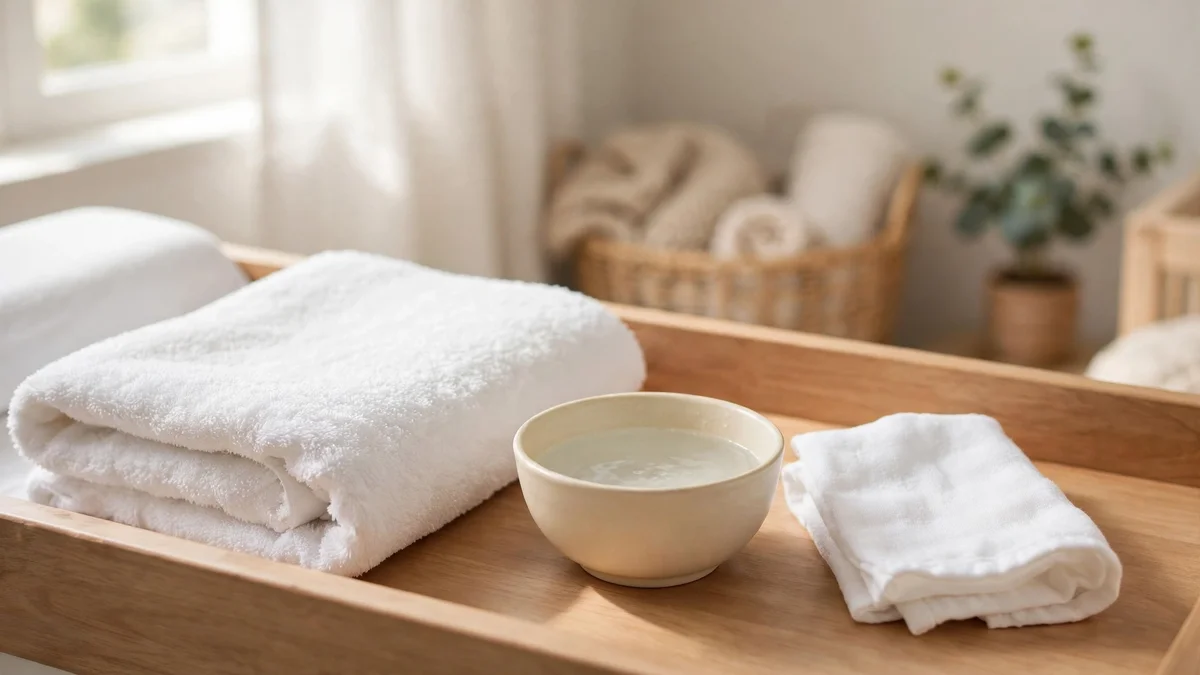
A baby's skin is the softest thing most of us will ever touch. It is thin, smooth and new, and it asks for very little: warm water, a soft cloth, a calm hand and time. New parents often worry they are doing too little, or doing it wrong, and the honest answer is that gentle and simple is usually right.
Water is the kindest place to start. Plain lukewarm water cleans a baby's skin without stripping it, and a short warm bath can settle a fussy evening better than any gadget. This guide walks through water and baby skin in plain words: first baths, face and hands, the nappy area, choosing products, patch-testing and the signs that mean a doctor should be asked.
Everything here is gentle general information only, never medical advice. A baby's skin problem that lasts, spreads or worries you belongs with a doctor, not with a new product.
Key Takeaways
- Baby skin is thinner and softer than adult skin, so it needs lukewarm water and a light touch.
- Short, warm baths with plain water and a mild wash are enough for most days.
- Always test the water on your wrist first, and never leave a baby alone near water.
- Patch-test every new product on a small spot and wait a full day.
- This is gentle general information only; lasting problems belong with a doctor.
What Baby Skin Is Like
A baby's skin is thinner than an adult's, and it loses water more easily. That is why it can look dry one day and flushed the next, and why it reacts quickly to hot water, strong soap and rough towels.
Newborn skin often peels a little in the first weeks, and small spots come and go as the skin settles into the world outside the womb. What it needs is patience, plain water and a hand that does not hurry.
Why Lukewarm Water Comes First
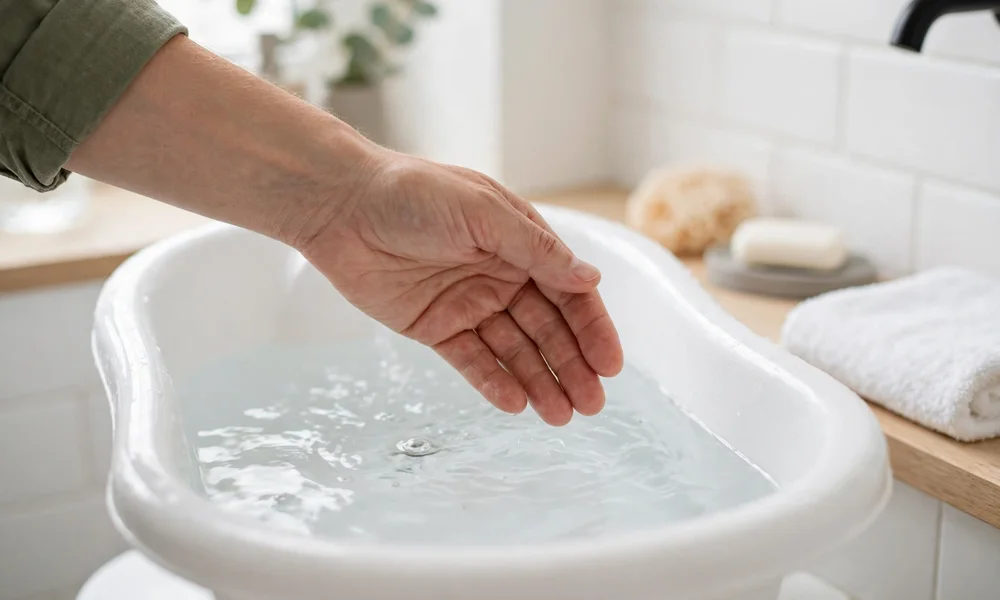
Lukewarm water is the safest water for a baby because it cleans without hurting. Hot water strips the skin's natural oils in minutes and leaves it dry and sore, while cold water makes a baby shiver and cry. Test it on the inside of your wrist: it should feel pleasantly warm there, neither hot nor chilly.
Run the water, stir it with your hand so there are no hot pockets, and press the inside of your wrist into it. If it feels warm and kind, it is ready. If it feels hot at all, add cool water and test again.
The First Bath, Step by Step
A first bath is simpler than it looks, and it helps to have everything ready before the baby is undressed. Have a soft towel, a clean nappy and clothes ready first. Fill the baby bath shallow, only a few inches deep, and check the water on your wrist.
Hold the baby firmly with one arm under the head and shoulders, and lower them into the water feet first, talking softly all the while. Wash with your free hand, starting at the face with plain water, then the body, using a mild wash only where the skin is truly dirty. Lift the baby out after a few minutes, wrap them in the towel, and pat dry.
Washing a Baby's Face and Hands
A baby's face needs only plain water most days. Dampen a soft cotton cloth with lukewarm water, wipe gently around the eyes from the inner corner outwards, then across the cheeks and chin.
Little hands pick up everything, so they need washing more often than the rest of the body. Wipe the palms and between the fingers with a damp cloth after feeding and after play, then pat dry. If the hands feel dry afterwards, a tiny amount of plain cream on skin that is still slightly damp is enough.
The Nappy Area, Gently
The nappy area is the part of a baby's skin that works hardest, so it deserves the gentlest care. At each change, wipe the area with a soft cloth dampened in lukewarm water, front to back, and pat dry before putting on a fresh nappy. Plain water is enough for most changes.
If the area looks red, change nappies more often, keep the skin clean and dry, and use a plain barrier cream sparingly. If the redness spreads, blisters or does not settle in a few days, ask a doctor rather than trying a new product.
Water and Baby Skin at a Glance
| Lukewarm water | Short bath | Pat dry |
|---|---|---|
| Wrist test first | Five minutes, calm | Soft towel only |
| Mild wash, little | Rinse well, plain | Plain cream, damp |
| Never hot, never cold | Keep room warm | Doctor for worries |
Choosing Products for a Baby
A baby needs very few products, and the fewer the better. Choose a mild, fragrance-free wash made for babies, a plain cream with no strong scent, and soft cotton cloths and towels.
Avoid adult products entirely, including scented soaps, bubble baths and anything with harsh cleansers. A baby's skin does not need foam, glitter or scent, and those extras are the things most likely to irritate it. Keep the shelf simple, and replace a product that seems to bother the skin rather than adding another one on top of it.
Patch-Testing a New Product
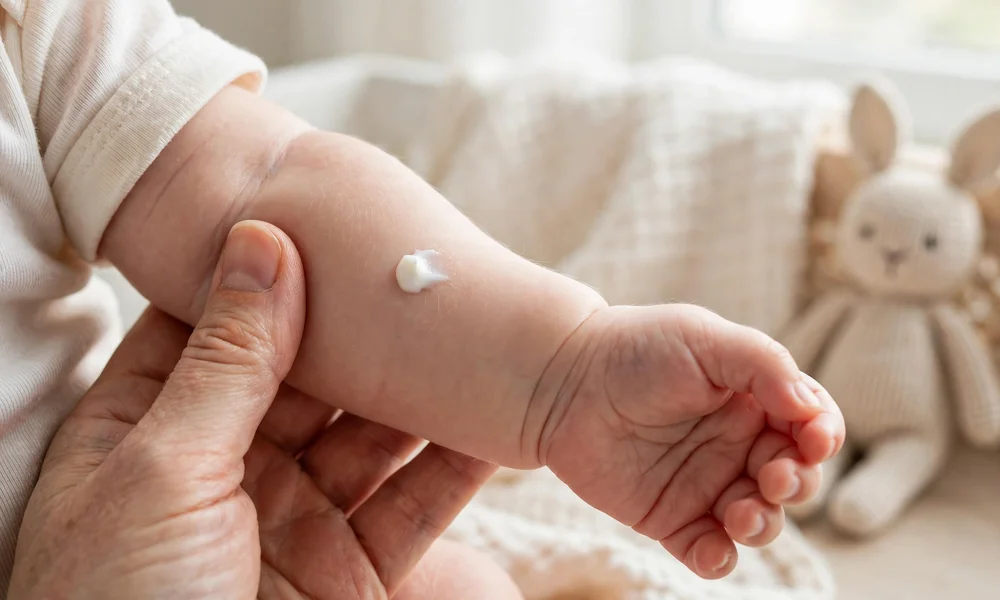
Every new product should be patch-tested before it is used all over a baby's skin. Put a tiny amount on a small spot, such as the inside of the forearm, once a day for a day or two, and watch the spot closely. If the skin stays calm, the product is probably fine to use more widely.
If the spot turns red, raised or itchy, stop using the product at once and wash the spot gently with plain water. Where a gentle routine for reactive adult skin is described in water sensitive skin, the same careful idea applies here: one change at a time, and time to watch what happens.
Drying and Dressing After Water
Drying is half of bath time, and gentle drying protects a baby's skin. After a bath or a wash, pat the skin dry with a soft towel, paying care to the folds of the neck, under the arms and between the toes, where water likes to hide. Hard rubbing can leave skin red and sore, while patting leaves it calm.
When the skin feels tight after drying, smooth on a little plain moisturiser while the skin is still a touch damp, morning and night, and keep the product plain and scent-free. The same approach suits dry adult skin, as water and dry skin explains.
A Gentle Daily Rhythm
A gentle daily rhythm ties the care together without turning the day into a schedule. Morning: wipe the face and hands with a damp cloth, and change the nappy with plain water. Midday: another nappy change, and a wipe of the hands after feeding. Evening: a short warm bath, pat dry, plain cream if needed, and a fresh nappy before sleep.
Keep the rhythm easy and forgiving. If a bath is missed one night, a quick wash with a warm cloth will do. If the baby is tired, make the routine shorter instead of dropping the quiet time. A flexible pattern that bends a little is one a family can hold onto for months. As the baby grows, water and children carries the same gentle ideas forward for little hands.
When to Ask a Doctor
Most baby skin troubles are small and pass quickly, but some signs mean a doctor should be asked. A rash that spreads fast, skin that blisters or weeps, swelling, or a baby who seems in pain need prompt attention. So does any skin problem that does not settle after a few days of gentle care.
A fever with a new rash, or a baby who is feeding poorly and seems unwell, is also a reason to call a doctor the same day. Do not wait and do not try stronger products while you wait. Write down what you have used and when the problem started, so the doctor has a clear picture.

Your Gentle Baby Skin Checklist
- Test bath water on your wrist first: lukewarm, never hot.
- Never leave a baby alone near water, not even for a moment.
- Keep baths short, warm and calm, five to ten minutes at most.
- Wash the face with plain water and a soft cloth, front to back.
- Pat the skin dry, never rub, and cream plainly on damp skin.
- Patch-test every new product, and ask a doctor about lasting problems.

Frequently Asked Questions
How often should I bathe my baby?
Two or three short baths a week are enough for most babies, with a daily wipe of the face, hands and nappy area in between. A short warm bath of five to ten minutes is plenty each time.
How warm should bath water be for a baby?
Lukewarm. Test it on the inside of your wrist before the baby goes in: it should feel pleasantly warm, not hot, and not so cool that the baby shivers.
Can I use soap on my baby's skin?
Plain water is enough for most washes. A mild, fragrance-free baby wash used sparingly, only where the skin is truly dirty, is fine. Never use adult soaps or scented bubble baths.
How do I patch-test a new baby product?
Put a tiny amount on the inside of the forearm once a day for a day or two and watch the spot. If it turns red, raised or itchy, stop using the product and wash the spot with plain water.
What should I do about a red nappy area?
Change nappies more often, clean gently with plain water, pat dry, and let the skin breathe when you can. If the redness spreads or does not settle in a few days, ask a doctor.
When should I ask a doctor about my baby's skin?
Ask promptly if a rash spreads fast, blisters or weeps, if the baby seems in pain, or if any skin problem does not settle after a few days of gentle care.
The Bottom Line
Water and baby skin belong together gently: lukewarm water, a soft cloth, short baths and a plain cream on damp skin. Keep the routine simple, patch-test every new product, and let a doctor handle anything that lasts.
A Note for New Parents
Keep it warm, keep it short, keep it simple. A baby's skin asks for very little, and a calm hand with plain water is already doing it well.