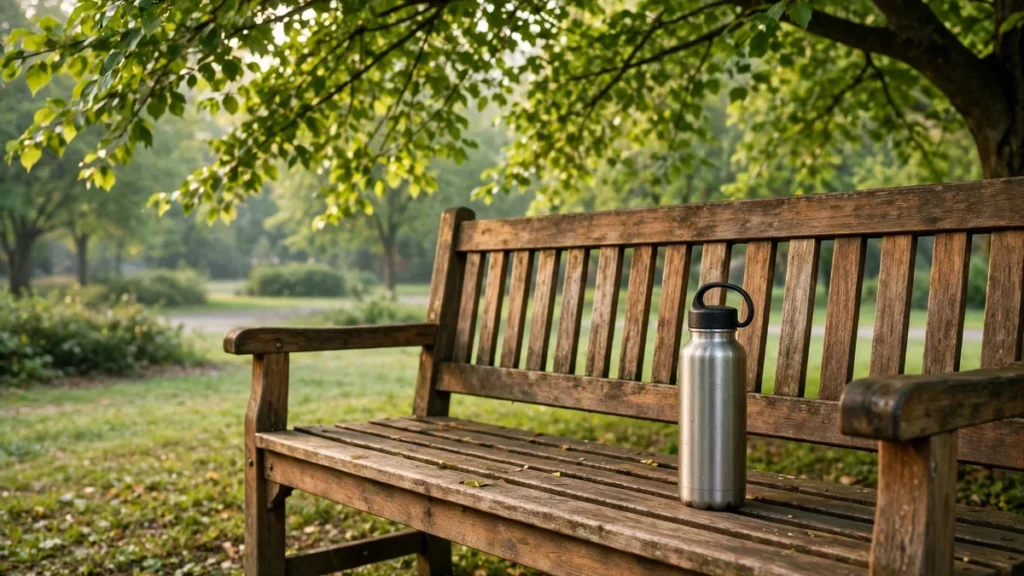
Mid-morning arrives, and the work has been going for two hours. The eyes feel dry, the shoulders feel tight, and the next task looks longer than at nine. It is not hunger, exactly, only the body asking for a pause, for something small and fresh before the day carries on.
Water and a snack break answer that ask: a tall glass of water, a few slices of apple, a small handful of nuts, and ten quiet minutes at the kitchen counter. Nothing is cooked, nothing is measured, and the break is small on purpose.
This guide sets out the whole ritual: what a snack break is, why a short pause helps, what to put on the plate, how water fits in first, and how to tidy up and return to work feeling fresh. It is general information only, a gentle habit for ordinary days, never a replacement for a doctor.
Key Takeaways
- A snack break is a short pause between meals, with one small snack and a glass of water.
- Water comes first, drunk slowly, and the snack follows in small bites.
- The snack stays small: fruit, nuts, yoghurt, or crackers, never a full plate.
- Ten quiet minutes are enough, away from screens and the desk.
- General information only; lasting worries about appetite or energy belong with a doctor.
What a Snack Break Is
A snack break is a pause with a purpose: rest, not food. You step away from the desk, fill a glass with fresh water, and take a small plate to the kitchen counter, with one small snack on it: a sliced apple, a pot of plain yoghurt, or a handful of almonds. Drink the water first, eat the snack slowly, and go back to work.
The break is short by design: ten minutes is the whole of it, from the first sip to the last bite. It is not a meal, and it is not a feast, only a gap in the day, filled with water, a little food, and quiet.
A snack break fits anywhere the hours start to drag, most often mid-morning, between breakfast and lunch, or mid-afternoon, when the light turns and the day feels long.
Why a Short Pause Helps
A short pause helps because the body and the mind tire in the same way: after two hours at a screen, the eyes want distance, the shoulders want a stretch, and the stomach wants a little something, and a snack break gives all three at once.
Water is the first half of the pause: a glass of fresh water, drunk in slow sips, wakes the mouth and steadies the hands, and the snack is the second half, a few bites of something plain and fresh, eaten slowly.
Picking a Simple Snack
Pick a snack you can hold in one hand and finish in minutes. A sliced apple is the classic choice, fresh, crisp, and easy to eat at the counter, and a small pot of plain yoghurt works just as well, with a spoon and nothing added. A handful of almonds or mixed nuts suits a desk drawer, kept in a small jar and counted out by the handful.
Cucumber slices suit a warm afternoon, and plain crackers with a little cheese suit a cold one. What matters is that the snack is small, plain, and ready in a moment, and if it needs cooking, it is not a snack break snack.
Wash fruit well, and wash your hands before you eat. If you have never tried a food before, taste a small amount first, and skip nuts entirely if nuts have ever troubled you.
Water First, Then the Snack
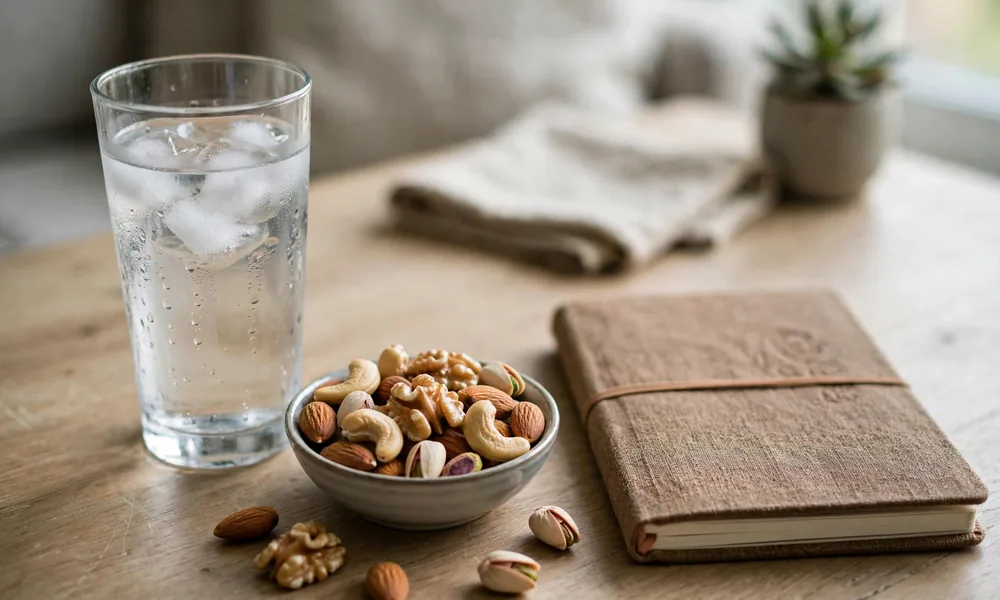
Water comes first in a snack break, and the order matters: fill a clean glass with fresh drinking water and drink half of it in slow sips before you touch the food.
Then eat the snack in small bites, one at a time, with the glass beside the plate, sipping between bites rather than gulping at the end. When the snack is finished, drink the rest of the water slowly.
A Snack Break at a Glance
| Water first | Small snack | Ten quiet minutes |
|---|---|---|
| Apple, nuts | One glass | Counter or desk |
| Yoghurt, fruit | Slow small sips | No screens nearby |
| Crackers, cheese | Wash hands first | Tidy up after |

A Snack Break and Breakfast
Water and breakfast for a fresh start is the morning meal that opens the day: a glass of water first, then yoghurt, toast, egg, or fresh fruit at a tidy table, eaten without rushing, a full plate and a proper start before the day begins.
A snack break is smaller and later, coming mid-morning, after the work has started, with only one small snack rather than a whole meal. Where breakfast opens the day at the table, a snack break pauses the day at the counter, and the two never take each other's place.
A Snack Break and Lunch Breaks
Water and lunch breaks for fresh workdays belong to the middle of a workday: a packed lunch eaten slowly away from the screen, a full glass of water before it, and a short walk after to freshen the afternoon, with a bottle kept close all morning.
A snack break is shorter and lighter, with no packed lunch, no walk, and no full plate, only ten minutes, a glass of water, and a few nuts or apple slices. Where a lunch break feeds the afternoon, a snack break simply rests the morning, and then the work carries on.
A Snack Break and a Tea Ceremony
Water and a tea ceremony for a calm hour is a slow ritual of about half an hour: a small teapot, two tiny cups, and a bowl of clear water on a wooden tray, each step following the last in a deliberate order, asking for time, quiet, and care.
A snack break asks for none of that: no teapot, no tiny cups, no set order, only a glass, a plate, and ten minutes at the counter. Where a tea ceremony shapes a whole calm hour, a snack break fits into a busy one, and the two suit different days entirely.
A Snack Break and Cooking
Water in cooking means a pot on a low flame, vegetables simmering into a clear broth, and jars cooled and stored in the fridge. Cooking takes forty-five minutes, a chopping board, and a plan for the week, and it fills the house with a warm smell.
A snack break needs no pot and no flame: the apple is sliced, the nuts counted out, and the water poured, all in a minute. Where cooking builds a meal for later, a snack break eats a little now, and the kitchen stays cool and quiet.

Setting Up the Break
Setting up a snack break takes a minute, and the same spot each day makes it easier. Pick a place away from the desk, the kitchen counter, a table by the window, or a chair on the balcony, put the glass and the plate there, and leave the phone on the desk.
Stand the glass on one side and the plate on the other, and keep a small cloth nearby for the apple juice.
Keeping the Break Short
A snack break stays useful only while it stays short: ten minutes is the measure, long enough to drink the water and eat the snack slowly, short enough that the work is still waiting when you return.
Eat slowly, one bite at a time, and put the fork or the apple down between bites. Look out of the window rather than at a screen, and let the eyes rest on something far away.
After the Break: Tidy Up
After the break, tidy up at once: wash the glass and the plate, wipe the counter clean, and put the nut jar back on the shelf. A clean counter is the sign that the break is finished, and the kitchen is ready for the next one.
Walk back to the desk with the phone in your pocket: the water is drunk, the snack is eaten, and a tidy ending makes the next break easier to take.

Your Snack Break Checklist
- Fill a clean glass with fresh water before the snack.
- Drink half the water slowly, in small sips.
- Eat one small snack, fruit or nuts or yoghurt, bite by bite.
- Keep the break to ten minutes, away from screens.
- Wash the glass and plate, and wipe the counter.
- For lasting worries about appetite or energy, see a doctor.
Frequently Asked Questions
What is a snack break?
A snack break is a short ten-minute pause between meals, with a glass of fresh water and one small snack, a rest for the eyes and the mind, not a meal.
When is the best time for a snack break?
Mid-morning is the usual time, between breakfast and lunch, when the first stretch of work is done, and mid-afternoon works too, when the light turns and the day feels long.
What should I eat in a snack break?
Keep it small and plain: a sliced apple, a pot of plain yoghurt, a handful of nuts, cucumber slices, or plain crackers, washing fruit well and skipping any food that has ever troubled you.
Should I drink water before the snack?
Yes, drink half the glass slowly before you eat, since the water wakes you up first and the snack tastes better after it. Sip the rest of the water between bites, and finish it slowly.
How is a snack break different from lunch?
Lunch is a full meal, eaten slowly away from the screen, often with a walk after, while a snack break is ten minutes with one small snack and a glass of water, and it never takes the place of a proper lunch.
Will a snack break fix tiredness?
No. A snack break is a gentle pause, general information only, and it will not cure tiredness or fix a lasting problem, so if tiredness or appetite worries keep returning, please see a doctor.
The Bottom Line
Water and a snack break make a simple fresh ritual: a glass of water first, one small snack, ten quiet minutes, and a tidy counter when it ends.
A Note for Fresh Breaks
Short pauses, plain water, a little fruit: that is all a fresh break needs.