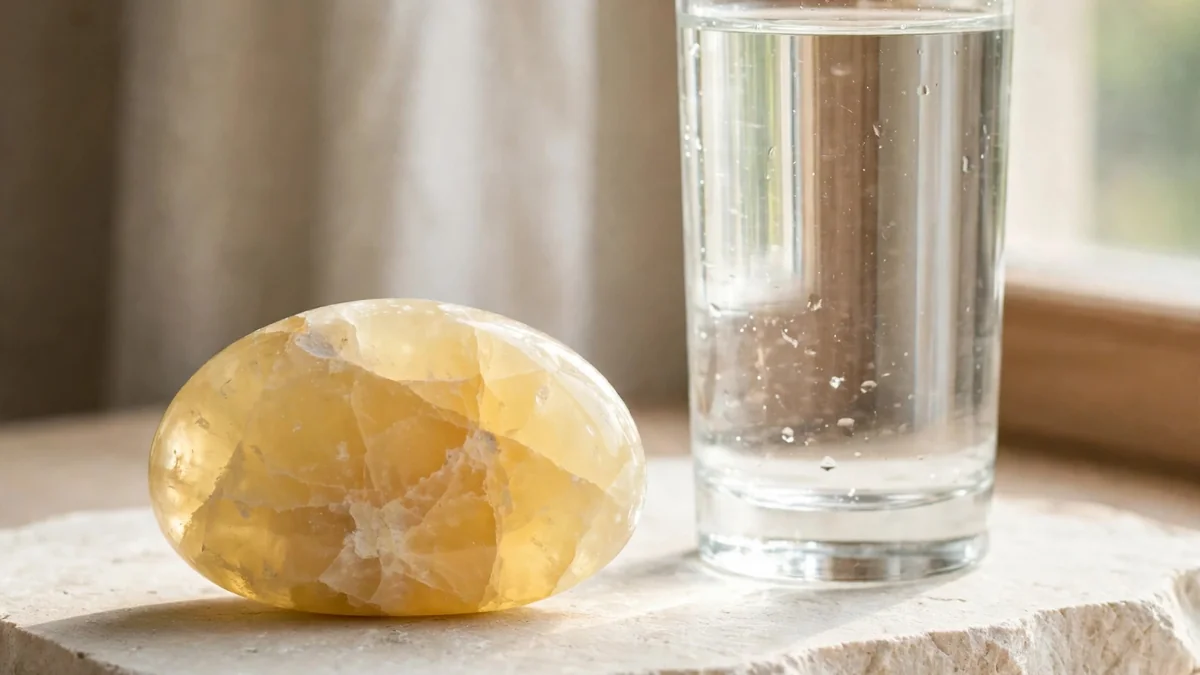
Bright days have a particular kind of light. It comes through the window before breakfast, turns the kitchen table pale gold, and makes the whole house feel awake. On such a morning, a soft yellow stone seems to belong to the light itself.
Cancrinite is that kind of stone. It is a pale lemon-yellow mineral with a waxy glow, quieter than a faceted gem and softer in colour than most yellow stones. Collectors know it as a feldspathoid, a mineral that grows in the same rocks as sodalite, and it carries its sunshine gently.
This guide looks at cancrinite up close: what the mineral is, how its soft yellow differs from the sharper yellows of other stones, how to pick a piece worth keeping, and how to set it on a tray beside a glass of water while the stone stays completely dry. It is a beautiful object, and nothing more than that.
Key Takeaways
- Cancrinite is a soft lemon-yellow feldspathoid mineral with a waxy, gentle glow.
- Its pale yellow suits bright days, open windows, and morning light.
- It is an ornament for display and handling only, and it heals nothing at all.
- The glass holds the water; the stone stays apart, dry always.
- One small piece is enough for a whole bright day.
What Cancrinite Is
Cancrinite is a mineral from the feldspathoid family, a group of stones that form in rocks rich in soda and low in silica, alongside minerals such as sodalite and nepheline. It was named for Count Georg von Cancrin, a Russian minister of finance in the eighteen hundreds, and the finest pieces still come from the Kola Peninsula in Russia.
The yellow kind is a pale lemon colour, sometimes warming toward honey at its centre, with a soft waxy shine rather than a glassy sparkle. A polished piece feels smooth and cool in the hand.
Cancrinite is a soft stone, scoring about five to six on the Mohs scale, so it scratches more easily than quartz and far more easily than sapphire. It is a collector's stone, held with care.
Why Soft Yellow Suits Bright Days
Soft yellow is the colour of the sun when it is still low, before the heat of midday. On a bright day, the light is generous and warm, and a pale yellow stone joins it instead of competing with it. A deep blue stone would look almost black against the glare, and a white stone would wash out, but soft yellow holds its own in a sunlit room.
There is also a gentleness to pale yellow that bright gold lacks. A cancrinite piece on a pale slab catches the morning light and gives a little of it back. It suits days when the plan is simple: a slow breakfast, a book, a walk before lunch.
Picking a Cancrinite Piece
Choose cancrinite in plain daylight, away from the bright lamps of a shop counter, because shop lights can make a pale stone look far stronger than it is. The yellow should look even across the piece, lemon-soft rather than patchy, with no painted-looking streaks and no chalky crust on the surface. Turn it over and run a finger along the rim; the whole edge should feel even, with no sharp nick or rough patch.
A walnut-sized piece sits easily in a closed hand, wipes clean in seconds, and moves between shelf and tray without fuss. Ask the seller where it was found, and walk away from any stone sold with a promise that it will make you well.

A Bright Day with Cancrinite
A bright day with cancrinite asks for nothing formal. Spread a pale yellow cloth over the side table, place the stone toward one end, and put a tall glass of water toward the other, with a stretch of dry cloth in the middle. Sip the water slowly as the stone takes the window light.
Pick the stone up once, notice how cool and heavy it feels, then return it to its spot. It is a thing to glance at between other small moments, not something that fills the day by itself.
Cancrinite Beside Water
Water in a glass and cancrinite on a tray look calm together, but they must stay separate. Keep the drink near one edge of the cloth and the stone near the other, a band of dry fabric between them, so the water stays clean and the stone stays dry.
Once the stone is set down, wash your hands with soap and water before you pick up the glass. Never drop the stone into a glass, a jug, or a bath.
Cancrinite at a Glance
| Pale lemon yellow | Bright tray, desk | Dry hands only |
|---|---|---|
| Waxy, fairly soft | Slow mornings, sun | Glass kept apart |
| Cool, smooth stone | Soft light, quiet | Not in drinks |
| Small palm piece | Tray plus glass | Wipe dry weekly |

Cancrinite and Yellow Sapphire
Yellow sapphire for bright days is the nearest bright yellow stone to this one, and the contrast between them is the heart of this guide. Yellow sapphire is a corundum, hard as a gem can be, scoring nine on the Mohs scale, with a warm golden glow and a sparkle that throws light back across the room. Cancrinite is softer, paler, and quieter, with a waxy glow that holds light rather than throwing it.
Where yellow sapphire catches the eye at once, cancrinite rewards a longer look. The two share a colour family, yet they are different minerals with different natures.
Cancrinite and Yellow Topaz
Yellow topaz for bright days is a clear sparkling yellow stone, the colour of lemon peel held up to the sun, and it is brighter than cancrinite in every way. Topaz is a hard, glassy mineral that takes a sharp polish and flashes in strong light, while cancrinite is soft and waxy, glowing rather than flashing.
The difference is one of mood: yellow topaz is a morning stone, wide awake and full of energy, while cancrinite is a mid-morning stone, calm and unhurried.
Cancrinite and the Other Yellow Stones
The yellow family on this site is a large one, and cancrinite sits at its softest end. Yellow zircon is a warm golden stone with a bright sparkle, named from an old Persian word for gold-coloured, and yellow spinel is a warm yellow gem with a clear, steady glow. Yellow jade is a soft warm yellow for steady days, while yellow fluorite is a pale yellow stone with a glassy surface.
Yellow moonstone carries a warm yellow with a soft shimmer, and yellow agate is a banded yellow stone with quiet patterns running through it. Canary tourmaline for bright days is a vivid yellow-green tourmaline, far brighter than cancrinite, and citrine is the sunny yellow quartz most people picture first, with lemon quartz its paler cousin. Yellow calcite, yellow aventurine, yellow jasper, mimetite, and bumblebee jasper round out the family.
Brazilianite, a fellow soft yellow stone in this same batch of new guides, is the closest in feeling: a yellow-green phosphate from Brazil, glassier than cancrinite and a touch greener in tone. Cancrinite is the lemon-soft feldspathoid, waxy and pale; brazilianite is its greener, glassier neighbour. Neither of them is the cancrinite of this guide, and that is the point: each yellow stone has its own mineral story.

Where Cancrinite Sits at Home
Give cancrinite a spot where the daylight is soft and the room moves slowly. A waist-high shelf, a desk corner, or a tray on a chest of drawers all suit it, if the stone stays in view and out of the way of passing elbows.
Keep the tray well away from taps, kettles, and steamy bathrooms, and up high where small children cannot reach. Choose one settled spot and leave it there; the stone does best when it is not moved about.
Keeping Cancrinite Clean and Dry
Cancrinite is soft, so handle it kindly. Once a week, wipe it with a dry, soft cloth and that is all the care it needs. Keep soap, polish, and sprays in the cupboard; moisture and chemicals only wear the shine away.
When it is not on display, wrap it on its own in a soft cloth pouch, away from keys, coins, and harder gems that might scratch it. Never run it under a tap.
Stones to Keep Far from Water
Certain stones must stay far from water, and some hold things that have no place near anything you drink. Malachite holds copper in its green bands, and copper is not something to swallow. Hematite turns rusty when it stays wet.
Angelite softens and melts away little by little in water, while amber is old tree resin, and soaking makes it cloudy. Apatite sheds flakes in a bath, lepidolite carries lithium in its pale layers, and pyrite breaks down in damp air. Keep all of them far from anything you drink, and give cancrinite the same treatment: beside the glass, never inside it.
Your Bright Days Checklist
- Set the stone on dry cloth, glass close beside it.
- Sip the water slowly, without hurrying.
- Pick the stone up, feel its cool weight, set it down.
- Wash your hands with soap once it is back.
- Buy from a seller who names the stone's origin.
- For any health worry, ask a clinician for guidance.

Frequently Asked Questions
What is cancrinite?
Cancrinite is a feldspathoid mineral, a soft lemon-yellow stone with a waxy glow, named for Count Georg von Cancrin and found in soda-rich rocks alongside sodalite.
How is cancrinite different from yellow sapphire?
Yellow sapphire is a hard corundum, scoring nine on the Mohs scale, with a warm golden sparkle. Cancrinite is far softer and paler, with a waxy glow.
How is cancrinite different from yellow topaz?
Yellow topaz is a clear, glassy, sparkling yellow stone, bright as lemon peel in sunlight. Cancrinite is softer and milkier, glowing gently instead of flashing.
How is cancrinite different from brazilianite?
Brazilianite is a yellow-green phosphate from Brazil, glassier than cancrinite and a touch greener. Cancrinite is a lemon-soft feldspathoid, waxy and pale.
Is cancrinite safe to hold?
A small polished piece is pleasant to hold for a short while. Return it to its tray afterwards when you finish, wash your hands with soap, and always keep it out of children's reach.
Where should I keep cancrinite at home?
Pick a quiet, dry corner: a waist-high shelf, a desk edge, or a tray on top of drawers. Always leave a small clear gap between the stone and its glass.
The Bottom Line
Cancrinite is a quiet companion for bright days: one soft yellow stone in gentle light, with its water in a separate glass, the stone never in it.
A Note for Bright Days
Slow hours, a dry stone, a full glass: that is all a bright day needs.


