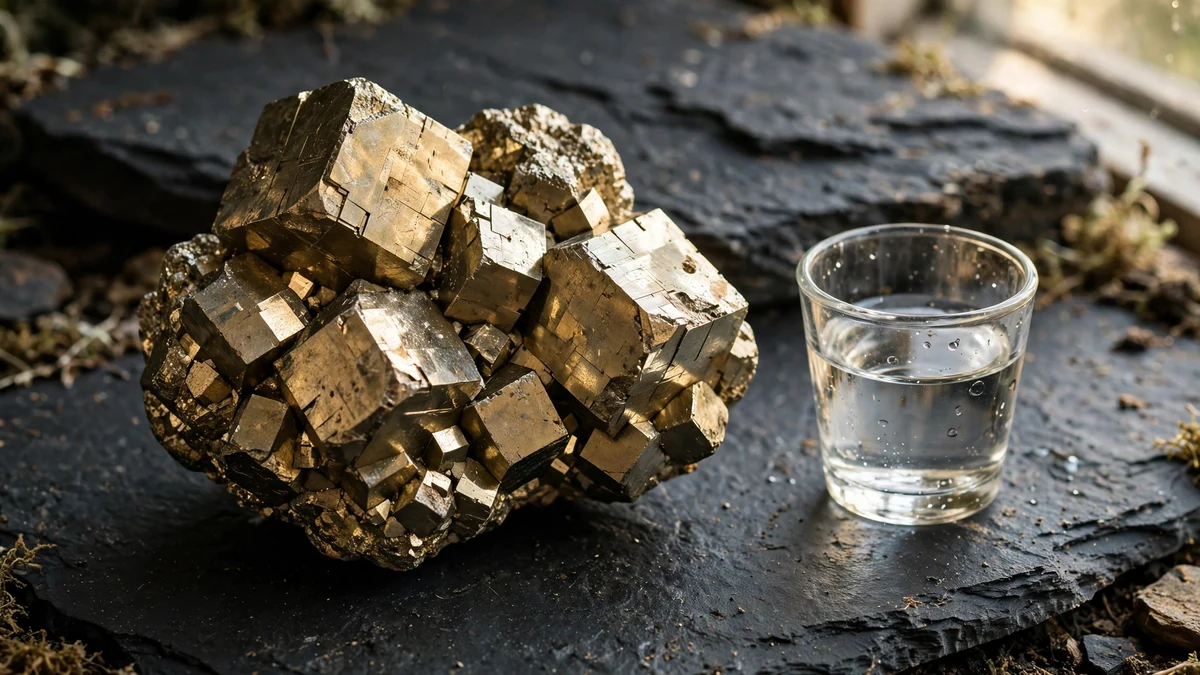
Some stones whisper. Pyrite does not. It catches the light with a warm, brassy gold, like late afternoon sun on a brass lamp, and it asks to be noticed. People have called it fool's gold, but that nickname misses the point. It is beautiful in its own right: bold, warm, and a little dramatic.
Gold jewellery, bronze eyeshadow, and copper blush all sit comfortably together, and pyrite fits that mood perfectly.
This article is a practical guide to pyrite shine: what pyrite is, how to choose and wear it, and how to care for it. One rule comes first. Pyrite must never touch water: it is iron sulfide, it can oxidise and tarnish in water, and it must never go in drinking water or elixirs.
Key Takeaways
- Pyrite is iron sulfide, a natural mineral with a warm, brassy golden shine.
- One pyrite piece is usually enough; bold beauty needs room to be noticed.
- Pair pyrite with warm neutrals, deep green, navy, and cream.
- Pyrite must never touch water: it can oxidise and tarnish, and it must never go in drinking water — wipe it with a dry, soft cloth only.
- Pyrite is a beautiful object, not a treatment, and no stone belongs in drinking water.
What Pyrite Is
Pyrite is a natural mineral made of iron sulfide, and its name comes from the Greek word for fire, because striking it against steel can throw sparks. It grows in cubes, clusters, and brassy golden masses that catch the light from across a room. The colour is a warm, metallic gold, deeper and brassier than the pale yellow of citrine, and the surface has a bright, mirror-like shine when it is polished.
People have admired pyrite for a very long time. It was once used as a mirror, as a fire starter, and as an ornament, and it still turns up in jewellery, carvings, and display pieces today. A raw cluster shows pyrite at its most dramatic, with many small golden faces catching the light at once. A polished cube is quieter and more modern, with clean edges and a smooth, bright surface.
Why Pyrite Suits Bold Beauty
Bold beauty is not about wearing more. It is about wearing one strong thing with confidence and letting the rest of the look stay calm. Pyrite suits that idea perfectly. Its gold is warm and brassy, not pale or glittery, so it reads as rich rather than loud. A single pyrite ring, pendant, or pair of earrings can carry a whole outfit, the way a good gold necklace does.
Warm metal tones flatter many skin tones, because gold brings out warmth in the skin instead of fighting it. Bronze and copper makeup sit happily beside pyrite, and the stone's shine echoes the shimmer in a bronze eyeshadow or a golden highlighter. The effect is a look that feels put together without feeling overdone,.
Choosing a Piece You Will Wear
Choose pyrite in person, in natural light, and ask how it feels to wear. A good piece has a warm, even golden colour and a bright, clean shine. Look for a surface that is smooth and unmarked, with no dull patches, grey crust, or powdery spots. Those marks can be early signs of tarnish.
Raw clusters are beautiful to display, but their edges can be sharp and catch on fabric. Polished cubes, tumbled stones, and set jewellery are better for wearing. If you buy set jewellery, check that the stone sits firmly, with no wobble.
Buy from a seller who answers plain questions about where the stone came from. Take your time, handle a few pieces, and choose the one you keep coming back to.
Wearing Pyrite with Warm Metal Tones
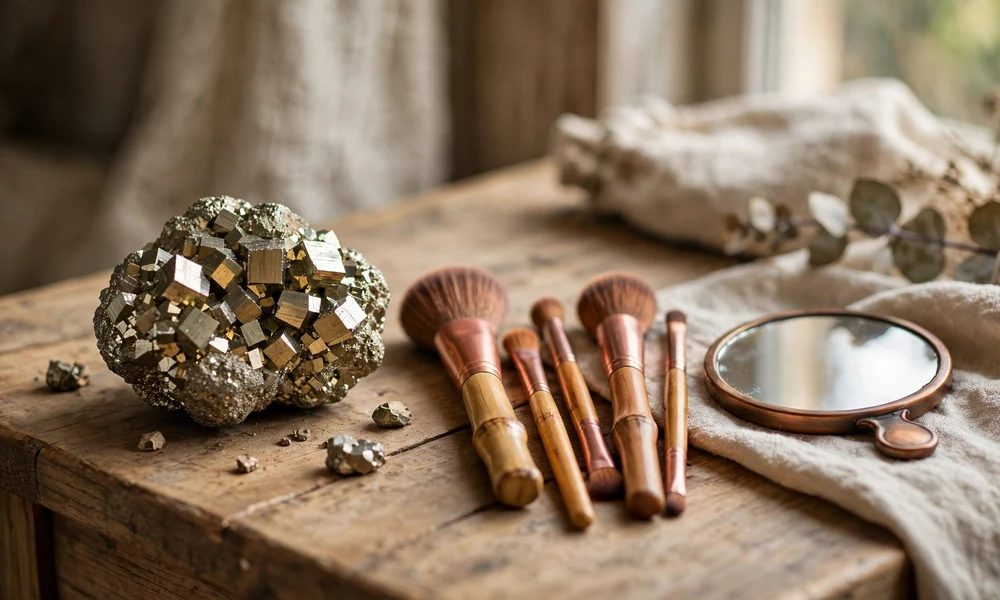
Start with one pyrite piece: a pendant on a fine gold chain, small studs, or a single ring. Add warm gold jewellery in the same tone, and keep silver and cool metals for another day.
Warm bronze and copper eyeshadows are natural partners for pyrite. A soft bronze wash and a warm golden highlighter echo the stone without competing with it.
Clothes matter just as much. Pyrite looks striking against deep green, navy, charcoal, cream, and warm brown. A cream blouse, a deep green dress, or a navy jacket gives the stone a quiet background to shine against. For another golden stone worn for bright days, topaz light and bright beauty for special days shows how a warm golden stone can lift a simple outfit.

Pyrite and Water: The Rule That Matters Most
Pyrite must never touch water. Pyrite is iron sulfide, and when iron sulfide meets water and air, it can oxidise. That means the surface can tarnish, dull, and develop grey, green, or rusty patches that are very hard to remove. The damage is often permanent.
Never rinse pyrite, never soak it, and never wash it under a tap. Never put pyrite in drinking water, and never use it in elixirs or crystal water of any kind. The indirect method, where a stone sits beside a glass of water rather than in it, is the only way pyrite belongs near drinking water at all.
This rule also covers rain, steam, and damp rooms, so do not wear pyrite in the shower, the bath, or the pool. For a fuller guide to which stones can be rinsed and which cannot, how to cleanse crystals with water safely explains the difference clearly.
Caring for Pyrite with a Dry Cloth Only
Caring for pyrite is simple: a dry, soft cloth, and nothing else. Wipe the stone lightly after wearing it, to remove skin oils and dust, and wipe it again before putting it away. A soft cotton cloth or a microfibre cloth works well. Do not use water, soap, or cleaning sprays.
Store pyrite somewhere dry, cool, and dark. A small wooden box lined with soft cloth is ideal, and wrapping each piece separately keeps pieces from scratching each other. A little silica gel in the box helps keep the air inside dry.
Check your pyrite now and then for early signs of tarnish, and move it to a drier place if you see any.

Other Stones That Must Never Touch Water
Pyrite is not the only stone that must stay dry. Malachite must never go in water or drinking water, since it contains copper. Selenite is soft and can dissolve, cloud, or lose its shape in water. Lepidolite contains lithium and must stay dry. Morganite and other beryllium stones must never go in drinking water, since beryllium is toxic. Hematite can rust in water, and it must never go in drinking water either.
The safest habit is simple: never put any stone in drinking water, and never drink water that a stone has touched. The indirect method, a glass of fresh water kept beside a dry stone, gives you the calm ritual without any risk. If you are ever unsure about a stone, keep it dry.
Styling Pyrite Through the Day
The table below shows one simple way to carry pyrite shine through a whole day. The rule never changes: the stone stays dry all day.
| Time of day | Pyrite piece | Styling note |
|---|---|---|
| Morning | Small studs or a thin pendant | Soft bronze makeup, cream or navy clothes |
| Afternoon | A single ring | Keep the look simple |
| Evening | A bold pendant or earrings | Warm bronze eyes, deep green |
| Special day | Pyrite with gold jewellery | Terracotta lips, golden highlighter |
A pyrite piece also makes a lovely object on a dressing table, beside a mirror and a glass of water. Keep the glass beside the stone, never over it.

What Pyrite Will Not Do
It helps to be honest about what pyrite can and cannot do. Pyrite is a beautiful object that can lift a look and warm a palette. It cannot treat, cure, or prevent any health condition, and it cannot change your energy, your luck, or your mood in any medical sense. No stone can.
Enjoy pyrite for what it is: a striking natural mineral with a warm golden shine. Its value is in its beauty and in the pleasure of choosing, wearing, and caring for it well. For ideas on keeping a small collection beautifully and safely, how to store crystals beautifully is a good companion to this guide.
If a seller promises that pyrite, or any stone, will heal you or change your life, take that as a reason to pause, not to buy.
Your Pyrite Shine Checklist
- Choose one pyrite piece with a warm, even gold colour.
- Pair it with warm gold jewellery and bronze makeup; keep the rest calm.
- Never let pyrite touch water: no rinsing, no soaking, no showers, no pools.
- Never put pyrite in drinking water or elixirs; keep the stone beside the glass only.
- Wipe pyrite with a dry, soft cloth after wearing, and store it dry in a lined box.
- Keep malachite, selenite, lepidolite, morganite and hematite dry too.
Frequently Asked Questions
Can pyrite go in water? No, never. Pyrite is iron sulfide, and water and air can make it oxidise, tarnish, and develop dull or rusty patches. Never rinse it, soak it, or wear it in water.
Can I put pyrite in my drinking water? No, never. No stone belongs in drinking water, and pyrite must never go in elixirs or crystal water. Keep a glass of fresh water beside the dry stone instead.
How do I clean pyrite? Wipe it with a dry, soft cloth only, such as cotton or microfibre. Do not use water, soap, cleaning sprays, or polishing liquids, and do not use a rough cloth that could scratch the polished surface.
What other stones must never touch water? Malachite, selenite, and lepidolite must never be soaked or rinsed, and morganite and hematite must never go in drinking water.
Does pyrite tarnish? Yes, it can, especially if it gets wet or lives in damp air. Tarnish shows as dull patches or grey spots. Keep pyrite dry and store it in a dry, lined box.
How should I wear pyrite for a bold look? Choose one piece, such as a pendant, ring, or earrings, and pair it with warm gold jewellery, bronze or copper makeup, and deep green, navy, or cream clothes. Let the stone be the boldest part of the look.
The Bottom Line
Pyrite shine is bold beauty with warm metal tones: one golden stone, warm gold jewellery, bronze makeup, and deep, quiet colours around it. The styling is simple, and the care is simpler still. Keep pyrite dry, wipe it with a dry, soft cloth, and never let it near drinking water.
A Note for Golden Days
Keep it bold, keep it warm, keep it dry. A little golden shine, worn well and cared for gently, is all the drama a day needs.