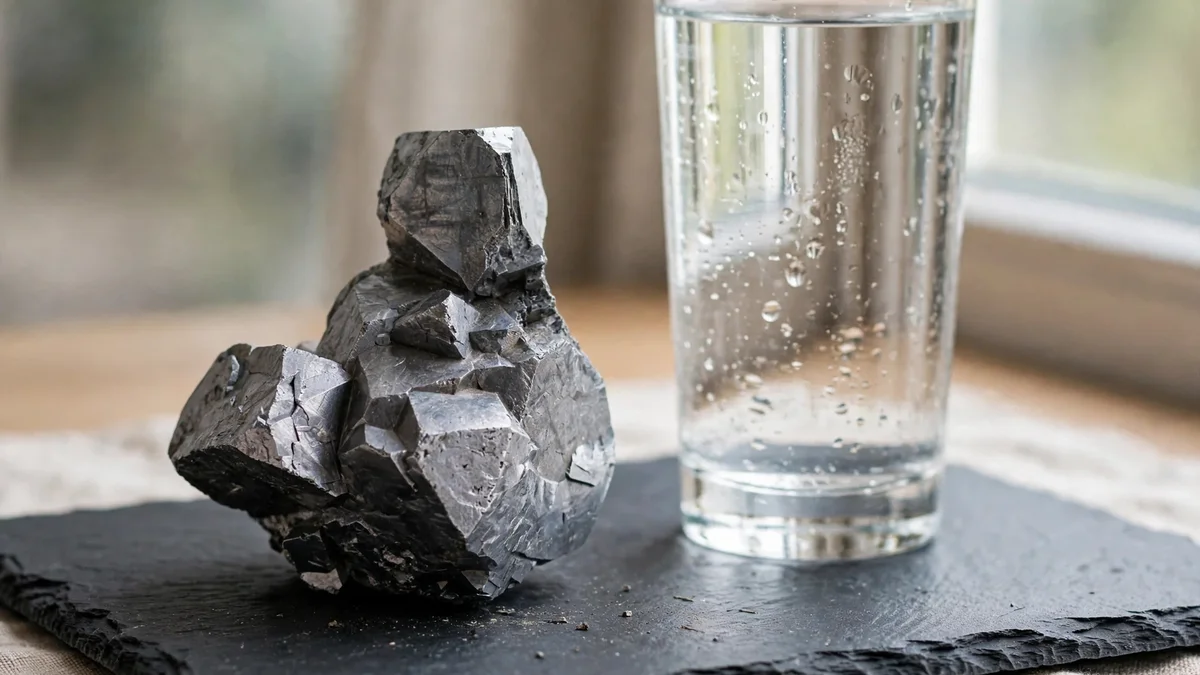
Some stones earn their place with colour. Galena earns it with quiet weight and a cold metallic shine, like a piece of polished pewter that grew itself into neat square steps. It sits there, grey and steady, catching the light one flat face at a time.
A quiet day suits such a stone. When the house is still and the light is soft, a small grey cluster on a dark slate tray can anchor a whole corner. It asks for almost nothing: a dry place, a little space, and one clear rule that is never bent.
That rule comes before anything else. Galena is lead sulfide, a mineral built around lead, which means it is a piece to look at and nothing more. It never goes in water, never sits near food or drink, and hands are washed with soap after it is touched. Children and pets must not be able to reach it.
Key Takeaways
- Galena is a soft grey lead sulfide, grown as bright metallic cubes.
- Its quiet grey suits calm days, soft light and still rooms.
- Lead sits inside galena, so looking is its only job: no water, no food, no drink.
- After a touch, soap and water for the hands; little ones and animals stay well away.
- The stone rests dry beside its glass, never inside it, on a dark slate tray.
What Galena Is
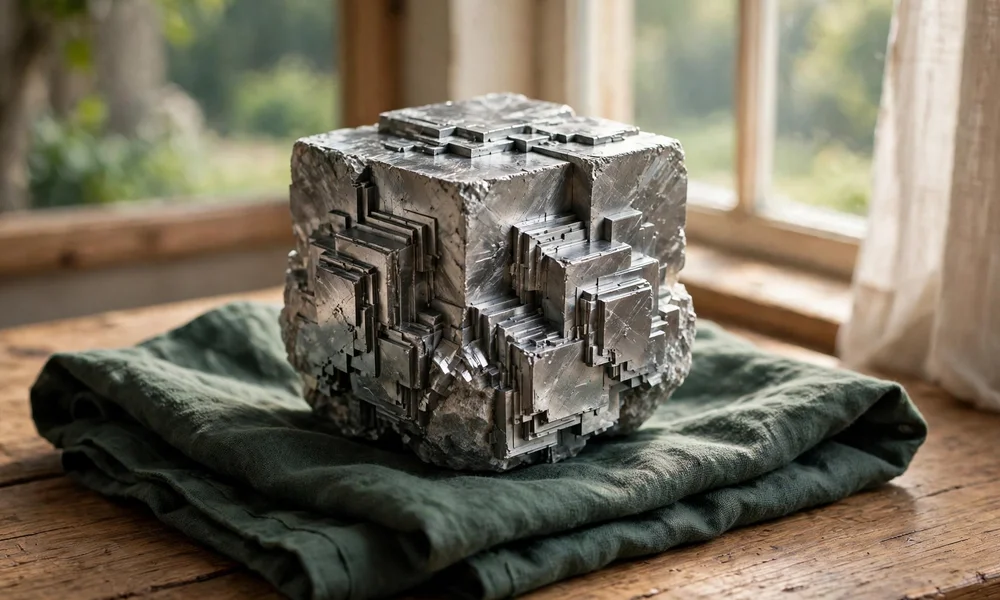
Galena is lead sulfide, a mineral made of lead and sulfur, and it is the ore from which people have smelted lead for thousands of years. Its crystals grow as cubes, often with stepped faces like a tiny staircase, and the surface shines like fresh-cut metal, bright silver-grey where it is new and duller where the air has touched it for a long while.
A piece feels surprisingly heavy in the hand, because lead is dense, and it feels cool even on a warm afternoon. Good specimens come from old mining country in England, Germany and the United States. A modest cluster, about the size of a plum, is enough.
Why Soft Grey Suits Quiet Days
Grey is the colour of a quiet day itself: soft skies, still rooms, stone steps after rain. A grey mineral does not compete with the light; it gathers it slowly and gives it back in small, cool flashes. On a loud bright day a vivid stone can feel like one more voice in the room, but on a quiet day galena simply belongs.
The shine is what saves it from dullness. Each flat cube face catches a different sliver of daylight, so the cluster seems to shift as you walk past, silver, then smoke, then silver again.
Galena and Pyromorphite: Cubes Beside Green Points
Pyromorphite warm green for bright days follows a bright green lead mineral that grows in slim six-sided crystals, packed into clusters the colour of fresh peas and young grass.
Galena could hardly look less like it. Where pyromorphite is green and waxy, galena is grey and metallic; where pyromorphite grows in slim points, galena grows in square cubes with stepped faces. Pyromorphite is a lead phosphate from weathered lead veins, galena a lead sulfide and the ore itself. Both hold lead, so both stay on their trays, clear of drinks, with soap and water for the hands after a touch, yet on the shelf they sit at opposite ends of the spectrum: one fresh green, one quiet grey.
Choosing a Galena Piece
Look at galena in plain daylight, away from shop lamps, because its shine can hide dull patches under warm light. A good piece shows cubes of one even silver-grey, with bright flat faces and crisp edges, and no crumbling grey powder on the surface.
Pick a piece about the size of a plum, and lift it by its base, not by the cubes. Ask the seller where the piece was found, and buy only where the seller says plainly, without being pressed, that the stone contains lead. Leave behind any seller who promises the stone can change your health.
A Quiet Morning with Galena
Begin the morning by giving the stone its place. Lay a folded dark green cloth over the side table, set the galena where its brightest cube face turns toward the window, and stand a tall glass of water at the opposite end.
Sip the water slowly while the grey cubes catch the soft light. Lift the stone once, feel its chill and its weight, set it back down, and wash your hands with soap before you touch food or your face.
Galena Beside Water
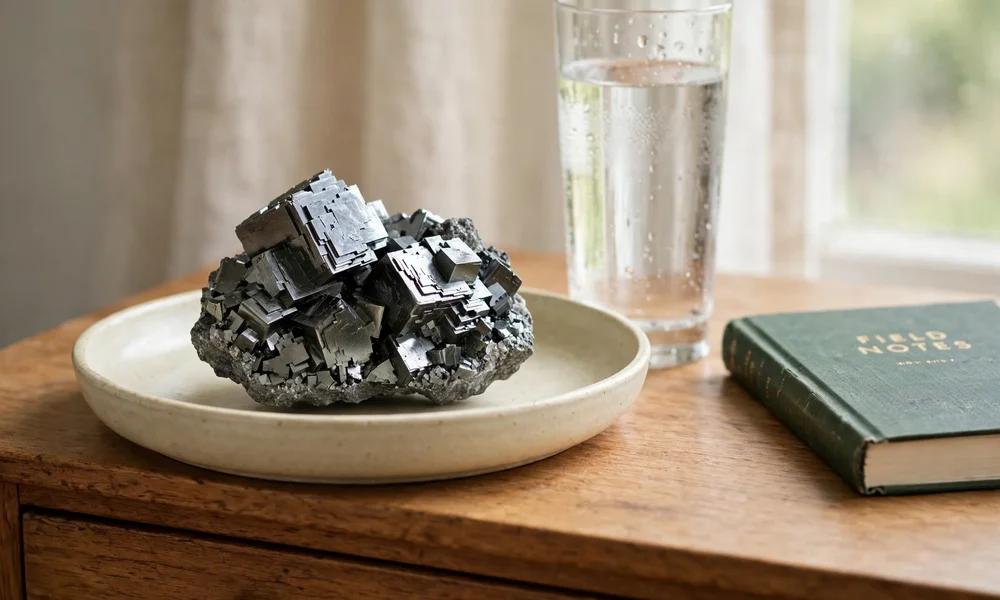
One tray can hold a tumbler and a galena cluster, as long as the two never touch. Set the drink down at the left edge and the mineral at the right, with a strip of dry slate showing between them, so a splash cannot reach the cubes. Galena belongs nowhere near a drink: not in a glass, not in a jug, not in a bath, and never under a running tap, because lead must not reach anything you swallow.
Should a glass tip over, lift the stone clear at once and dry the tray with a cloth.
Galena at a Glance
| Soft grey metal cubes | Slate tray, shelf | Display only |
|---|---|---|
| Lead sulfide, heavy | Quiet days, soft light | Glass kept apart |
| Cool, bright shine | One small cluster | Wash hands after |
| Stepped cube faces | Wood, slate, cloth | Keep children away |
Galena and Anglesite: Grey Cubes, White Points
Anglesite clear white for bright days follows a clear white lead mineral that grows as sharp, glassy points and blocky tablets, bright as a windowpane in winter.
Galena is its dark mirror. Anglesite is pale and glassy where galena is grey and metallic; anglesite throws white flashes where galena gives back cool silver. Anglesite is lead sulfate, born when older lead ores weather near the surface, while galena is the lead sulfide ore those minerals came from. The warning is one and the same for both minerals. Lead lives inside each of them, so neither is ever worn, soaked or set beside a plate, and soap follows every brief look.
Galena and Crocoite: Grey Cubes, Orange Needles
Crocoite warm orange for bright days follows a vivid orange-red lead mineral that grows in thin needle sprays on dark rock, first dug from the old Tasmanian lead mines.
Galena sits at the other end of the lead family from it. Crocoite is fiery and fragile, its needles thin as matchsticks; galena is cool and solid, its cubes heavy and square. Crocoite is a lead chromate, galena a lead sulfide, and the two could not be confused even in dim light. Yet both follow one rule: display only, dry on the tray, far from drinks, hands washed after a touch.
Galena Among the Other Stones in This Batch
This batch holds four more minerals beside galena, each wearing a colour far from soft grey. Goethite is warm brown and earthy. Orthoceras is deep black, a coiled ancient shell turned to stone. Bornite shifts between purple, blue and gold. Sphalerite is warm gold, bright and honeyed where galena is cool and grey.
The water guides in this batch take a different road altogether. A hammock offers a calm way to rest outdoors, a fire pit gets its first guide, an umbrella brings six ways to stay dry, wellies keep feet dry, and a wool scarf has a guide to when to wear one.
Where Galena Rests at Home
Give it a quiet perch that feet never reach and elbows seldom brush: a dresser end, a bookcase top, a ledge above the sink's steam. Small fingers and curious paws must not be able to get at it, and kettles and taps should stay well away. Every few days, lift the piece by its base and look for a cube working loose. For a journey, nestle it in tissue inside a padded box of its own, far from keys, coins and anything that could chip an edge.

Stones That Must Stay Away from Water
A dry shelf suits some minerals best, and their names are worth knowing. Start with pyrite, which stains and tarnishes when it stays damp. Malachite comes next: the copper in its green bands should never meet a mouth, so keep it far from every cup. Hematite follows, since a wet spell leaves rust on it. Amber, old tree sap grown hard, turns cloudy after a long dip. Apatite softens and falls apart after a soak, while angelite goes dull and milky when it gets wet. Lepidolite carries lithium in its pale flakes, another reason to keep drinks at a distance. Galena stands with them all: admire it beside the glass, never within it, and let no stone named here come near food.
Your Quiet Days Checklist
- Lay the galena on its dry slate tray, with the tumbler a good hand-span off.
- Drink the water unhurriedly, a little at a time, while the light stays soft.
- Turn the cluster once or twice and notice the grey change.
- Put the piece back, then clean your hands with soap and water.
- Buy from a seller who names the mine without being asked.
- If health worries you, talk to a doctor instead; stones answer nothing.
Slate, glass, cloth and one small grey cluster.
Frequently Asked Questions
What is galena, in plain words?
Galena is a soft grey lead sulfide mineral, grown as bright metallic cubes with stepped faces, and it is the ore from which people have smelted lead for thousands of years.
Is it safe to display galena at home?
Yes, as a display piece only, on a dry tray out of reach of children and pets, far from food and drink, with hands washed with soap after it is touched.
Why is galena kept out of water?
Lead inside galena can harm the body when swallowed, so the mineral never meets a drink, a soak or a bath.
How can I tell galena from hematite?
Hematite is dark and reddish with a dull shine, while galena is silver-grey with bright flat cube faces, so the shape and shine tell them apart.
May I pick galena up for a closer look?
Yes, briefly, holding it by its base with dry hands. Set it down again right away and wash your hands with soap.
Where should galena live at home?
Choose a dry spot in soft light, a high shelf or a ledge, clear of taps, steam, little hands and pets.

The Bottom Line
One quiet grey cluster kept dry, and water that stays in its glass: that is all a calm day asks of galena.
A Note for Quiet Days
A grey stone resting dry, a glass of water standing clear, and the light moving slowly across the room.


