Cold weather days have a feeling of their own: grey light at the window, a chill that follows you from room to room, and a warm drink held in both hands. It is easy to spend the whole day waiting for the cold to pass.
Red jasper warmth offers a small counterweight to that chill: a deep red stone, the colour of brick and autumn leaves, that looks warm simply sitting on a tray in winter light.
This article is a gentle guide to red jasper warmth for cold weather days: what the stone is, how to choose one, how to keep it safely beside water, and how to build a slow routine around it. The stone is a companion, never a treatment.
Key Takeaways
- Red jasper warmth means the deep red colour and cosy mood of the stone, not heat from the stone itself.
- Red jasper is a beautiful object, not a treatment, and it will not warm your body.
- The stone always stays beside drinking water, never in it; this is the only safe way.
- A slow cold day needs only a warm drink, soft light, and one quiet pause.
- Red jasper is a hard, opaque quartz — sturdy, but still deserving gentle, dry care.
What Red Jasper Warmth Means
Red jasper is an opaque variety of quartz, coloured deep red by iron oxides held inside the stone. Its surface is smooth and matte rather than glassy, and its colour runs from brick red to a darker rust, sometimes with soft bands of brown or cream. No two stones carry quite the same pattern.
The word warmth here describes a mood, not a temperature. The stone gives off no heat, and holding it will not warm your hands. Its warmth is the warmth of its colour: red against grey winter light, like a lit window on a dark street.
Why Cold Days Feel Longer
A cold day feels longer because the light is short and the body stays tense against the chill. Mornings start in darkness, and every trip outside means coats, scarves, and gloves. When the day feels cold, it is easy to rush through it and wish it away.
The fix is not to fight the weather. It is to give the day a warm shape: a hot drink, soft light, and one quiet pause. A stone on the tray can mark that shape, like a small red bookmark in a grey day. The same gentle idea runs through amber warmth for cosy beauty.
Choosing a Red Jasper Stone
Choose a red jasper you can see before you buy it. Look for a deep, even red with a smooth, matte surface, and hold it up to daylight: the colour should stay steady, and the stone should feel cool and dry. A small tumbled stone that fits in your palm is enough.
Red jasper is a common stone, so it should be priced as one. Be wary of pieces that look painted, and of sellers who promise the stone will warm you, heal you, or change your luck. Buy it as jasper: plain red, honestly named, and priced as an everyday stone.

Red Jasper Beside Water, Never in It
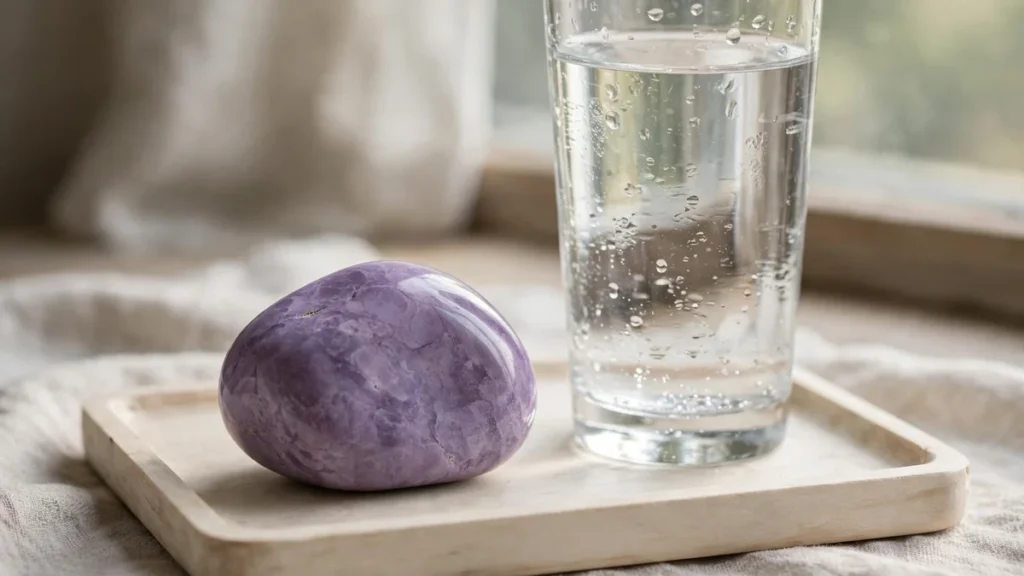
The safety rule is simple and absolute: the stone stays beside the water, never in it. A glass of fresh drinking water stands on the tray, and the red jasper rests beside the glass. The water stays plain, and the stone stays dry.
Red jasper must never go into water or soaks. No stone belongs in drinking water: even a clean-looking stone can carry dust and oils, and a stone handled all day has no place in a glass. Keep the stone dry and the water plain. The same rule is explained in how to cleanse crystals with water safely, which lists the stones that must never be soaked.
A Warm Start to a Cold Morning
A warm start to a cold morning begins the night before. Set out the tray — the glass, the stone, and what you need — so the morning does not begin with searching. Lay out warm clothes, fill the kettle, and write the first task on a small piece of paper.
When you wake, pour a glass of fresh water and set it beside the red jasper, then make a hot drink and hold the mug in both hands. Drink the water slowly, and let the day arrive instead of chasing it. Then wash, dress warmly, and read the paper with your first task on it.
Red Jasper in Your Palm
Holding the stone is the quietest part of the routine. Pick up the red jasper, close your fingers around it, and feel its cool, smooth weight. Turn it once, look at the bands of colour, and set it back down.
This takes less than a minute: it gives your hands a task while your mind settles. Cold days pull the mind towards discomfort, and a small, simple object gives it one thing to rest on.
Planning a Slow Cold Day
A short plan makes a cold day feel smaller. Open your journal beside the red jasper and write three things: the task that matters most today, one warm pleasure, and the time you will stop work. Three lines take two minutes.
Keep the plan visible: a plan that lives only in your head will be forgotten by nine o'clock, but a plan on paper waits patiently. Cross each task off as you finish it, and change the plan if the weather changes it.
Red Jasper on the Windowsill
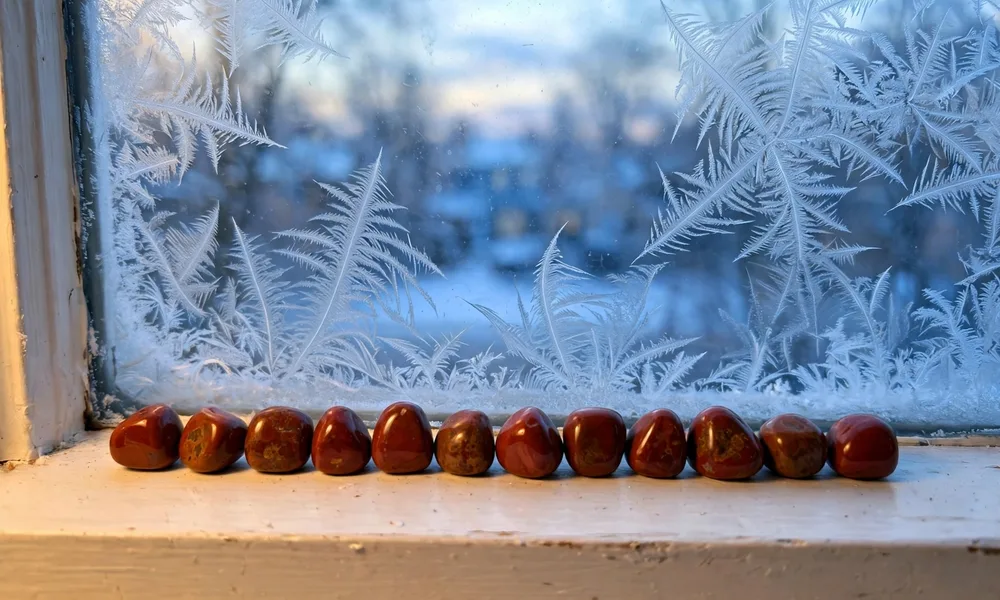
The windowsill is where a cold day shows itself, and a row of red jasper stones there can warm the whole window. Set two or three stones on the sill, where the low winter sun can reach them, and let their red colour stand against the frost.
Look out at the cold for a minute before you start work: notice the frost, the bare branches, the pale sky. The stones do not change the weather, but they give the window a warm edge. Wipe them dry if condensation reaches them, and bring them in from a freezing sill at night.

Carrying Red Jasper Through the Day
Some cold days need the warmth to travel. A small red jasper in a soft pouch fits in a coat pocket, a bag, or a desk drawer, and it is there when the day grows long and grey. The pouch protects the stone from keys and harder stones.
Choose a soft cloth pouch with room for one stone and nothing else, and keep it away from cleaning products and strong soaps. Take it out at your desk when you need a pause, then put it back. In the evening, set it back on its tray.
Caring for a Sturdy Stone
Red jasper is a hard stone that needs only simple care. Clean it with lukewarm water and a drop of mild soap, then rinse and pat it dry at once. Never soak it or use harsh chemicals, and dry it fully before you put it away.
Handle it gently all the same: even a hard stone can chip if dropped on a hard floor. Keep it away from harder stones, and do not wear it while gardening, cleaning, or doing heavy work. Buy from sellers you trust, and ask plain questions before you pay.
What Red Jasper Will Not Do
Be honest about what a stone can and cannot do. Red jasper will not warm your body, cure a cold, or make winter pass faster. It will not help you sleep or change your luck. It is a beautiful object, and its value is the pleasure of looking at it and the calm of the routine around it.
The same honesty applies to the water beside it: fresh water drunk slowly is good for you, but it is not a treatment either. No stone or winter ritual will replace rest, sleep, and warm clothes. Long cold days need strength built from rest and steady habits, as in bloodstone strength rituals. If the cold leaves you unwell week after week, the answer is warm shelter and advice from a professional.
| Cold day step | Water beside | Stone care |
|---|---|---|
| Drink fresh water | Glass beside stone | Wipe dry cloth |
| Hold stone briefly | Sip water slowly | Store in pouch |
| Write three lines | Plan on paper | Keep out frost |
| Warm drink first | Hot mug in hands | Clean soft cloth |
Your Red Jasper Warmth Checklist
- Choose a deep red jasper with a smooth, matte surface.
- Set a glass of fresh water beside the stone each morning, never in it.
- Drink the water slowly, hold the stone briefly, and take one slow breath.
- Write three lines: the main task, one warm pleasure, and your stopping time.
- Carry the stone in its own soft pouch, away from keys.
- Clean the stone gently and dry it fully.

Frequently Asked Questions
What is red jasper warmth?
Red jasper warmth is the cosy mood of the stone's deep red colour on a cold day. The stone gives off no heat; its warmth is in how it looks — red against grey winter light, like a lit window.
Can I put red jasper in drinking water?
No. Keep the stone beside the glass, never in it. No stone belongs in drinking water, and the stone stays dry while the water stays plain.
Is red jasper a real quartz?
Yes. Red jasper is an opaque variety of quartz, coloured deep red by iron oxides. It is hard and sturdy, with a smooth matte surface rather than a glassy shine.
How do I clean red jasper safely?
Wash it with lukewarm water and a drop of mild soap, then rinse and pat it dry at once. Never soak it or use harsh chemicals, and store it dry in a soft pouch.
Can I carry red jasper every day?
Yes, if you treat it gently. Carry it in its own soft pouch, away from keys and harder stones, and take it off before gardening, cleaning, or heavy work. Bring it in from a freezing sill at night.
Will red jasper warm me on cold days?
No. Its warmth is the warmth of its colour and the calm of the routine around it — a hot drink, soft light, and a slow start are what truly warm a cold day.
The Bottom Line
Red jasper warmth is a deep red stone, a glass of water beside it, and a slow, warm shape to a cold day.
Set your stone out tonight, and let tomorrow begin gently.
A Note for Cold Weather Days
Keep it red, keep it dry, keep it beside the water. The cold will pass.