
Some stones catch the eye with sparkle. Amber catches it with warmth. Hold a polished piece up to the light and it glows from inside, the colour of honey, late afternoon sun, and leaves in October. It feels warm in the hand almost at once, and it has been worn and loved for thousands of years.
Amber is not a mineral at all. It is fossilised tree resin, the sticky sap of ancient pine-like trees, hardened over millions of years into a soft, light, golden stone. People have carved it into beads, set it into jewellery, and carried it as a keepsake since the Stone Age.
This guide is a slow look at amber: what it is, where it comes from, why its honey tones suit cosy beauty so well, and how to wear and care for it gently.
Key Takeaways
- Amber is fossilised tree resin, not a mineral, and it is soft, at about 2 to 2.5 on the Mohs hardness scale.
- Baltic amber, from the shores of the Baltic Sea, is the best-known and most loved amber in the world.
- Never soak amber in water, never put it in drinking water, and keep it away from heat, perfumes and chemicals.
- Clean amber only with a soft, dry cloth, and store it in a soft pouch away from harder stones.
- Amber suits cosy beauty: warm honey tones, soft knits, and calm autumn evenings.
What Amber Is
Amber began as resin, the sticky golden sap that trees release to seal a wound or trap an insect. Over millions of years, buried under layers of earth and sea, that resin hardened and changed into amber: light, warm, and glowing.
Because it is resin, amber is soft. On the Mohs hardness scale, which runs from 1 for talc to 10 for diamond, amber sits at about 2 to 2.5. That is softer than a fingernail is hard, and far softer than most stones. It can be scratched by a key, a coin, or a harder piece of jewellery in the same box, and it can crack if it is dropped on a hard floor.
Amber is also light. A bead of amber feels lighter than a bead of glass or stone the same size, and a necklace of amber sits easily on the neck all day. Warm it in your hand for a minute and it warms quickly, which is why it feels so comfortable to wear in cold weather.
Baltic Amber and Where It Comes From
Most of the amber in the world comes from the Baltic region, the shores of the Baltic Sea in northern Europe, around Lithuania, Latvia, Poland, and the Kaliningrad region. Baltic amber is about 44 million years old, formed from the resin of ancient pine forests that once grew where the sea is now.
Amber with an insect inside is called an inclusion, and it is a small window into a world millions of years old. Such pieces are rare and costly, and most amber jewellery uses clear or cloudy honey amber without inclusions.
The Warmth of Honey Tones
Amber's colour is its gift to beauty. Honey, caramel, butterscotch, cognac, and pale gold: these are warm tones that sit happily beside skin, and they flatter most complexions without shouting. In autumn light, amber seems to glow from within, and it pairs beautifully with the season's colours.
Warm tones suit warm light. On a grey day, a piece of amber at the neck or wrist brings a small point of sun to an outfit. With cream, camel, rust, olive, and soft brown, amber looks settled and natural. With navy or charcoal, it stands out gently, a warm note against a cool background.
Topaz shares amber's golden light, though it is a harder, sparklier stone: topaz light for bright beauty shows how golden stones lift a special day. Amber is the softer, warmer cousin: less sparkle, more glow.
Wearing Amber: Jewellery and Everyday Beauty
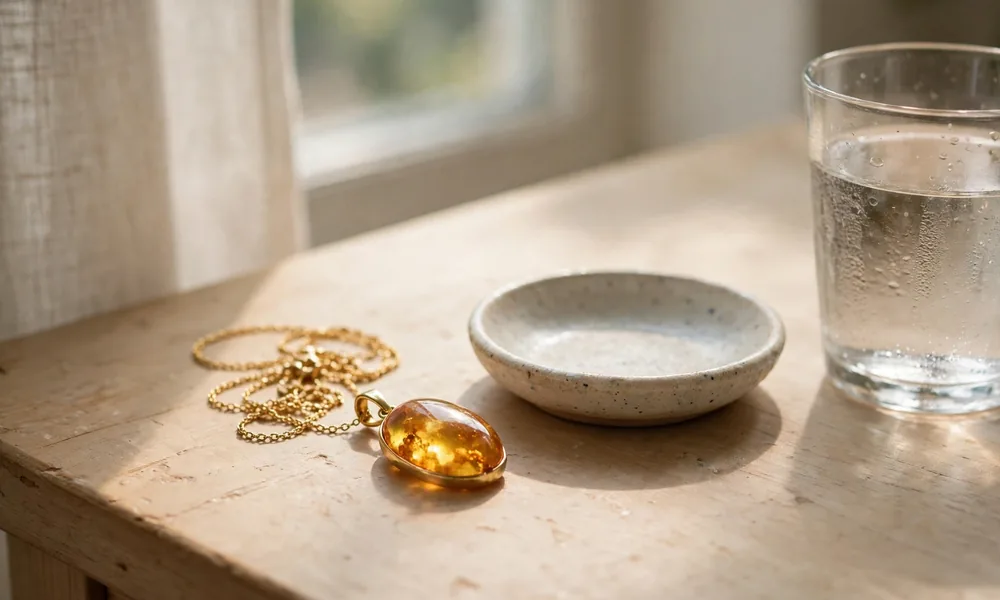
Amber is at its best as jewellery: a pendant on a fine chain, a string of beads, a pair of small earrings, or a single smooth stone set into a ring. Because it is light, a longer necklace is comfortable all day, and because it is warm, it suits cold weather and cosy clothes.
Wear amber with soft textures. A honey pendant rests beautifully on a cream jumper, a camel coat, or a knitted shawl, and the stone's warmth echoes the warmth of the fabric. Keep the rest of the outfit simple, and let the amber be the one warm note.
Labradorite is another evening stone, though its beauty is cool and shifting where amber's is warm and steady: labradorite shimmer for evening beauty describes its moonlit glow. Choose amber for evenings that are cosy rather than glittering: dinner at home, a walk at dusk, a quiet celebration with people you love.
Caring for Amber: Soft Stone, Gentle Hands
Amber's softness is the heart of its care. Never soak amber in water, and never put it in drinking water. Water can seep into tiny cracks, dull the surface, and loosen the settings that hold it.
Keep amber away from heat. Do not leave it in strong sun for hours, near a radiator, or in a hot car, because heat can crack it and fade its colour. Keep it away from perfumes, hairspray, creams, and household chemicals, which can dull or damage the surface. Put your amber on last, after perfume and makeup, and take it off first when you come home.
Amber Beside Water, Never In It
Water and amber make a lovely picture together, and a terrible partnership. A glass of water beside a dish of amber is a calm, beautiful sight: the clear water, the honey stone, the soft light. But the stone itself should never go into the water, whether for drinking, bathing, or washing.
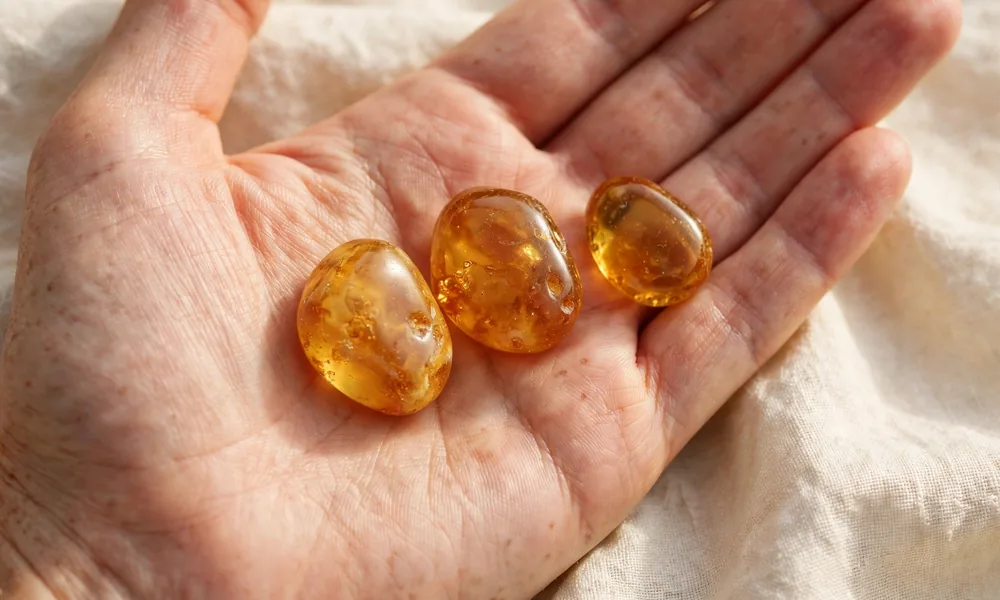
If you like a calm ritual, set a small dish of amber beside a glass of fresh water on your dressing table or bedside shelf. Look at them together in the morning light, enjoy the warmth of the stone and the coolness of the water, and let the pairing be a visual one.
Cosy Beauty: Amber with Autumn Colour
Cosy beauty is a feeling as much as a look: warm light, soft fabric, and colours that feel like autumn. Amber fits it perfectly, and a few small choices bring the feeling together.
Warm autumn colours flatter amber and are flattered by it. Rust, burgundy, mustard, olive, and camel all sit well beside honey gold, and a touch of cream keeps the whole look soft. Garnet is amber's deep red companion for autumn, and its glow is described here: garnet glow for autumn skin. Together, honey and deep red make an autumn palette that feels rich without feeling heavy.
| Pairing | Feeling | Wear it |
|---|---|---|
| Amber and cream knit | Soft and calm | Daytime, at home or out |
| Amber and camel coat | Warm and classic | Autumn walks and errands |
| Amber and deep red | Rich and cosy | Evenings and celebrations |

Keep makeup soft with amber: warm lips, a little blush, and skin that looks cared for rather than covered. The stone is the warmest thing in the look, and everything else can stay quiet around it.
Choosing Real Amber
Real amber is widely copied, and a few simple checks help. Real amber feels warm quickly in the hand, while glass and plastic stay cool longer. It is light for its size, and it feels slightly soft and resinous rather than cold and hard. Rubbed gently, real amber can carry a faint pine-like scent, though this is not a test to rely on alone.
Buy from a seller you trust, and ask where the amber comes from. Baltic amber from a known source, with a clear description of its colour and clarity, is a good sign. Very cheap, perfectly clear amber in large pieces deserves a second look.
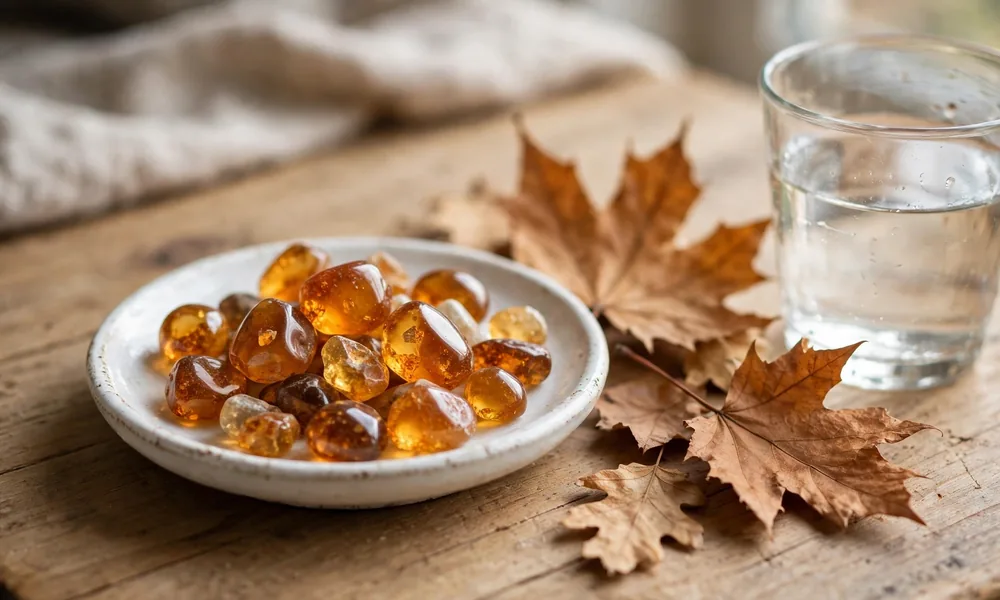
Look at the stone in daylight before you buy it. Good amber glows warmly, with small clouds, tiny bubbles, or gentle waves inside that show it formed slowly over millions of years. Perfectly uniform amber is less common in nature, and a little imperfection is often a sign of the real thing.
Your Amber Warmth Checklist
- Choose honey-toned amber that glows warmly in daylight.
- Wear amber with soft knits, cream, camel, rust or deep red.
- Put amber on last, after perfume, makeup and hairspray.
- Never soak amber in water, and never put it in drinking water.
- Clean only with a soft, dry cloth; store in a soft pouch on its own.
- Keep amber away from heat, perfumes and household chemicals.
Frequently Asked Questions
What is amber made of? Amber is fossilised tree resin, the hardened sap of ancient trees, millions of years old. It is not a mineral, and it is much softer than most stones.
How hard is amber? Amber is about 2 to 2.5 on the Mohs hardness scale, which makes it one of the softest gem materials. It scratches easily, so handle it gently and store it on its own.
Can I put amber in water? No. Never soak amber in water, and never put it in drinking water. Water can dull the surface, seep into tiny cracks, and loosen settings. Keep amber beside water, never in it.
How should I clean amber? Wipe it gently with a soft, dry cloth. Never use ultrasonic cleaners, steam cleaners, or harsh soaps, and keep it away from perfumes and chemicals.
Where does Baltic amber come from? Baltic amber comes from the shores of the Baltic Sea, around Lithuania, Latvia, Poland and the Kaliningrad region. It is about 44 million years old.
Is amber good for everyday wear? Yes, with gentle care. Amber is light and warm, so it is comfortable all day, but take it off for washing, cleaning, gardening and exercise.
The Bottom Line
Amber is a classic stone because it is warm in every sense: warm in colour, warm to the touch, and warm in the way it suits cosy clothes and quiet evenings. It is fossilised tree resin, soft and light, and it asks for gentle care in return.
Wear it with soft textures and autumn colours, keep it dry and away from heat and chemicals, and clean it with nothing more than a soft cloth. That is the whole of amber care, and it is enough to keep the stone glowing for years.
A Note for Cosy Days
Keep it warm, keep it soft, keep it yours. Amber asks for very little: a gentle hand, a dry cloth, and a place among the warm things you love. Stay curious. Stay clear.



