A reusable bottle is a small object with a quiet job. It waits on the counter in the morning, rides along in a bag through the day, and comes home in the evening to be washed and set out again. It asks for almost nothing, yet water is always within reach, and there is no plastic bottle to buy, carry and throw away.
This guide is about the bottle itself, not about how much water to drink. It looks at choosing one good bottle, keeping it clean, drying it properly, and carrying it without fuss. A bottle that is washed, dried and filled each morning becomes a habit that runs on its own.
The habit is simple on purpose: one bottle, one brush, one spot on the counter, and a few minutes a day. There are no rules about litres here and no promises about health; this is gentle general information, and any lasting health worry belongs with a doctor.
Key Takeaways
- Water and water bottles are a simple fresh habit: one reusable bottle, washed and filled daily.
- Choose a bottle that fits your hand, your bag and your tap.
- Wash the bottle every day with warm water, soap and a brush.
- Dry it upside down with the cap off, so it stays fresh inside.
- Keep one bottle for everyday use, and retire it when it smells or leaks.
What a Reusable Bottle Habit Means
A reusable bottle habit means one bottle that you use again and again, instead of a new disposable bottle each day. The bottle is filled from the tap at home, carried out in the morning, and brought back to be washed at night. Nothing about it is complicated, and that is why it lasts.
The habit has four small parts: choosing, filling, washing and drying. Each part takes a minute or two. A bottle that is washed each night is pleasant to fill each morning, and one you will actually carry.
Why a Good Bottle Suits a Fresh Day
A good bottle suits a fresh day because it removes small frictions. There is no queue at a shop, no crinkling plastic in a bag, and no guessing whether the water inside has been sitting warm since yesterday. The bottle is simply there, cool and clean, whenever you want a sip.
It also suits a tidy home: one bottle on the counter replaces a shelf of half-used disposables. A fresh day starts with small things in their places, and a bottle is one of the smallest.
Choosing Your Water Bottle
Start with the size. A bottle of about half a litre to three quarters of a litre suits most days: light enough to carry, large enough that you are not refilling it every hour. Bigger bottles suit long days out, smaller ones suit a short walk or a desk drawer.
Then check the mouth. A wide mouth is easy to fill under a tap and easy to wash with a brush, while a narrow mouth pours neatly and rarely spills in a bag. Check the cap too: it should close with a firm twist and seal well enough that the bottle can lie on its side in a bag without leaking.

A Fresh Day with Your Bottle
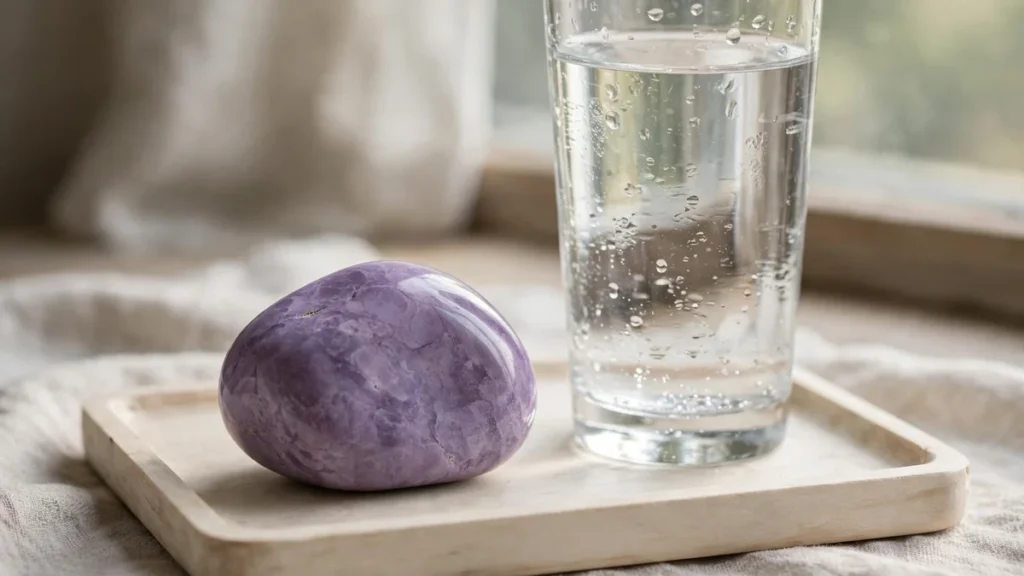
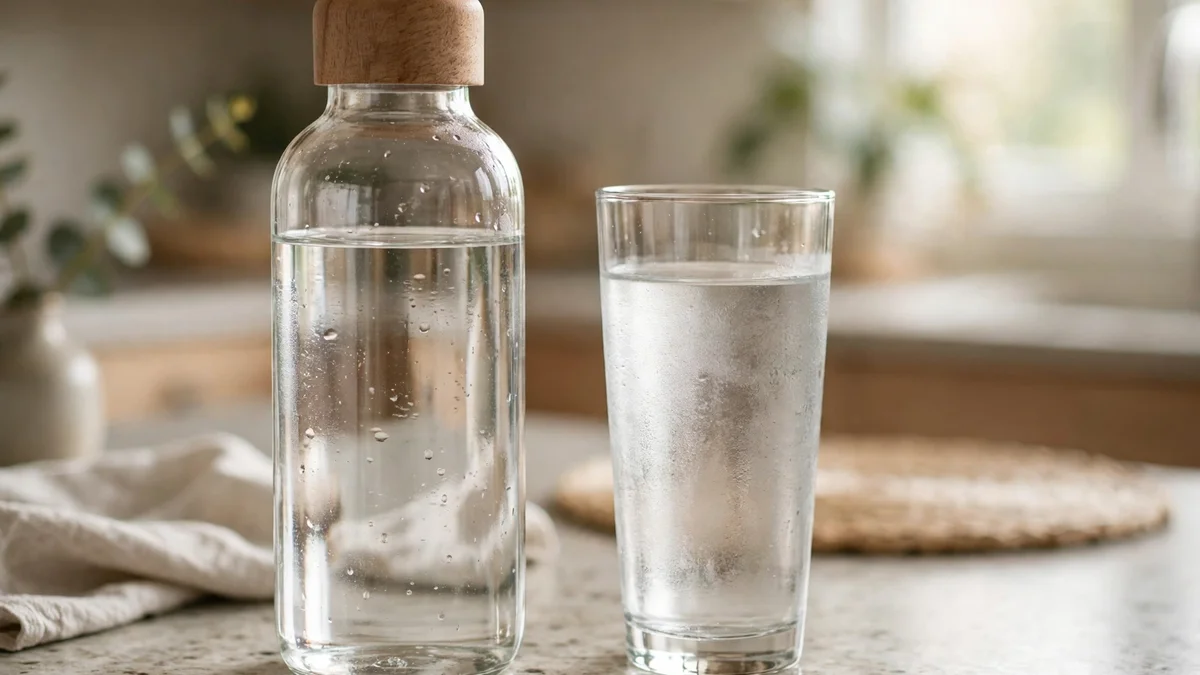
Begin the morning by filling the bottle from the tap and setting it on the counter beside a tall glass of water. Drink the glass slowly, then carry the bottle with you when you leave the house. There is nothing to count and nothing to finish; bottle, glass and a calm morning are the whole plan.
When you come home, empty whatever is left, rinse the bottle, and set it out for its evening wash.
Washing Your Bottle Well
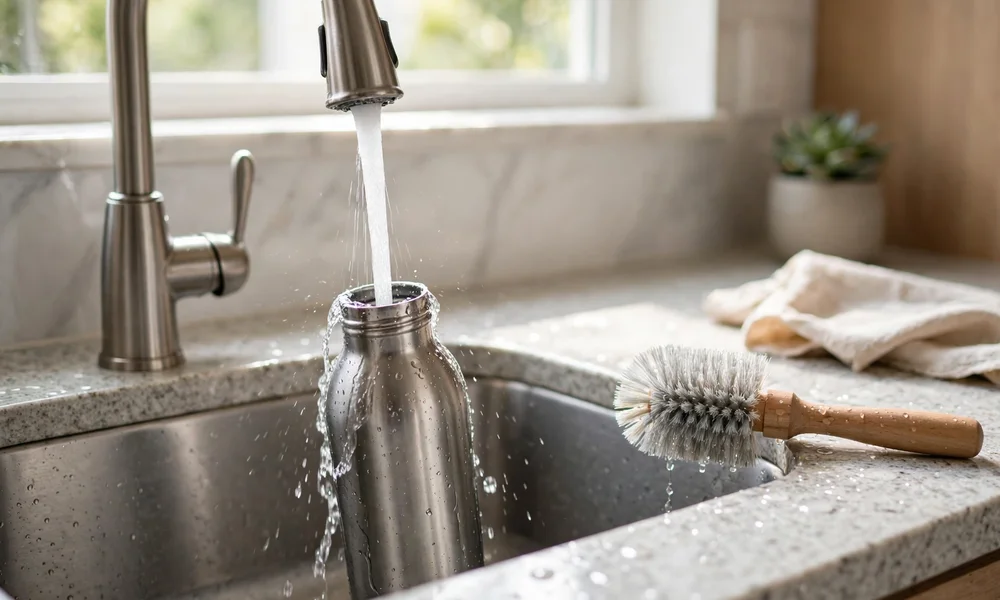
Wash the bottle every evening, even if it held only plain water. Fill it a third full with warm water, add a drop of washing-up liquid, and work a long bottle brush around the inside, right down to the corners at the bottom. Rinse it three times with clean water until the water runs clear and no soap bubbles remain.
Take the cap apart if it comes apart, and wash each piece the same way, including the seal and any straw. Caps hold more smells than bottles do, because water sits in their small grooves all day.
Water and Water Bottles at a Glance
| One bottle, daily | Glass, steel, plastic | Wash each night |
|---|---|---|
| Half to full litre | Wide mouth, firm cap | Rinse three times |
| Fits bag, fits tap | Seal checked weekly | Dry cap off |
| Filled each morning | Carried, not forgotten | Retire when worn |
Glass, Steel and Plastic Bottles
Glass bottles keep water tasting clean and show at a glance whether the inside needs a wash, but they are heavier and need a sleeve or a careful hand. Steel bottles are light, tough and good at keeping water cool, though you cannot see inside them, so the brush matters even more. Plastic bottles are the lightest of all and the easiest to carry, but they scratch inside over time, and scratches hold smells.
No material is right for everyone. A glass bottle suits a desk and a kitchen, a steel bottle suits a bag and a walk, and a plastic bottle suits a short trip where weight matters most. Choose the one that fits where your bottle actually goes.
Carrying Your Bottle Out
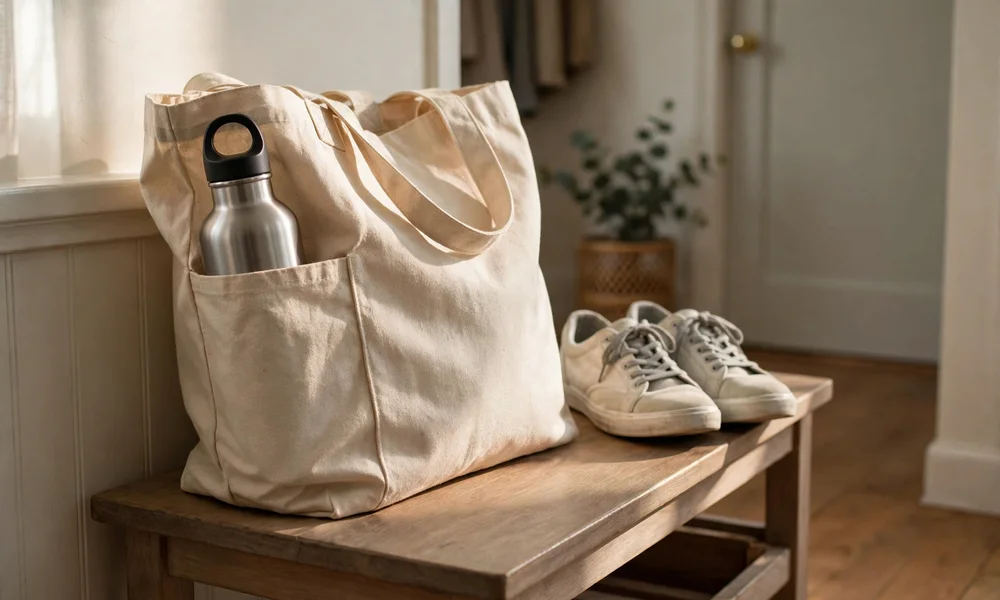
Give the bottle one fixed home outside the house: the side pocket of a bag, or a small tote that lives by the door. A bottle with a home is carried every day, while a bottle that wanders from shelf to shelf is forgotten half the time. Pack it the night before if your mornings are rushed, filled and capped, so leaving the house needs no thought at all.
Keep it upright when you can, and away from keys and loose pens that might scratch it. On a hot day, carry it inside the bag rather than in a sunny car door pocket, where the water warms up.
Refilling Without Fuss
Refilling is the quiet middle of the habit, and it should stay simple. Ask for tap water wherever you are, at a cafe, an office kitchen or a public fountain, and fill the bottle to the top. If the tap runs slowly, hold the bottle steady and wait; a minute of patience beats a spill across a counter.
Empty the bottle each night before its wash, even if some water is left: water that sits overnight tastes stale by morning. A water-first morning routine pairs well with a freshly filled bottle waiting on the counter.
Drying and Storing Your Bottle
A washed bottle needs air, and the simplest way to give it air is to turn it upside down on a dish rack with the cap off. Leave it there overnight, and by morning the inside is dry and fresh. Never put the cap back on a damp bottle, because a sealed damp bottle grows a stale smell by the next day.
Store the bottle on the same shelf each night, cap beside it rather than on it, so the morning fill takes seconds. Keep the bottle away from strong kitchen smells, which plastic in particular can pick up.
When a Bottle Needs Replacing
A bottle does not last forever, and knowing when to let one go is part of the habit. Retire it when it keeps a smell after a good wash, when the seal no longer stops leaks, or when the inside is scratched so deeply that the brush cannot reach clean plastic. A cracked glass bottle goes at once, and a dented steel bottle with a bent rim goes too, since a bent rim will never seal again.
Replacing a bottle is not a failure of the habit; it is the habit working. Choose the next one the same way you chose the first, one simple swap at a time, and the routine carries on.
Keeping the Habit Gentle
A bottle habit should stay light, never become a worry. If you forget the bottle one day, or miss a wash one evening, simply wash it the next day and carry on. There is no score to keep, only a small object that makes ordinary days a little fresher.
This guide is general information about looking after a bottle, not medical advice. If a health problem keeps coming back, speak to a doctor rather than looking for answers in a bottle routine. The bottle is there to hold water, not to solve problems.

Your Fresh Bottle Checklist
- Fill one reusable bottle each morning from the tap.
- Wash it each night with warm water, soap and a brush.
- Rinse three times, and wash the cap and seal too.
- Dry it upside down with the cap off overnight.
- Carry it in its fixed pocket, and refill on the go.
- Retire it when it smells, leaks or cracks.
Frequently Asked Questions
How often should I wash my water bottle?
Wash it every evening with warm water, a drop of washing-up liquid and a brush, then rinse three times. A daily wash keeps the inside fresh and stops smells from building up.
Should I dry my bottle with the cap on or off?
Dry it with the cap off, upside down on a dish rack overnight. A sealed damp bottle grows a stale smell by morning, while an open one dries clean.
Which bottle material is best for everyday use?
Glass keeps water tasting clean and shows dirt at a glance, steel is light and tough, and plastic is the lightest of all. Choose the one that fits your bag and your day.
Can I carry my bottle on a commute?
Yes, a bottle in a bag pocket suits a commute well, and refilling on the way keeps it useful all day. For ideas on staying fresh while travelling, see staying fresh on a commute.
Why does my bottle smell even after washing?
Smells usually live in the cap, the seal or scratches inside the bottle, not in the water. Take the cap apart, wash each piece, and if the smell stays after a good wash, retire the bottle.
When should I replace my water bottle?
Replace it when it keeps a smell after washing, when the seal no longer stops leaks, or when it is cracked or badly scratched inside. A fresh bottle keeps the habit simple.
The Bottom Line
Water and water bottles are a simple fresh habit: one good bottle, filled each morning, washed each night, and dried with the cap off, ready to go again.
A Note for Fresh Days
Keep one bottle, one brush and one spot on the counter. A small fresh habit, kept daily, is all you need.