Bright days arrive with the curtains glowing. The sun is up before the kettle, the windows stand open, and the whole house feels awake. A dull stone would vanish in that light.
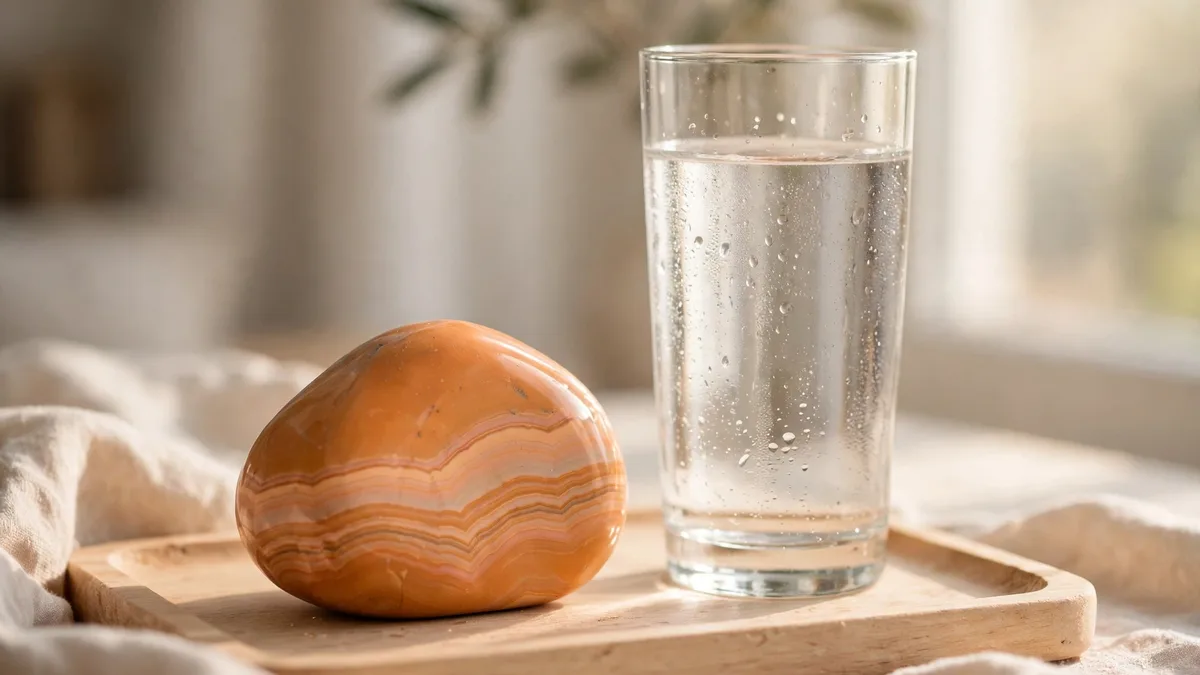
Orange jasper belongs on days like those: a warm orange stone, the colour of apricots left in the sun, of marmalade on warm toast, of the last light on a summer evening. It carries no picture to puzzle over, only a friendly orange that warms a bright room the way a lit lamp warms a hallway.
In the pages below, orange jasper gets a careful once-over: what it is made of, the marks of a good specimen, its cousins across the jasper family, and the easy habit of keeping it dry next to a drink. It is a handsome object and nothing more; it heals nothing at all, and only offers a bright day one warm, cheerful place for the eyes to land.
Key Takeaways
- Orange jasper is plain warm orange jasper, even in colour, with soft peach bands and no spots.
- Its warm orange suits bright days, open windows and rooms full of morning light.
- Orange jasper is an ornament to look at and hold; it heals nothing in the body.
- The stone sits beside the glass, never dropped into it, and stays dry.
- One apricot-sized orange pebble is enough for a whole bright day.
What Orange Jasper Is
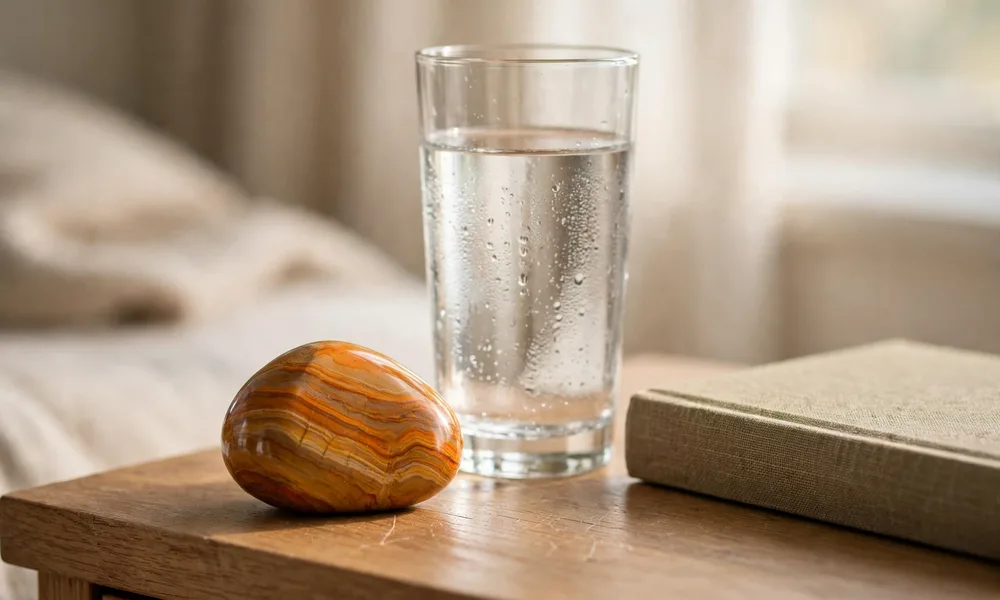
Orange jasper is jasper dressed in warm orange, a dense quartz that lets no light through, its colour laid down by iron minerals while the rock was slowly forming. Shades move from soft peach to rich apricot, often with easy bands of cream and rust wandering through it like slow water. A burnished piece feels cool, solid and smooth in the palm, with a muted waxy sheen rather than a sharp glitter.
Unlike its patterned cousins, orange jasper asks for no close study: no circles to trace, no stripes to count, no landscape to find. Its charm is its glow, one warm orange all the way through, like a peach held up to the light.
Why Warm Orange Suits Bright Days
Orange is the colour of mornings that mean business. Sunrise, apricots, marigolds, a kettle whistling on a bright stove: orange things carry energy without noise. A bright day runs the same way, full of small plans and open windows rather than surprises.
A pale stone would fade in that sunshine, and a dark one would sulk in the corner. Warm orange meets the light halfway, and looks as good in late-afternoon gold as in sharp mid-morning white.
Choosing an Orange Jasper Piece
Turn the stone gently in daylight and watch the orange hold steady. The finest pieces keep a single glowing tone across the whole face, with mellow peach banding instead of hard lines, no pale chalky marks, no grey film and no nicked edges. An apricot-sized piece is plenty, and it ought to rest level without wobbling.
Ask the seller outright which ground the stone came out of, and walk past any piece whose orange looks brushed on, or any trader who promises it will mend your health.
A Bright Day with Orange Jasper
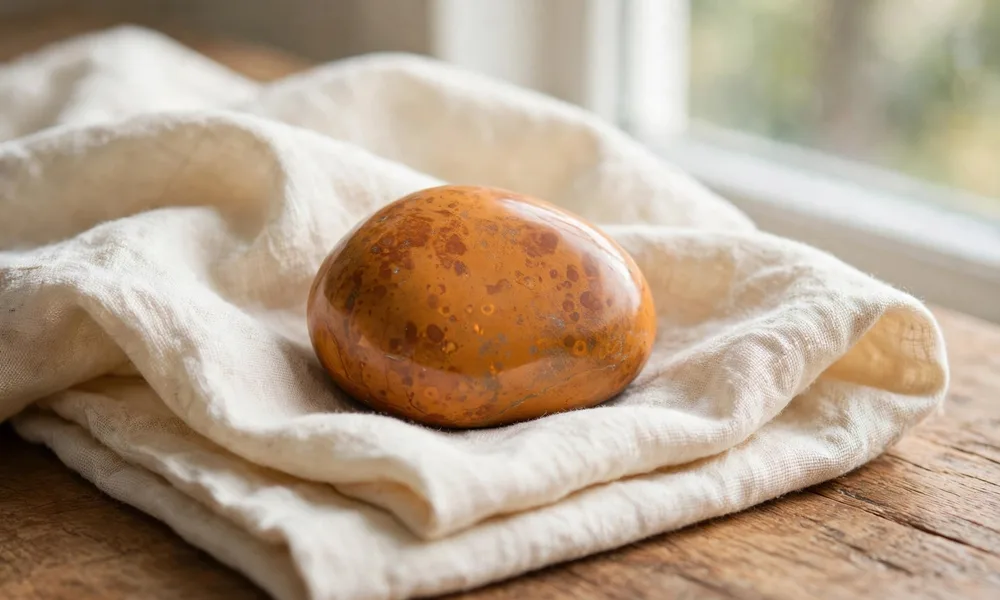
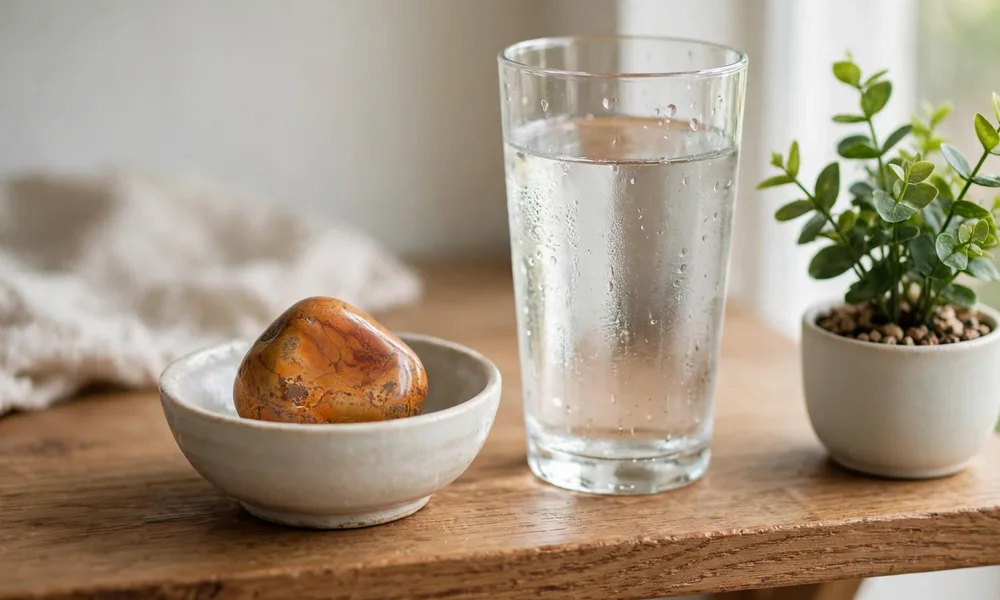
Start by spreading a pale linen cloth near the window, the orange jasper at one side and a tall glass of cool water at the other. Sip the water slowly and let your gaze settle on the warm orange as the morning unfolds. There is nothing to complete; cloth, glass and pebble make the whole plan.
Open the window a little wider, or follow the sunlight across the floor. When the glass runs dry, fill it again.
Orange Jasper Beside Water
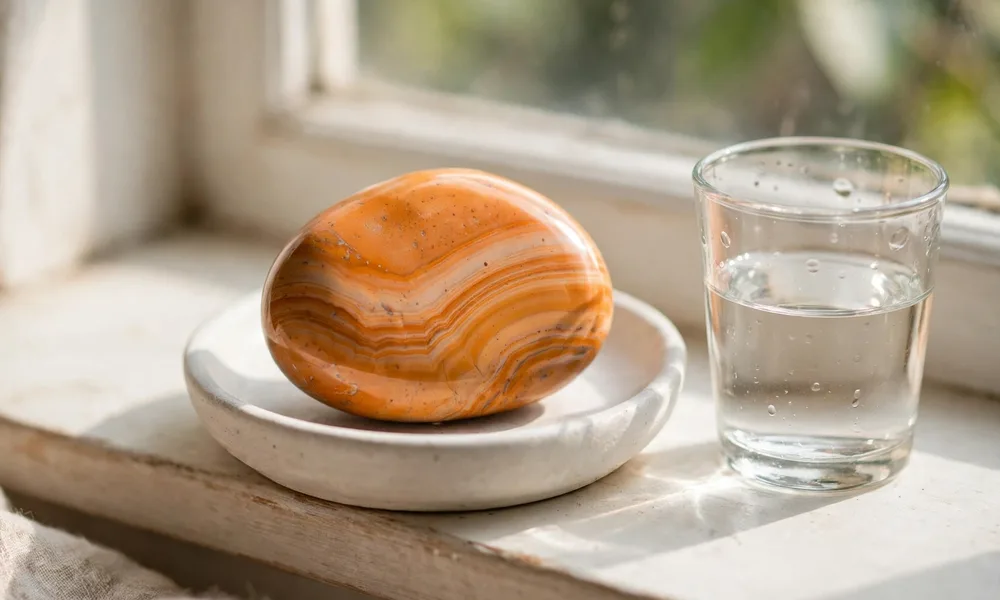
A glass of water and an orange jasper sit happily together on a single tray, though they never touch one another. Set the tumbler on one side and the pebble on the other, leaving a stretch of empty timber in the middle, so the drink stays pure and the stone stays dry.
Wash your hands with soap once the pebble is down, before you pick up the glass. Keep the stone out of every vessel: no tumbler, no pitcher, no tub, and never swirled through water meant for drinking.
Orange Jasper at a Glance
| Warm orange bands | Tray, shelf, sill | Display only |
|---|---|---|
| Even, glowing colour | Daylight, soft lamps | Keep it dry |
| Cool, smooth, solid | Bright days, open windows | Hands rinsed after |
| Apricot-sized piece | Water beside it | Never in a drink |
Orange Jasper and Blue Jasper
Blue jasper, the sibling numbered 778, is the cool opposite of this stone: a calm blue jasper for quiet waters, soft and steady, made for evenings that want stillness. Where blue cools a room, orange warms it. Blue jasper is cool first, and it suits a shaded shelf in gentle light.
Orange jasper is warmth first, brightness its whole character, and it suits a tray for sunny hours at home.
Orange Jasper and Pink and Purple Jasper
Pink jasper, the sibling numbered 780, is the soft opposite of this stone: a gentle pink jasper for tender days, pale and kind. Pink jasper is gentle and quiet, like rose petals on a pillow, while orange jasper is livelier, like apricots in a sunny bowl.
Purple jasper, the sibling numbered 782, is the deep opposite of this stone: a rich purple jasper for thoughtful days, dark and velvety. Purple jasper is solemn and slow, like dusk settling over a garden, while orange jasper is open and sunny, like morning light on a kitchen table.
Orange Jasper and the Other Jaspers
Past the three siblings, the jasper clan holds plenty more colours, and not one of them is the straightforward warm orange of this guide. Picasso jasper for bright days carries sweeping strokes of black, grey and cream, as though a brush had passed over it, while fancy jasper curls pale pink, cream and sage green in soft waves. Leopardskin jasper is flecked with cream, tan and dark brown spots.
Zebra jasper is striped in black and white, rainforest jasper shows pale leaf shapes against green, and kambaba jasper turns in deep green whorls. Mookaite jasper for steady days layers mustard yellow, brick red and chocolate brown. Green jasper is one solid deep green, and brecciated jasper pieces together shattered rust, terracotta and cream, a fractured-earth face where orange jasper stays smooth.
Polychrome jasper turns terracotta, ochre, teal and cream together, yellow jasper shines warm mustard, and ocean jasper circles soft green, cream and blue. Dalmatian jasper is cream freckled with black, picture jasper sketches brown, cream and rust scenes, and red jasper for cold days burns warm brick red. Brown jasper is unadorned chestnut, white jasper is clear pale white, and black jasper is deep and dark. Orange jasper stands apart by being plainly orange, with no spots and no scenes inside it.
Orange Jasper and Orange Agate
Orange agate is the stone most often confused with orange jasper, because both wear warm orange, yet they belong to different branches of the quartz family. Orange agate, live on this site as post 5206, is a banded chalcedony in thin glassy layers, with apricot, peach and cream bands.
Orange jasper is opaque quartz, solid all the way through, with no light passing. Pick the agate for a translucent glow and fine banding, and the jasper for a solid earthy orange.
Caring for Orange Jasper
Orange jasper is sturdy stuff, yet gentle handling keeps its shine fresh for years. Settle on a single home for it, a living-room shelf, a desk corner or a bright windowsill, so the pause turns into a habit, and keep that corner clear of sinks and steamy kitchens, where moist air clouds the polish.
When it is not on display, tuck it into a dry drawer or a fabric-lined box, away from harsh sun and jars that could topple onto it. Tougher minerals may scratch it, so give it a pocket all its own, beyond the reach of small children. A weekly wipe with a soft dry cloth takes off the dust.
Stones to Keep Far Away from Water
A few stones are best kept well clear of water, and naming them helps. Malachite leads the list: beneath its green ribbons sit copper salts no mouth should ever meet, so it stays out of every glass and jug. Hematite follows, because moisture can speckle it with rust and mark anything nearby, so it stays out of drinking water as well.
Apatite and lepidolite also live on dry shelves. Lepidolite holds lithium within its pale flakes, so it is never brewed, soaked or sipped with. Pyrite, angelite and amber complete the keep-dry set: no baths, no dunking in drinks. Orange jasper keeps the same habit and rests beside its glass, dry on the tray.
Your Bright Days Checklist
- Set the orange jasper on a dry tray with a full glass beside it.
- Sip the water slowly while the morning light warms the room.
- Wash your hands with soap after putting the stone down.
- Buy from a seller who can name the ground the pebble came from.
- Keep it somewhere dry and cool, up high, beyond little hands.
- Any health worry belongs with a doctor; a pebble cures nothing.
Frequently Asked Questions
What is orange jasper?
Orange jasper is a plain warm orange jasper, an opaque quartz coloured by iron inside the stone. Its colour runs from pale peach to deep apricot, often with soft cream bands.
How is orange jasper different from yellow jasper?
Yellow jasper glows warm mustard and suits steady days. Orange jasper is a deeper apricot, warmer and livelier, and suits bright days that want cheer.
How is orange jasper different from red jasper?
Red jasper glows warm brick red and suits cold days. Orange jasper is a lighter apricot, softer and sunnier, and suits bright days rather than cold ones.
How is orange jasper different from orange agate?
Orange agate is a banded chalcedony, glassy and layered. Orange jasper is opaque quartz, solid all the way through, with no light passing.
Is orange jasper safe to hold?
Yes, for a short while. Put it back on its tray when you are done, clean your hands afterwards, and keep the pebble where small children cannot reach it.
Where should I keep orange jasper at home?
Pick a bright, dry corner — a tray, a ledge, a sill — the glass near yet separate, safe from bumps and damp.
The Bottom Line
Orange jasper lends bright days an orange friend: one warm pebble in gentle light, on a pale tray next to a glass of water, looked at, never drunk from. Keep the morning sunny and the stone dry.
A Note for Bright Days
One little orange jasper, one glass of water, and a few bright hours are all you need.