
Some days are simply long. The list of things to do is longer than the hours available, and by mid-afternoon your shoulders have crept up towards your ears. On those days, what you need is not a grand new routine, but something small, steady, and easy to return to.
Bloodstone is a good companion for that kind of day: dark green, flecked with red, heavy in the hand, cool to the touch, and carried as a pocket stone for centuries. It asks nothing of you; it simply sits there, solid and quiet.
This article explains what bloodstone is, how to choose one, and how to build three small rituals around it — morning, midday, and evening — with water always beside the stone, never holding it.
Key Takeaways
- Bloodstone is a dark green chalcedony flecked with red iron oxide, also called heliotrope, at 6.5 to 7 on the Mohs scale.
- A strength ritual is a small pause: hold the stone, drink water, breathe slowly, then carry on.
- Keep the stone beside your water, never inside it: the indirect method only.
- Three pauses a day — morning, midday, evening — are enough, because the ritual works by being small.
- Bloodstone does not treat or cure any health condition; it is a steady habit, not a medicine.
What Bloodstone Is
Bloodstone is a variety of chalcedony, a microcrystalline quartz made mostly of silicon dioxide. Its deep green body comes from finely dispersed mineral inclusions, and its red spots, drops, and veinlets are hematite and related iron oxides. The red markings run beneath the polished surface, not painted on top. The stone is opaque, with a waxy lustre, and it is usually polished rather than cut.
Its older name is heliotrope, from the Greek words for sun and turning. Pliny the Elder described it in the first century as leek-green and streaked with blood-red veins. The name bloodstone came later, because the red spots look like drops of blood on green stone. It is a traditional birthstone for March, alongside aquamarine. At 6.5 to 7 on the Mohs scale, it is hard and durable, and good material comes from the Deccan Traps of India.
Why Long Days Need a Steady Anchor
A long day is rarely hard because of one big thing. It is hard because of the accumulation: one more email, one more errand, one more person who needs something, and no clear moment when the day ends. Energy drains away in small amounts, and by evening you feel flat without quite knowing why. What helps is not more effort, but a pause that is easy to take and easy to repeat.
A ritual is a small action done the same way each time, a signal to yourself: stop, breathe, drink some water, and begin again. It breaks the day into pieces and reminds you to drink and breathe, two things easily forgotten when you are busy. The stone is the anchor: heavy, cool, and pleasant to hold, always there when you need it.
Choosing Your Bloodstone
Choose a stone that fits your hand and your day. A palm stone, about the size of a small plum, is the easiest shape for a ritual: it sits comfortably in a closed hand and does not roll away. A tumbled stone is smaller, about the size of a large grape, and slips easily into a pocket or pouch. Buy from a seller who names the stone plainly and shows clear photographs. Real bloodstone has spots that vary, from pinpricks to broad splashes, and a deep, uneven green; flat, bright green or painted-on red means a fake.
| Form | Best for | Keep |
|---|---|---|
| Palm stone | Morning and evening rituals at home | On your desk or bedside table |
| Tumbled stone | Carrying in a pocket through the day | In a small cloth pouch |
| Beaded bracelet | Wearing without thinking about it | On a hook or in a jewellery box |
The Morning Strength Ritual
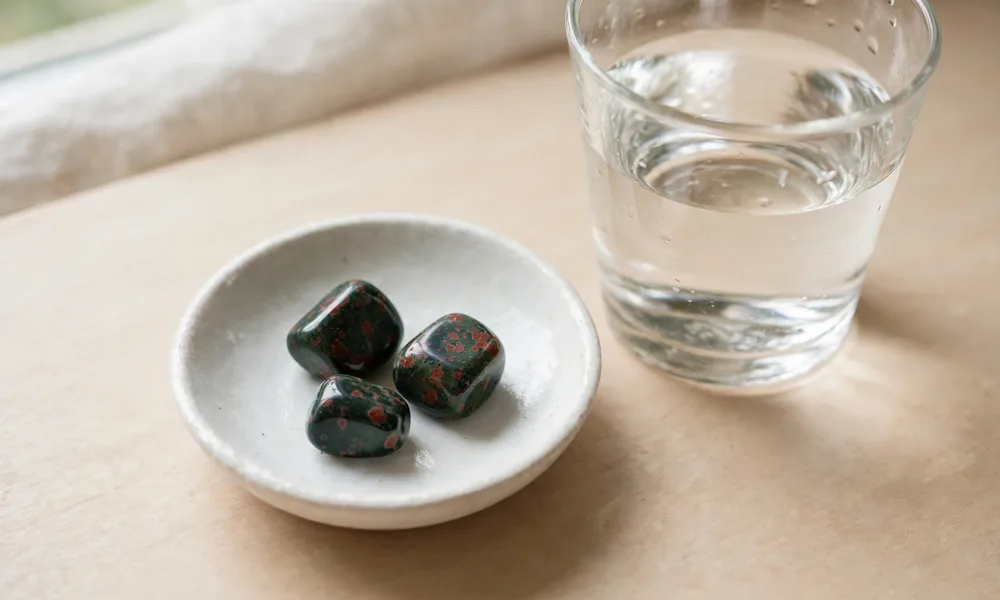
The night before, put your bloodstone on your desk or table, and set a clean glass beside it. In the morning, fill the glass with fresh water. The stone stays beside the glass, never inside it. Sit down, hold the stone in one hand, and drink the water slowly, in small sips. Take five slow breaths, in through the nose and out through the mouth, and let your shoulders drop. That is the whole ritual, in about two minutes.
If your skin prefers a gentler start, wash your face with lukewarm water first: why lukewarm water works better for morning skin explains the case for a softer start. Then name the day ahead in one sentence: what matters most today? Say it quietly, put the stone back, and begin. If mornings are slow for you, a warm start for slow days is a gentle companion.
Pauses for the Middle of the Day
The middle of the day is where long days are won or lost. Energy dips after lunch, attention scatters, and the temptation is to push through with more coffee and screen time. A better answer is a pause, and bloodstone gives you a reason to take one. Keep a tumbled stone in your pocket or on your desk. When your focus slips, pick it up, hold it for a minute, and drink a glass of water. Stand up, stretch, and look out of a window for thirty seconds.
If the afternoon feels especially long, take the pause outside: carry the stone in your pocket, walk to the end of the street and back, and drink a glass of water when you return. Aim for two midday pauses, one before lunch and one mid-afternoon, and tie each pause to something that already happens, such as finishing a cup of tea.
The Evening Wind-Down
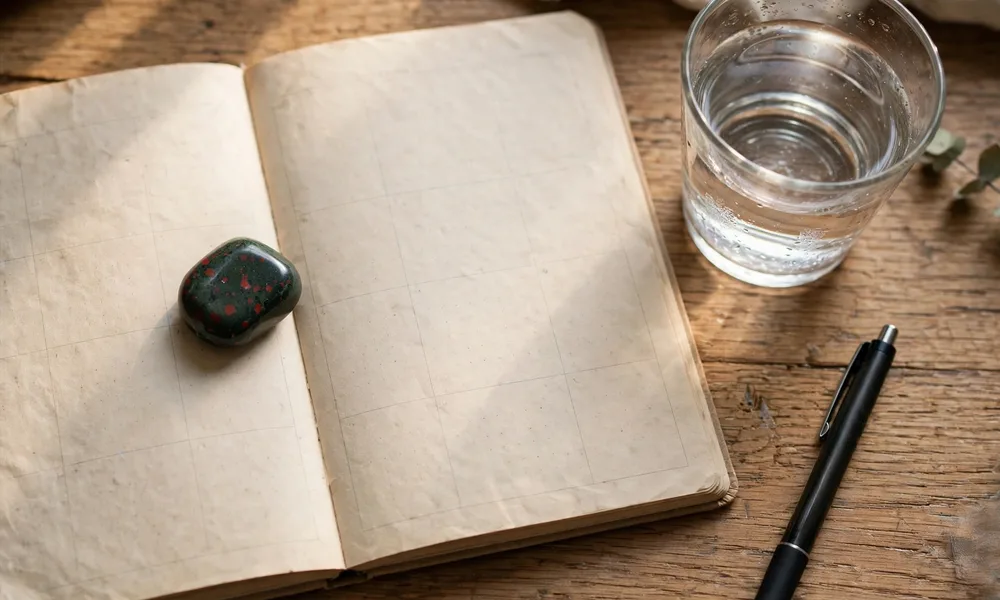
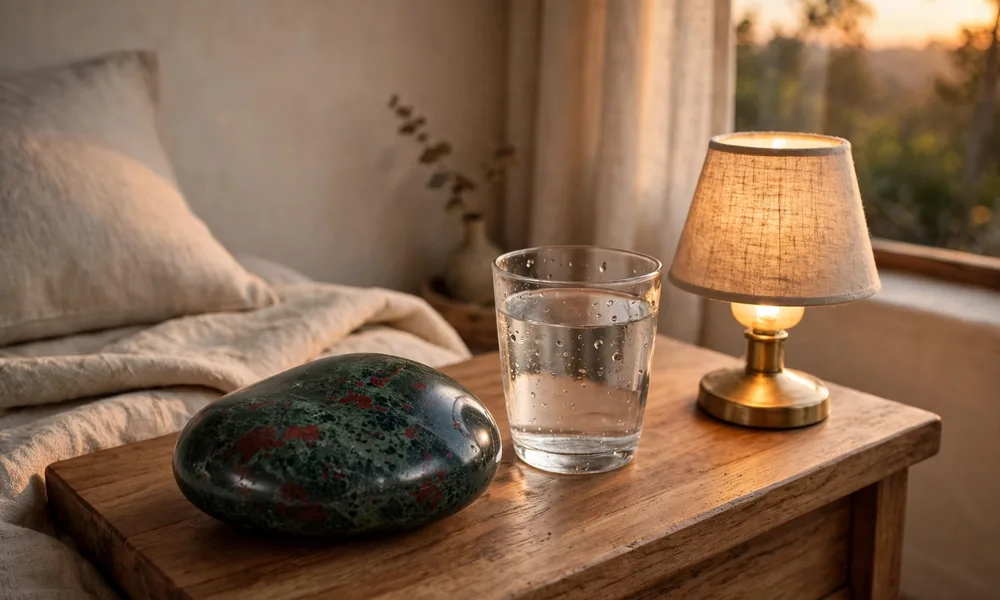
When the day is done, the ritual changes: it is no longer about strength for what is coming, but about letting the day go. Put the bloodstone on your bedside table, with a glass of fresh water beside it. Wash your hands, change into something comfortable, and sit for a few minutes with the stone in your hand. Think about the day in three short sentences: one thing that went well, one thing that was hard, and one thing for tomorrow. Drink the water slowly, then put the stone down, and let the day end.
This small review matters because long days follow you into the night. Without a clear ending, the mind keeps rehearsing what was left undone, and writing the three sentences down helps: once a thought is written, the mind can let it go. If you like a fuller evening routine, a five-step night routine built around stone and water fits naturally after this wind-down. Keep the stone in the same place every night.
Bloodstone and Water: The Indirect Method
Bloodstone and water belong together, but they must stay apart. The stone sits beside the glass, never inside it. This is the indirect method, the only safe way to pair a stone with drinking water. A stone can carry dust, skin oils, and polishing residues. The indirect method avoids all of that: the stone is near the water, the water stays clean.
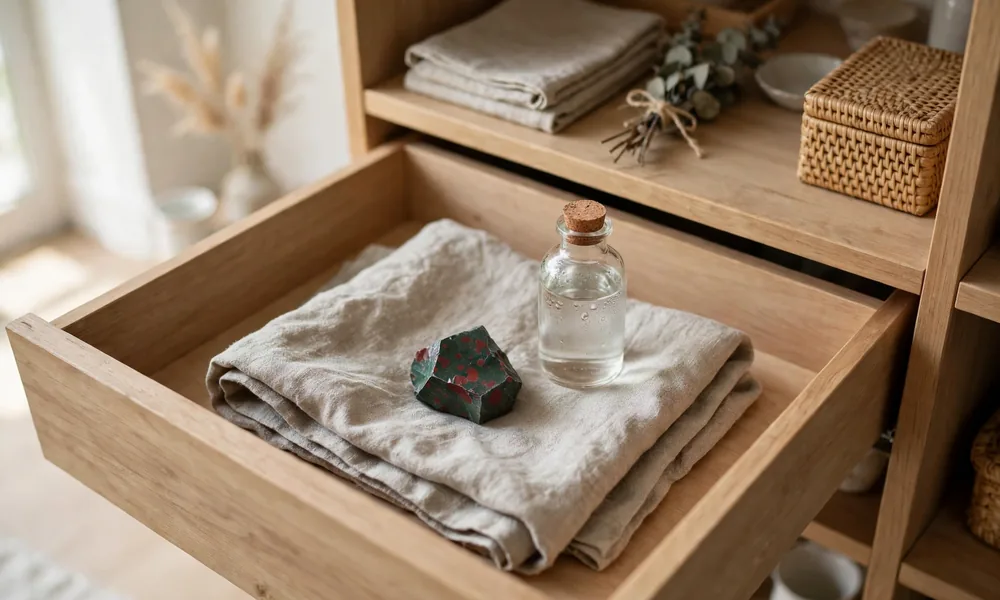
To use the indirect method, set the stone on a small dish or a folded cloth next to your glass. Never drop a stone into a jug, a bottle, or a bath, and never leave one in a glass overnight. If you rinse the stone, use plain lukewarm water and dry it at once with a soft cloth. The same rule applies to every stone: in your hand or on a shelf, a stone is a pleasure; in your drink, it is a risk that buys nothing.
What It Will Not Do
Say plainly what bloodstone will not do. It will not give you energy, cure tiredness, fix a bad night's sleep, or heal any illness. It will not make a long day short, and it will not do your work for you. No stone can do these things. If you are tired all the time, sleeping badly, or feeling unwell in a way that worries you, please speak to a qualified health professional.
What bloodstone can do is simpler, and it is honest: it gives you a reason to pause, a pleasant weight in your hand, and a small daily rhythm that helps you drink water and breathe slowly. Those are modest things, but on a long day, modest things hold. A ritual that asks little of you is a ritual you will keep.
Your Bloodstone Strength Checklist
- Choose a palm stone or tumbled bloodstone with natural red spots and a smooth, cool polish.
- Set the stone beside a clean glass of water, never inside it.
- Take a two-minute morning pause: hold the stone, drink the water slowly, breathe five slow breaths.
- Take two midday pauses: hold the stone, drink water, stretch, and look out of a window.
- End the day at your bedside: three short sentences, then put the stone down.
- Rinse the stone with plain lukewarm water when dusty, dry it at once, and store it in a pouch.
Frequently Asked Questions
Is bloodstone the same as heliotrope? Yes. Heliotrope is the older name for the same stone: a dark green chalcedony with red iron-oxide spots.
Can I put bloodstone in my drinking water? No. Keep the stone beside the glass, never inside it. Stones can carry dust and polishing residues, so the indirect method keeps your water clean.
Is bloodstone safe to hold every day? Yes, for most people. It is hard and stable at 6.5 to 7 on the Mohs scale. Wash your hands after handling any stone.
How do I tell real bloodstone from a fake? Real bloodstone has a deep, uneven green with red spots of varied size, running beneath the polish. Uniform dots or surface paint suggest a fake.
Does bloodstone need to be charged or cleansed? It does not need anything special. A rinse under plain lukewarm water and a dry with a soft cloth is enough.
Can bloodstone help me sleep better? No stone can treat sleep problems. What may help is the wind-down itself: a quiet pause, a glass of water, and a clear end to the day.
The Bottom Line
Bloodstone strength rituals are small and steady: a stone beside a glass of water, a slow breath, and a pause, morning, midday, and evening. The stone does not carry the day for you; it simply marks the moments when you stop, drink, and begin again.
Begin tomorrow with one stone and one glass: two minutes in the morning, two pauses in the afternoon, and a quiet wind-down at night. That is the whole habit, and it is enough for the longest day.
A Note for Long Days
Keep it steady, keep it simple, keep it yours. Long days do not need grand answers; they need small anchors, repeated until they become part of how you live. A cool stone, a glass of water, and a minute of quiet, three times a day.



