Some days arrive bright and stay bright. The sun comes in early, the sky is clear, and everything in the room looks sharper. On a day like that, a coloured stone can feel too heavy.
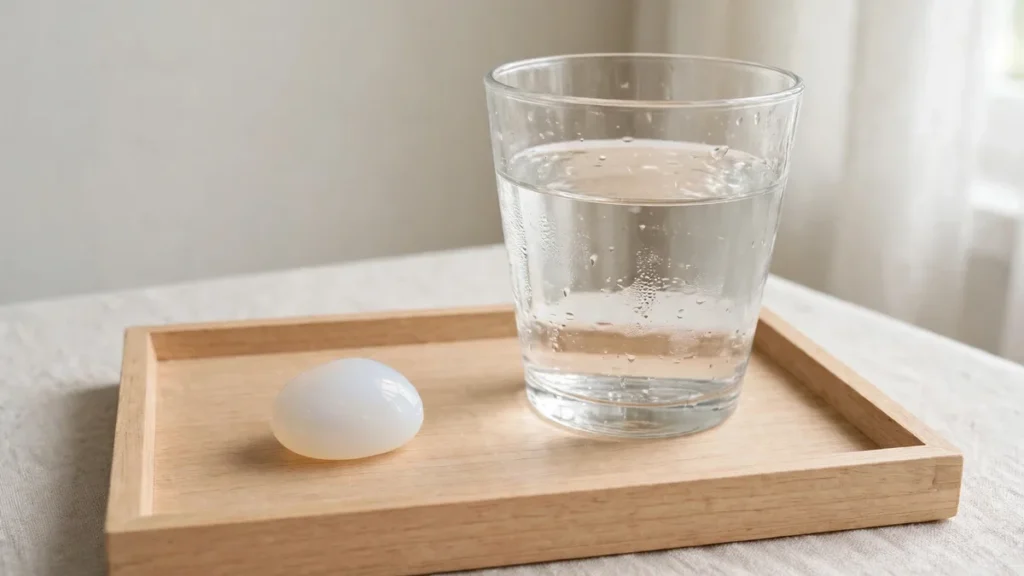
Hyalite opal is a stone for bright days like these: a clear, glass-like opal with no colour of its own, like a drop of water held still. Set it on a tray beside a glass of fresh water, and it looks like a small piece of the light itself, kept where you can see it.
This guide is a spotlight on hyalite opal: what the stone is, how to choose a piece, how to display it on a bright day, and how its quiet glow under ultraviolet light works. The stone is for display and handling only, never a treatment, and it will not heal anything.
Key Takeaways
- Hyalite opal is a clear, glass-like opal with no body colour.
- Its clear light suits bright days, strong daylight and open windows.
- Hyalite glows green under UV light, never in ordinary daylight.
- Hyalite differs from white, black, ethiopian and the other opals.
- The stone stays beside drinking water, never in it, and stays dry.
What Hyalite Opal Is
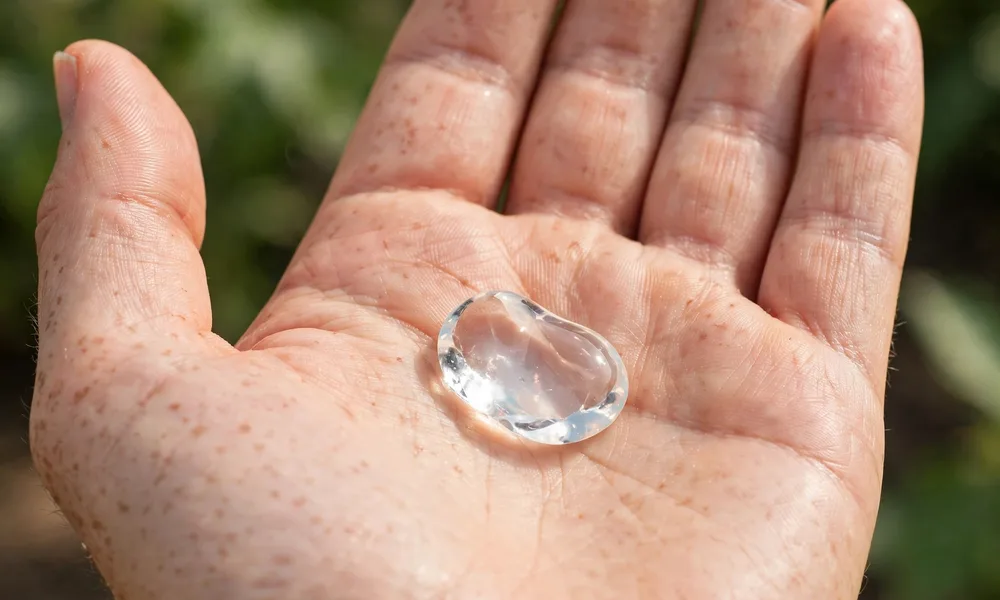
Hyalite opal is a variety of opal that is clear and colourless, like glass or a drop of clean water. Opal is formed from tiny spheres of silica and water inside the earth, and in most opals those spheres bend light into flashes of colour. In hyalite opal the structure is different: the stone is mostly clear, with no milky body and no play of colour, so light passes straight through it.
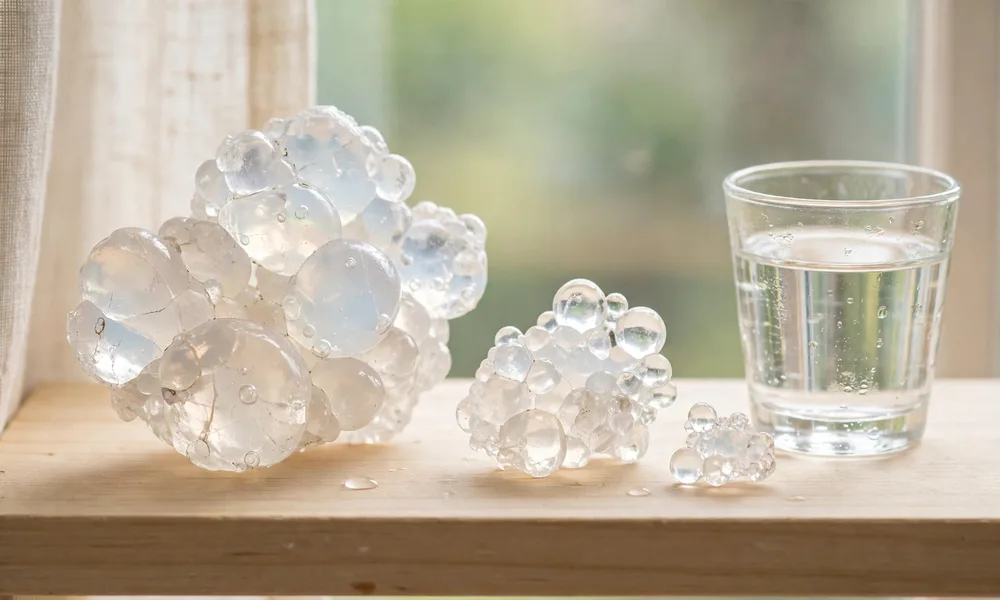
The stone often grows in rounded, grape-like clusters called botryoidal shapes, like small bubbles frozen together. Hold one in your palm and it feels cool and smooth, and no two pieces wear quite the same shape.
Choosing a Hyalite Opal Stone
Choosing a hyalite opal is mostly a matter of looking closely and trusting your eye. A good piece is clear like clean glass, with no cloudy white patches and no dull grey film, and the surface should be smooth with no sharp chips or rough pits.
A palm-sized cluster or a single smooth pebble is enough for a bright-day desk. If a piece feels pleasant in your hand and lets the light through, it is the right one. Buy from a trusted seller, never one who promises it will change your health, and wash your hands after handling it.
A Bright Day with Hyalite Opal
A bright day with hyalite opal takes only a few minutes to begin: place the stone on its tray, fill a clear glass with fresh water, and set it beside the stone. When you sit down with your notebook or your morning tea, drink the water slowly, in small sips, and then pick up the stone and hold it up to the light for a few breaths.
Put the stone back, and let the day carry on brightly: the desk and the window light. The day is water, bright light, one clear stone, and a short pause before the hours begin.
Hyalite Opal Beside Water
Water belongs beside the stone, never around it: set a clear glass of fresh drinking water next to the stone on the tray. They share a tray, not a glass. Never place the stone inside drinking water, and never soak it, because opal is a soft stone that should stay dry, and a stone has no place in a drink.
If the glass spills, lift the stone away and dry it with a soft cloth at once.
Hyalite Opal and Ultraviolet Light
Hyalite opal has one quiet surprise: under ultraviolet light it glows a soft green. This is called fluorescence, and it is honest to say plainly how it works. In ordinary daylight the stone is simply clear, like glass, and it does not glow at all. Under a UV lamp, in a dark room, the stone lights up green, then fades back to clear when the lamp is switched off.
The glow is a pretty trick of the light, nothing more. It does not mean the stone can heal anything. It is simply a beautiful thing to see once, on a bright day, with a small UV torch.
Keeping Hyalite Opal Safe
Hyalite opal needs only gentle care, and it is worth stating plainly: the stone is for display and handling only. Never put it in drinking water, never soak it, and never use it in a bath or a foot soak. Wash your hands with soap and water after handling the stone, and keep it away from small children and pets.
Dust the stone weekly with a soft, dry cloth, never soap or polish, and never scrub it. Keep the stone away from damp places, and dry it at once if it ever gets wet.

Hyalite Opal at a Glance
| Clear glass-like stone | Bright days | Display only |
|---|---|---|
| No body colour | Strong daylight | Never in water |
| Smooth cool feel | Desk and tray | Dust with dry cloth |
| Glows under UV | Water, light, pause | Wash hands after |
Hyalite Opal and White Opal
Hyalite opal and white opal are both pale stones for bright days, but they look very different. White opal is milky white, soft and cloudy, with a gentle rainbow flash that appears in bright light. Hyalite opal is clear as water, with no white body at all and no flash, so light passes through it instead of bouncing back in colour.
Where white opal soft white bright days keeps a soft milky white stone for bright days, this guide keeps a clear glass-like stone for bright days.
Hyalite Opal and Black Opal
Hyalite opal and black opal sit at opposite ends of the opal family. Black opal is dark-bodied, deep grey and near-black, with bright flashes of blue, green and violet that move across its surface as it turns, and it shines best in low evening light. Hyalite opal is clear and colourless, with no dark body and no flash, and it shines best in strong daylight.
Where black opal dark flash bold evenings keeps a dark flashing stone for bold evenings, this guide keeps a clear colourless stone for bright days.
Hyalite Opal and Ethiopian Opal
Hyalite opal and ethiopian opal are both opals that catch the light, but they catch it in different ways. Ethiopian opal is pale at its base with vivid flashes of rainbow colour, green, blue and orange, that move as the stone turns, like sunlight on fresh water. Hyalite opal has no flashes at all: it is simply clear, and its only trick is a soft green glow under UV light, never in daylight.
Where ethiopian opal bright flash fresh days keeps a bright flashing stone for fresh days, this guide keeps a clear glowing stone for bright days.
Hyalite Opal and the Other Opals
Hyalite opal is easy to tell apart from the rest of the opal family once you know what to look for. Boulder opal is bright veins in dark ironstone for grounded days. Matrix opal is pale veins across dark host rock for bright days. Peruvian opal is soft even blue with no flash for quiet afternoons. Andamooka opal is milky white with pale blue and faint pink light for calm days. Yowah opal is warm brown, rust and cream for grounded mornings. Blue opal is pale milky blue for daytime looks. Pink opal is soft milky pink for sensitive skin. Dendritic opal is milky white with grey fern branches for quiet minds. Fire opal is warm orange with red and gold flashes for autumn evenings.
Hyalite stays its own stone: clear as water, no colour of its own, for bright days.
Stones That Must Never Touch Water
Not every stone is safe beside water, and some must never touch water at all. Malachite must never go in water or in elixirs, because it can release harmful substances. Hematite must never go in drinking water, and apatite, lepidolite — which contains lithium — pyrite, angelite and amber must never go in drinking water or in soaks either.
The rule stays the same for hyalite: display it on a tray, keep a glass of water beside it, and never let the two meet. The stone will not heal anything, and real health problems belong with a doctor.
Your Bright Days Checklist
- Set the stone on a tray beside a clear glass of water.
- Drink a glass of fresh water slowly while the day begins.
- Hold the stone up to the light and look through its clear glow.
- Keep the stone beside water, never inside drinking water or soaks.
- Dust the stone dry weekly, and wash your hands after handling it.
- Remember the stone will not heal anything; see a doctor for health problems.
Frequently Asked Questions
What is hyalite opal?
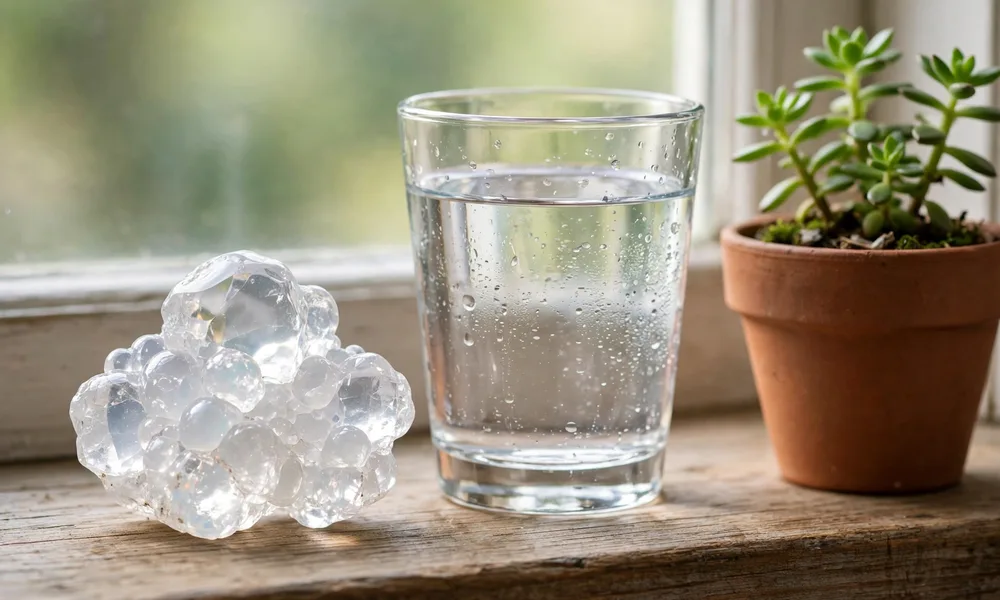
Hyalite opal is a clear, colourless variety of opal, like glass or a drop of clean water. It has no milky body and no play of colour, and it often grows in rounded, grape-like clusters.
Does hyalite opal really glow?
Yes, but only under ultraviolet light. In a dark room, under a UV lamp, hyalite opal glows a soft green. In ordinary daylight it does not glow at all.
Can I put hyalite opal in drinking water?
No, never. The stone belongs beside a glass of water, not inside it. Keep a glass of water beside the stone on the tray, and never soak the stone.
Will hyalite opal heal anything?
No. Hyalite opal will not heal anything. It is a beautiful object for display and handling, and the bright feeling comes from the light, the water and the slow day.
How do I clean hyalite opal?
Dust it once a week with a soft, dry cloth, never soap or polish, and never scrub it. If it gets wet, dry it at once and wash your hands after.
Where should I keep my hyalite opal?
Keep it on a small tray or desk in a dry, bright room, with a clear glass of water beside it — a desk, a shelf or a windowsill works well.
The Bottom Line
Hyalite opal brings clear light to bright days: a glass-like stone, clear as water, held beside a glass of fresh water in strong daylight. Keep it beside water, never in it, wash your hands after handling, and dust it dry.
A Note for Bright Days
Keep it clear, keep it dry, keep it bright. A small clear stone, a glass of water, and a few slow minutes can carry a day well.